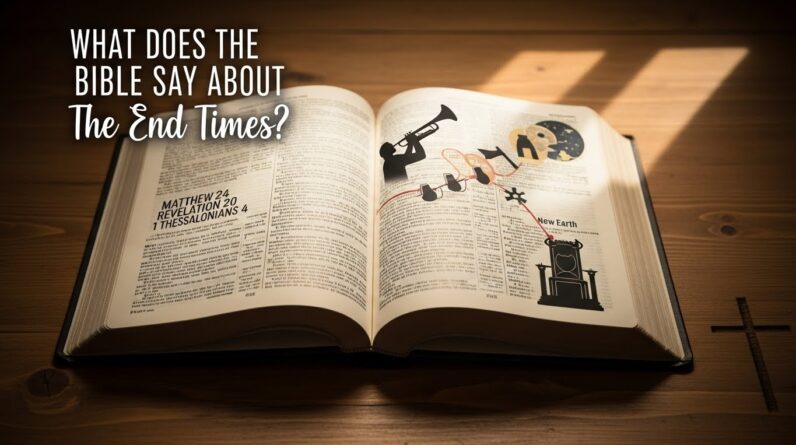


What Happens During The Trumpets In Revelation? (Revelation 8–11)
Many Christians wonder what the trumpets in Revelation really mean and whether they apply to believers today. These powerful symbols reveal how God warns the world, calls for repentance, and prepares history for Christ’s final victory.
TL;DR — Simple Answer
The seven trumpets in Revelation 8–11 are God’s warnings and judgments that call people to repentance while showing His sovereign control over history. They remind believers to live faithfully, trust Jesus Christ’s final victory, and respond with repentance and hope rather than fear.

Introduction
You might wonder why the book of Revelation — with its vivid images and symbols — matters for your everyday faith. The trumpet passages in Revelation 8–11 aren’t primarily a horror story; they’re a theological message about God’s justice, holiness, and the unfolding of salvation through Christ. When you read these chapters, you’re invited into a spiritual conversation about judgment, mercy, and the call to faithful witness.
As a Christian teacher, I want to help you see the pastoral heart beneath the symbols. This topic ties directly to discipleship: how you live in the present age while anticipating Christ’s return. It shows God’s character — He is holy, righteous, and patient — and His purpose: to bring all things back under the lordship of Jesus. Keeping Christ at the center prevents sensationalism and helps you respond with hope and obedience.

👉 “As the trumpet judgments sound, Scripture makes clear that humanity faces a narrowing window of decision—revealing that entrance into God’s kingdom is not automatic.”
➡️ Learn more in Is Heaven for Everyone? (John 3:36, Matthew 7:13-14)
Simple Biblical Meaning
At its core, the trumpet sequence in Revelation functions like a series of divine announcements. Think of a trumpet in the Bible as a sound that says: “Pay attention. Something important is happening.” In Revelation 8–11 the trumpets call people and creation to notice God’s action — exposing sin, bringing correction, and moving history toward final redemption.
The first four trumpets affect the natural world (sea, vegetation, waters, celestial bodies), signaling cosmic disturbance and the consequences of human rebellion. The fifth and sixth are more specific, symbolic visions — terrifying creatures and warfare imagery — that point to spiritual conflict and demonic activity restrained by God. The seventh trumpet brings a climax: praise in heaven, the proclamation that God’s kingdom has come, and movement toward final judgment (and ultimate restoration).
What God reveals through these sounds is not cruelty but purpose. The trumpet warnings function as a call for repentance and a reminder that Jesus, not calamity, is the center of God’s plan for the world.
What Does the Bible Say? (Overview of Revelation 8–11)
John the Apostle records these scenes as visions he received while exiled on Patmos (see Revelation 1). The speaker is primarily the risen Christ, mediated by angelic figures who carry out God’s commands. The original audience is the early Christian churches and the broader world — people tempted to compromise under persecution and idolatry. Yet the message is timeless.
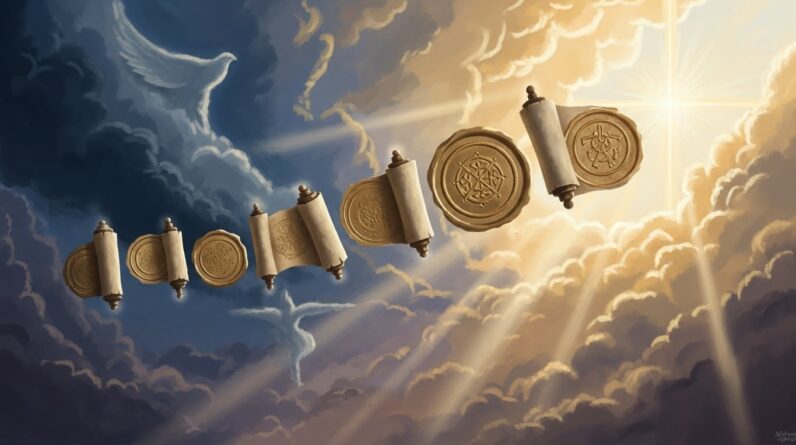
- Revelation 8:1–6 — After the seventh seal is opened, seven angels receive seven trumpets. An angel offers incense with the prayers of the saints, then the angels prepare to sound their trumpets. See Revelation 8:6.
- Revelation 8:7–12 — The first four trumpets bring ecological judgments: hail and fire burn a third of the earth’s vegetation; a burning mountain is thrown into the sea turning a third to blood; a star named Wormwood poisons waters; a third of the sun, moon, and stars are darkened. See Revelation 8:7–12.
- Revelation 8:13; 9:1–12 — The fifth trumpet opens a pit and releases locust-like creatures that afflict people, but only those without God’s seal. These creatures symbolize a tormenting judgment that has spiritual meaning, and a leader named Abaddon/Apollyon is mentioned. See Revelation 9:1-12.
- Revelation 9:13–21 — The sixth trumpet releases four angels bound at the Euphrates who unleash a massive army, causing widespread death, yet many still refuse to repent. See Revelation 9:13-21.
- Revelation 10 — An interlude: a mighty angel with a small scroll appears. John is told to eat the scroll (internalize God’s words); then he must prophesy again. See Revelation 10:1-11.
- Revelation 11:1–14 — Two witnesses prophesy for 1,260 days, are killed (a symbolic portrayal of opposition), and then resurrected and taken up. The seventh trumpet sounds, announcing the kingdom of Christ and God’s final reign. See Revelation 11:15-19.
Throughout, voices in heaven and prophetic drama emphasize that these events happen under God’s control and point to Jesus’ ultimate victory.

The Bible Foundation
Revelation 8:6–7 (NIV) — Bible Foundation verse: “Then the seven angels who had the seven trumpets prepared to sound them. The first angel sounded his trumpet, and there came hail and fire mixed with blood, and it was hurled down on the earth; and a third of the earth was burned up, and a third of the trees were burned up, and all the green grass was burned up.” — Revelation 8:6–7 (NIV).
This passage grounds the trumpet sequence as God-directed, symbolically portraying serious consequences for a world marred by sin. The detailed imagery invites you to wrestle with moral and spiritual realities rather than with technical timelines.
👉 “The judgments in Revelation often raise questions about purification after death, yet the Bible offers clarity on whether such a place truly exists…”
➡️ Learn more in What Is Purgatory? From a Biblical View (Hebrews 10:14)
QUICK ANSWERS PEOPLE ASK (PAA SECTION)
- What do the trumpets represent? The trumpets represent divine announcements and judgments intended to call attention, warn people, and move history toward God’s redemptive purposes centered in Christ.
- Are the trumpets literal events or symbolic? The book of Revelation uses vivid symbols. The trumpets point to real spiritual realities (judgment, repentance, final restoration), but the imagery is often symbolic rather than strictly chronological, so avoid precise date-setting.
- Do the trumpet judgments mean God hates the world? No. They reveal God’s holiness and justice. His judgments are measured and aim toward purification and the establishment of Christ’s kingdom, which is ultimately about restoration and reconciliation through Jesus.
GOD’S PURPOSE, PROTECTION & PROMISE
God’s purpose in the trumpet sequence is not to terrify you, but to reveal truth: He is sovereign over history, He judges sin, and He will bring about justice. The trumpets expose what is broken so that healing can come in the scope of God’s plan centered on Christ.
Christ’s role is central: He is the Lamb who opens seals and through whom God’s purposes are accomplished (see Revelation 5). The trumpet passages point forward to the kingdom where Christ reigns fully and the righteousness of God is consummated.
God’s protection appears in several ways: the prayers of the saints rise before God (Rev 8:3–4); people are sealed and protected in symbolic ways (Rev 9:4); and the narrative shows that while judgments happen, they are limited and purposeful. These images remind you that trust in Christ is not naive optimism but confidence that God is active, just, and merciful.
The promise: despite the turmoil, Christ wins. The seventh trumpet announces that “the kingdom of the world has become the kingdom of our Lord and of his Messiah” (Revelation 11:15). Your hope rests in Jesus, who redeems creation.
GOING DEEPER — BIBLICAL CONTEXT
The trumpet imagery sits inside a larger biblical web.
- Old Testament echoes: Trumpets called God’s people to worship, battle, and repentance (see Joel 2:1 and Zechariah 9:14). The plagues in Exodus (Exodus 7–12) show God’s power over rebellious systems — a thematic background for Revelation’s judgments.
- Gospels: Jesus teaches about cosmic signs and perseverance (see Matthew 24:29–31, reminding you that ultimate restoration follows tribulation and that the Son gathers His elect.
- Epistles: Paul and Peter write about God’s judgment and hope (e.g., 1 Thessalonians 4:16–17and 2 Peter 3:10), encouraging faithful living while awaiting Christ.
These cross-references show theological continuity: God acts decisively in history to defeat evil and bring redemption through Christ. The trumpet scenes are part of Scripture’s unified story, not isolated sensational visions.

MODERN CONNECTION — DAILY LIFE APPLICATION
How does the trumpet imagery shape your daily faith?
First, the trumpets call you to spiritual attention. Just as a trumpet halts noise and commands notice, God’s warnings invite you to examine your life, repent, and cling to Christ. When anxiety about the future arises, look to Jesus’ promises rather than speculative timelines.
Second, the trumpets motivate faithful witness. The two witnesses (Revelation 11) show that God calls people to testify even under opposition. Your everyday discipleship — word and deed — participates in that witness: love, truth-telling, and mercy.
Third, the trumpets encourage perseverance. They remind you that suffering is not meaningless but sits within God’s story of redemption. You can endure trials because Christ has triumphed and reigns. That helps you pray, serve, and hope without fear.
👉 “Even amid the trumpet judgments, God’s mercy still calls people to respond—because openly confessing Christ remains central to saving faith.”
➡️ Learn more in How Important Is Confession for Salvation? (Romans 10:9-10)
PRACTICAL APPLICATION (BULLET POINTS)
- Pray regularly for discernment and compassion for the lost rather than for fear of events.
- Read Revelation with a Christ-centered Bible study plan, focusing on Jesus’ victory (e.g., read Revelation alongside the Gospels).
- Practice communal worship and repentance—confess sin privately and corporately, celebrating God’s mercy.
- Engage in faithful witness: speak the gospel gently, serve the vulnerable, and demonstrate God’s love tangibly.
- Memorize or meditate on key scriptures that point to God’s sovereignty (e.g., Revelation 11:15, Matthew 24:35).
- Care for creation: the trumpet judgments often affect nature, reminding you of stewardship responsibilities.
- Join a small group to discuss Revelation soberly and pastorally, avoiding sensationalism.

FAITH REFLECTION BOX
Question for reflection: When you hear a “trumpet” in your life — a wake-up call, a crisis, a conviction — how do you notice God inviting you to turn toward Christ rather than away from Him?
Key Takeaways:
- Remember: The trumpets call attention to God’s justice and mercy—respond with repentance.
- Rest: Christ’s victory is the center; trust His reign, not timelines or sensational claims.
- Respond: Let the trumpet calls fuel your witness, worship, and service today.

 “Every God-given message deserves to be shared.”


Don’t let your calling stay hidden. Start a Christian blog or website using Hostinger — with 99.9% uptime, a free domain, and SSL, your voice can shine for God’s glory anytime, anywhere. Begin today.
  Try it RISK-FREE!
FREQUENTLY ASKED QUESTIONS (SCHEMA-READY)
Q1: Are the trumpet judgments in Revelation literal events happening in sequence? Answer: The trumpet visions are rich in symbolic language and should be read as prophetic imagery that communicates spiritual truth rather than a strictly literal timeline. Revelation uses symbolic numbers, Old Testament imagery, and apocalyptic figures to help you grasp the reality of God’s judgments and mercy. While some details may have historical or future applications, the central message is theological: God is sovereign, He judges sin, and He brings salvation through Christ (see Revelation 1:1–3; Joel 2:1). Read the passage seeking Christ and the call to faithfulness rather than a timetable.
Related: Finding Joy in the Midst of Suffering: Lessons from Paul
Q2: Do the trumpets mean Christians should fear the future? Answer: No. The trumpets call for sober attention, not panic. Scripture repeatedly invites believers to trust God amid trials (see John 16:33; Romans 8:28). The book of Revelation ultimately centers on Christ’s victory (see Revelation 11:15). That victory reframes how you interpret warnings: they are means to call people to repentance and faith in Jesus, not to generate fear.
Q3: How should I teach children or new believers about the trumpets? Answer: Teach them simply: trumpets in the Bible mean “listen up.” Explain that Revelation uses pictures to show that God cares about justice and will make all things right through Jesus. Emphasize God’s love, Christ’s victory, and the call to follow Jesus. Use age-appropriate stories and focus on prayer, compassion, and trust (see Matthew 19:14; 1 John 4:8–10).
See also: Prayers of Gratitude: Thanking God Every Day (1 Thessalonians 5:16–18 Explained)
Conclusion & Prayer
Summary: The trumpets in Revelation 8–11 are God’s solemn announcements that bring judgment, warning, and the impetus toward repentance, all under the sovereign lordship of Jesus Christ. They are not puzzles to fuel speculation but pastoral prompts to live faithfully, love others, and trust Christ’s final victory. The trumpet scenes ultimately point you back to the cross, the risen Lord, and the promise that God will make all things new.
A prayer for you: Lord Jesus, you are King over heaven and earth. Thank you that your victory is sure, and that your judgments are guided by perfect wisdom and mercy. Help me to hear the trumpet calls in my life as invitations to repentance, deeper trust, and faithful witness. Teach me to rest in your sovereignty, to love courageously, and to proclaim your good news. Keep my eyes fixed on you, the author and perfecter of my faith. Amen.
 RELATED BIBLE TEACHINGS
- Salvation: What Is Eternal Life And How Is It Related To Salvation? (John 17:3, Romans 6:23)
- Christian living: What Does It Mean To Live By Faith? (Hebrews 11:1, 2 Corinthians 5:7)
- End Times: What Does The Bible Say About The End Times? A Clear, Scripture-Based Overview
- Afterlife: What Is The Second Death In Revelation? (Revelation 20:14)
 As a ClickBank & Amazon Affiliate, I earn from qualifying purchases.
 Acknowledgment: All Bible verses referenced in this article were accessed via Bible Gateway (or Bible Hub).
 Want to explore more?
  Dive into our new post on Why Jesus? and experience the life-changing truth of the Gospel!