


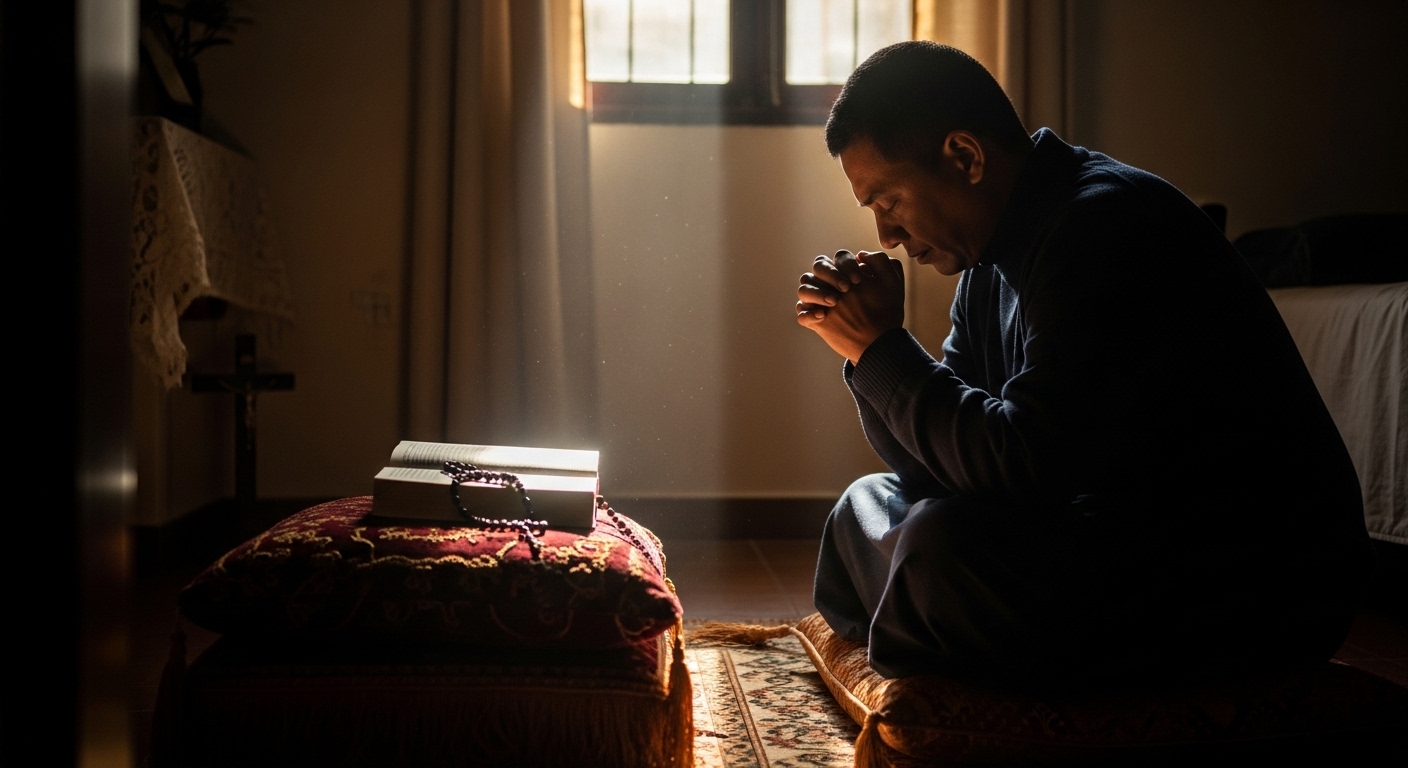
If you’ve ever wondered what to say when you pray, you’re not alone. Many beginners feel unsure what words to use or how to start. Prayer can feel intimidating at first—like there’s a hidden script you’re missing—but it doesn’t have to be complicated.
You don’t need perfect words, a formal vocabulary, or spiritual experience. Prayer is simply a conversation: honest, humble, and trusting.
This guide gives you a simple structure to follow, practical examples you can use immediately, and a short daily routine to help you grow. By the end, you’ll have phrases and patterns you can repeat until speaking with God feels natural. If you want a full step-by-step guide, read:: How to Pray (Step-by-Step for Beginners Who Don’t Know Where to Start).

What to Say When You Pray (Simple Answer)
If you don’t know what to say when you pray, use this simple pattern:
- Praise God for who He is
- Say thank you for something specific
- Share honestly what’s on your heart
- Ask for help or guidance
- End with trust in God’s will
Why Structure Helps When You Don’t Know What to Say
When you’re new to prayer, having a small framework removes pressure. A simple structure keeps your thoughts from wandering and helps you stay focused on connection rather than performance. You’ll learn how to praise, give thanks, share honestly, ask specifically, and end with trust—five short steps that fit a quick morning prayer or a longer conversation in the evening.
Structure also helps you grow. Repeating the same pattern trains your heart to notice God in everyday life, build gratitude, and bring real needs into prayer without getting stuck on words. If you prefer a compact daily routine, check our cluster article: Simple Daily Prayer Routine (5–10 Minutes).
1. Start With Praise — Acknowledge Who God Is
Begin by telling God who He is to you. Praising God helps you lift your eyes off your problems and remember God’s character—His goodness, faithfulness, power, love, and wisdom. Praise doesn’t need to be elaborate. A single sentence that honors God sets the tone for the rest of your prayer and reminds you that you’re speaking with Someone worthy of your trust.
Example: “Lord, You are good and faithful.” This short recognition reflects humility and confidence. Scripture tells you to present your requests with thanksgiving; praise prepares your heart for that posture. For a biblical reminder about thanksgiving and prayer, see Philippians 4:6.
2. Say Thank You — Practice Simple Gratitude
Gratitude flips the prayer from a list of demands into a relational exchange. Thanking God, even for small things, trains you to notice His presence throughout your day. You can say thanks for safety, food, relationships, a small kindness, or the ability to breathe and begin again.
Expressing gratitude doesn’t cancel out your real struggles; it balances them. When you thank God first, your worries don’t dominate the conversation. This habit builds faith and awareness, helping you remember past answers and anticipate future help.
A helpful Bible reminder to give thanks always is 1 Thessalonians 5:16-18.
To build consistency, follow:
👉 Simple Daily Prayer Routine (5–10 Minutes)

3. Share Honestly — Talk About Stress, Worries, and Needs
After praise and thankfulness, speak plainly about what’s on your heart. God already knows your needs, but speaking them out loud clarifies your own thoughts and deepens your trust. Share stress, worries, frustrations, doubts, relationships, finances, health—whatever is real for you.
Honesty doesn’t mean you must be neat or polished. You can be blunt: “I’m scared,” or “I’m tired of trying.” God welcomes your honest voice. If words fail you, remember Paul’s encouragement that the Spirit helps when you don’t have words: Romans 8:26.
When you speak about needs, try to be specific. Instead of “help my family,” you might say, “Give my brother patience in his job search” or “Provide for the rent this month.” Specific requests help you watch for answers and grow in faith.
4. Ask for Help — Be Specific and Bold
Now make requests. Asking for help is not selfish; it acknowledges your dependence on God. Be precise when you can. God cares about the big picture and the small details of your life. Specificity helps you track God’s faithfulness and strengthens your prayer life.
Ask for wisdom, courage, healing, provision, or reconciliation as needed. If you’re unsure what to ask for in a situation, pray for guidance: “Show me what to do.” Jesus taught you to ask, seek, and knock—persistent, expectant prayer is part of a healthy conversation with God. For a model of how Jesus instructed His followers to pray, read Matthew 6:9-13.
If you’re dealing with emotions that overwhelm words, you can say, “I don’t know how to pray about this, but I ask for Your help,” trusting that the Spirit intercedes for you in groans too deep for words (Romans 8:26).
If your mind keeps wandering:
👉 Why Do I Get Distracted When Praying?
5. End With Trust — Surrender to God’s Will
Close your prayer by expressing trust in God’s wisdom and timing. Saying, “Your will be done,” isn’t a passive resignation; it’s active faith. It declares you believe God sees more than you do and that you’re willing to obey—even when answers look different than you expect.
Ending with trust steadies your heart and prevents prayer from becoming a bargaining session. It brings your requests into alignment with God’s purposes and helps you rest while God works. A great example of trusting God is found in Jesus’ words in the Garden of Gethsemane and in teachings throughout Scripture. For a reminder to trust God with your heart and lean not on your own understanding, consider Proverbs 3:5.

What to Say When You Pray: A Simple Example
Use this short prayer when you’re learning or when time is tight. It follows the praise-thanksgiving-honest-sharing-asking-trust structure so you can pray confidently with a few sentences.
“Lord, You are good and You love me. Thank You for today and for the small mercies I noticed this morning. I’m anxious about my job interview; please give me calm, clarity, and the right words. Help my family with health and provision. I trust You even if the outcome is different than I expect. In Jesus’ name, amen.”
This example shows how brief a meaningful prayer can be. If you want to expand, add more specifics or linger longer on praise and listening.
What to Say When You Pray (1-Minute Prayer)
If you need a one-minute prayer you can memorize and use anywhere, try this:
“God, thank You. I need Your help. Please give me wisdom, peace, and courage. I trust You. Amen.”
Keep that short prayer in your pocket for stressful moments—before a meeting, during a commute, or first thing when you wake up.
If you’re still unsure what to say when you pray, just follow this pattern daily until it becomes natural.
How to Pray When You Run Out of Words
Running out of words is normal. You will have days when language feels empty. When that happens, you have good options: sit in silence, sing a simple worship line, read a Bible verse aloud, or pray Scripture back to God.
Silence can be prayer too—quietly resting in God’s presence is a powerful form of trust. If you prefer words, use short prompts: “Thank You,” “Help me,” “I’m sorry,” “I trust You,” and repeat them slowly. The Psalms are full of raw language you can borrow when you don’t have words of your own.
If you want a Scripture to lean on, try praying phrases from the Lord’s Prayer in Matthew 6:9-13 or meditating on the promises in Psalm 46:1 for comfort.
If you feel stuck, read:
👉 What to Do When You Don’t Feel Like Praying
Common Struggles and Gentle Fixes
Feeling awkward, distracted, or unsure is normal when you start praying. Here are common struggles and kind, practical ways to move forward.
- Feeling awkward: Remind yourself prayer is a conversation, not a performance. Begin with simple sentences and let them grow naturally.
- Running out of words: Use Scripture or a short prayer template. Silence is also an option—resting in God is valid.
- Doubting God hears you: Keep a prayer journal of requests and answers. When you see evidence of God’s faithfulness, faith grows.
- Not sure how long to pray: Start with 5 minutes. Consistency matters more than length. A daily 5–10 minute habit beats an occasional long session.
Each small fix focuses less on technique and more on regular connection. If you want a short daily habit, our related article Simple Daily Prayer Routine (5–10 Minutes) gives a clear plan.
If you wonder whether God hears you:
👉 Does God Hear Every Prayer? (Biblical Answer)
Practical Tips to Make Prayer a Habit
Turning prayer into a habit doesn’t require dramatic changes. Start small and build consistently. Choose a time that fits your life—morning, lunch break, or bedtime—and set a gentle reminder on your phone. Use a notebook to jot down prayer points and answers. Keep it simple: five minutes a day is enough to start seeing change.
Create a small prayer space if that helps—an open Bible, a candle, or a cup of tea. These tactile cues train your mind that it’s time to turn toward God. If you struggle with silence, read a psalm, pray it aloud, and then sit. Over time, prayer will feel less like an obligation and more like breathing.
Remember: progress is measured in consistency, not perfection. Every honest sentence you speak to God matters.
If your mind keeps wandering:
👉 Why Do I Get Distracted When Praying?
The Role of Scripture in Prayer
Praying Scripture is a powerful bridge between your words and God’s promises. Repeating a verse in prayer helps your requests align with God’s character and will. You can pray verses of comfort, thanksgiving, or petitions that fit your season.
Examples you might pray back to God include:
- “God, You are my refuge and strength” (based on Psalm 46:1).
- “Lord, help me to trust You and not rely only on my understanding” (based on Proverbs 3:5).
- “Thank You that You are working all things for good” (based on Romans 8:28).
Praying Scripture trains your heart to think God’s thoughts, and it’s especially helpful when you feel stuck or weak.
How to Pray for Others (Intercession)
Praying for others, or interceding, is one of the most meaningful forms of prayer. When you pray for someone, name them and their need specifically—health, salvation, wisdom, or peace. You can also ask God to show you how to love them practically.
Intercede regularly for the people you care about. Keep a list in your journal and tick off requests as they’re answered—this builds faith and gratitude. If you’re praying for someone in pain or grief, just being present and praying a short sentence like “Lord, be with them and hold them” communicates love and dependence on God.
Here’s a short intercessory phrase you can use: “Jesus, meet [Name] in their need. Bring comfort, supply, and Your peace.”
What to Do When Doubts or Anger Come Up in Prayer
Doubt and anger don’t disqualify you from prayer. They are honest emotions you can bring to God. Scripture models raw honesty—many psalms are prayers of complaint that end in trust. Name your doubts or anger and ask God to help you understand or to bring healing.
You might say, “God, I’m angry about this injustice. Help me not to become bitter. Show me how to act with mercy.” God can handle every emotion you have, and bringing those feelings to Him often begins the healing process.
If it helps, echo the psalmists: speak your lament and then end your prayer with a small reaffirmation of trust, such as “I will wait for You” or “You are my hope.”
If you wonder whether God hears you:
👉 Does God Hear Every Prayer? (Biblical Answer)
Listening in Prayer — Quieting to Hear
Prayer is two-way. After you speak, spend time listening. Quiet your mind for a few moments and pay attention to impressions, Scriptures that come to mind, or a sense of peace. Listening is a discipline: start with thirty seconds and gradually lengthen it.
You may not always “hear” a voice, but God often speaks through Scripture, circumstances, or a wise friend. Asking God for clarity and then being open to how He answers helps you recognize His voice over time.
For guided listening, consider using a passage like Psalm 23 — read it slowly, then ask God which line resonates today.
Prayer and Persistence — Keep Coming Back
Sometimes answers are immediate; other times they unfold slowly. The parable of the persistent widow and Jesus’ teaching on persistence encourage you to keep praying, even when immediate change isn’t seen. Persistence isn’t nagging God—it’s a mark of dependence and trust.
If you’re tempted to stop praying about something, honestly refresh your request and continue to present it with gratitude. Keeping a record of prayers and timelines helps you see movement over weeks or months and keeps discouragement at bay.
If answers feel delayed:
👉 Why Does God Delay Answers to Prayer?
A Longer Realistic Prayer Example (Five Minutes)
If you have a bit more time, use this five-minute pattern as a template. It expands each step so you can linger in praise, gratitude, honest sharing, specific requests, and trust.
“Father, I praise You—You are holy, wise, and good. Thank You for today, for bread to eat, and for moments of joy I might have missed. I’m honest with You: I’ve been feeling overwhelmed with work and fear about the future. I don’t know how to balance everything. Please give me wisdom, a clear mind, and energy. Help me to prioritize what matters and to rest when I need it. I pray for my friend Sarah—bring healing and peace in her surgery. Please guide my decisions about this move; open doors if it’s Your will and close them if not. I trust Your timing and know You hear me. Help my heart to be open to Your answers. In Jesus’ name, amen.”
This example reflects real concerns and uses specific details where possible. Over time, you’ll find your own words and rhythm.
Common Questions Beginners Ask
You might wonder: Do I need to use certain words? How long should I pray? Is silent prayer real prayer? The short answers: no, there are no magic words; length is less important than consistency; and yes, silence and listening are real prayer.
Not sure how long to pray?
👉 How Long Should You Pray Each Day?
If you’re anxious about language, pray in your normal voice. If you prefer structure, use the templates in this article. If you’re pressed for time, pray briefly and often. The important thing is to begin, return, and be honest.
If you’d like a full beginner walkthrough, our in-depth guide expands these ideas into daily practices: How to Pray (Step-by-Step for Beginners Who Don’t Know Where to Start).
Encouragement — You Don’t Need Perfect Words
The heart of prayer is relationship. God cares more about your heart than your phrasing. You can start with one short sentence and add more as you feel comfortable. Even imperfect prayers are heard and valued. Keep coming back, keep being honest, and allow your words to grow with your faith.
If you ever feel stuck, try the simple five-step structure: praise, thank you, share honestly, ask specifically, and end with trust. Use the short prayers in this guide until your own voice returns.
Keep It Simple (Important Reminder)
You don’t need to cover everything in one prayer. Focus on simple, honest words using this pattern:
👉 Praise
👉 Thank
👉 Share
👉 Ask
👉 Trust
Over time, your prayer life will grow naturally.
Closing Prayer — A Gentle Send-Off
“God, thank You for meeting me as I learn to pray. Help me to be honest, to trust, and to listen. Use these words to draw me closer to You. Amen.”
Bible Verses Referenced
- Philippians 4:6 — about prayer and thanksgiving.
- Romans 8:26 — the Spirit helps in prayer.
- Matthew 6:9-13 — the Lord’s Prayer model.
- 1 Thessalonians 5:16-18 — rejoice, pray continually, give thanks.
- Proverbs 3:5 — trust in the Lord.
- Psalm 46:1 — God is our refuge and strength.
- Romans 8:28 — God works for good.
Next Steps: Learn What to Say When You Pray in Any Situation
Now that you know what to say when you pray, the next step is to practice daily.
👉 If you want a full structure:
Read → How to Pray (Step-by-Step for Beginners)
👉 If you want a simple daily habit:
Start here → Simple Daily Prayer Routine (5–10 Minutes)
👉 If you feel stuck or discouraged:
Go to → What to Do When You Don’t Feel Like Praying
And → Why Is My Prayer Not Working?
👉 If you want to grow deeper:
Explore → Best Time to Pray (Morning vs Night Explained)