



Introduction
You’ve probably heard that the resurrection of Jesus is the cornerstone of Christian faith, but you might also wonder: is there real evidence that it actually happened? That’s a fair question. This isn’t merely a matter of personal feeling—it’s a historical claim about a specific event in a specific place and time. You want to know if the claim stands up to careful scrutiny.
In this article you’ll walk through the key lines of evidence: the biblical records and how they were treated, eyewitness testimony, the empty tomb, the transformed lives of Jesus’ followers, fulfilled prophecy, and how skeptical theories measure up. My promise is simple: by the end you’ll have a clear picture of why many scholars and believers consider the resurrection to be a well-supported historical claim—and how that evidence can strengthen your faith.
The Key Bible Verse
Verse: 1 Corinthians 15:3–4
“He was buried, that He was raised on the third day according to the Scriptures.”
Context: Paul writes to the church in Corinth, summarizing an early, concise statement of the gospel. This creed-like summary is widely recognized by scholars as one of the earliest written attestations to the core claim: Jesus died, was buried, and was raised. You can see why Paul’s words are central—if the resurrection didn’t happen, the foundation of the early church is inexplicable.
Meaning: This verse points you immediately to how the earliest Christians understood their message: not as a later spiritual reinterpretation but as a proclamation grounded in an event claimed to have happened “on the third day.”
Application: Knowing that this declaration goes back so early in Christian history helps you see that belief in the resurrection was not a gradual myth—it was claimed from the start.
1. The Empty Tomb
Verse: Matthew 28:5–6
“He is not here; He has risen, just as He said.”
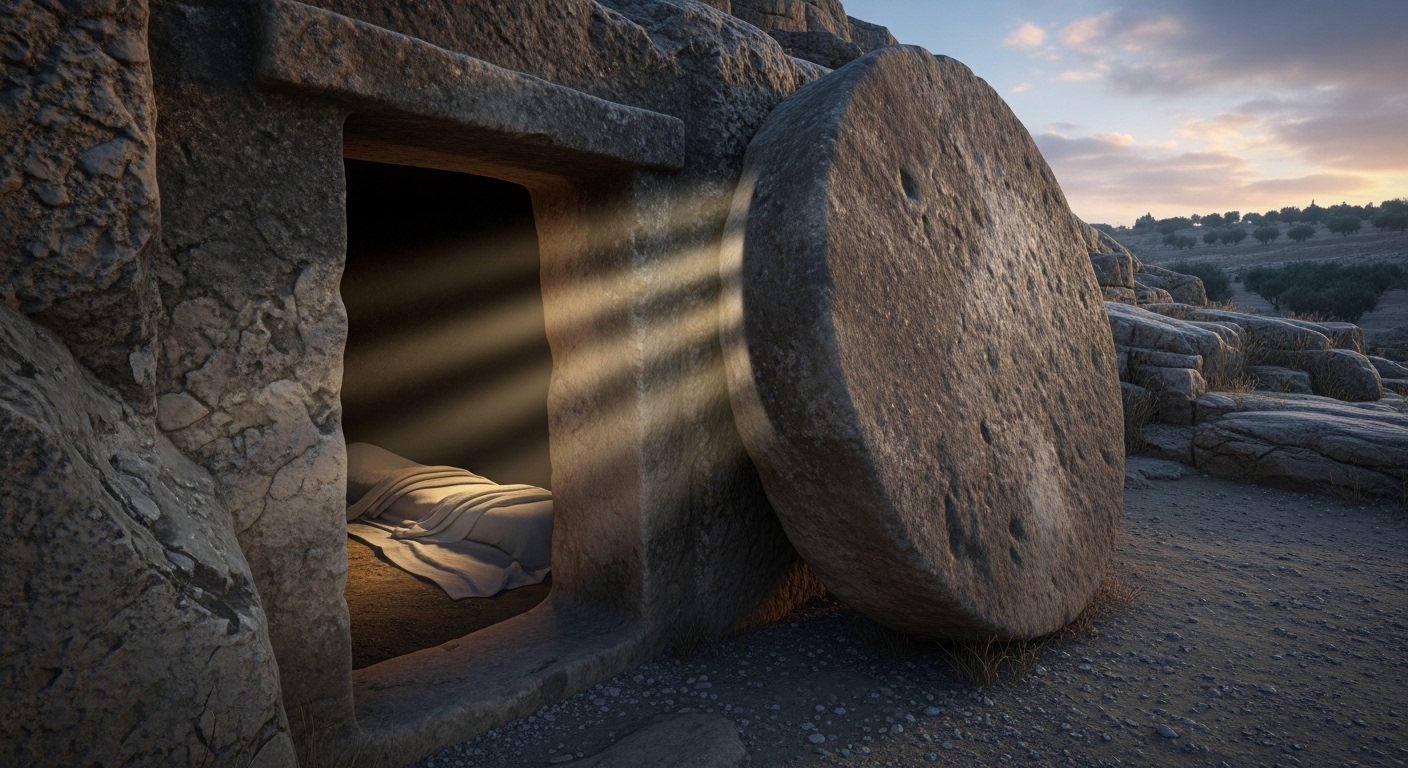
Context: According to Matthew, when the women arrived at the tomb, the stone was rolled away and an angel announced Jesus’ resurrection. The empty tomb is reported in all four Gospels, and each account highlights that Jesus’ followers expected to find a corpse—so they had strong motivation to be candid about whether the tomb was empty.
What the empty tomb means: The empty tomb is a factual claim that Jesus’ body was missing. You can look at a few direct implications: if the tomb is empty, it eliminates explanations that require Jesus’ body to be elsewhere (unless stolen or moved). It pushes the question to what happened to the body. Importantly, the Gospel narratives claim that Jewish and Roman authorities could have ended the story by producing Jesus’ body—but they did not.
Why this matters historically: Historians treat an empty tomb claim seriously because it is a specific, testable claim anchored in a known place. You can ask: who reported it? Who could have contradicted it? The Gospels claim that opponents had both motive and opportunity to show a corpse if one existed. Their failure to do so pushes you to the alternatives the early church offered.
Application: When you consider the resurrection, start with the simplest observable claim: the tomb was empty. That is a historical claim that needs an explanation; the resurrection is one explanation that fits the breadth of surrounding testimony and behavior.
2. Eyewitness Testimonies
Verse: 1 Corinthians 15:5–6
“He appeared to Cephas, and then to the Twelve… He appeared to more than five hundred…”
Context: Paul lists witnesses to Jesus’ resurrection, naming Peter (Cephas), the apostles, and more than five hundred others. He writes this within a generation of the events. When testimony is that early, it’s harder to explain away as legend shaped over centuries.
Why multiple attestations matter: You’ll notice that multiple, independent lines of testimony strengthen the plausibility of an event. The Gospels were composed from different perspectives, and Paul’s early statement corroborates their central claim: Jesus was seen alive by many. Some of these people were still alive when Paul wrote, so the claim was vulnerable to verification or refutation.
Consistency and diversity: Eyewitness reports come from different locations, personalities, and contexts. While details vary (as eyewitness accounts often do), the core claim—Jesus was seen alive after death—remains consistent. That pattern is what you would expect if many genuinely believed they had seen Jesus alive.
Application: You don’t need to accept every detail in the narratives to value their cumulative force. The sheer number of eyewitness claims, some public and some documented early, makes the resurrection a claim grounded in social testimony rather than private mystical experience.
3. The Transformation of the Disciples
Verse: Acts 4:13
“They saw the courage of Peter and John… and realized that they had been with Jesus.”
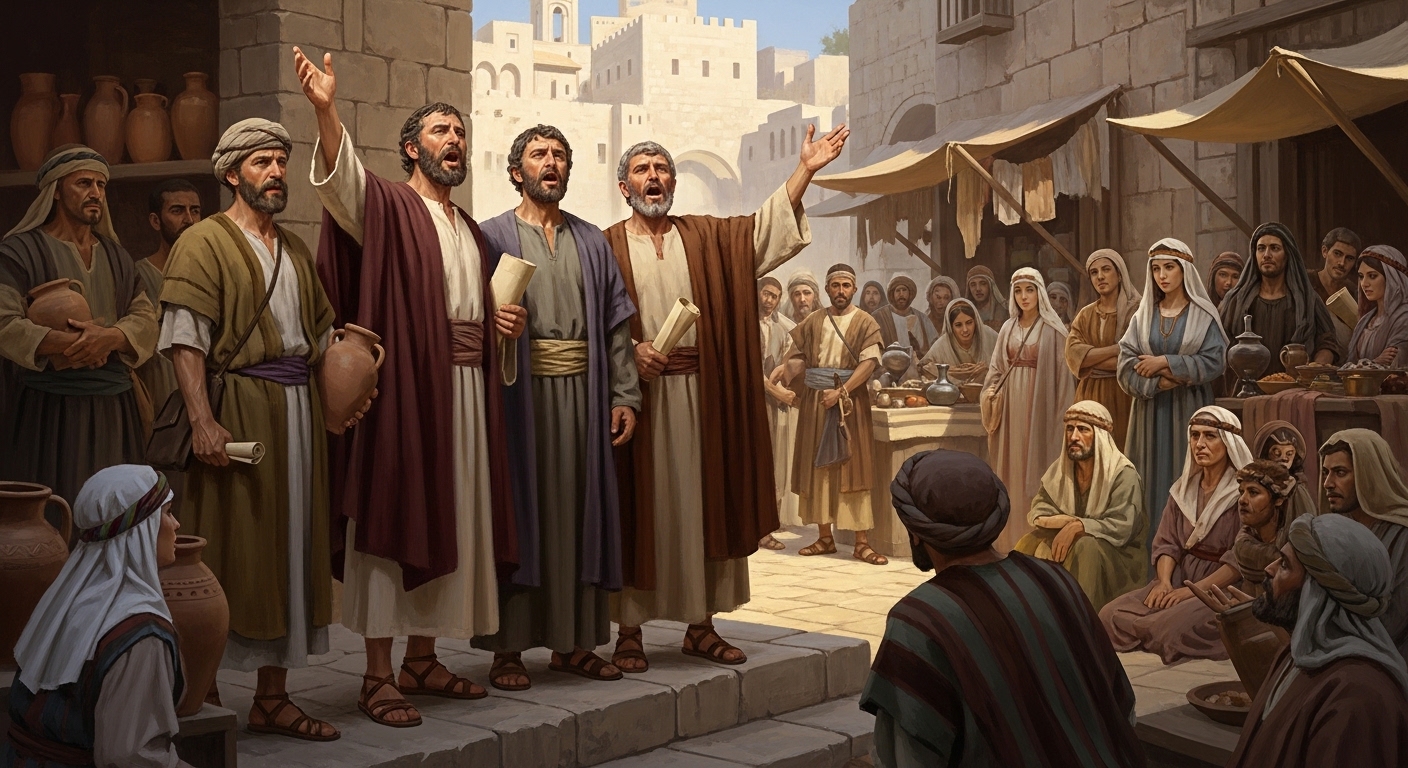
Context: Before the resurrection, the disciples were frightened and in hiding. Afterward, they preached boldly in public squares, faced persecution, and many were willing to die rather than recant. This dramatic turnaround is a sociological and historical marker that something real and powerful occurred to change them.
What the change indicates: When people are transformed in ways that involve sustained risk and personal sacrifice, historians often infer they genuinely believed in the cause that motivated them. You can weigh alternative explanations: mass delusion, deliberate fraud, or inspirational leadership. Each of these fits badly with the facts: the disciples were not seeking power or wealth; their actions led to suffering, not reward.
The psychology of sacrifice: People don’t commonly endure torture and execution for what they know is a lie. The willingness of so many early followers to suffer and die suggests they truly believed they had experienced the risen Jesus.
Application: If you sometimes doubt whether faith is grounded in reality, look at the disciples’ lives. Their radical change is evidence that what they proclaimed was, to them, real. That has bearing on how you evaluate other ancient claims.
4. The Rise of the Early Church
Verse: Acts 2:32
“God has raised this Jesus to life, and we are all witnesses of it.”
Context: Peter’s sermon at Pentecost in Acts marks a rapid spread of the Christian movement in Jerusalem and beyond. The resurrection was not a hidden belief among a small sect; it became the public proclamation at the heart of the new movement. The early church grew in the city where Jesus had been crucified—among people who could have checked the facts.
Why growth is evidential: When a movement grows rapidly because of a single claim, historians look to that claim for explanatory power. The resurrection provided a compelling reason for people to follow Jesus as Lord rather than simply as a teacher. That the message endured amid persecution gives you reason to think its core affirmation was not a fabricated myth.
Social and cultural stakes: You should notice how risky it was to proclaim a crucified criminal as the vindicated Messiah in a Jewish and Roman environment. Yet the early believers did so openly. Their conviction suggests the resurrection offered a compelling, experienced reality for them.
Application: When you consider whether Christianity’s claims are baseless, remember that a movement built on a central historical claim took root in hostile contexts and spread precisely because people found the evidence and message convincing.
5. Fulfilled Prophecy
Verse: Psalm 16:10
“You will not abandon me to the realm of the dead…”
Context: The early church read Old Testament passages as foreshadowing the resurrection. Psalm 16:10 is one such verse quoted in Acts (see Peter’s sermon) and by Paul to argue that the Messiah would not be left in the grave.
How prophecy interacts with history: You can approach prophecy two ways: either as texts reinterpreted after events, or as authentic predictions fulfilled by later events. The early Christian claim is that passages like Psalm 16 pointed ahead to the Messiah’s vindication. Whether you treat these passages as predictive prophecy or as theological reinterpretation, the early church saw a continuity between Scripture and what they experienced in Jesus.
Why this matters for you: If you trust that Scripture contains coherent themes and promises about God’s redemption, seeing the resurrection through the lens of fulfilled prophecy strengthens the sense that this event fits a larger divine plan rather than being a random anomaly.
Application: You don’t have to start from the assumption that prophecy proves everything. But prophecy provides a theological and literary framework that early Christians used to interpret the resurrection as fulfillment, which adds depth to the historical claim.
Addressing Common Skeptical Theories
You likely want to know how alternative explanations stack up. The main skepticism falls into a few categories: the wrong tomb theory, the stolen-body theory, hallucination theories, and legendary development. Let’s take each one briefly and see how it measures up to what you know.
Wrong Tomb Theory
Some suggest the women went to the wrong tomb and reported the wrong person missing. That theory has problems. The Gospel accounts emphasize the women knew where Jesus was buried. The tomb’s location was known to multiple people, and the grave clothes and evidence inside point to a deliberate burial, not confusion.
Whether you consider the available testimony, the wrong tomb theory requires more assumptions than the empty-tomb claim itself. It also fails to account for post-resurrection appearances reported in public settings.
Stolen-Body Theory
Perhaps the disciples stole the body to invent the resurrection. This theory must explain why the disciples would risk martyrdom for a deliberate lie and why they would not simply produce the body later if exposed. It also doesn’t account well for the presence of women as first witnesses in the Gospels—women’s testimony was culturally devalued, so inventors of a deception would be unlikely to base their primary claim on women’s testimony.
Moreover, the stolen-body theory doesn’t explain the variety of early appearances described, especially those that involve the disciples’ eating with Jesus and touching him, which point to a bodily resurrection, not merely a rumor.
Hallucination Theories
Hallucinations can’t account for group appearances reliably, such as the report of Jesus appearing to more than five hundred at one time. They also fail to explain the empty tomb. Hallucinations are subjective experiences and typically occur under specific psychological conditions, not as sustained, public encounters that result in coordinated behavior over decades.
Legendary Development
The idea that the resurrection is a legend that grew over generations is weakened by the early creed in 1 Corinthians 15:3–4, and by the proximity of eyewitnesses who could have refuted the story. Many critical scholars acknowledge that while traditions can grow, the earliest layer of belief in Jesus’ resurrection is too early and too closely tied to named eyewitnesses to be dismissed as late legend.
Application: When you evaluate skeptical theories, notice how each requires stacking multiple assumptions to explain away the basic facts: the empty tomb, public appearances, and the disciples’ transformation. The resurrection hypothesis offers a simpler and more coherent explanation of the data.

Historical Context and Corroborating Details
Understanding burial practices, Roman crucifixion, and first-century Jewish expectations helps you evaluate the claims more accurately. Crucifixion victims were often exposed or buried hurriedly; Jesus’ burial in a wealthy man’s tomb (Joseph of Arimathea) and the detailed burial customs indicate a verifiable context.
Roman and Jewish authorities had both motive and opportunity to disprove the resurrection if they could have. The absence of a counterproof—such as producing a body—means you should weigh the early Christian testimony seriously. You also have non-Christian sources (brief references in Tacitus, Josephus, and others) that attest to Jesus’ historical existence and the early Christian proclamation about his resurrection, which show the claim was known beyond Christian circles.
Application: When you place the resurrection claim into its historical context, you see that it’s not a myth floating free of external anchors. It’s embedded in a web of social, legal, and cultural realities that make the claim testable against available evidence.
The Conversion of Paul
Before Paul became an apostle, he actively persecuted Christians. His dramatic conversion—Paul claims to have seen the risen Jesus on the road to Damascus—is a central piece of evidence. Whatever you make of Paul’s experience, it’s historically significant because he went from persecutor to proclaimer, risking his life in a way that aligns with the pattern of transformed lives seen elsewhere.
Paul’s letters are among the earliest Christian documents. His early affirmation of the resurrection in 1 Corinthians 15:3–8 ties him into the same stream of testimony as the other apostles. His willingness to suffer for the faith further corroborates the sincerity of early belief.
Application: You can reasonably conclude that Paul’s conversion is a strong piece of historical data indicating that something compelling happened which convinced him and many others that Jesus had been raised.
The Resurrection as the Best Explanation
When historians evaluate competing hypotheses, they consider explanatory scope, explanatory power, and plausibility. The hypothesis “Jesus physically rose from the dead” has considerable explanatory scope: it accounts for the empty tomb, consistent early testimony, the disciples’ transformation, the rapid growth of the church, and the early preaching that treated Jesus as risen. Other hypotheses—stolen body, hallucination, conspiracy—each explain only fragments and require many ancillary assumptions.
You don’t need to accept supernatural claims lightly. But if the best available historical explanation of the combined data is that Jesus rose and appeared to many, you’re justified in treating the resurrection as a historically credible event that has profound theological implications.
Application: Making an honest, reasoned decision about the resurrection requires weighing which explanation makes the most sense of the whole set of facts. For many, the resurrection is that best-fit explanation.
What the Resurrection Means for You
Verse: John 20:29
Then Jesus told him, “Because you have seen me, you have believed; blessed are those who have not seen and yet have believed.”
Context: Jesus’ appearances brought conviction to those who saw him, and he acknowledged the blessing for those who believe without seeing. The resurrection changes how you see death, suffering, and the meaning of Jesus’ life and mission. It’s not merely proof of divine power; it’s a vindication of Jesus’ claims and an invitation to a restored relationship with God.
Practical implications: If Jesus truly rose, then sin, death, and injustice do not have the final word. The resurrection invites you into new life, moral transformation, and a hope that extends beyond immediate circumstances. It also grounds Christian hope in a historical event, not only in personal feelings.
Application: When you wrestle with doubt or fear, remember that the resurrection is meant to produce courage, hope, and a reorientation of your life toward God’s purposes. It’s not just ancient history—it’s a living foundation for your faith.
Reflection Questions
Ask yourself:
- Which piece of evidence for the resurrection resonates with you most?
- Are your doubts intellectual, emotional, or both?
- How would your life change if you truly took the resurrection as a real, historical event?
Engaging with these questions helps you move from abstract assent to personal conviction. Faith and reason are friends when you honestly test the evidence and allow it to shape your life.
 Internal Resources to Explore
To understand the resurrection within the full Holy Week journey:
Main Hub
Related Articles
- What Happened on Good Friday?
- Holy Saturday (Jesus in the Tomb – Matthew 27:57–66)
- Why Jesus Had to Suffer and Die
- The Theology of the Cross: Why It Matters
- Resurrection Practices: Living in Easter Hope
Conclusion
The resurrection of Jesus Christ is not merely a religious sentiment. It’s a claim grounded in a cluster of historical indicators: an empty tomb, multiple early testimonies, the dramatic change in the disciples, the rise of a movement in hostile contexts, and early appeals to prophetic fulfillment. While alternative explanations exist, they struggle to account for the full range of facts without adding extraordinary assumptions.
If you’re seeking a reasoned faith, giving careful attention to the evidence for the resurrection is a good place to start. The claim that Jesus is risen provides not only historical hope but also a life-transforming invitation.
Closing Prayers
Lord, Thank You for the truth of the resurrection and the evidence that strengthens my faith. Help me to trust You more deeply and live boldly in the hope You give. In Jesus’ name, Amen.
Lord, Thank You for the power of the resurrection and the hope it brings. Help me live in the new life You have given me. Fill my heart with faith, joy, and purpose each day. In Jesus’ name, Amen.
Sponsored recommendation

Acknowledgment: All Bible verses referenced in this article were accessed via Bible Gateway (or Bible Hub).
“Want to explore more? Check out our latest post on Why Jesus? and discover the life-changing truth of the Gospel!”