

Introduction
Holy Saturday is the quietest—and often most overlooked—day of Holy Week.
Jesus has been crucified.
His body lies in the tomb.
The disciples are grieving, confused, and waiting.
It is a day of silence, uncertainty, and hidden hope.
But even in the stillness, God is still at work.
This guide will help you:
- Understand what happened on Holy Saturday
- Discover the meaning of this waiting season
- Apply its truth to your daily life
🪦 The Key Bible Passage
Verse: Matthew 27:59–60
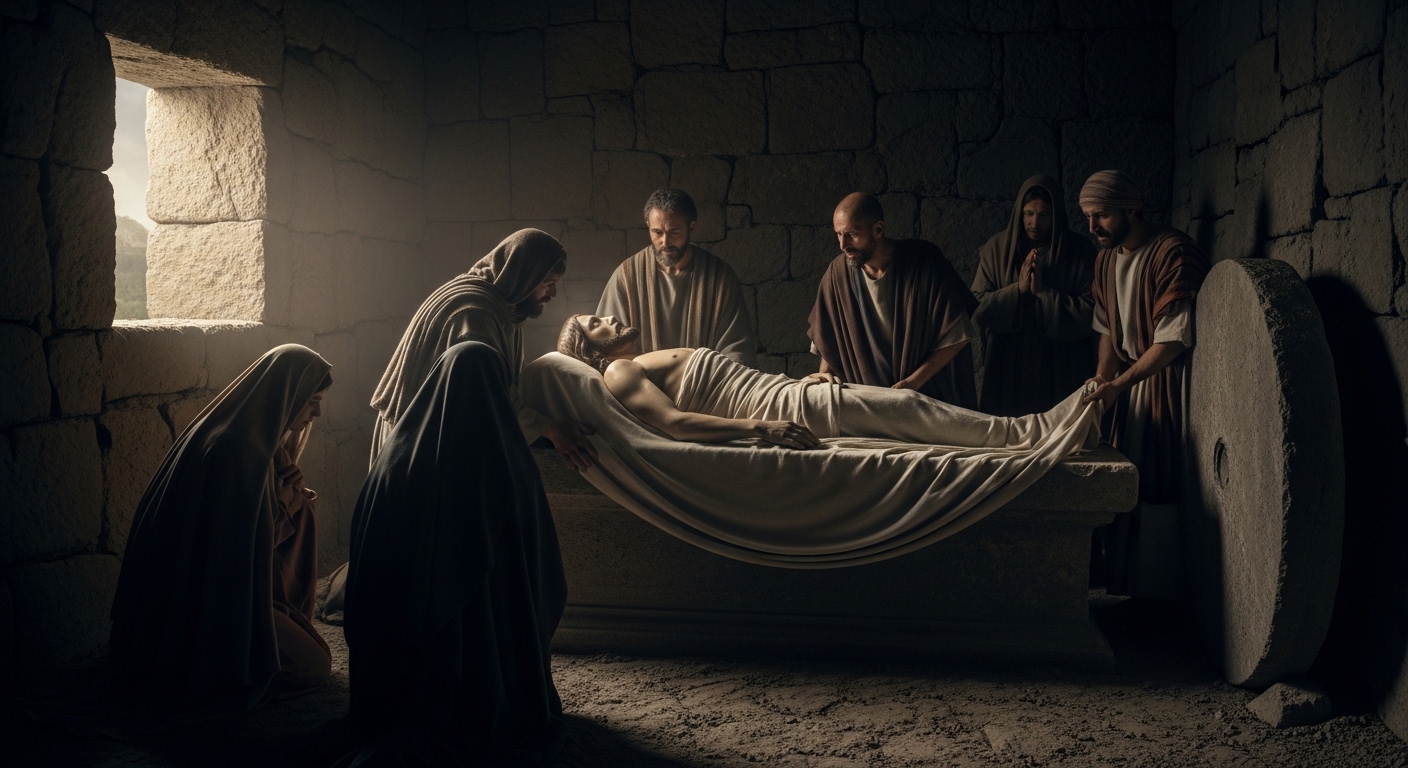
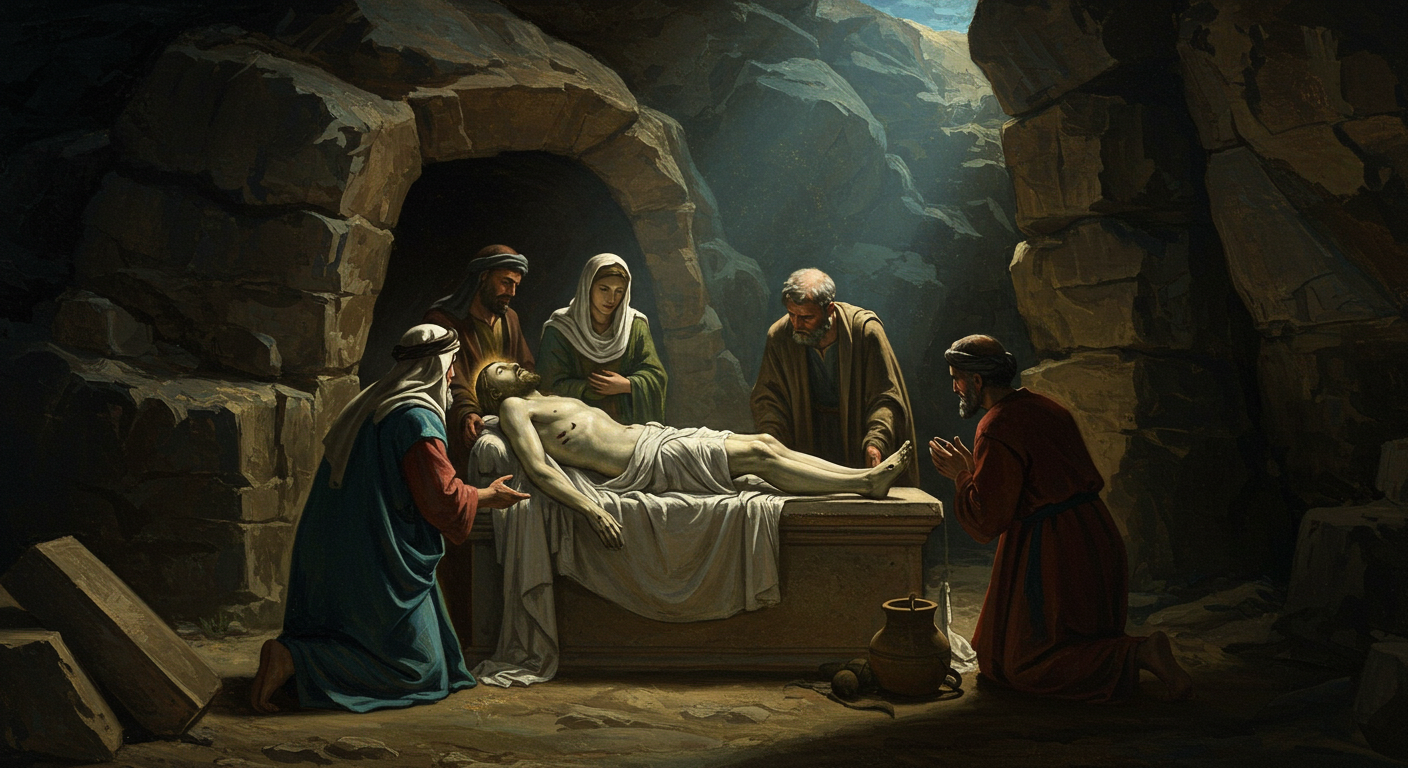
“Joseph took the body, wrapped it in a clean linen cloth, and placed it in his own new tomb…”
Context:
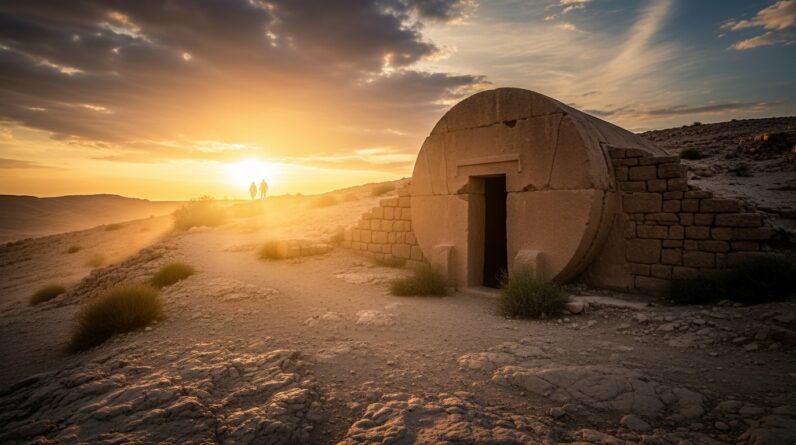
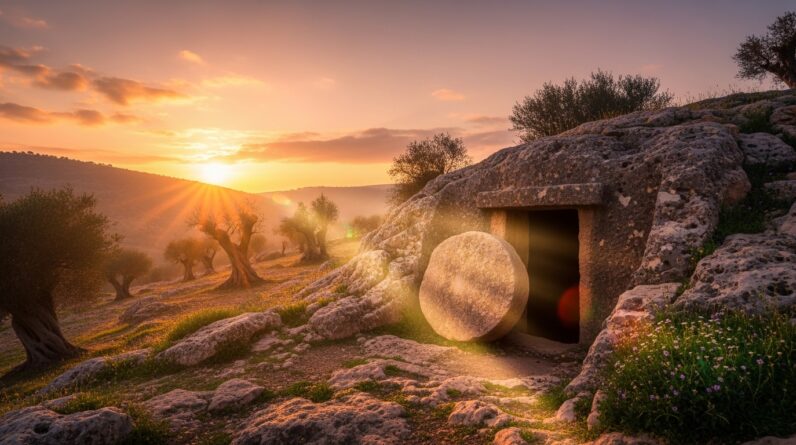
After Jesus dies on the cross, Joseph of Arimathea requests His body and places it in a tomb. A large stone is rolled over the entrance, and guards are posted to secure it.

Introduction
Holy Saturday is a day marked by a profound pause. It represents the time when Jesus lay in the tomb, a mystery wrapped in quiet anticipation. Why is this day so important? What can it teach you about faith, patience, and the space between despair and hope? Let’s explore these questions and more as you reflect on the story of Holy Saturday.
What Happened on Holy Saturday?
Holy Saturday, part of the Easter Triduum, is the day after Jesus’ crucifixion. It’s a moment of waiting and uncertainty. For the disciples, it was a day filled with confusion and grief. You can feel the weight of those emotions when you read Matthew 27:57–66, which describes the events that unfold after Jesus’s death.
Matthew 27:57–66 (NIV)
“57 As evening approached, there came a rich man from Arimathea, named Joseph, who had himself become a disciple of Jesus. 58 Going to Pilate, he asked for Jesus’ body, and Pilate ordered that it be given to him. 59 Joseph took the body, wrapped it in a clean linen cloth, 60 and placed it in his new tomb that he had cut out of the rock. He rolled a big stone in front of the entrance to the tomb and went away. 61 Mary Magdalene and the other Mary were sitting there opposite the tomb. 62 The next day, the one after Preparation Day, the chief priests and the Pharisees went to Pilate. 63 ‘Sir,’ they said, ‘we remember that while he was still alive that deceiver said, “After three days I will rise again.” 64 So give the order for the tomb to be made secure until the third day. Otherwise, his disciples may come and steal the body and tell the people that he has been raised from the dead. This last deception will be worse than the first.’ 65 ‘Take a guard,’ Pilate answered. ‘Go, make the tomb as secure as you know how.’ 66 So they went and made the tomb secure by putting a seal on the stone and posting the guard.”
The Role of Joseph of Arimathea
Joseph of Arimathea plays a critical role on Holy Saturday. This wealthy disciple, who had previously kept his faith private, steps forward to honor Jesus in death by providing a tomb. Joseph’s actions remind you that faith often calls for courage, especially in moments of uncertainty and fear.
The Courage to Act
When you consider Joseph’s bravery, it’s a powerful reminder of the need to take inspired action, even when the outcomes are unknown. By doing so, Joseph respects Jewish burial customs while fulfilling prophecies. As you reflect on your own life, where might you need to show this kind of courage?
Mary Magdalene and the Other Mary
Alongside Joseph, Mary Magdalene and the other Mary hold vigil at the tomb. Their presence during such a painful time is a testament to their unwavering loyalty and love for Jesus.
The Power of Endurance
Endurance is seen through the women who stayed while others fled in fear. This example invites you to consider your endurance in trying times. They choose to stay in that moment, to grieve and hold space for what’s to come, embodying faith through their presence.
The Chief Priests and Pharisees’ Anxiety
Amidst these personal acts of devotion, the narrative shifts to the chief priests and Pharisees, who request a guard at the tomb. Their actions stem from a place of fear and uncertainty, yet they inadvertently set the stage for one of the most compelling elements of the resurrection story—the empty tomb.
Fear of the Unknown
The religious leaders’ decision to secure the tomb underscores a fear of losing control and the unknown, an emotion you may often relate to. In attempting to maintain control, they inadvertently affirm the possibility of the miraculous, paving the way for a divine surprise.
The Symbolism of the Tomb
The tomb itself holds significant symbolic meaning. Often associated with darkness and death, it also becomes a womb for resurrection—a place of new beginnings. For you, this duality illustrates the complex nature of faith, where endings are frequently just preludes to new beginnings.
From Death to Life
Holy Saturday reflects the transformation from death to life. This quiet middle space is a bridge, reinforcing that periods of waiting can be ripe with potential, a field where new beginnings are sown.
Waiting and the Gift of Silence
In your fast-paced world, waiting is often uncomfortable. Yet, Holy Saturday offers a moment to pause and embrace silence. In this waiting, you may find profound peace and a deeper connection to your faith.
Embracing Silence
Meditate on the value of silence. It is in this silence that you might hear the whispers of hope and assurance. What if you allowed yourself to be fully present, to listen and wait for what is being birthed in the quiet?
Reflecting on Loss and Hope
Holy Saturday is uniquely poised between the heartbreak of Good Friday and the celebration of Easter Sunday. It invites you to sit with grief without rushing toward resolution. It allows you to recognize the coexistence of sorrow and hope.
The Interplay of Grief and Hope
How can this interplay between grief and hope be relevant in your life? Reflect on moments when you have experienced the simultaneous presence of these emotions, allowing them to enrich your spiritual journey.
Lessons for Today
What does Holy Saturday have to teach you about the complexities of faith, endurance, and new beginnings? This day compels you to explore these themes more deeply within your life.
🧭 Simple Reflection
Ask yourself:
- How do I respond when God feels silent?
- Am I trusting Him in seasons of waiting?
- Can I hold on to hope even in uncertainty?
 Internal Resources to Explore
 Internal Resources to Explore
To understand Holy Saturday within the full Holy Week journey:
Main Hub
Related Articles
- What Happened on Good Friday?
- Why Jesus Had to Suffer and Die
- The Theology of the Cross: Why It Matters
- Resurrection Practices: Living in Easter Hope
- The Meaning of the Resurrection of Jesus Christ
Next Step in Holy Week Journey:
The Resurrection of Jesus Christ (Matthew 28:1–10)
Conclusion
Holy Saturday teaches us a powerful truth:
God is still working—even in the silence.
It is the day between:
- Suffering and victory
- Death and resurrection
- Waiting and fulfillment
Don’t lose hope in the waiting—Sunday is coming.
🙏 Closing Prayer
Lord,
In seasons of silence and waiting, help me trust You.
Strengthen my faith when I cannot see what You are doing.
Remind me that You are always at work, even in the stillness.
In Jesus’ name, Amen.
Sponsored recommendation

Acknowledgment: All Bible verses referenced in this article were accessed via Bible Gateway (or Bible Hub).
“Want to explore more? Check out our latest post on Why Jesus? and discover the life-changing truth of the Gospel!”