



You may have been asked to lead a Bible discussion at church, or you may know a few people who want to grow in faith together. The opportunity is encouraging, but it can also feel intimidating. What should you prepare? How do you help everyone participate? What happens when the conversation goes in an unexpected direction?
Leading a small discipleship group begins with a clear purpose: help people know Jesus, understand His Word, and respond faithfully together. You can prepare thoughtfully while depending on God for wisdom and growth. You will also learn as you lead.
This guide offers eight practical steps, a sample 60-minute meeting, and simple ways to respond to common group challenges. It is designed for everyday Christians and beginning lay leaders who want to serve their church community with care.
What Is a Small Discipleship Group?
A small discipleship group is a gathering where people learn to follow Jesus together through Scripture, prayer, encouragement, and practical obedience. Its purpose includes understanding biblical truth and helping one another live in response to it.
In Matthew 28:18–20, Jesus commissions His followers to make disciples and teach them to obey His commands. Acts 2:42–47 describes the early believers learning, sharing life, and praying together. These passages give us a foundation for Christian growth in community.
They do not prescribe a particular group size, meeting length, or modern curriculum. Those are practical choices to make according to the people you serve and your church’s guidance. A group of four to eight adults can be a manageable beginning when you want room for discussion, but another size may suit your setting better.
The group should strengthen people’s connection with the wider church. The Power of Belonging to a Church Family explains why that broader relationship matters.
1. Give Your Small Discipleship Group a Clear Purpose
Before choosing lessons, decide whom the group will serve and what you hope to help them learn. Are you welcoming new believers, supporting Christians who want more consistent Bible reading, or helping an existing church group apply Scripture together?
Keep the initial purpose simple. For example: “Over the next month, we will read a short passage each week, understand its main teaching, and discuss a practical response.” This tells people what to expect and helps you choose suitable material.
If you are starting a group within a church, speak with a pastor or ministry leader. Ask about approved resources, leadership expectations, and how your group can support the church’s discipleship work. Seek guidance about your readiness to lead, especially if you are new to teaching Scripture.
Keep the gospel central. Explain that salvation is God’s gift through faith in Jesus; attending meetings or completing assignments does not earn it. See Ephesians 2:8–10. Christian obedience grows from our relationship with Christ and what He has done for us.
2. Pray for the People and Your Own Leadership
Pray before you prepare, before you meet, and as you continue caring for the group. Ask for understanding, patience, and love. Bring the members’ needs to God and ask Him to help you respond wisely.
Jesus’ teaching about the vine and branches in John 15:1–8 reminds us that fruitful Christian life depends on Him. Good planning matters, and our preparation belongs within that dependence.
The Holy Spirit helps believers grow in understanding and Christlike character. The Holy Spirit Explained offers background on His work. As a leader, remain teachable and willing to confess your own mistakes.
Avoid measuring your leadership only by attendance or how smoothly a meeting runs. A small gathering with thoughtful discussion and sincere prayer can be meaningful even when progress is quiet.
3. Prepare a Manageable Passage and a Realistic Meeting Plan
Choose a passage you can explain responsibly within the time available. Read it more than once, notice the surrounding context, and identify its main teaching. Prepare explanations for unfamiliar words and consult a reliable study resource when necessary.
Write down a few discussion questions that help the group observe the text, understand it, and respond. Also decide which points need a clear explanation from you. Preparation helps you guide the conversation without needing to speak throughout the whole meeting.
If members are learning to read Scripture, How to Understand the Bible When You Read It can support them. Your church may also recommend suitable materials; our Bible Study Resources Hub provides another starting point for finding studies.
Plan the practical details too: the meeting location, start and finish times, seating, reading materials, and who will welcome people. Consider whether the room is accessible, whether the print is readable, and whether participants can hear the discussion comfortably.
Send clear details beforehand. If there is a reading assignment, keep it manageable and explain whether a person can still participate without completing it. Welcome people into learning rather than making the first meeting feel like an examination.
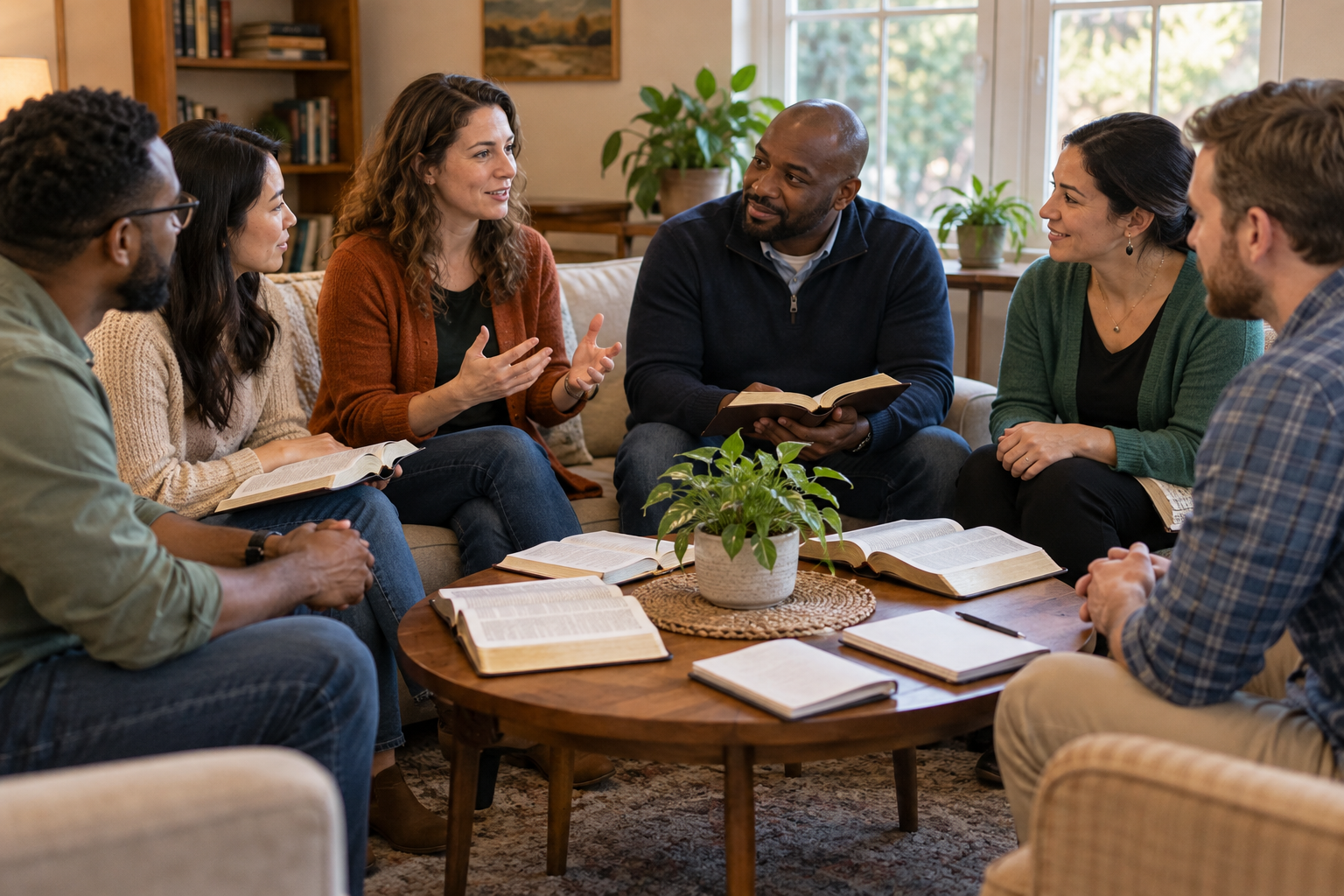
4. Welcome People and Agree on a Respectful Group Culture
Greet members personally and explain the purpose of the gathering. At the first meeting, introduce the format and discuss a few simple expectations: listen without interrupting, share the conversation, ask honest questions, and treat one another with respect.
Allow people to decline a personal question or choose not to speak. Participation can begin with careful listening, and confidence may develop gradually. Be particularly thoughtful with newcomers who are unfamiliar with Christian vocabulary or prayer in a group.
Agree that personal information should be handled carefully. Ask members not to pass on another person’s story or prayer request without permission. Be honest about confidentiality limits when someone may be at risk of harm, and follow your church’s guidance when a situation needs further help.
You can build trust through ordinary hospitality and dependable care. 10 Practical Ways to Build Fellowship With Other Christians offers ideas for strengthening those relationships beyond the study itself.
Watch: Leading a Small Group Discussion
This optional video from PursueGOD Training offers practical ideas for making room for people to participate. As you watch, consider one habit that could help you guide a more balanced discussion. Combine participation with clear explanation of Scripture whenever the group needs it.
▶️ Watch “How to Lead a Small Group Discussion” by PursueGOD Training on YouTube.
5. Guide the Discussion With Clear Teaching and Balanced Participation
Read the passage together and give its essential background. Ask one clear question at a time, then pause long enough for people to consider it. When someone responds, ask how the passage supports their answer and invite another contribution when useful.
Keep returning to the text. A conversation can be warm and interesting while drifting away from the lesson. You can say, “That is worth discussing. For now, let’s look again at the point this passage makes.” Save a separate question for another meeting or a private conversation when appropriate.
If one person regularly takes most of the time, respond with appreciation and a clear invitation: “Thank you for sharing that. Let’s hear from someone who has not spoken yet.” Speak privately afterward if the pattern continues.
For quieter members, offer an invitation they can decline: “Would you like to add anything, or would you prefer to listen for now?” You can also give everyone a short period to write an observation before discussing it. Avoid putting someone on the spot to prove they are engaged.
Clear teaching remains part of leadership. When an answer misunderstands the passage, explain the relevant context and show the group how you reached your understanding. The conversation should help people learn Scripture faithfully, with truth and kindness together.

6. Help the Group Choose a Faithful Response
Once the main teaching is clear, ask how it relates to ordinary life. Depending on the passage, the response may involve a change in understanding, repentance, gratitude, prayer, reconciliation, or practical service.
Make room for different circumstances. A parent, a student, and a person working long shifts may respond to the same teaching in different ways. Encourage a realistic step that grows from the passage rather than requiring everyone to make the same commitment.
For example, a discussion about gracious speech might lead one member to apologize for a harsh conversation and another to listen more patiently at home. At the next meeting, ask what they learned through that response. Living in Obedience Through Everyday Choices provides further examples of this connection.
Avoid treating shared commitments as public scores of spiritual worth. Encourage honesty and repentance when someone struggles. God’s grace gives us reason to return, learn, and continue following Christ.
7. Pray Together and Follow Up With Care
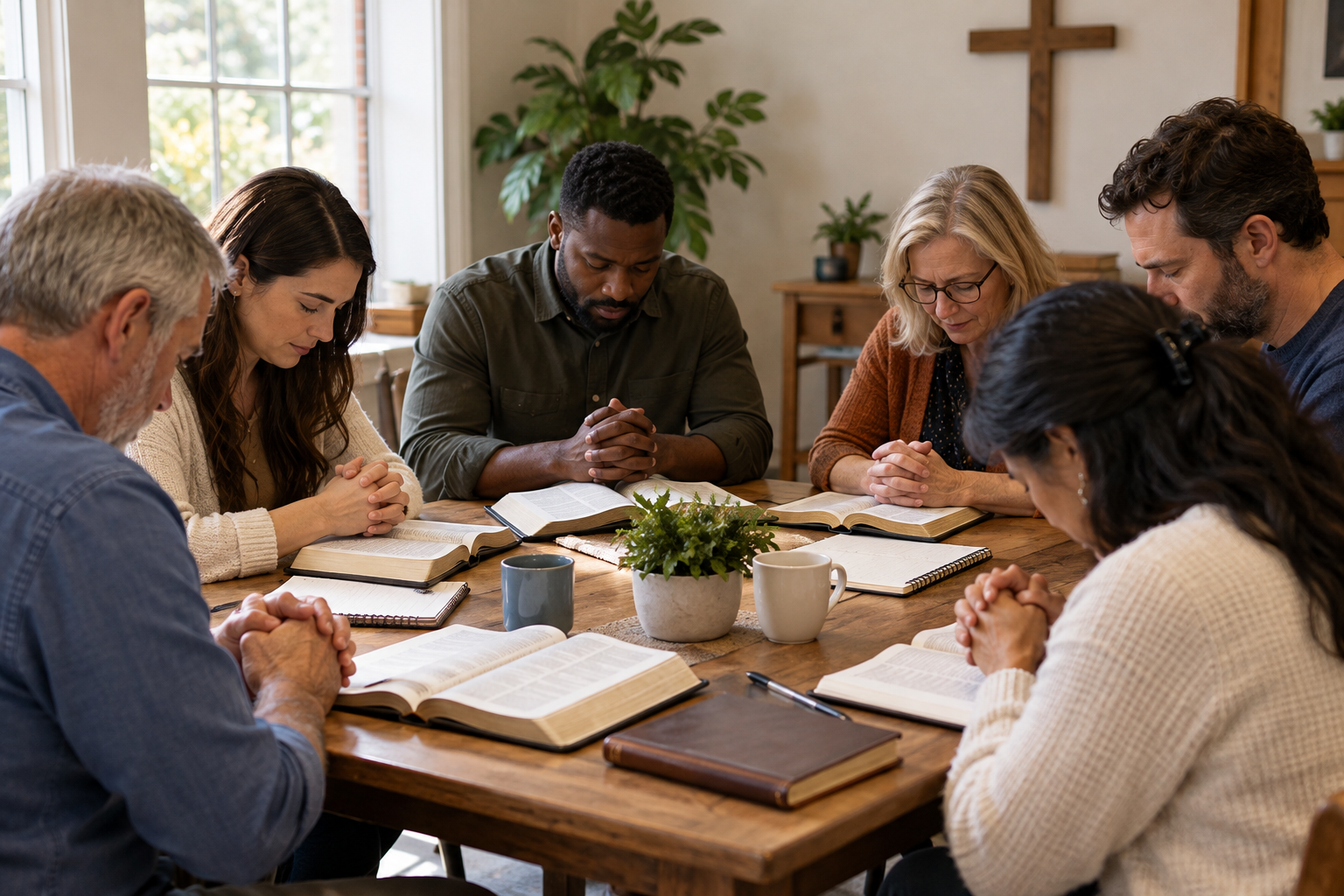
Leave time for prayer before the meeting ends. Ask what members would like prayer for, and let them decide how much detail to share. People should not feel required to reveal private circumstances to receive prayer.
Give new believers a simple example of praying in ordinary words. Invite participation without making it compulsory. How to Pray as a New Believer can help someone who feels unsure about beginning.
Between meetings, follow up in a way that fits the person’s preferences. Ask permission before sharing a prayer request in a group message. If someone misses a meeting, check in with kindness rather than assuming they are careless or spiritually weak.
Some needs deserve a separate conversation and wider support. How to Encourage Someone Struggling With Their Faith offers a starting point for gentle encouragement. Seek pastoral help when the concern is beyond your knowledge or role.
8. Share Responsibilities and Help Others Develop
Invite suitable members to help with welcoming, reading a passage, keeping time, or leading a short prayer. Explain the task and provide support. Small responsibilities can help people participate and build confidence.
As someone grows in understanding and character, consider preparing a lesson together or letting them lead part of a discussion with guidance. Follow your church’s expectations for teaching and leadership, and choose responsibilities according to readiness.
2 Timothy 2:2 describes faithful teaching being entrusted to people able to teach others. Developing leaders involves patience, sound understanding, and character. Someone’s confidence in speaking is only one part of that picture.
Look for humility, care for others, willingness to learn, and reliability. The 9 Fruits of the Spirit Explained can help the group discuss the character God develops in believers.
A Simple 60-Minute Discipleship Group Meeting
This suggested timetable gives you a starting point. Adjust it for your setting and agree on the finish time with your members.
| Time | Activity | Leader’s aim |
|---|---|---|
| 10 minutes | Welcome and brief check-in | Help people settle and connect without requiring private disclosures |
| 5 minutes | Opening prayer | Ask God for understanding and help |
| 5 minutes | Read the selected passage | Make sure everyone can follow the text |
| 10 minutes | Explain the setting and main teaching | Clarify essential background and unfamiliar words |
| 15 minutes | Guided discussion | Invite observations and questions with balanced participation |
| 10 minutes | Practical response | Help members consider a realistic response to the passage |
| 5 minutes | Closing prayer and next-meeting details | Bring needs to God and confirm what comes next |
You can shorten the opening conversation when the passage needs more time. If someone raises an important personal concern near the end, offer appropriate follow-up rather than extending the whole group’s meeting indefinitely.
A First-Meeting Example: Growing Together in Christ
For a first gathering, consider Colossians 3:12–17. Explain that Paul is addressing believers about the life that follows their belonging to Christ. Read the wider section when preparing so that the teaching remains connected with that foundation.
Ask the group to notice the qualities and actions Paul describes. Discuss how compassion, patience, forgiveness, love, peace, gratitude, and the message of Christ shape life together. Explain any point that is unfamiliar before moving to application.
Then ask which of these qualities would help your group learn well together. Someone may suggest listening patiently; another may notice the importance of forgiveness when misunderstandings happen. Use the passage to help establish the way you want to treat one another.
For an individual response, ask members to consider one relationship in which they need to show greater care or patience. Sharing should be voluntary. Pray for wisdom to respond, then revisit the learning at the next meeting without turning it into a public performance check.

Common Group Challenges and Simple Responses
| Situation | A helpful response |
|---|---|
| Nobody answers a question | Pause, rephrase it, or ask members to find one detail in the passage |
| One person dominates | Acknowledge their contribution, invite other voices, and discuss the pattern privately if needed |
| The discussion becomes argumentative | Slow the conversation, clarify the issue, and return to Scripture and respectful listening |
| A question is beyond your preparation | Write it down and seek a careful answer before the next meeting |
| A member misses several meetings | Check in kindly and ask whether the timing, responsibilities, or another concern is making attendance difficult |
| The group regularly runs late | Simplify the plan, choose fewer questions, and protect the agreed finish time |
If conflict becomes serious, seek help from an appropriate church leader. You can maintain a respectful discussion while recognizing that some situations need more support than the meeting itself can provide.
Review the First Few Meetings
After three or four gatherings, ask what is helping people learn and what could be improved. Consider whether the passage length, reading materials, meeting time, and discussion format suit the group.
Notice participation and understanding as well as attendance. Are members becoming more comfortable asking questions? Can they explain the main teaching? Are they finding realistic ways to respond and care for one another?
Make one or two useful adjustments rather than changing everything at once. Thank people for their contributions and keep the group’s purpose clear. Patient, steady leadership gives the group room to grow.
Frequently Asked Questions
Do I need to be a pastor to lead a small discipleship group?
Many churches welcome trained lay leaders. You should be grounded in the gospel, willing to prepare Scripture carefully, and accountable to your church’s leadership. Ask what preparation and support your church expects.
How often should the group meet?
A weekly gathering is a useful starting point, but choose a rhythm the members can sustain. Consistency, preparation, and care matter more than copying another group’s calendar.
Can someone who is exploring Christianity attend?
Yes, when the group is intended to welcome them. Explain the purpose, avoid assuming prior knowledge, and give them freedom to ask questions. Choose material suitable for understanding Jesus and the gospel.
Should everyone lead a lesson?
Responsibilities should match readiness and your church’s guidance. Members can participate through reading, prayer, welcoming, or practical care while they develop the understanding needed for teaching.
Reflection Questions
- What clear purpose will guide our first few meetings?
- Have I prepared the passage and considered the members’ needs?
- How will I make room for quieter voices and keep the discussion balanced?
- Who can provide guidance when a question or situation is beyond my role?
A Prayer for Small-Group Leadership
Father, thank You for the people You have brought into our lives. Help me serve them with humility, patience, and love. Give us understanding as we read Your Word and courage to respond faithfully. Teach us to depend on Your Spirit, listen to one another, and grow together in Christ. Guide our leaders and strengthen the fellowship of our church. Amen.
Final Encouragement
You can begin leading a small discipleship group with a clear purpose, a manageable passage, and thoughtful care for the people attending. Prepare well, pray sincerely, and welcome questions as you learn together.
Over time, those ordinary gatherings can become a place where people understand Scripture more clearly, encourage one another, and practice following Jesus in everyday life.
Continue Growing in Your Faith
- 🤝 The Power of Belonging to a Church Family
- 📖 How to Understand the Bible When You Read It
- 🙏 How to Pray as a New Believer
- 🕊️ The Holy Spirit Explained
- 🍇 The 9 Fruits of the Spirit Explained
Next Read: 10 Practical Ways to Build Fellowship With Other Christians.