


Noah’s Faith In Building The Ark – Obedience Against All Odds
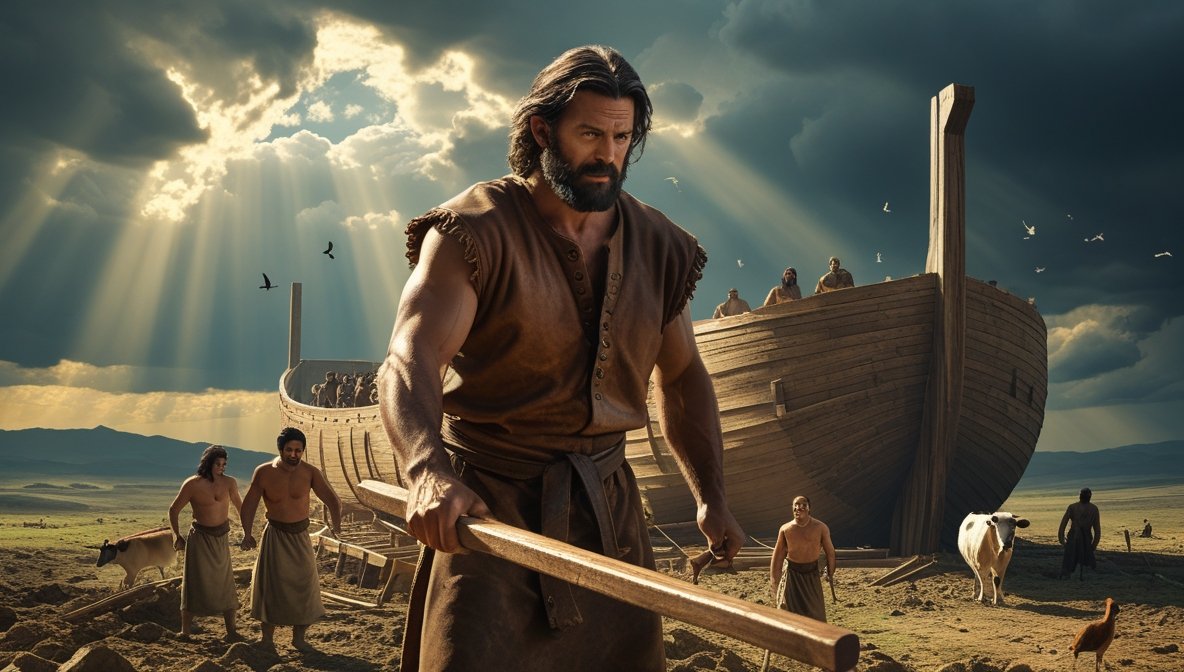
You’re standing at a crossroads in life—maybe you can barely see the path ahead. When you read the story of Noah, you see someone in a similar place. God speaks, and Noah responds. The story of Noah’s faith is not just an ancient narrative; it’s a model for how you live when God calls you to obey against all odds. The Bible sets the scene for this decision in a world gone wrong Genesis 6:5-8, and then it tells how God gave clear, counter-cultural instructions Genesis 6:13. Throughout this article, you’ll see how Noah’s obedience, exemplified each time Noah built the ark, becomes a mirror for your own faith journey.
Why this story still matters to you
You might think the flood story is just about history or a moral lesson for children. But it’s deeply practical: when God calls you to something costly and counterintuitive, how do you respond? The account shows the dimensions of faith—obedience, endurance, and trust in God’s promises. Hebrews highlights the heart of Noah’s faith, saying he acted by faith and became an heir of righteousness Hebrews 11:7. As you read, ask yourself: when God gives you a task that doesn’t make sense to the world, will you obey like Noah?
Sponsored recommendation

The Context: Humanity’s Condition and God’s Decision
The world around Noah was morally bankrupt. The text describes a society saturated with violence and corruption, where God’s grief leads to decisive action. You need to understand the context to see the weight of Noah’s obedience. Genesis explains the depth of human sin clearly in Genesis 6:5-8, and that reality is what makes God’s instructions so urgent and extraordinary.
The seriousness of God’s response
God doesn’t act hastily; the narrative shows deliberation followed by decisive action. He announces his intention to destroy human wickedness and give a fresh start. The command he gives Noah is both a judgment and a provision—a way of rescue. This combination of justice and mercy is central to how God works, and it matters because your obedience often comes at the intersection of divine judgment and divine grace.
The Call to Build: Clear Instructions from God
When God told Noah what to do, the instructions were specific, practical, and detailed. You’re not left guessing. God gives the dimensions of the ark, the materials, the animals to bring, and the timetable Genesis 6:14-16. That level of clarity is both comforting and demanding: following God often requires attention to detail as much as it does devotion.
Hearing God in a noisy world
You might be living in a season where it’s hard to hear God’s voice—there’s so much noise around you. But Noah demonstrates that when you listen carefully and respond obediently, your faith becomes visible. The task God gave Noah was not glamorous. It was a massive construction project in a dry land. Yet it was the only way of survival. When you hear God’s charge for your life, follow it faithfully—whether it seems radical or routine.
The Obedience of Noah: Faith in Action
Noah’s obedience wasn’t theoretical. The text makes a point to tell you that Noah did exactly what God commanded in Genesis 6:22. That single verse captures a lifetime of trust and steady work. You don’t build faith by talking about it—faith is proved in the doing. Every time Noah built the ark, he was embodying obedience, step by step, plank by plank.
Obedience breaks through doubt
You’ll have doubts. People around you will laugh, question, or even forsake you. That’s what happened to Noah: he worked while his neighbors mocked. Obedience isn’t the absence of doubt; it’s action despite it. When you obey, God counts your faith as righteousness, and your obedience becomes the medium through which God’s plans for you are fulfilled.
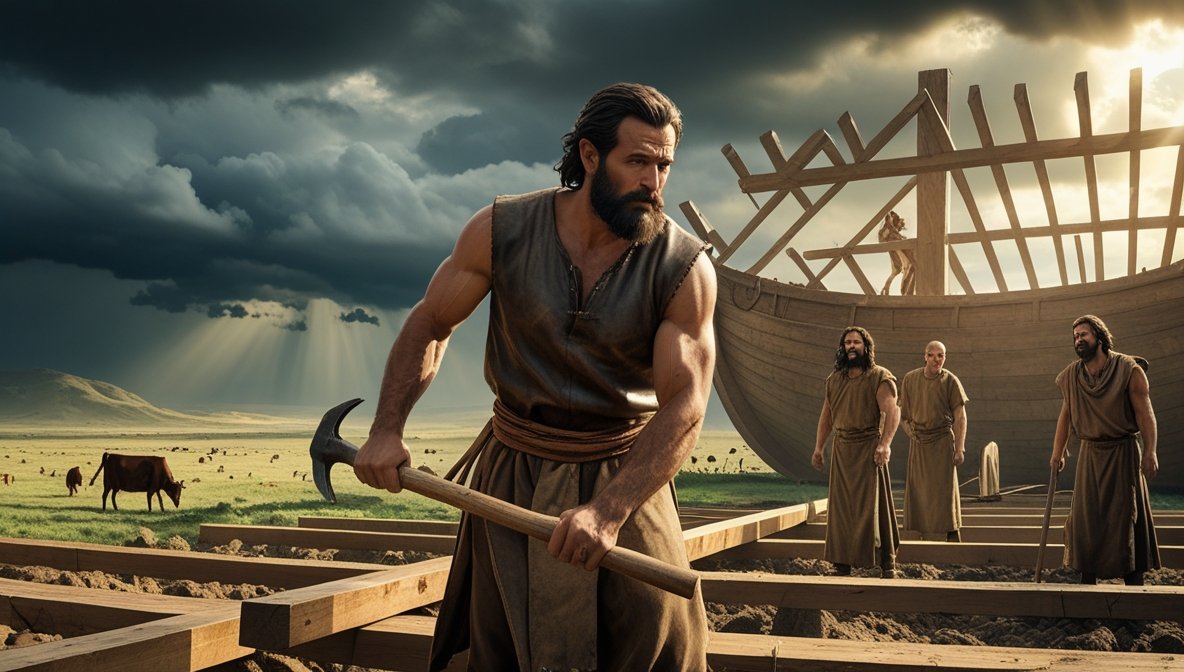
The Technical Details: Why the Ark Mattered
Understanding the ark’s design helps you appreciate that God’s instructions were practical. The ark’s dimensions and construction details were provided by God and followed by Noah, which shows the intersection of divine guidance and human craftsmanship Genesis 6:14-16. The ark was big enough to preserve life, durable enough to survive the deluge, and intentional in every detail. That practical aspect matters: God often equips you with precise resources and instructions to complete what He calls you to do.
Faith works through means
It’s tempting to think that faith requires supernatural bypass of natural means—God will simply make things happen. But God usually works through means: people, processes, and obedient labor. You’re expected to do the work God gives you. Noah built the ark following divine blueprints, and God honored the labor. Your step-by-step obedience—your phone call, your visit, your financial stewardship, your time investment—is the modern equivalent of construction on the ark.
Facing Ridicule: The Social Cost of Obedience
When you step out in obedience, you’ll often pay a social price. Noah lived in a culture that found his behavior absurd. Imagine building a massive boat on dry land while people go about their usual days. They mocked him, they didn’t join him, and yet Noah persisted. The cost of faith can be loneliness, misunderstanding, and public scorn. Yet the record scrawls a powerful testimony: Noah built the ark, obeyed God, and was saved from the flood Genesis 7:1-5.
Standing firm when everyone disagrees
You won’t always be popular when you follow God. Popularity and obedience don’t always go together. When you decide to act on God’s word, brace for possible isolation. But remember: God’s approval is the approval you need most. Noah’s story shows that when you hold fast to God’s instructions, He will be with you even when others are against you.
The Flood: When Obedience Meets Crisis
The day the rain came, the ark became the focal point of God’s salvation plan. The waters rise, doors are closed, and Noah’s obedience is vindicated Genesis 7:11-16. You should see that obedience doesn’t just feel good morally; it positions you for God’s protection and purpose. The crisis proves that the act of building the ark—Noah built the ark—was not foolish but faithful, not a waste but a rescue.
Preparedness versus passivity
Obedience prepares you; passivity leaves you vulnerable. Noah didn’t guess about the storm—he prepared. Building the ark was a proactive act of faith that saved his family and preserved life. In your life, preparation might look like spiritual disciplines, wise counsel, or planning. They aren’t signs of distrust in God; they are tools of stewardship that God expects you to use.
God’s Covenant After the Storm: A New Beginning
When the waters receded, and life emerged, God made a covenant with Noah—a promise sealed with a rainbow Genesis 8:1 and spelled out in the covenant passage Genesis 9:8-17. That promise shows that God’s faithfulness endures beyond the crisis. When you obey, you enter into God’s redemptive plans, and those plans often include new beginnings and restorative grace.
Renewal after obedience
Obedience leads not just to survival but to renewal. After the flood, humanity gets another chance, a fresh start under God’s covenant. Your faithful actions open doors for restoration in relationships, careers, and communities. You should take heart: God doesn’t just save you from disaster; He restores and reorders your life for new fruitfulness.
Hebrews and the Theology of Noah’s Faith
The New Testament looks back at Noah’s example in Hebrews, highlighting the spiritual principle behind his actions. Hebrews records that Noah’s obedience was an act of faith—he built the ark to save his family because he trusted God’s warning Hebrews 11:7. That theological insight is pivotal for you: faith without works isn’t mere assent; it’s concrete obedience that moves you into God’s purposes.
Faith that saves versus mere belief
You might hold beliefs about God, attend church, or even pray, and yet lack the obedience that manifests faith. Noah’s life shows you the difference: real faith produces action. When God warns, you don’t hesitate—like Noah, you build. When God speaks about justice, mercy, or a new direction for your life, respond with the obedience that aligns your behavior with God’s revelation.
Practical Lessons You Can Apply Today
-
Listen carefully to God’s Word.
-
Act promptly when He makes something clear.
-
Persist even when misunderstood.
-
Protect what God has entrusted to you.
You may not be building a literal ark, but you are building something—your family, your faith, your character, your legacy.
What Does This Mean for Us Today?
This passage is not only history—it speaks directly to modern believers.
It reminds us that obedience often comes before understanding, that faith sometimes requires standing alone, and that God honors those who trust Him fully. Whether you are being called to step out in leadership, forgive someone difficult, start something new, or remain faithful in a quiet season, Noah’s story invites you to depend completely on God.
Because Scripture is living and active, its encouragement still strengthens hearts right now.
Frequently Asked Questions
What is the main message of Noah’s story?
The central message is that obedient faith pleases God and positions us for His protection and purpose.
How can I apply Noah’s obedience in everyday life?
You apply it by acting on God’s Word even when circumstances or opinions discourage you, trusting that obedience today prepares you for tomorrow.
Why is Noah’s faith important for Christians today?
It demonstrates that faith is not passive belief but active obedience, and that God’s promises remain trustworthy even when fulfillment seems distant.
Continue Growing in Scripture
If this study encouraged you, you may also like:
- Noah Obeys (Genesis 6-7)
- Noah: Faith, Obedience, and the Ark That Saved Humanity
- How He Saved His Family by Faith
Conclusion: Your Call to Obedience Today
Noah built the ark not because it was easy, but because he trusted God.
His obedience changed history.
Your obedience may not make global headlines—but it can transform your home, your relationships, your community, and your spiritual legacy.
When God calls, respond.
When He instructs, build.
When others doubt, remain steady.
Like Noah, build plank by plank—in steady obedience and humble trust. And trust that the same God who guided him is guiding you today.
Conclusion: Your Call to Obedience Today
Noah’s life is a reminder that faith is best expressed through obedience. When God calls, you answer. When God directs, you work. When God warns, you prepare. The story demonstrates that even when the world scoffs, obedience aligns you with God’s purposes and positions you for salvation and restoration. Think about your life right now—what ark is God asking you to build? Remember, Noah built the ark despite every reason to doubt, and God used his obedience to accomplish a new beginning for humanity Hebrews 11:7.
Noah built the ark as an act of faith that saved his family and preserved creation; your obedience can have the same kind of impact in your sphere of influence. Keep listening, keep working, and keep trusting that God is at work through your obedience.
Noah built the ark in the face of mockery, and so can you stand firm when ridicule comes. Noah built the ark by trusting God’s instructions; do the same with what God is asking of you now. Noah built the ark faithfully plank by plank; build your life the same way, in steady obedience and humble service.
Noah built the ark not because he loved construction, but because he loved God and his family. Let that motivate your obedience today. Noah built the ark—and because he obeyed, history was changed.
A Short Prayer Based on This Passage
Lord, thank You for the example of faithful obedience. Help me trust You even when the path seems unclear or unpopular. Give me courage to build what You’ve called me to build, and perseverance to remain faithful until Your promises unfold. Amen.
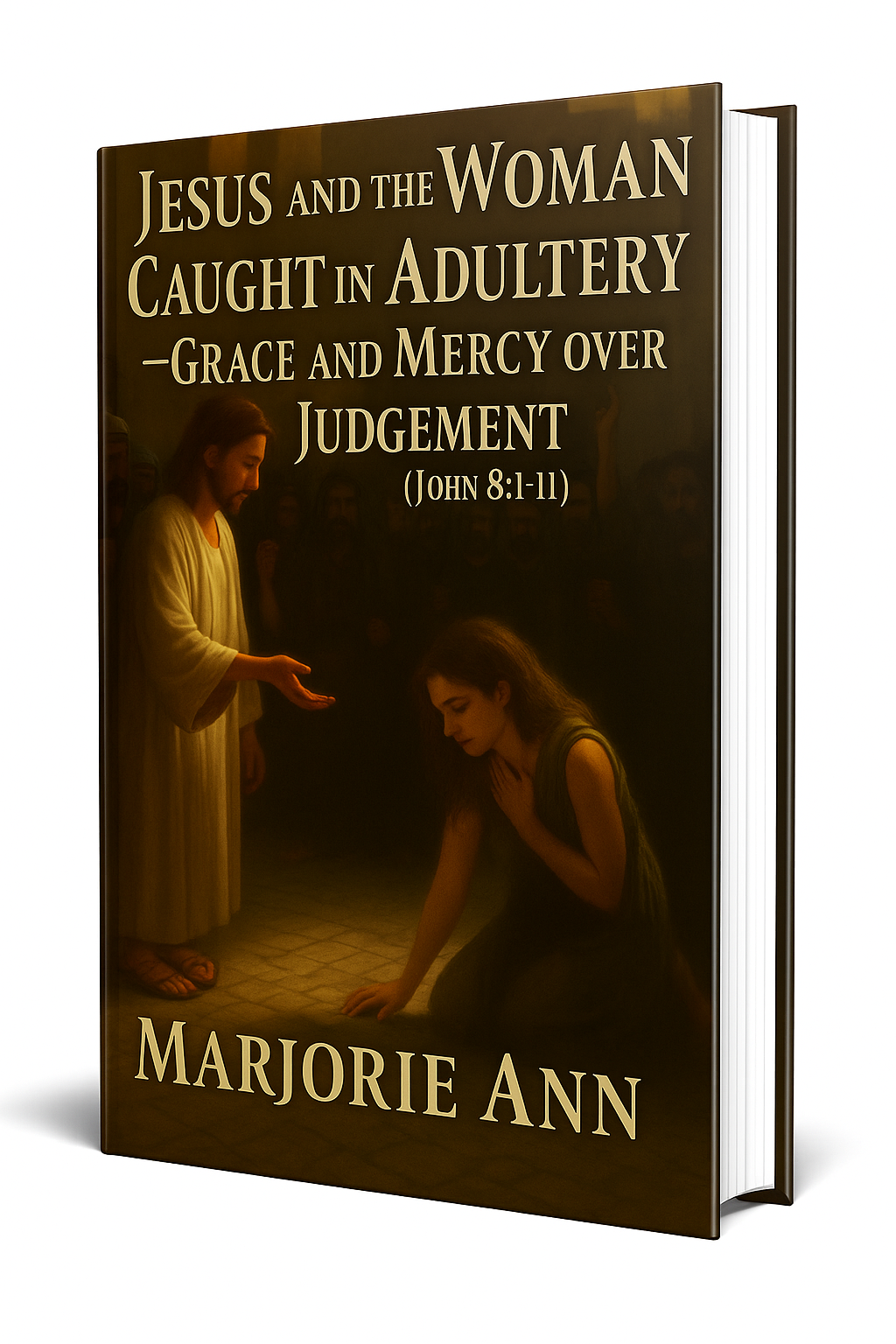
📘 Jesus and the Woman Caught in Adultery – Grace and Mercy Over Judgement
A powerful retelling of John 8:1-11. This book brings to life the depth of forgiveness, mercy, and God’s unwavering love.
👉 Check it now on Amazon
Sponsored recommendation
Acknowledgment: All Bible verses referenced in this article were accessed via Bible Gateway (or Bible Hub).
“Want to explore more? Check out our latest post on Why Jesus? and discover the life-changing truth of the Gospel!”