


Many people find themselves pausing over Jesus’ words about gates and paths—especially when He warns that the gate is narrow and the way is hard that leads to life. You might have read the passage and felt a pang of worry, relief, conviction, or curiosity. Those reactions are important because they invite you to think about what it means to follow Jesus in a world that often prizes ease, comfort, and popularity over commitment and truth.
In this article, you’ll explore the text of Matthew 7:13–14, the context in which Jesus spoke, and what the narrow gate meant to His original listeners and means for you today. You’ll get practical steps for living this truth out, common misunderstandings clarified, related Scripture to study, and a short prayer to anchor your response. By the end, you’ll have a clearer sense of how the imagery of a gate and a way shapes faithful discipleship, both individually and in community.
The Bible Verse Explained
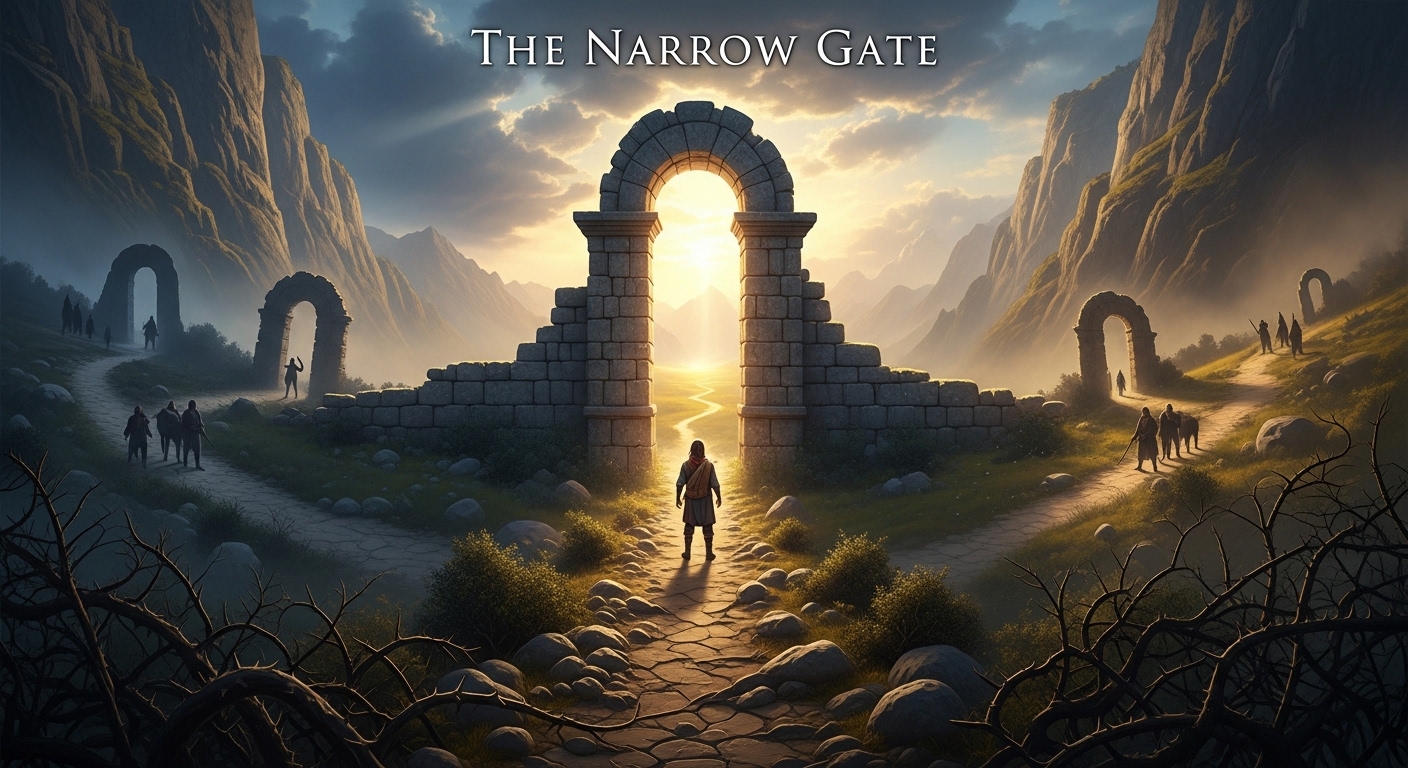
You’ll want to start by reading the passage clearly: Matthew 7:13–14. Take a moment to read it slowly and let the image of two gates and two ways sink in.
When you place the verse in its biblical context, several details help illuminate what Jesus meant. The words come from the Sermon on the Mount, a collection of teachings recorded by the apostle Matthew that capture Jesus’ core ethics and invitations to the Kingdom of Heaven. Matthew wrote his Gospel to a primarily Jewish audience that was living under Roman rule and navigating tensions between traditional Jewish expectations and the new reality Jesus introduced. Matthew’s portrait of Jesus emphasizes Jesus as the fulfillment of Jewish prophecy and the authoritative teacher, so when Jesus speaks about gates and ways, He’s addressing those who are trying to discern true righteousness from religious showmanship or easy, crowd-pleasing paths.
Historically, gates were more than metaphors; they were literal markers of access and security. Cities had gates you had to pass through, and roads had narrow passes and wide thoroughfares. In this teaching, the “narrow gate” and “hard way” metaphorically contrast two life-orientation choices: one leads to life (eternal and abundant life under God’s rule) and the other to destruction. The audience was people accustomed to hearing legal and prophetic language about life, law, and covenant fidelity. Jesus uses familiar imagery to call listeners to a radical, costly discipleship that prioritizes God’s rule over worldly gain.
The key message is simple but profound: the path to true life under God is not the default or the easy option. It requires attention, deliberate choice, and often a counter-cultural turning away from what “everyone else” is doing. You’re being invited to choose carefully—and to recognize that the choice has eternal significance.
What Does This Verse Really Mean?
This section unpacks the deeper meanings and practical implications of Jesus’ words. You’ll see how the metaphor points to intentional discipleship, dependence on God, and the day-to-day realities of following Christ.
1. Understanding the Message of the Verse
When Jesus talks about a narrow gate and a hard way, He’s not simply giving a geography lesson—He’s teaching about orientation and commitment. The narrowness indicates exclusivity of focus and the discipline required to pass through: it demands that you make choices that align with God’s kingdom rather than with the world’s temptations. The narrow path suggests intentionality: you must aim for it, watch for it, and sometimes squeeze past obstacles that would keep you from entering.
That image counters the popular notion that religious life is merely a matter of heritage, cultural identity, or routine practice. Jesus emphasizes you can’t assume you’re on the right path simply because you belong to a group or perform certain rituals. What matters is the direction of your life and the quality of your obedience.
You should also notice Jesus’ use of contrast: many enter through the wide gate, and many follow the broad road that leads to destruction. The wide gate symbolizes what is easy, popular, and often self-serving. That road attracts because it seems uncomplicated, permissive, and socially acceptable. But popularity does not equal truth or life. Jesus warns that the wrong road will ultimately lead to ruin.
2. Trusting God’s Wisdom and Guidance
At its heart, the passage points you toward trusting God’s wisdom over the world’s. The narrow gate is not just about moral rigor; it’s about embracing a life shaped by God’s values—love, justice, humility, and truth. Trusting God often requires humility: admitting you don’t have all the answers and that God’s directions—even when counterintuitive—are better than your own.
Trust also means dependence. You don’t navigate the narrow way by sheer will alone. Jesus invites you to rely on Him, on the Holy Spirit, and on Scripture to guide your steps. When the road feels taxing or lonely, trusting God is the posture that keeps you moving forward. It creates endurance, not legalism; it fosters spiritual maturity, not mere moral performance.
3. Living Out This Truth in Everyday Life
You’ll live out this teaching in the small, ordinary decisions as much as in big, dramatic choices. Choosing the narrow gate may mean saying no to compromises at work, seeking reconciliation in broken relationships, standing up for justice, or choosing sacrificial love over selfish comfort. It also shapes how your community functions—churches that pursue the narrow way prioritize discipleship, mutual accountability, and radical hospitality, even when those practices are costly.
Living this truth also reframes success. Instead of measuring life by wealth, prestige, or approval, you learn to value faithfulness, obedience, and spiritual growth. This reorientation changes everyday priorities—time in prayer and Scripture, serving others, and living transparently. The narrow path refines character and shapes you into someone more like Christ.

Why This Verse Still Matters Today
The image of the narrow gate remains vital because your cultural moment is filled with easy distractions, tempting shortcuts, and messages that promise fulfillment without cost. Here’s why the verse continues to speak.
The modern world often prizes convenience, individualism, and instant gratification. You live in an age of abundant options and persuasive voices telling you to follow whatever path feels right. That cultural background makes Jesus’ warning urgent: the abundance of options can deceive you into thinking every path is neutral, when in fact some choices carry spiritual consequences.
This passage is particularly relevant if you’re facing seasons of doubt or uncertainty. When you feel unsure about the next steps—career decisions, relationships, moral dilemmas—Jesus’ words challenge you to evaluate paths by whether they lead toward God and life or away from them. The narrow way requires courage during such seasons because it might lead you against the grain of accepted norms.
Spiritually, the verse encourages growth. It dissuades complacency and calls you to take discipleship seriously—learning Scripture, serving the vulnerable, engaging in prayer, and participating in a faith community. It also offers encouragement: though the path is narrow and sometimes lonely, it leads to life. That promise anchors perseverance when the journey is hard.
Finally, the passage is pastoral. It warns against cheap grace and religious performance while inviting you into authentic transformation. The narrow gate calls you to a faith that is lived out, not merely professed—an invitation you can respond to daily.
How to Apply This Verse in Your Life
Applying Jesus’ words about the narrow gate is practical and deliberate. Below are steps you can take to align your life with the path that leads to life.
- Reflect on God’s Word Daily
Make Scripture a regular habit. Let passages like Matthew 7:13–14 and related verses inform your decisions. When you meditate on God’s Word, you develop discernment about which “gates” to pass through and which roads to avoid. Regular reading grounds your heart and mind in God’s perspective. - Pray for Wisdom and Guidance
Pray specifically for discernment when you face choices. Asking God to guide you is not a one-time act but a continual posture. Prayer keeps you connected to the Source of life and helps you notice the Spirit’s leading. When the way feels uncertain, prayer becomes your compass. - Trust God Even When Life Feels Uncertain
Embrace trust as an action. It looks like choosing obedience when outcomes are unknown and stepping out in faith, even without guarantees. Trust is strengthened by remembering God’s faithfulness in past challenges and by learning to depend on the community God provides. - Live Out Your Faith Through Action
Obedience is the fruit of this teaching. Serve others, practice justice, forgive, and confess honestly. You demonstrate that you’re on the narrow path not merely by belief, but by deeds that reflect the Kingdom of God. Practical faith shapes character and bears witness to a world that desperately needs authentic love.
Each of these steps is a discipline that shapes your spiritual trajectory. They’re not exhaustive, but they’re practical levers you can use to stay on the path that leads to life.

Common Misunderstandings About This Verse
People often misunderstand this passage in ways that either harden hearts or excuse indifference. Clarifying these misconceptions helps you respond with balanced truth.
One common mistake is taking the verse out of context. If you isolate the image of the narrow gate without reading its surrounding teachings—such as the beatitudes, teachings on prayer, and warnings about false prophets—you might think Jesus is merely condemning everyone. But He’s inviting you to examine your life honestly and choose discipleship with integrity.
Another misunderstanding is seeing the narrow gate as a promise of hardship for its own sake. The narrowness isn’t a celebration of suffering; it’s a recognition that following Jesus often requires sacrifice and counter-cultural choices. The reward is not suffering but life—true, abundant life in God.
Some people interpret “many” entering the wide gate as a statement about who’s saved versus who’s not in a simplistic way. The passage is less about quantifying salvation and more about the quality of a life oriented toward God. It calls for discernment and repentance rather than judgmental exclusion.
Finally, you might be tempted to think that being on the narrow path is a private affair—something between you and God alone. However, true discipleship unfolds in community. The narrow way often requires others to encourage, correct, and walk alongside you. Avoid the trap of private pietism and seek accountable relationships that help you stay true.
Bible Verses Related to This Passage
Studying Scripture together helps you see the consistent themes of trust, faithfulness, and the cost of discipleship. Below are four passages that connect with Matthew 7:13–14; each link directs you to the exact chapter and verse at Bible Gateway for further reading.
• Proverbs 3:5–6 — This passage calls you to trust the Lord with all your heart and not lean on your understanding, promising that God will direct your paths. It underscores the dependence Jesus expects as you navigate the narrow way.
• Romans 8:28 — Paul reminds you that God works for good in all things for those who love Him. That truth comforts you when the narrow path seems costly, reminding you that God can redeem hardship.
• Hebrews 11:1 — Faith is described as assurance and trust in things not yet seen. Walking the narrow way requires this kind of faith—confidence in God’s promises even when they’re not immediately visible.
• Psalm 37:5 — This Psalm encourages you to commit your way to the Lord and trust in Him, reflecting the posture needed to stay on the path that leads to life.
Each of these verses reinforces the central themes of reliance on God, perseverance in faith, and the ultimate goodness of God’s guidance.
Frequently Asked Questions About This Verse
What does this verse mean in simple terms?
In simple language, Jesus is saying that the path that leads to true life with God requires commitment and sometimes sacrifice. Many people choose the easier, more popular way that leads away from God, but the way that leads to life is narrower and requires you to follow God faithfully.
Who wrote this verse in the Bible?
This verse is recorded by the apostle Matthew in his Gospel. Matthew compiled Jesus’ teachings and accounts of His life, writing especially to Jewish readers to show Jesus as the Messiah and authoritative teacher.
What is the main message of this verse?
The main message is a call to intentional discipleship. Jesus contrasts two paths: one wide and easy that leads to destruction, and one narrow and challenging that leads to life. He urges you to choose the path that aligns with God’s kingdom.
How should Christians apply this verse today?
Apply it by evaluating your priorities, committing to obedience and spiritual growth, practicing disciplines like prayer and Scripture reading, and by pursuing justice, humility, and compassion. Live in community, seek accountability, and trust God when the way is difficult.
A Short Prayer Inspired by This Verse
Heavenly Father,
Thank You for the wisdom and truth found in Your Word. Help me understand and live out the message of this verse each day. Strengthen my faith, guide my steps, and teach me to trust You more deeply in every season of life.
In Jesus’ name,
Amen.
 Continue Your Growth Journey
If you want to understand this more clearly:
The Lord Is My Shepherd: The Deep Meaning Of Psalm 23 Explained
If you want practical daily steps:
10 Short Morning Devotionals For Busy Christians
If you feel stuck or discouraged:
The 9 Fruits Of The Spirit Explained (Galatians 5:22–23)
If you want to know if you’re truly growing:
Spiritual Maturity: 8 Biblical Signs You’re Growing In Christ
If you want to stand strong in spiritual battles:
The Armor Of God Explained: The Meaning Of Each Piece
Final Thoughts
Jesus’ picture of the narrow gate and the hard way is not a morbid or exclusionary pronouncement—it’s an urgent, compassionate invitation. He wants you to choose life intentionally, to value what is lasting over what is fleeting, and to walk in a way that transforms you and blesses the world. When you study Scripture in its context, rely on God’s guidance, and live out your faith in community, you’ll find that the narrow path leads to the fullness of life God intends.
Acknowledgment: All Bible verses referenced in this article were accessed via Bible Gateway (or Bible Hub).
“Want to explore more? Check out our latest post on Why Jesus? and discover the life-changing truth of the Gospel!”