



Introduction
You’ve probably heard the phrase “grow in grace” read in church or seen it on a bookmark, but what does it really mean for your everyday life? Maybe you’re juggling work deadlines, family responsibilities, and the noise of social media—and spiritual growth feels like one more task on a never-ending list. Or perhaps you’ve been a Christian for years but sometimes wonder if you’re still moving forward or just stuck in the same patterns.
There’s a gentle invitation in Scripture that addresses this very tension between where you are and where God wants to lead you. But how does growing in grace look in practice? How does it shape your choices, your priorities, and your relationships? That’s the question we’ll explore together.
Key Bible Verse (Foundation)
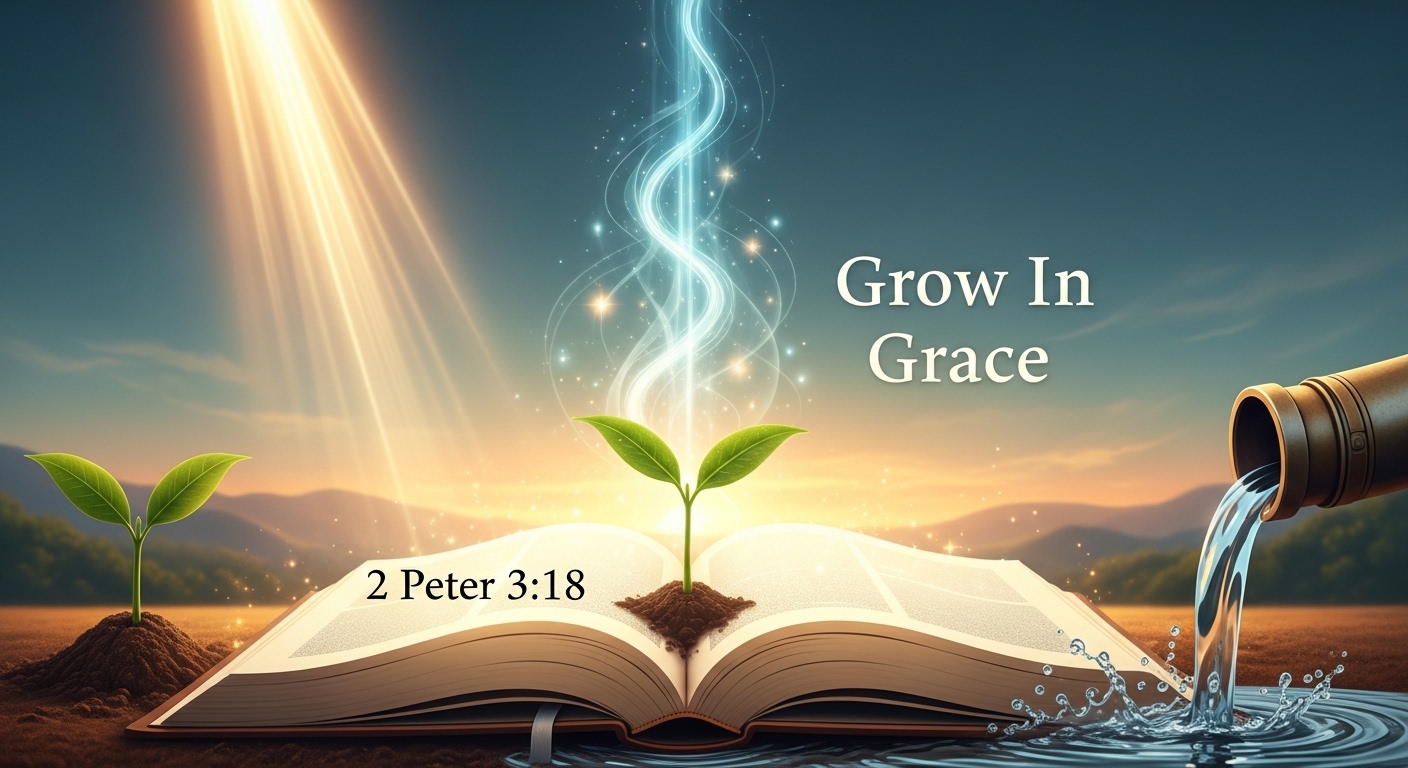
The verse that gives us the foundation for this devotional is 2 Peter 3:18: 2 Peter 3:18. The apostle Peter writes, “But grow in the grace and knowledge of our Lord and Savior Jesus Christ.” In simple terms, Peter encourages believers to keep growing—both in the experience of God’s grace and in understanding who Jesus is.
This verse isn’t a one-time command; it’s a direction for the whole Christian life. It points you to a growth that’s spiritual, relational, and practical.
Core Explanation (Main Teaching)
What “Grow in Grace” Means
Growing in grace means allowing God’s undeserved favor to change the way you think, feel, and act. Grace isn’t only the moment you first accept Christ; it’s the ongoing power and kindness of God working in your heart. As you grow in grace, you begin to respond more naturally to God’s love—not out of duty, but out of a transformed heart.
This growth includes deeper trust, a softer response to failure, and increasing compassion toward others. It’s not about becoming a better moralist; it’s about becoming more like Jesus because you’ve tasted and seen the grace that saves and shapes you.
What “and Knowledge of Our Lord and Savior Jesus Christ” Adds
Peter couples grace with knowledge—so your growth isn’t just emotional or experiential; it’s informed. Growing in knowledge of Jesus means learning more about who He is and letting that truth shape your life. As you understand Jesus’ character, His teachings, and His work for you, your actions begin to match your beliefs.
This knowledge isn’t merely academic. It’s relational: you learn to recognize Jesus’ voice, to rest in His promises, and to follow His lead in daily decisions. The two—grace and knowledge—work together. Grace changes your heart; knowledge guides your steps.
What the Bible Teaches About Ongoing Growth
Throughout Scripture, spiritual growth is presented as a journey rather than a checklist. Paul prays for believers to be “rooted and established in love” and to “grow up in every way into him who is the head” (see Colossians 2:6–7). John talks about walking in the light and maturing (see 1 John 2:12–14). Even Jesus used images like seeds and small beginnings to describe how God’s kingdom grows.
The Bible consistently teaches that growth is progressive, often slow, and sometimes unseen. It encourages perseverance and patience, because spiritual formation takes time and relies on the Spirit’s work in you.
Why This Matters Today
In a culture that prizes quick fixes and instant progress, the biblical call to grow in grace is countercultural. You don’t earn grace by trying harder; you respond to grace by letting it shape you. This matters today because you’re constantly tempted to perform, compare, or rush your spiritual life. The invitation to grow in grace frees you from those pressures and points you to a steady, Spirit-led transformation.
This growth affects everything—how you face failures at work, how you handle money, how you relate to people who hurt you, and how you find purpose in everyday tasks. It’s not abstract; it’s practical and deeply human.

Real-Life Application
This can look like a thousand small choices that add up over time. Below are ways growing in grace and knowledge of Christ shows up in everyday life.
In Your Career and Success
Growing in grace affects how you measure success. Instead of defining worth by promotions or paychecks, you start to value faithfulness, integrity, and service. In real life, this happens when you choose honesty over an easy shortcut, or when you show kindness to a coworker who makes a mistake.
This can look like:
- Choosing rest when work demands push you to burnout because you trust God’s provision.
- Celebrating a colleague’s success without jealousy because grace has reshaped your priorities.
- Using your position to serve others rather than to build your own reputation.
In Money and Material Decisions
Grace changes how you view possessions. When you grow in grace, generosity becomes a natural expression rather than an obligation. You begin to see money as a tool for stewardship, not the source of security.
In real life, this happens when you give generously even when it’s inconvenient, when you live within your means, or when you support causes that extend God’s grace to others.
In Spiritual Growth Struggles
If you feel spiritually stuck, growth in grace offers hope. It recognizes that growth often includes seasons of dryness, doubt, and failure. The difference is that grace keeps you moving toward God instead of away.
This can look like:
- Returning to prayer and Scripture after a season of neglect, trusting that God meets you where you are.
- Confessing small sins without shame, knowing grace covers you.
- Seeking wise counsel or community rather than trying to fix yourself alone.
In Busyness and Distraction
Grace helps you simplify. As you grow, you discern what truly matters and let go of unnecessary noise. This can look like setting healthy boundaries with technology, protecting Sabbath time, or choosing meaningful relationships over shallow busyness.
In real life, this happens when you decline an extra commitment to spend time with family or when you quiet your schedule to spend a morning reading Scripture.
In Identity and Purpose
Growing in the knowledge of Christ shapes your identity. You begin to see yourself as loved, chosen, and commissioned, not merely useful. This gives clarity and courage for purpose-driven living.
This can look like:
- Saying “yes” to opportunities that align with your gifts and God’s call.
- Letting go of the need to prove yourself and resting in your identity as God’s child.
- Serving in your church or community with humility and joy because you’re grounded in Christ.

Reflection Questions
- Where do you feel most stuck in your spiritual life right now, and how might grace meet you there?
- What is one practical change you can make this week to grow in the knowledge of Jesus (a book, a verse, a conversation)?
- How do your goals for success align or conflict with God’s call to grow in grace?
- Who in your life models growth in grace, and what can you learn from them?
Devotional Thought
God’s invitation to “grow in grace and knowledge of our Lord and Savior Jesus Christ” is both tender and persistent. It doesn’t shame you for where you are; it simply points you toward a fuller life in Christ. As you take small steps—reading Scripture, praying honestly, choosing mercy—you participate in a transformation that is both promised and gradual.
Be encouraged: growth often happens in small, ordinary moments. The Spirit is patient with you, and God’s grace is more than enough for every struggle and every victory. Let your days be shaped by the steady rhythm of grace, not by the pressure to perform.
Supporting Bible Verses
- Colossians 1:10 — Paul prays that believers would “live a life worthy of the Lord” and “bear fruit” in every good work, showing that spiritual growth is practical and visible.
- Hebrews 5:12–14 — This passage contrasts spiritual infancy with maturity and underscores the need for steady growth through practice and discernment.
- 2 Peter 1:5–8 — Peter outlines spiritual qualities to pursue—faith, virtue, knowledge, self-control—showing that growth involves intentional habits and character development.
- James 4:6 — “God opposes the proud but gives grace to the humble,” a reminder that humility opens the door to God’s transforming grace.
- Philippians 1:6 — Paul assures believers that God, who began a good work in you, will carry it on to completion—offering hope and patience for the journey.
Continue Exploring This Topic
👉 To understand this more deeply, read our full devotional on growing in grace: 2 Peter 3:18 Devotional: Growing in Grace and Knowledge of Christ
Continue Growing In Grace Through These Related Readings

Conclusion
Growing in grace and knowledge of Jesus is an invitation to a lifelong journey, not a one-time achievement. The main lesson is simple: allow God’s grace to change your heart, and let your understanding of Jesus shape your daily choices. As you do, you’ll find freedom from performance, clarity of purpose, and a deeper, steadier joy that withstands life’s ups and downs.
Take small steps this week—read a verse, pray for openness, choose one act of generosity—and trust that God is at work in the slow and steady growth of your life.
Prayer
Lord, help me grow in your grace and in the knowledge of Jesus. Give me patience when progress is slow, courage to act when you call, and humility to receive your help. Shape my heart so I reflect your love to others. Amen.
 Continue Your Growth Journey
If you want to understand this more clearly:
The Lord Is My Shepherd: The Deep Meaning Of Psalm 23 Explained
If you want practical daily steps:
10 Short Morning Devotionals For Busy Christians
If you feel stuck or discouraged:
The 9 Fruits Of The Spirit Explained (Galatians 5:22–23)
If you want to know if you’re truly growing:
Spiritual Maturity: 8 Biblical Signs You’re Growing In Christ
If you want to stand strong in spiritual battles:
The Armor Of God Explained: The Meaning Of Each Piece
Acknowledgment: All Bible verses referenced in this article were accessed via Bible Gateway (or Bible Hub).
“Want to explore more? Check out our latest post on Why Jesus? and discover the life-changing truth of the Gospel!”