


Introduction
You wake up one morning feeling the familiar tug: you want to grow spiritually, to be closer to Christ, but the days blur together with work, family demands, scrolling, and deadlines. You go to church, read a verse now and then, but something inside tells you growth feels slow or stuck. You wonder if spiritual growth is supposed to be obvious, fast, or even measurable.
Maybe you’ve tried a few spiritual habits—prayer, a Bible plan, a podcast—but life’s distractions pull you back. Maybe disappointment, guilt, or comparisons make you think you’re doing it wrong. You’re not alone in that.
What if spiritual growth, according to the Bible, is less about checking boxes and more about becoming steadily more like Jesus—rooted in grace and growing in knowledge of Him? How do you actually do that in real life?

Key Bible Verse (Foundation)
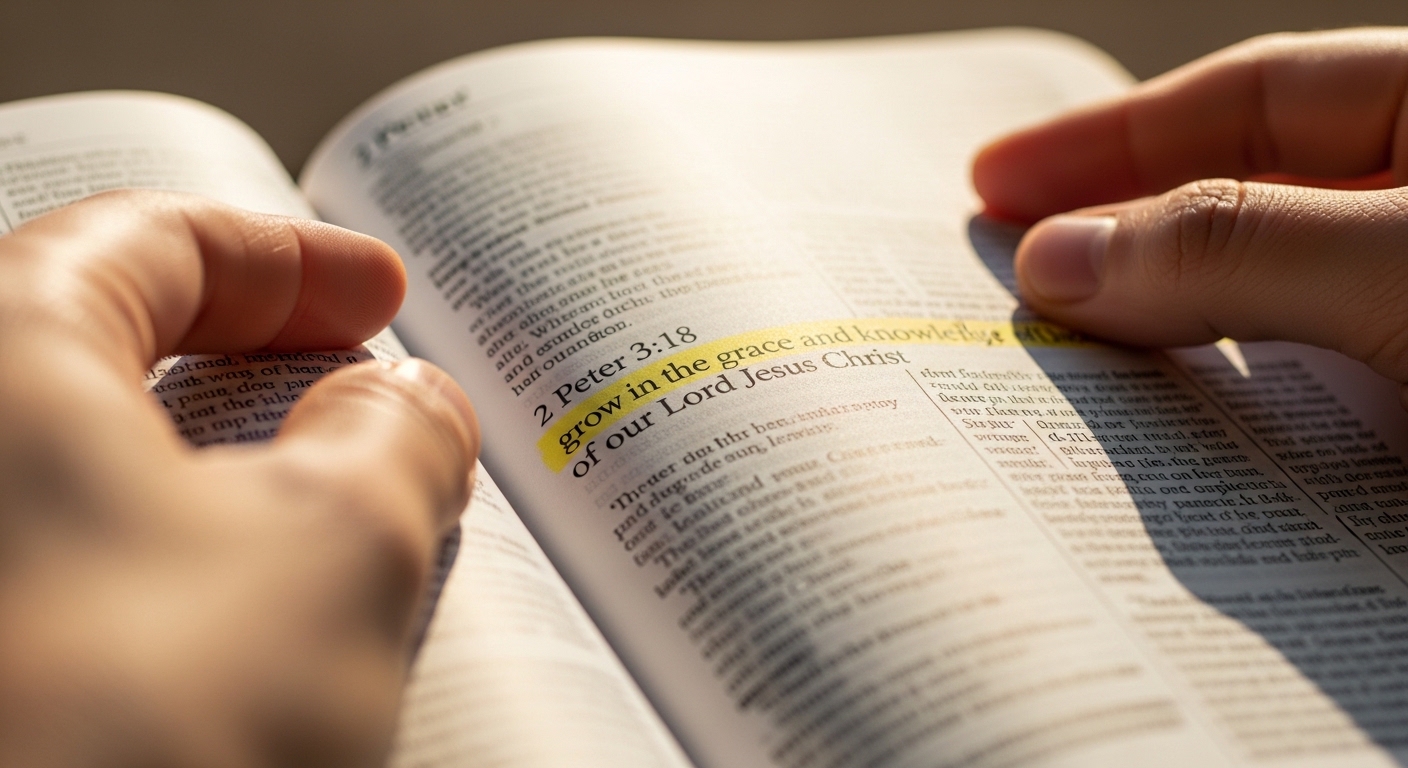
The Bible gives a steady, encouraging command for this: 2 Peter 3:18 — “But grow in the grace and knowledge of our Lord and Savior Jesus Christ. To him be glory both now and forever! Amen.”
This verse is both an invitation and a direction. It tells you what to aim for: growth that is grounded in grace and informed by knowing Jesus. It’s not a one-time event but an ongoing way of living. The invitation is gentle: grow—step by step—as you learn to rely on God’s grace and to know Jesus more deeply.
Core Explanation (Main Teaching)
What “Grow in Grace” Means
Growing in grace means you increasingly live from God’s undeserved kindness rather than from fear, performance, or guilt. Grace isn’t just the way you’re saved; it’s the atmosphere where your everyday life unfolds. As you grow, you start responding to mistakes with repentance and hope instead of shame. You begin to extend grace to others because you’ve received it yourself.
The Bible shows grace as the starting point and the continuing resource for life. You don’t first earn God’s favor and then grow; you grow because you already belong to Christ. That truth changes your motivation and steadies your heart when circumstances are hard.
What “Knowledge of Christ” Looks Like
Knowledge of Christ is more than head knowledge about historical facts. It’s relational—knowing Jesus through Scripture, prayer, and life with others. As your knowledge deepens, your desires, decisions, and dreams line up with who Jesus is: his love, his wisdom, his priorities.
Scripture and experience shape this knowledge. Reading about Jesus forms your mind; trusting him in trials shapes your heart. Over time, knowing Jesus transforms how you think about work, money, relationships, and purpose.
Why These Two Together Matter Today
Grace without knowledge can become vague sentimentality; knowledge without grace can become harsh legalism. The Bible pairs them so you grow in truth that is wrapped in kindness. Today, with so much performance pressure and noise, this balanced growth keeps you humble, hopeful, and effective.
You’ll find decisions guided by love rather than guilt, resilience built on mercy rather than self-reliance, and a steady joy that survives setbacks. That’s the practical power of growing in grace and knowledge together.
The Biblical Pattern for Ongoing Growth
The New Testament shows growth as a process: teaching leads to obedience, obedience to character, and character to effective living for God. This isn’t a checklist but a rhythm—learning, applying, reflecting, and repeating. Growth often includes seasons of rest, reevaluation, and new spiritual disciplines. It’s a lifelong journey, not a sprint.
Real-Life Application
This can look like small, concrete changes in your day-to-day life. Here are ways to translate the biblical idea of growth into habits you can start this week.
Practical Steps You Can Take (Step-by-step Guide)
- Set a simple, sustainable daily practice. Pick one spiritual habit—10 minutes of Bible reading, a short prayer time on your commute, or a two-sentence journaling habit—and keep it daily. Small consistency beats dramatic bursts.
- Pair study with prayer. After reading a short passage, ask God one question: What do you want me to know? What do you want me to do? This builds knowledge and invites grace to shape your heart.
- Practice confession and gratitude. Each evening, confess one thing that went wrong and thank God for one thing that went right. This steadies you in grace and trains your heart to notice God’s work.
- Join a community. Growth happens best in shared life. Find a small group, a mentor, or an accountability partner who encourages you in truth and grace.
- Serve in a practical way. Serving others lets you learn Christ’s heart and break the focus on yourself. Choose a regular way to help—at church, with a neighbor, or through your work.
- Revisit and reframe failures. When you fail, name it, learn from it, and return to God’s mercy. Don’t let failure derail you—let it teach you.
These steps keep things practical and sustainable. You’re less likely to burn out if you adopt one habit, keep it small, and let grace guide you when you stumble.
Real-Life Examples
This can look like choosing to respond kindly to a coworker who cuts you off in a meeting, rather than lashing out; or it can look like using your commute to pray for a family member instead of replaying negative news. In your finances, growth looks like making stewardship decisions motivated by worship rather than anxiety. In parenting, it looks like offering patient correction wrapped in love, modeling the grace you hope your children will learn.
In real life, this happens when busyness tempts you to skip prayer but you choose five minutes of honest conversation with God. It happens when success calls for pride and you instead remember your identity is in Christ, not your achievements.
Dealing with Common Obstacles
You’ll face obstacles: distraction, guilt, busyness, and seasons of dryness. The Bible doesn’t ignore these; it gives tools. Sabbath rest combats burnout. Honest confession and accountability combat hidden sin. Scripture memorization and short prayers combat distraction. Remember: spiritual growth includes rest and recovery, not just constant striving.

Reflection Questions
- Where in your life are you trying to grow through willpower rather than grace?
- Which small spiritual habit could you realistically keep for the next 30 days?
- Who can speak truth and grace into your life as you grow—someone you can invite into accountability?
- When you think of Jesus, what one truth about him would you like to know better?
Take a few minutes to write your answers. Let them guide the small next steps you’ll take this week.
Devotional Thought
You are not a project to be perfected but a person being shaped by a loving Savior. Growth in grace and knowledge is less about impressive spiritual feats and more about learning to walk with Jesus every day. When you stumble, the invitation remains: return to him, receive his mercy, and try again.
Let God’s grace be the soil where your growth happens. When knowledge of Christ begins to shape your desires and actions, you’ll find peace in progress rather than pressure for perfection. Keep your eyes on Jesus—his patience, his kindness, his life poured out for you—and you’ll grow, often in ways you only notice with time.

Supporting Bible Verses
- 2 Peter 1:5–8 — These verses outline a progression of virtues to add to your faith, showing growth as a series of practical steps: faith, goodness, knowledge, self-control, perseverance, godliness, mutual affection, and love. This gives you a map for spiritual growth.
- Colossians 2:6–7 — Paul tells you to continue to live in Christ, rooted and built up, established in faith. Growth is rooted growth—deepening your relationship with Jesus as the source of life.
- John 15:4–5 — Jesus uses the image of a vine and branches to show that staying connected to him produces fruit. Spiritual growth is relational and dependent: you abide, you bear fruit.
- Hebrews 5:12–14 — This passage encourages moving from spiritual infancy to maturity by training your senses to discern good and evil. Growth includes learning and exercising spiritual discernment.
- Philippians 3:10–11 — Paul expresses his desire to know Christ deeply, including the fellowship of sharing in his sufferings. Sometimes growth means learning through hardship, trusting God’s purposes.
Each of these verses points back to the same truth: growth is relational, practical, and often gradual. Use these passages as short anchors in your daily devotions.
Continue Exploring This Topic
As you reflect on this message, you may want to go deeper. These related readings will help you understand it more clearly and apply it to your life.
To better understand this, read our full guide: 2 Peter 3:18 Devotional: Growing in Grace and Knowledge of Christ. This pillar article explores the verse more fully with practical exercises and longer reflections.
If you want to go deeper, this devotional explains it clearly: What Does “Grow in Grace” Mean?. It helps you grasp the heart behind the phrase and how it affects daily choices.
For a deeper study, see this related message: Why Spiritual Growth Takes Time. It encourages patience and explains the seasons of the soul.
Related short reads to continue your journey:
- 7 Bible Verses About Spiritual Growth — quick scripture anchors.
- Signs You Are Growing Spiritually — encouraging markers to notice progress.
- Morning Devotional on Growing in Grace — a simple morning routine to start your day.
These links are meant to be gentle next steps. Pick one and give it a read when you’re ready to go a bit deeper.
Conclusion
The main lesson is simple and life-changing: grow in grace and grow in the knowledge of Jesus. Growth is not a one-time achievement but a lifelong habit shaped by small, faithful steps—daily practices, honest soul-work, and community life. When grace and knowledge work together, your spiritual life becomes less about performance and more about relationship.
You don’t need to be perfect to grow; you need to be consistent and humble enough to receive grace. Keep your eyes on Jesus, take one small step today, and trust that God will continue the work in you.
Prayer
Lord Jesus, help me to grow in your grace and to know you more deeply. Give me wisdom for the next steps and patience for the slow seasons. Renew my heart when I stumble, and let your love shape my life. Amen.
 Continue Your Growth Journey
 If you want to understand this more clearly:
The Lord Is My Shepherd: The Deep Meaning Of Psalm 23 Explained
If you want practical daily steps:
10 Short Morning Devotionals For Busy Christians
If you feel stuck or discouraged:
The 9 Fruits Of The Spirit Explained (Galatians 5:22–23)
If you want to know if you’re truly growing:
Spiritual Maturity: 8 Biblical Signs You’re Growing In Christ
If you want to stand strong in spiritual battles:
The Armor Of God Explained: The Meaning Of Each Piece
Acknowledgment: All Bible verses referenced in this article were accessed via Bible Gateway (or Bible Hub).
“Want to explore more? Check out our latest post on Why Jesus? and discover the life-changing truth of the Gospel!”