
How To Start Praying Consistently (Even If You Struggle)

Image fx 12 13

You want to pray—but you struggle to stay consistent. If you’re wondering how to start praying consistently, you’re not alone. Many people feel stuck in a cycle of starting and stopping.

The good news: this is not just a discipline problem—it’s a habit problem. And habits can be built.

This article walks you through a practical, compassionate plan to build a prayer habit that lasts. You’ll get simple routines you can start today, ways to remove pressure, ideas for when you don’t feel like praying, and concrete tools to measure progress without drowning in rules. This isn’t about performance. It’s about connection—gradual, steady, real.

Before you dive in, remember a biblical invitation: 1 Thessalonians 5:17 encourages you to “pray continually” in a way that’s meant to reshape your life, not burden it. Let that be a guiding picture rather than a demand.

Why Consistency Is Hard

If you’re trying to learn how to start praying consistently, understanding these obstacles is the first step.

If your prayers feel ineffective:
👉 Why Is My Prayer Not Working?

If you’re new to prayer, start here:
👉 How to Pray (Step-by-Step for Beginners)

How to Start Praying Consistently (Simple Plan)

If you struggle to pray consistently, follow this simple method:

  1. Start with 2–5 minutes daily
  2. Attach prayer to a daily habit (like coffee or bedtime)
  3. Use a simple structure so you don’t overthink
  4. Remove pressure—short prayers are enough
  5. Expect imperfection and return daily

Why Consistency Is Hard

Consistency in prayer feels impossible for a few predictable reasons. Understanding these reasons helps you stop blaming yourself and start changing your system.

Most of the time, inconsistency isn’t because you lack spiritual zeal. It’s because your environment and expectations don’t support the habit. You might try to pray only when you “feel moved”; that makes prayer dependent on mood. Or you attempt hour-long sessions despite a chaotic schedule, which sets you up to fail. Or you simply have no routine—no physical or time trigger to prompt you. All of these are solvable when you treat prayer like a habit you can design.

When you recognize the real obstacles—no routine, too much pressure, unrealistic expectations—you can redesign your approach instead of beating yourself up. Jesus’ instruction to pray in private in Matthew 6:6 reminds you that prayer’s core is relationship, not performance. Use that insight to reduce the pressure you place on every prayer moment.

No Routine

When you don’t have a regular place or time, prayer becomes optional. You rely on decision-making energy every time—and that’s limited. Habit science shows you need a trigger: a time, place, or action that reliably cues your practice. Without it, prayer stays sporadic.

Start by choosing a tiny, repeatable action that always happens in your day. Maybe it’s sitting at the breakfast table, brewing your coffee, or turning off your bedside lamp. The point is consistency, not length. Attach prayer to that anchor and you’ll stop relying on willpower alone.

Too Much Pressure

You might think every prayer must be eloquent, long, or deeply emotional. That pressure keeps you from starting. If you believe prayer must “feel” right, you’ll wait for a feeling that rarely comes on demand.

Instead, give yourself permission to speak simply. Short prayers, breath prayers, or scripted prayers are valid. Jesus’ example of private, honest conversation with God in Matthew 6:6 empowers you to remove the performance element. Practice small prayers that are easy to repeat.

If you’re new to prayer, start here:
👉 How to Pray (Step-by-Step for Beginners)

Unrealistic Expectations

Many people set goals they can’t sustain: daily hour-long sessions, elaborate liturgy, or a prayer schedule that ignores life’s ebbs and flows. When you miss a day or two, guilt grows and motivation evaporates.

Shift from an all-or-nothing mindset to a “recovery and return” mindset. Expect misses and decide in advance what you’ll do when you miss. This reduces shame and makes consistency more likely across the long term.
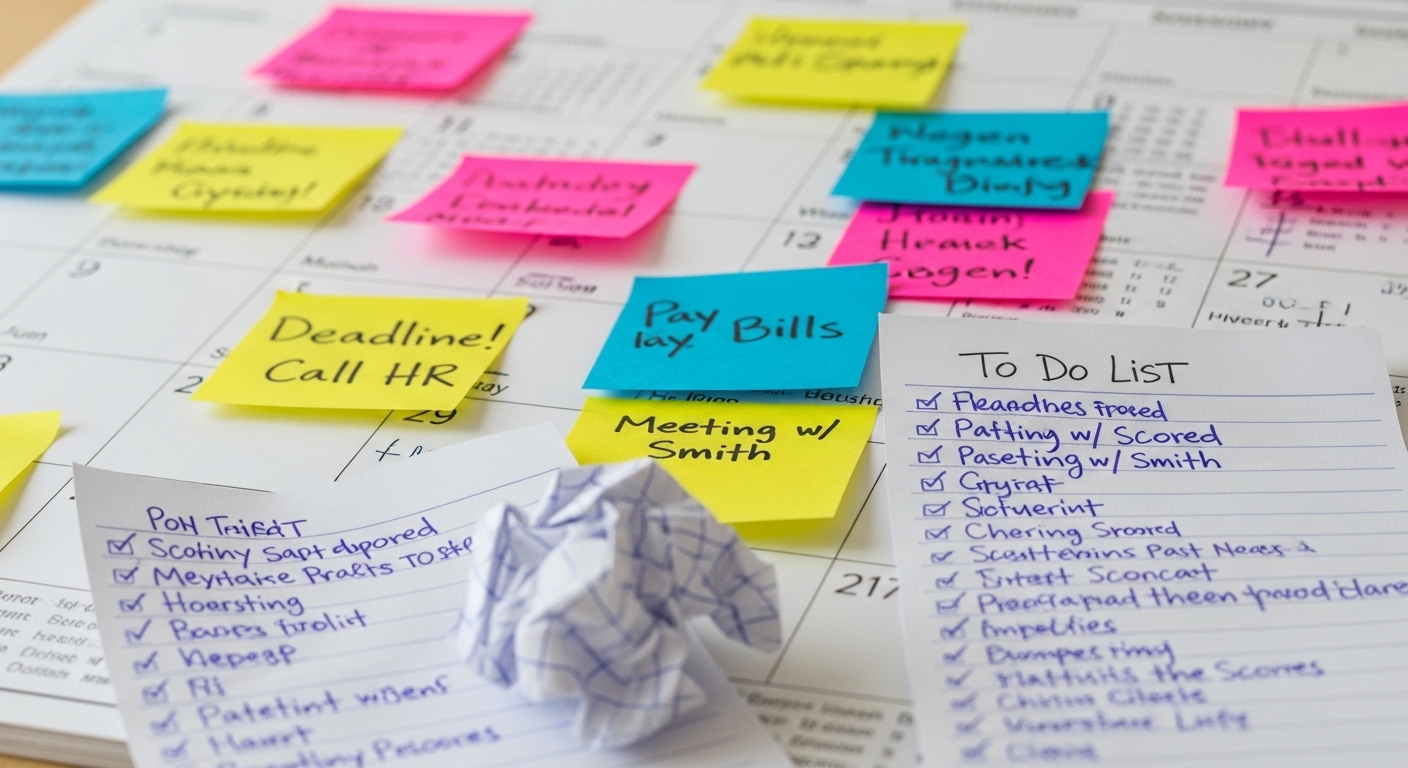
Image fx 13 12

Step 1: Start Small (First Step to Praying Consistently)

If you’re struggling, reduce your entry point. Five minutes is enough. Two minutes is enough. The aim is to create a nonthreatening, repeatable practice.

Begin with a micro-prayer routine you can complete even when your schedule is chaotic. For example: breathe deeply for 30 seconds, offer one sentence of thanks, and ask for help for one specific thing today. Small wins build identity—when you keep doing something for weeks, you begin to think of yourself as someone who prays. Momentum follows identity.

You can scale up later. But only scale when you genuinely enjoy the rhythm and when it becomes reliable. For now, victory is showing up—even for two minutes.

Follow this simple routine:
👉 Simple Daily Prayer Routine (5–10 Minutes)

Sample 5-Minute Prayer Routine

Even five minutes can be structured so it feels meaningful. Start by sitting or standing where you’ll be free from interruptions. Spend 60 seconds breathing and naming one thing you’re grateful for. Spend 120 seconds reading one verse slowly—try Philippians 4:6-7 as a comfort when anxiety is present. Spend the last two minutes bringing one request to God and leaving the rest in silence.

Short routines like this develop muscle memory and trust. Over time, those five minutes can naturally expand to fifteen without force.

Step 2: Pick a Trigger

To make prayer regular, attach it to an existing habit. This is habit stacking: you add a new habit to something you already do. The trigger removes the need to decide to pray each day.

Choose a trigger you already do at the same time and place. Common choices are: morning coffee, locking the front door, bedtime routine, or getting into the car. Attach your prayer to that trigger. After one to two weeks of repetition, your brain begins to associate the trigger with prayer, making the practice automatic.

If mornings are unpredictable, pick a trigger that happens multiple times a day (like a meal or a commute). The exact trigger matters less than its reliability. Once you find a dependable cue, use it to cue your prayer habit consistently.

Examples of Good Triggers

  • Brewing your morning coffee: the aroma cues a short gratitude prayer.
  • Turning off your bedside lamp: a moment for a nightly review and request.
  • Washing your hands: a quick breath prayer for patience.
  • Sitting in your car: a two-minute centering prayer before driving.

Keep the trigger simple. Complexity kills habits; simplicity builds them.

Image fx 14 11

Step 3: Remove Pressure

You need to lower the stakes around prayer. Pressure leads to avoidance. When prayer feels like a test you might fail, you’ll either try too hard or give up. Reduce expectation and you’ll be more likely to show up.

One practical way to remove pressure is to prepare a few go-to prayers or prompts you can use when you don’t know what to say. Here are options you can keep on your phone or in a small card in your wallet: a gratitude list, a confessional prompt, a short intercession list (three people), and a one-sentence surrender like “Lord, help me to trust you today.” Having these ready removes the need to craft a perfect prayer every time.

Also normalize brief prayers. A breath prayer—two to four words repeated slowly—can keep you connected throughout the day. Examples include “Lord, be near,” or “Jesus, give peace.” These are accessible, fast, and spiritually real even if they feel ordinary.

Scripted Prompts to Keep Handy

  • “Thank you, God, for…”
  • “Help [name] with…”
  • “Please give me wisdom for…”
  • “I surrender this day to you.”

These prompts lower the bar and keep you engaged without the pressure to perform.

Step 4: Expect Imperfection

You will miss days. You will get distracted in prayer. You will feel dry. That’s normal. Change your relationship to failure: it’s not the end of the habit, it’s data.

Create a simple recovery plan for misses. For example, decide that if you miss your morning prayer you will do a 60-second midday breath prayer. Or place a sticky note reminder that gently invites you back the next day: “Try again today.” This removes shame and makes your practice resilient.

Jesus taught persistence in prayer in Luke 18:1, urging you to keep going even when it’s not glamorous. When you accept imperfection and build small contingencies, prayer becomes a long game you can play faithfully.

What to Do When You Miss a Day

Resist the urge to punish yourself. Instead, note what distracted you and simplify the plan. Maybe your morning routine needs a different trigger, or maybe your early expectation was too big. Adjust and return.

If you feel discouraged:
👉 What to Do When You Don’t Feel Like Praying

Step 5: Make It Visible

Visible systems shape behavior. Out of sight is out of mind. Create cues that remind you to pray until prayer becomes habitual.

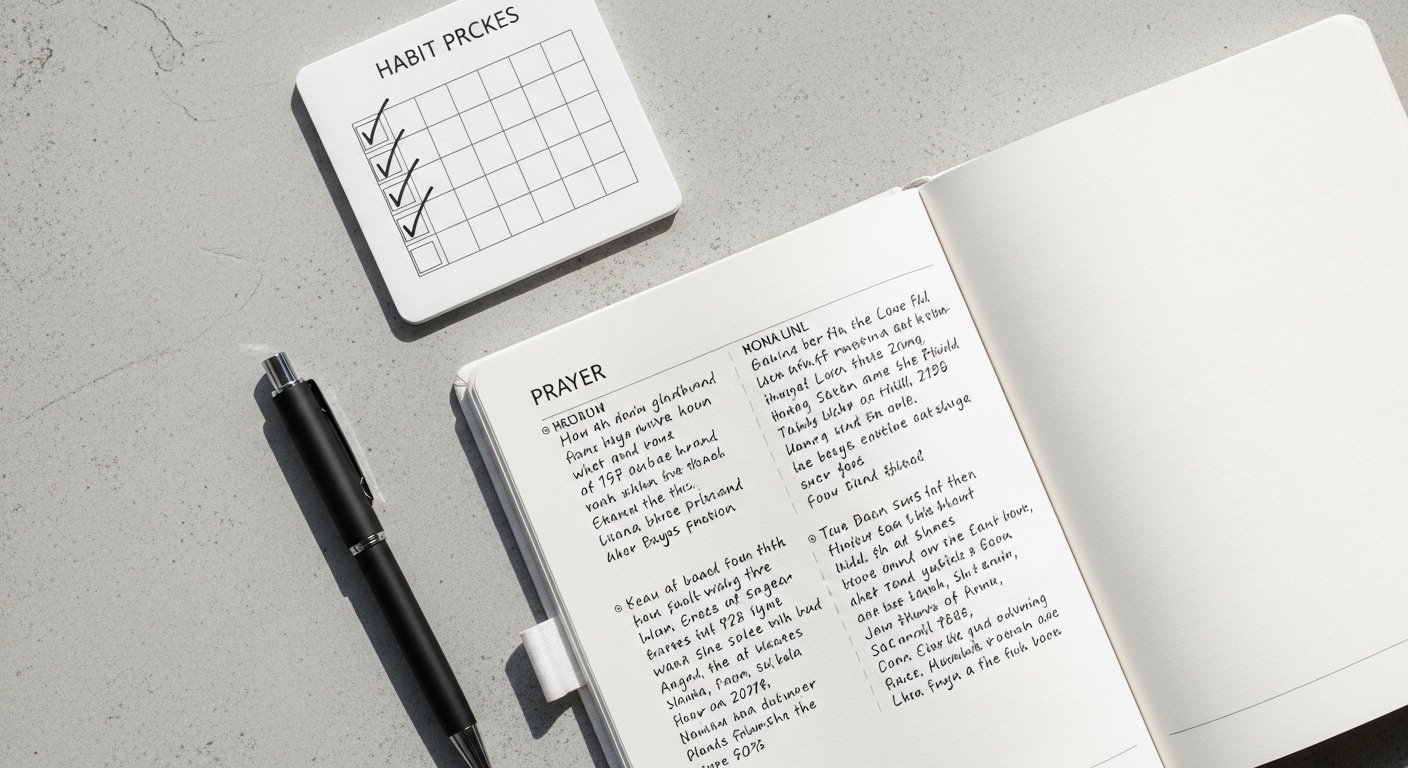
Use a physical journal, a sticky note on your bathroom mirror, a reminder on your phone, or a habit tracker app. Track only one or two metrics: days you prayed and a short note about the experience. Over time, patterns will appear and you can tweak your routine. Seeing a streak of green boxes or checked days motivates you more than abstract intentions.

A visible habit tracker also helps you celebrate small wins. When you keep records of short daily prayers, you’ll be able to look back and see progress even when it feels slow.

Tools to Make Prayer Visible

  • A pocket-sized prayer journal with three fields: gratitude, request, answered prayer.
  • A simple calendar where you mark each day you prayed.
  • Phone reminders with gentle text prompts.
  • A sticky note on the coffee machine that says, “Pause. Pray.”

Choose one visual system and keep it simple so it’s sustainable.

Image fx 15 10

Common Struggle: “I Don’t Feel Like Praying”

It’s normal to object, “I don’t feel like praying.” Many people wait for an emotional nudge before they pray. Feeling like praying is not reliable. The discipline of prayer often leads feelings, not the other way around.

When you don’t feel like praying, use structure and content that remove the need to manufacture emotion. Read a short Psalm aloud—Psalm 5:3 (Psalm 5:3) is a great morning prayer example. Pray the Psalms word-for-word if your heart is numb. Use structured methods like SOAP (Scripture, Observation, Application, Prayer), breath prayers, or a list of three people to pray for.

You can also enlist external help: a prayer podcast, a short guided prayer video, or an accountability partner who texts you a daily check-in. The key is to start small and consistent even if the feeling isn’t there; feelings often follow practice.

Practical Moves When You Don’t Feel Like It

  • Read a Psalm aloud for 2–3 minutes.
  • Pray a one-sentence breath prayer.
  • Pray for one person you love.
  • Use a guided prayer app for five minutes.

Each of these moves helps you return to prayer without waiting for a mood shift.
How to Structure Your Prayer Time

You’ll want both spontaneity and structure. Too much structure feels rigid; too little becomes aimless. A framework gives you safety and freedom.

Try a simple pattern you can repeat: Presence, Praise, Read, Request, Listen, Commit. Spend one minute on presence (slow breath, center), one minute praising or thanking, two minutes reading a verse and reflecting, one minute asking, and one minute of silence to listen. That structure fits a ten-minute window but can be compressed to five minutes or expanded to thirty.

Tools like journaling prompts, a prayer list, or a set of memorized verses make this structure easy to implement.

A Flexible Prayer Framework

  • Presence: settle and breathe.
  • Praise/Thanks: name one thing.
  • Read: one short verse.
  • Request: bring one need.
  • Listen: silent pause or simple question, “What do you want to say?”
  • Commit: a one-sentence surrender for the day.

This framework helps you cover the relational elements of prayer without feeling overwhelmed.

Daily Routines You Can Start Today

You don’t need a perfect plan—just a practical one. Here are two routines you can try immediately. Both are designed to be reproducible and flexible.

  • 5-Minute Morning Routine: Single verse reading, one sentence of gratitude, prayer for the day, and a 30-second silence.
  • 15-Minute Evening Routine: Review the day briefly, confess anything that’s heavy, thank God for at least three things, pray for three people, and read a Psalm or short devotional.

Rotate between routines if that helps you stay engaged. The point is steady repetition, not length.

When Life Is Crazy: Micro-Prayers and Scattered Moments

Your life will sometimes be too busy for quiet time. That’s where micro-prayers save you. These are 10–30 second prayers you can do while making dinner, walking, or standing in line. They keep you anchored and maintain momentum.

Micro-prayers can be simple: “Lord, give patience now,” or “Thank you for this meal,” or “Help me love this person.” You’re forming a habit of turning toward God throughout the day, which is the essence of continuous prayer described in 1 Thessalonians 5:17.

Measuring Progress (Without Turning Prayer into Chore)

You don’t have to measure prayer like a fitness tracker, but a little data helps. Track only two things: days you prayed and something that changed (a short answer). This helps you see the cumulative effect of small practices.

Every few weeks, review your journal or tracker and celebrate growth. Maybe you prayed five minutes more often than last month, or you noticed a shift in your heart. Celebrate the small wins to stay motivated and avoid perfectionism.

Troubleshooting Common Problems

If your new system falters, troubleshoot with curiosity, not condemnation. Ask practical questions: Is the trigger reliable? Is the expectation realistic? Is there a time of day that constantly gets interrupted? Adjust and try again.

If boredom is the enemy, change the form of prayer: try praying through art, music, walking, or journaling. If distraction dominates, shorten the prayer to a breath prayer and gradually lengthen it. If shame creeps in, talk to a trusted friend or pastor who can help you reframe the habit with grace.

Short-Term Challenges and Long-Term Growth

Habits rarely move linearly. You’ll have bursts of consistency and plateaus. The aim is long-term growth formed by daily tiny acts. Reframe the journey: small, repeated actions compound into spiritual growth. Expect ups and downs, but keep your compass set on relationship, not metrics.

When doubts surface, remember the biblical encouragement to be persistent in prayer (Luke 18:1: Luke 18:1). Persistence is not heroism—it’s practicing trust even when you don’t fully feel it.

A Simple 30-Day Starter Plan

If you want a practical launch, try this 30-day plan:

  • Days 1–7: Five minutes daily. Focus on gratitude, one verse, one request.
  • Days 8–14: Keep five minutes and add a nightly 60-second review.
  • Days 15–21: Extend two morning sessions by 2–3 minutes each or add a weekly 15-minute block.
  • Days 22–30: Maintain daily practice, add one accountability check-in per week, and celebrate what’s changed.

Adjust pace to your life. The goal is sustainable growth, not an intense burst you can’t maintain.

Resources and Next Steps

You don’t have to invent everything. Use guided prayer resources, apps, or books when you’re stuck. Start with simple tools: a pocket prayer journal, a short devotional, and an accountability partner. If you want to deepen your practice later, study contemplative practices like lectio divina, breath prayer, or guided silence.

When you’re ready to learn basic prayer frameworks, check out a beginner guide on how to pray: how to pray properly. For building a daily routine: prayer routine. If you struggle with motivation: don’t feel like praying. These internal resources can give you templates you can personalize.

Biblical Encouragement

Prayer isn’t magic; it’s relationship. Scripture encourages persistence, honesty, and a posture of dependence. Turn to these passages when you need a reminder:

Let these verses anchor your practice and remind you that prayer is meant to shape your life over time.

Image fx 16 8

A Short Prayer to Start

Take a breath and try this short prayer now:

Lord, help me to return to you today. Give me the grace to pray simply and consistently. Teach me to trust you in small things and to keep coming back when I fail. Amen.

Keep It Simple (Important Reminder)

You don’t need a perfect system to start praying consistently.

Focus on this:

👉 Start small
👉 Stay consistent
👉 Return when you miss

Consistency grows through repetition—not perfection.

Next Steps: Build a Consistent Prayer Habit

Now that you know how to start praying consistently, the next step is simple: practice daily.

👉 If you’re just starting:

Read → How to Pray (Step-by-Step for Beginners)

👉 If you don’t know what to say:

Go to → What to Say When You Pray

👉 If you want a simple routine:

Start here → Simple Daily Prayer Routine (5–10 Minutes)

👉 If you feel stuck or unmotivated:

Read → What to Do When You Don’t Feel Like Praying

The goal is simple:
Start small. Stay consistent. Keep coming back.

Visited 14 times, 14 visit(s) today

You May Also Like