



You want to pray—but staying consistent feels harder than it should.
Maybe you start strong for a few days, then slowly stop. Or you only pray when you feel emotional, stressed, or guilty. Over time, it becomes a cycle of starting and stopping.
If that sounds familiar, you’re not alone.
Learning how to start praying consistently is not about being more “spiritual”—it’s about building a simple rhythm that fits your real life.
In this guide, you’ll learn:
- why consistency is difficult (and normal)
- how to build a prayer habit that actually lasts
- simple daily routines you can start today
- what to do when you miss days or don’t feel like praying
This is not about pressure or performance. It’s about building a steady connection with God—one small step at a time.
Why Consistency in Prayer Is Hard
Most people don’t struggle with prayer because they don’t care about God.
They struggle because their system doesn’t support consistency.
Common reasons include:
- no fixed routine or trigger
- unrealistic expectations (too long, too complex)
- relying on emotion instead of structure
- guilt after missing days
Prayer becomes inconsistent when it depends on motivation instead of rhythm.
Jesus reminds us in Matthew 6:6 that prayer is about relationship, not performance.
That means the goal is not perfect prayer—it’s repeated return.
The Real Problem Isn’t Discipline—It’s Design
Most people try to “force” consistency through willpower.
But habits don’t work that way.
You don’t fix inconsistency by trying harder—you fix it by designing:
- a time
- a trigger
- a simple structure
Once prayer becomes part of your daily rhythm, consistency becomes natural instead of forced.

How to Start Praying Consistently (Simple 4-Step Plan)
If you’re starting from inconsistency, begin here:
- Start with 2–5 minutes daily
- Attach prayer to an existing habit (coffee, bedtime, commute)
- Use a simple structure (don’t overthink it)
- Restart immediately after missing a day
👉 The goal is not intensity—it’s repetition.
Step 1: Start Small
Five minutes is enough.
Even two minutes is enough.
Example:
- 1 sentence of gratitude
- 1 short request
- 30 seconds of silence
Small consistency builds identity. Over time, you become someone who prays naturally.
Step 2: Pick a Trigger (Habit Stacking)
Attach prayer to something you already do daily:
- morning coffee
- brushing teeth
- bedtime routine
- starting your car
This removes decision fatigue and builds automatic rhythm.
Step 3: Remove Pressure
Prayer fails when it feels like performance.
Instead:
- use simple words
- short prayers are valid
- repetition is enough
Example prompts:
- “God, help me today.”
- “Thank you for this moment.”
- “Guide my thoughts.”
Step 4: Expect Imperfection
You will miss days.
That’s normal.
What matters is not perfection, but return.
Jesus encourages persistence in Luke 18:1—not perfection, but endurance.
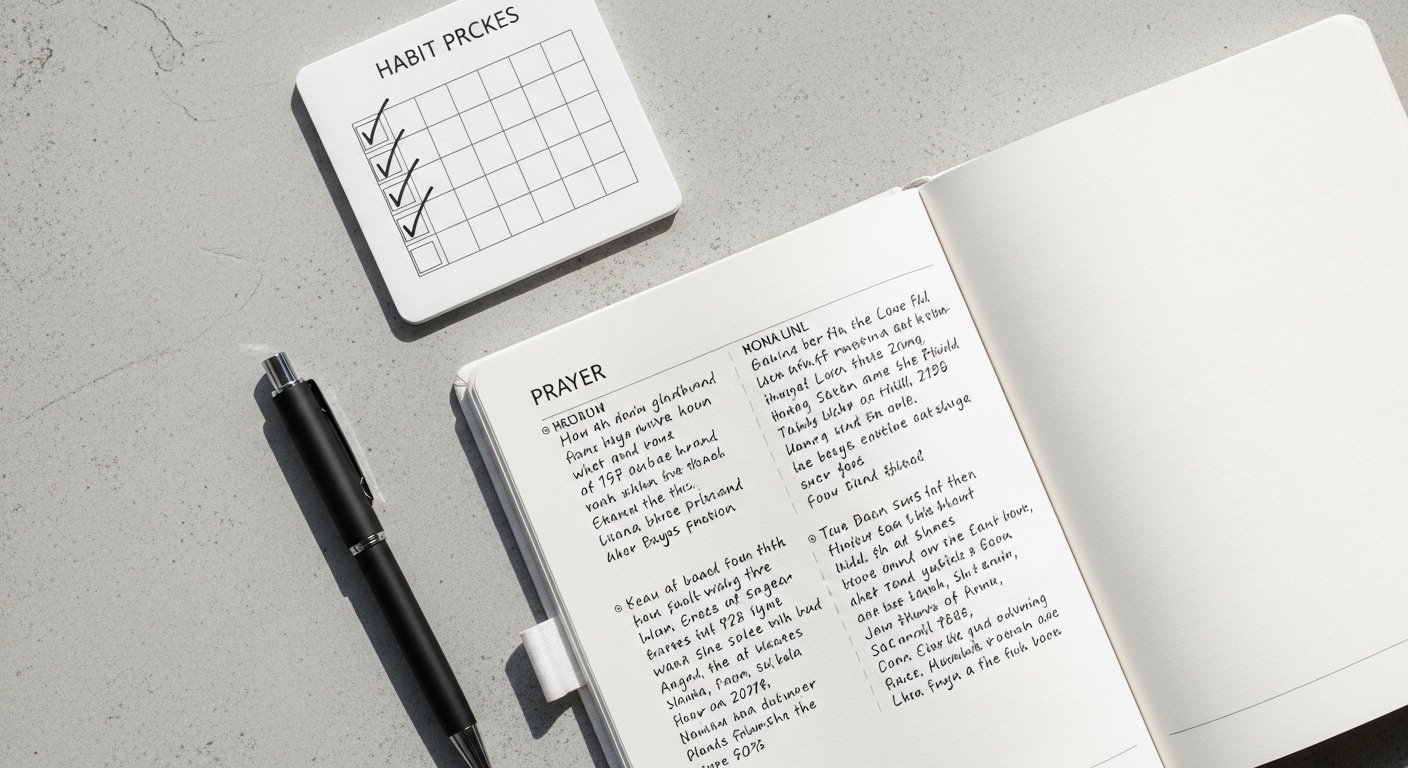
Step 5: Make It Visible
What gets seen gets repeated.
Use:
- journal
- phone reminder
- habit tracker
- sticky note
Visibility strengthens consistency.
What to Do When You Don’t Feel Like Praying
This is where most people stop.
But consistency is not built on feeling—it’s built on structure.
When motivation is low:
- pray one sentence
- read one short verse
- use a breath prayer
Even small connection keeps the habit alive.
Unrealistic Expectations
Many people set goals they can’t sustain: daily hour-long sessions, elaborate liturgy, or a prayer schedule that ignores life’s ebbs and flows. When you miss a day or two, guilt grows and motivation evaporates.
Shift from an all-or-nothing mindset to a “recovery and return” mindset. Expect misses and decide in advance what you’ll do when you miss. This reduces shame and makes consistency more likely across the long term.

What to Do When You Don’t Feel Like Praying
This is where most people stop.
But consistency is not built on feeling—it’s built on structure.
When motivation is low:
- pray one sentence
- read one short verse
- use a breath prayer
Even small connection keeps the habit alive.

Common Struggle: “I Don’t Feel Like Praying”
It’s normal to object, “I don’t feel like praying.” Many people wait for an emotional nudge before they pray. Feeling like praying is not reliable. The discipline of prayer often leads feelings, not the other way around.
When you don’t feel like praying, use structure and content that remove the need to manufacture emotion. Read a short Psalm aloud—Psalm 5:3 (Psalm 5:3) is a great morning prayer example. Pray the Psalms word-for-word if your heart is numb. Use structured methods like SOAP (Scripture, Observation, Application, Prayer), breath prayers, or a list of three people to pray for.
You can also enlist external help: a prayer podcast, a short guided prayer video, or an accountability partner who texts you a daily check-in. The key is to start small and consistent even if the feeling isn’t there; feelings often follow practice.
Practical Moves When You Don’t Feel Like It
- Read a Psalm aloud for 2–3 minutes.
- Pray a one-sentence breath prayer.
- Pray for one person you love.
- Use a guided prayer app for five minutes.
Each of these moves helps you return to prayer without waiting for a mood shift.
How to Structure Your Prayer Time
You’ll want both spontaneity and structure. Too much structure feels rigid; too little becomes aimless. A framework gives you safety and freedom.
Try a simple pattern you can repeat: Presence, Praise, Read, Request, Listen, Commit. Spend one minute on presence (slow breath, center), one minute praising or thanking, two minutes reading a verse and reflecting, one minute asking, and one minute of silence to listen. That structure fits a ten-minute window but can be compressed to five minutes or expanded to thirty.
Tools like journaling prompts, a prayer list, or a set of memorized verses make this structure easy to implement.
A Flexible Prayer Framework
- Presence: settle and breathe.
- Praise/Thanks: name one thing.
- Read: one short verse.
- Request: bring one need.
- Listen: silent pause or simple question, “What do you want to say?”
- Commit: a one-sentence surrender for the day.
This framework helps you cover the relational elements of prayer without feeling overwhelmed.
Daily Routines You Can Start Today
You don’t need a perfect plan—just a practical one. Here are two routines you can try immediately. Both are designed to be reproducible and flexible.
- 5-Minute Morning Routine: Single verse reading, one sentence of gratitude, prayer for the day, and a 30-second silence.
- 15-Minute Evening Routine: Review the day briefly, confess anything that’s heavy, thank God for at least three things, pray for three people, and read a Psalm or short devotional.
Rotate between routines if that helps you stay engaged. The point is steady repetition, not length.

👉 Related Prayer Growth Guides
To strengthen your prayer life:
- How to Pray (Step-by-Step for Beginners)
- How to Hear the Holy Spirit
- Why You Don’t Feel Like Praying
- Simple Daily Prayer Routine
🌿 Optional Reflection
Prayer doesn’t only shape your personal life—it also influences how you love and honor others.
If you want a reflection on faith, gratitude, and family relationships, you may also read:
Mother’s Day Devotional: Honoring Moms With Scripture, Prayer, and Gratitude
A Short Prayer to Start
Take a breath and try this short prayer now:
Lord, help me to return to you today. Give me the grace to pray simply and consistently. Teach me to trust you in small things and to keep coming back when I fail. Amen.
Final Thought
You don’t need a perfect system to become consistent in prayer.
You need:
- small steps
- simple structure
- willingness to return after failure
Consistency is not built in one moment—it is built in repetition over time.
Even when you miss, you can begin again.
That is how prayer becomes a habit, not a struggle.