



Consistency is one of the hardest parts of prayer.
You may want to pray more regularly—but life gets busy, motivation fades, and routines break down. Over time, it can feel like you keep starting over without real progress.
If that sounds familiar, you’re not alone.
The truth is: consistency in prayer is not about doing more—it’s about doing something simple enough that you can actually repeat it.
This 5–10 minute prayer routine is designed to help you:
- remove pressure
- build a daily rhythm
- and stay connected to God even on busy days
It’s simple, flexible, and designed for real life—not perfection.

Why a Simple Prayer Routine Works
Most people fail at prayer consistency not because they don’t care—but because their approach is too complicated.
A short, structured routine works because it:
- removes decision fatigue
- fits into any schedule
- creates repetition (which builds habit strength)
- reduces guilt when life gets busy
Prayer is not meant to feel like pressure. It is meant to become a rhythm.
Jesus emphasized sincerity and relationship in Matthew 6:6, reminding us that prayer is not performance—it is connection.
The Real Problem Isn’t Prayer—It’s Consistency Design
If you struggle to pray daily, the issue is usually not spiritual failure.
It’s system failure.
Without:
- a trigger
- a structure
- and a realistic time frame
…prayer becomes inconsistent even if your desire is strong.
This routine fixes that by making prayer simple enough to repeat every day.
The 5–10 Minute Prayer Routine
Choose the version that fits your day:
| Prayer step | 5-minute routine | 10-minute routine |
|---|---|---|
| Praise | 1 minute | 2 minutes |
| Gratitude | 1 minute | 2 minutes |
| Honest talk | 1 minute | 3 minutes |
| Ask and trust | 2 minutes | 3 minutes |
| Total | 5 minutes | 10 minutes |
These timings are flexible guides, not rules. Start with five minutes and allow more time when you can.
Step 1: Praise — Focus on God
Begin by shifting your attention to God’s character.
Say simple phrases like:
- “God, You are faithful.”
- “You are good and present.”
This recenters your heart.
📖 Psalm 100:4 — “Enter his gates with thanksgiving…”
Step 2: Gratitude — Name Specific Things
Thank God for real, specific things:
- people
- moments
- small blessings
Specific gratitude strengthens awareness of God in daily life.
📖 Philippians 4:6-7
Step 3: Honest Talk — Be Real With God
Speak openly:
- stress
- fears
- confusion
- needs
No polished language required.
God values honesty over perfection.
Step 4: Ask + Trust — Surrender the Outcome
Bring clear requests, then release them:
- “Help me with this situation.”
- “Give me wisdom.”
- “I trust You with the outcome.”
Why Most People Don’t Stay Consistent
Even with a good routine, consistency breaks because:
- they wait for motivation
- they overcomplicate prayer
- they restart instead of continuing
- they feel guilty after missing days
The solution is simple:
👉 don’t restart the habit—return to it
👉 Related Prayer Growth Guides
To build a stronger prayer life:
- How to Pray (Step-by-Step for Beginners)
- How to Start Praying Consistently
- How to Hear the Holy Spirit
- Why You Don’t Feel Like Praying

🌿 Optional Reflection
Prayer also shapes how we love and honor the people in our lives.
If you want a reflection on gratitude, family, and faith, you may also read:
Mother’s Day Devotional: Honoring Moms With Scripture, Prayer, and Gratitude
How to Stick With This Routine
Focus on:
- same time daily (trigger)
- same short structure
- restart immediately if you miss
Consistency comes from repetition, not intensity.
Flexible Use for Different Days
- Morning: full 5–10 minutes
- Busy day: 2-minute version
- Evening: reflection + gratitude
Keep the structure simple and adaptable.
Common Mistakes and How to Avoid Them
People often trip up by trying to do too much too soon, thinking prayer must be long or dramatic to count. That leads to guilt and inconsistency. Another mistake is waiting for perfect silence or the “right” mood; if you wait, you’ll miss days.
Avoid these pitfalls by using the five-minute rule: do the routine in five minutes, even if you’re tired, busy, or distracted. Use a simple trigger—getting out of bed, finishing your coffee, or before opening your laptop—so prayer becomes part of an existing pattern.
A final mistake is losing variety: if you repeat the same phrases mechanically, your heart might drift. Keep the four-part structure but change phrases, Scriptures, and focus to stay engaged.

Variations for Different Seasons and Situations
Your life will change. The beauty of this routine is that it adapts.
- Morning: Use the five-minute version to set the tone for your day.
- Commute: Pray the same structure quietly in the car or with headphones.
- Lunch break: Pause for a two- or three-minute check-in using praise and gratitude.
- Evening: Extend to ten minutes, include reflection on the day and confession.
- Crisis season: Allow a full ten minutes to pour out your heart and request urgent help.
- Busy season: Keep it to two minutes—quick praise and a single request—until you can expand.
Scripture supports adaptable prayer life: “Pray continually.” See 1 Thessalonians 5:17. Prayer can be woven through your day, not just scheduled.
Tools, Apps, and Simple Aids
You don’t need fancy tools, but a few practical aids make it easier:
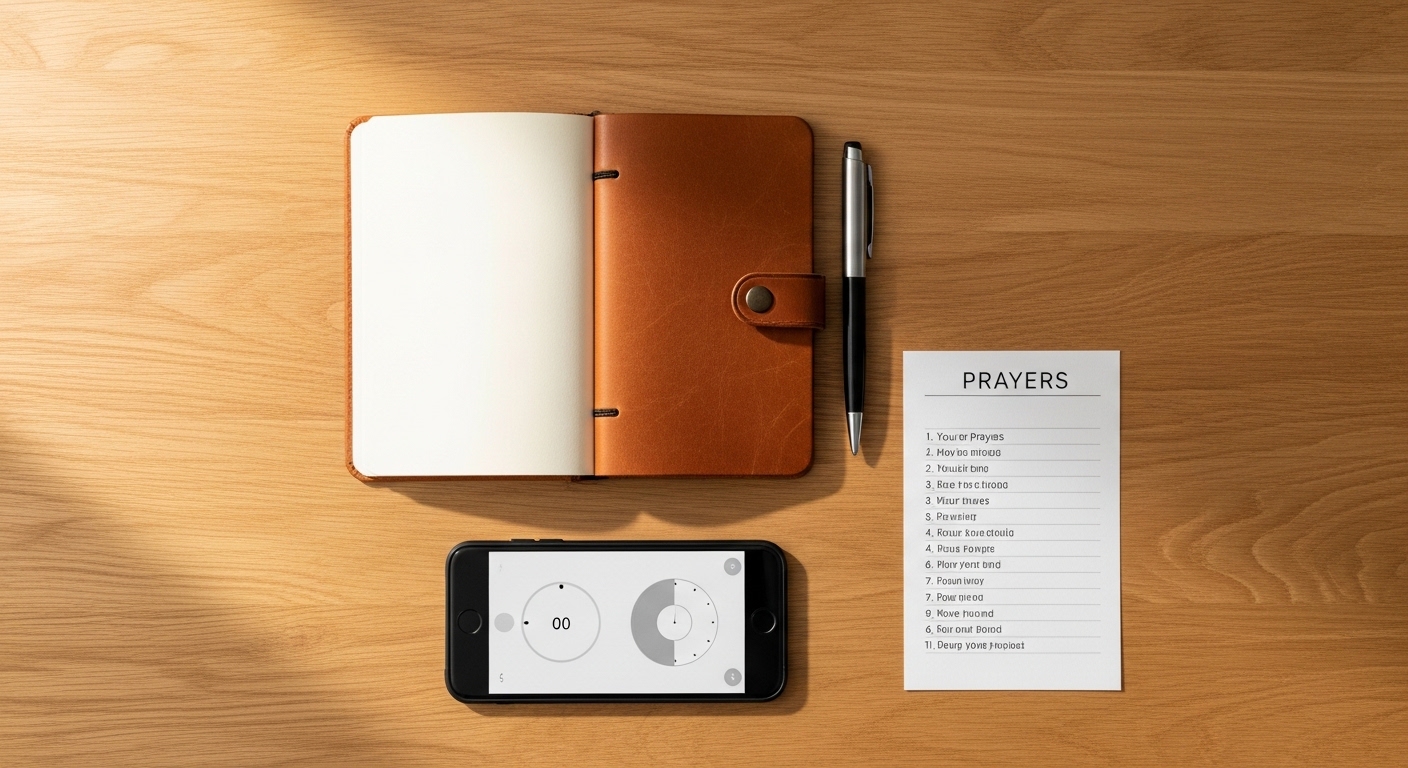
- Timer app set to 5–10 minutes.
- A small journal and pen next to your bed or coffee maker.
- A short list of go-to Bible verses to anchor your praise and trust.
- A prayer app or daily reminder that nudges you at the same time each day.
A physical ritual—lighting a candle, opening your Bible to a set verse, putting your phone on Do Not Disturb—can signal your mind that it’s time to pray.
Sample 5-Minute and 10-Minute Scripts You Can Use
If you don’t want to think of words, use a short script. Read it slowly and genuinely.
5-Minute Script: Spend about one minute each on praise, gratitude, and honest talk, then two minutes asking for help and expressing trust. Use the words below as starting points and add your own.
- Praise: “Lord, you are good and faithful. You are my refuge today.”
- Gratitude: “Thank you for this new day, for my family, for provision.”
- Honest Talk: “I’m feeling anxious about work. I’m tempted to worry.”
- Ask + Trust: “Please give me peace and the wisdom I need. I surrender this work to you.”
10-Minute Script (expand each section with specifics and Scripture):
- Praise: “God, you are sovereign, loving, and present. Thank you for your faithfulness across generations.” Read Psalm 145:2 if you’ve got the extra minute.
- Gratitude: Give three specifics and briefly reflect on why each matters.
- Honest Talk: Tell God the reality—fears, joys, unresolved feelings—and pause for a moment of silence.
- Ask + Trust: Make distinct requests and conclude with, “I trust you with the outcome, Lord.”
These scripts keep you honest and moving.
Incorporating Scripture into Your Short Routine
Short Scripture readings pair well with this routine. You might memorize a short verse for the praise minute or read a line for trust. A few short passages to rotate:
- Psalm 100:4 — praise and thanksgiving.
- Philippians 4:6-7 — prayer with thanksgiving.
- Matthew 6:6 — private and sincere prayer.
- Proverbs 3:5-6 — trust and guidance.
Rotate these through your week. Even a single verse memorized changes how you pray—those words settle into your heart and shape your requests.
Practical Prompts to Keep You from Stalling
When you can’t think of words, prompts help. Here are short prompts to line up with the routine sections:
- Praise prompt: “Name one attribute of God.”
- Gratitude prompt: “What surprised you today?”
- Honest talk prompt: “What is weighing on you right now?”
- Ask + Trust prompt: “Name one thing you want God to do and say, ‘I trust you, Lord.’”
Use these prompts as mental cues to move the prayer along. If you need more structure, write them on an index card.
FAQs — Quick Answers to Common Questions
Q: What if I miss a day? A: Don’t punish yourself. Gently return. The habit of restarting matters more than never missing.
Q: Can I pray aloud? A: Yes. Praying aloud can focus you. If you’re in public, speak quietly or pray inside.
Q: How soon can I lengthen my prayer time? A: When five minutes feels easy and consistent for several weeks, try adding a minute or two. Let growth be gradual.
Q: What if I don’t feel anything? A: Emotions aren’t required. Faithfulness is. Keep praying; feelings often follow faithful practice.
Q: Should prayer replace Scripture reading? A: No. Prayer and Scripture reading complement each other. You can add a single verse into your routine.
Sample Short Prayers for Different Moments
If you like ready-made prayers, here are a few you can use verbatim. Speak them slowly and honestly.
Morning 5-Minute Prayer: “Lord, you are good. Thank you for this day and rest. Help me to love well and work with wisdom. I’m anxious about the meeting; give me clarity. I trust you with the outcome. Amen.”
Busy Day 2-Minute Check-In: “God, thank you for this minute. Help me with patience. Give me what I need to do today. I trust you. Amen.”
Evening 10-Minute Reflection: “Father, I praise you for your mercy. Thank you for today’s blessings and for lessons learned. I confess where I fell short. Please forgive me and help me grow. I lift up the people on my heart—[name specifics]—please meet them. I surrender tomorrow to you. Amen.”
Why Surrender Is Not Weakness
Surrender in prayer is an act of spiritual maturity, not resignation. When you ask and then consciously release the outcome, you’re recognizing God’s sovereignty and choosing to stop carrying the burden alone. Scripture repeatedly calls you to trust: “Trust in the LORD with all your heart and lean not on your own understanding.” See Proverbs 3:5-6.
Surrender frees your energy to act where you can while leaving the uncontrollable to God.
Long-Term Benefits of a Tiny Habit
Small daily prayers change you gradually. Over months and years you’ll notice shifts: calmer responses to stress, increased gratitude, clearer sense of direction, and deeper trust. Regular prayer rewires your attention toward God’s presence and perspective.
This is why the routine isn’t about the five minutes alone—it’s about those minutes compounding into a spiritual life that feels supported, steady, and anchored.

Final Thought
You don’t need a perfect routine to build a consistent prayer life.
You need:
- a simple structure
- a realistic time frame
- and the willingness to return when you miss
Small daily prayers create long-term spiritual strength.
Consistency is not built in intensity—it is built in repetition.
Short Prayer
Lord, thank you for this time. Help me to be consistent and honest in prayer.
Teach me to praise, to give thanks, to speak plainly, and to trust you with what I cannot control. Amen.