



You feel it: the frustration when your words don’t match your heart, the emotional weakness that leaves you reactive instead of rooted, the spiritual inconsistency that makes holiness feel like a mood rather than a way of life. You try to do the right thing, but by evening you’ve slipped back into old patterns, discouraged and wondering if “goodness” and “integrity” are just ideals that don’t fit your everyday reality.
This is where the fruit of the Spirit transforms you — not by shaming you into better behavior, but by shaping your heart from the inside out. When you invite the Holy Spirit to lead, the qualities that look like moral effort become the natural overflow of a life connected to Jesus. You don’t merely act good; you become the kind of person whose choices spring from a renewed inner life.

Biblical Foundation
To root your pursuit of goodness and integrity in Scripture, begin with the fruit of the Spirit and other clear teachings about righteous living.
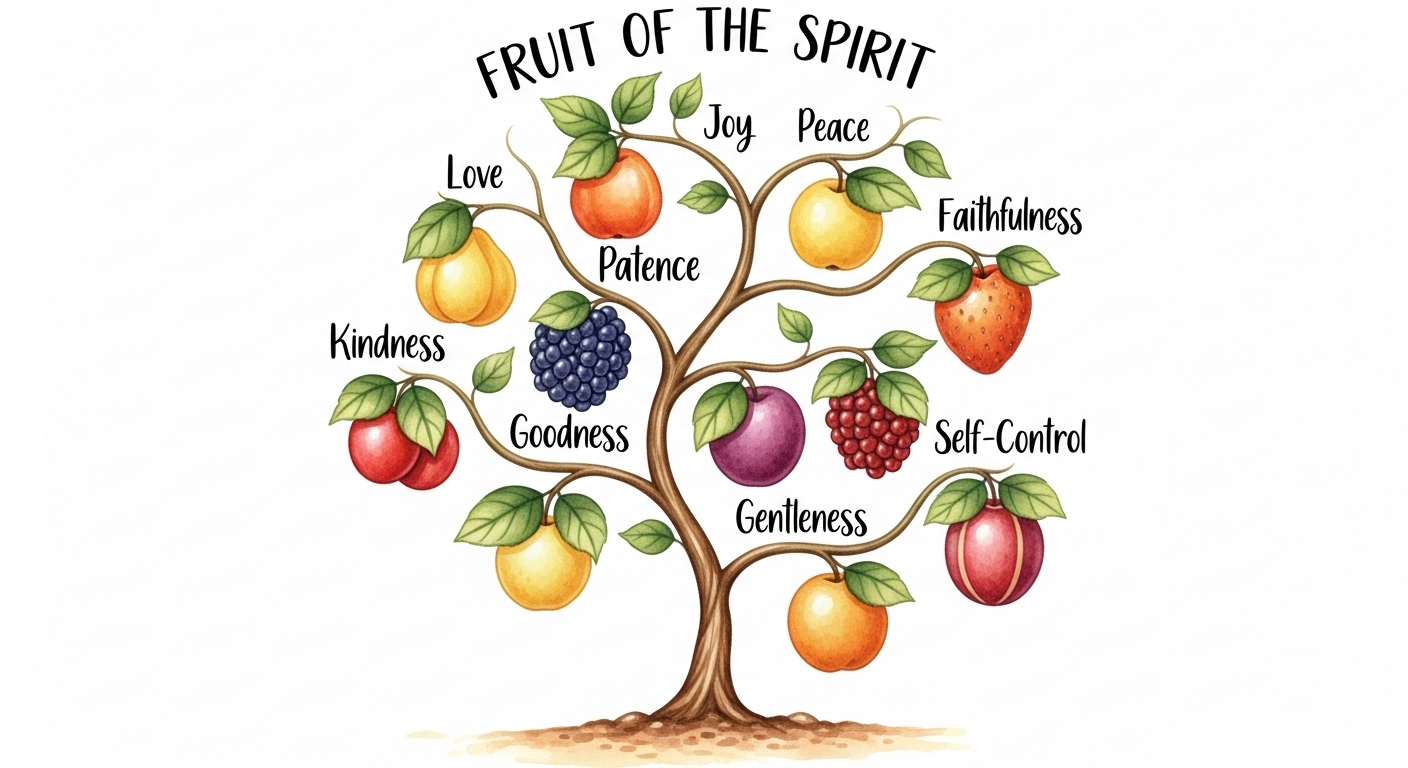
- Galatians 5:22-23 gives you a portrait of the Spirit’s work in a believer: love, joy, peace, forbearance, kindness, goodness, faithfulness, gentleness and self-control. These are not checklists to perform but character qualities the Spirit cultivates when you remain connected to Christ. Read it here: Galatians 5:22-23.
- Micah 6:8 summarizes God’s ethical heart—doing justice, loving mercy, and walking humbly with God. This verse grounds goodness in relationship and action, not in the appearance of righteousness: Micah 6:8.
- Jesus’ teaching about abiding is crucial. In John 15:4-5, He tells you to remain in Him like branches in the vine—apart from Him you can’t bear lasting fruit. That dependence is the secret to integrity that sticks: John 15:4-5.
- The New Testament also points to inner renewal (Ephesians 4:22-24) and the transformation of your mind (Romans 12:2) as the means to start living differently: Ephesians 4:22-24, Romans 12:2.
These passages together show that biblical goodness and integrity are both a gift and a responsibility: they flow from union with Christ and from daily choices to live according to His Word.
What It Really Means
When you talk about biblical goodness and integrity, don’t reduce them to mere moral effort or to an extroverted personality trait.
- Not moral effort: Goodness is not simply trying harder, as if spiritual growth were a willpower contest. The Bible presents goodness as the fruit the Spirit cultivates. You cooperate, but the growth is Spirit-produced, not merely self-generated.
- Not just a personality trait: Integrity is more than being “consistent outwardly.” It’s congruence between your inner life and outward actions—what you value, speak, and do are aligned because your heart has been transformed by Christ.
- Spirit-produced transformation: Real biblical goodness begins with the Spirit. You open the door to transformation by abiding in Christ, soaking in Scripture, and inviting the Spirit to reshape your desires and habits. As you remain connected, the outward results—kind words, faithful actions, moral clarity—start to come naturally.
When you understand goodness and integrity this way, pressure shifts from performing to receiving and responding. You still make choices, but those choices are empowered and reoriented by the Spirit’s work within you.
Why It’s Hard
Living with consistent goodness and integrity isn’t easy. You face real, everyday obstacles that test your resolve and reveal the areas you need the most spiritual growth.
Emotions That Pull You Off Course
Your feelings aren’t wrong in themselves, but they can be deceptive. Anger, fear, shame, loneliness—these emotions can hijack your decisions and push you toward reactions you later regret. When you’re emotionally triggered, integrity becomes a distant goal because you’re responding to pain instead of to Christ. Emotional discipline doesn’t mean stifling your feelings; it means learning to process them with God’s truth and the help of the Holy Spirit.
Habits That Keep You Stuck
Old habits run deep. The small, seemingly harmless routines—sarcastic comments when stressed, avoidance when confrontation is needed, quick excuses to protect your reputation—add up to a life that contradicts your professed values. Habits create default responses. Changing them requires intentionality, repetition, and the Spirit’s power, not just a stern commitment.
Environmental Pressure and Cultural Norms
You live in a world that often rewards shortcuts, self-promotion, and compromise. Family dynamics, workplace culture, and social expectations can subtly shape your choices. Pressure to conform can make integrity feel costly. In these moments you must discern when to adapt gracefully and when to hold firm to biblical convictions. The courage to do so often comes from a community that supports you and from the inner assurance that God values righteousness more than popularity.
Understanding these barriers helps you plan rightly: you’ll need support, spiritual tools, and realistic strategies to press into lasting change.

How To Grow It Daily (Core Section)
Growing in biblical goodness and integrity happens in the everyday rhythms of your life. Here are five practical, Spirit-centered steps you can begin practicing today. Each step is rooted in Scripture and designed to be habitual so the Spirit’s fruit becomes your default.
1. Prayer Focus: Invite the Spirit First
Start each day by inviting the Holy Spirit to guide your thoughts, words, and decisions. A focused prayer center helps you align your heart before the demands of the day arrive. Say something simple: “Holy Spirit, fill me with Your goodness today. Help me see people with Your eyes and speak with Your kindness.” Make this intentional moment a daily habit.
Practical tip: Keep a short list of prayers for common situations (work conflict, family tension, temptation) and pray those as you step into the day. Prayer primes your heart to respond differently when real tests come.
Scripture to guide you: Ask for the Spirit’s fruit as you pray, remembering Galatians 5:22-23: Galatians 5:22-23.
2. Scripture Meditation: Let Truth Rewire You
Reading the Bible isn’t just about knowledge; it’s about transformation. Choose short passages that speak directly to goodness and integrity, then meditate on them throughout the day. Use techniques like lectio divina, memorization, or writing Scripture on index cards that you keep in pockets or on your desk.
Practical tip: Pick a verse each week—perhaps Philippians 4:8 or Colossians 3:12-14—and repeat it slowly in the morning, mid-day, and evening. Let it shape your imagination about what goodness looks like in specific moments.
When Scripture saturates your thoughts, your responses begin to mirror God’s priorities rather than your impulses.
3. Daily Habit Shift: Tiny Acts, Big Changes
Integrity is often formed in the small choices you make repeatedly. Identify one daily habit that undermines your goodness—maybe gossip, procrastination, or defensive speech—and replace it with a practical, positive habit.
Practical tip: If you tend to speak harshly when stressed, create a simple pause ritual: count to five, take a breath, and ask, “Will this build up or tear down?” This habit gives your Spirit-led heart space to respond differently.
Start small. Change is sustained when it’s achievable. Over time, tiny acts compound into a consistent pattern of integrity.
4. Mind Renewal Practice: Reframe and Replace
Your thought life is the training ground for moral action. Renewing your mind (Romans 12:2) means you actively replace destructive or default thoughts with God’s truth. When a cynical, self-protective, or fear-driven thought arises, consciously counter it with Scripture or a faithful statement about God’s character.
Practical tip: Keep a short list of truth statements that counter your common lies. For example, if you fear rejection, replace the lie “I must please everyone” with “God’s approval is sufficient” and cite a supporting verse like Psalm 119:11 or a personal promise.
This practice isn’t mere positive thinking; it’s Gospel-shaped cognitive training that prepares you to live out integrity under pressure.
5. Accountability Step: Invite Others Into Your Journey
You weren’t designed to pursue integrity alone. Invite trusted friends, a mentor, or a small group to walk with you. Accountability partners listen, pray, and offer perspective. They also call you back when you drift and celebrate growth when you make progress.
Practical tip: Establish a weekly check-in with someone who knows you well. Share one struggle, one success, and one concrete next step. Make commitments specific and measurable so your accountability is practical.
Community doesn’t override your personal responsibility; it strengthens it. God often uses other people to refine your character.

Real-Life Examples
Seeing how biblical goodness and integrity apply to everyday situations helps you translate principles into action. Here are practical examples across common contexts.
Family: Choosing Grace in Tough Conversations
Imagine you’re in a family disagreement about money or caregiving—situations ripe with old hurts and quick defenses. Your temptation might be to protect your reputation or assert your rights. Instead, begin by praying for a softened heart and practice listening fully before speaking.
A practical move: Use a phrase such as, “Help me understand more about how you’re feeling,” and reflect back what you hear. That small posture of empathy lets the Spirit shape your response. When your reaction is rooted in love and patience, you model integrity: you’re the same person in private as in public.
Scriptural encouragement: Micah 6:8 guides you to act justly and love mercy, which looks like humility and compassion even in heated family moments: Micah 6:8.
Work: Integrity When No One Is Watching
At work you face ethical decisions large and small—reporting errors, taking credit, managing time honestly. Your character is shaped by how you act when oversight is minimal. Integrity here means doing the right thing because it reflects God’s standards, not merely to avoid consequences.
A practical move: Create a daily accountability habit like an end-of-day integrity check—ask, “Where did I act out of fear or selfishness today?” and “Where did I reflect Christ?” Log one small step to take tomorrow to improve.
Remember John 15:4-5: your ability to bear fruit at work comes from abiding in Christ, not from pure effort: John 15:4-5.
Stress Moments: Choosing Goodness Under Pressure
Stress compresses your options and often reveals what rules you. In stressful moments, you can default to lashing out, withdrawing, or numbing. Goodness and integrity show up when you choose self-control, gentleness, and faithfulness instead.
A practical move: Build an “emergency” spiritual practice. When stress spikes, stop for a two-minute centering exercise: breathe, pray a brief Psalm or verse (Philippians 4:8 can refocus your mind), and choose one gracious action you can take immediately.
This small ritual creates a pause that allows the Spirit to act rather than your impulses dominating the moment.

Common Mistakes
As you pursue biblical goodness and integrity, watch for familiar traps that can slow or derail you.
Trying Harder Instead of Surrendering
Many Christians respond to failure by trying more—stricter rules, more effort, harsher self-talk. But effort without surrender leads to burnout and legalism. The better path is surrender: return to the vine, confess dependence, and ask the Spirit to do what you cannot. Your human striving needs to be joined with Spirit-led transformation.
Guilt-Based Christianity
Guilt can be a sentinel that alerts you to wrongdoing, but it shouldn’t be your motivator. Living out of shame produces performance-driven faith, not freedom-filled obedience. When guilt points to sin, let it drive you to confession and grace, not to hiding or self-condemnation. God’s restorative love is the context in which integrity grows.
Ignoring the Holy Spirit
You can be busy with spiritual disciplines and noble intentions and still miss the Spirit’s leading. Reading, praying, and serving are vital, but they must be Spirit-guided. Make asking for His presence and prompting an ongoing habit. If your practices become mechanical, pause and ask the Spirit to breathe life back into them.
Avoid these mistakes by returning often to simple dependence and to the grace that enables transformation.
Spiritual Practice: One Daily Action to Transform Your Day
Here’s a practical single daily practice that integrates prayer, journaling, and Scripture reflection. It takes 10–20 minutes and centers you in the Spirit’s presence for the day ahead.
- Begin with a two-minute breath prayer: “Holy Spirit, guide my heart.”
- Read a short Scripture (choose a verse or two related to goodness—for example, Philippians 4:8 or Colossians 3:12-14).
- Journal for five minutes: note where you sense God inviting you to act with kindness or integrity today. Write one concrete, achievable step.
- Pray your written step back to God and ask for the Spirit’s strength to follow through.
- Close with a short declaration: “I will rely on God’s grace today.”
This compact routine trains your heart to start each day with gospel-shaped intention and provides a simple roadmap to act when tests come.
Scripture to support the practice: Psalm 119:11 reminds you to store God’s word in your heart so you don’t sin against Him: Psalm 119:11.
Closing Encouragement
Growing in biblical goodness and integrity is a lifelong journey, not a one-time achievement. You’ll have seasons of steady growth and seasons where you feel like you’re starting over. That’s okay. God is patient and faithful; He cultivates fruit in ways you may not immediately see.
Trust that small, consistent steps matter. The Spirit is already at work in you; your role is to remain, to cooperate, and to choose faithfulness day by day. Growth is gradual, often unseen, and deeply rooted in grace. As James 1:4 reminds you, perseverance produces maturity, and God is the gardener who brings growth in His time.
Remember also that you don’t produce fruit by your own wisdom alone—God gives growth (see 1 Corinthians 3:7). Stay connected to Jesus, invite the Spirit to work in your daily choices, and celebrate the small signs of transformation along the way.
 Continue Growing in the Fruit of the Spirit
 Continue Growing in the Fruit of the Spirit
- Explore related fruit: Love (fruit of the Spirit)
- Explore related fruit: Self-control (fruit of the Spirit)
- Practical guide to ongoing dependence: Walk in the Holy Spirit Daily
Common Scriptures to Keep Handy
- Galatians 5:22-23: Galatians 5:22-23
- John 15:4-5: John 15:4-5
- Romans 12:2: Romans 12:2
- Philippians 4:8: Philippians 4:8
- Psalm 119:11: Psalm 119:11
🙏 Short Prayer
Lord, fill me with Your Spirit and shape my heart to reflect Your goodness and integrity. When I’m tempted to act out of fear, anger, or pride, remind me to return to You. Give me small, faithful steps today and the courage to surrender to Your work in me. Amen.