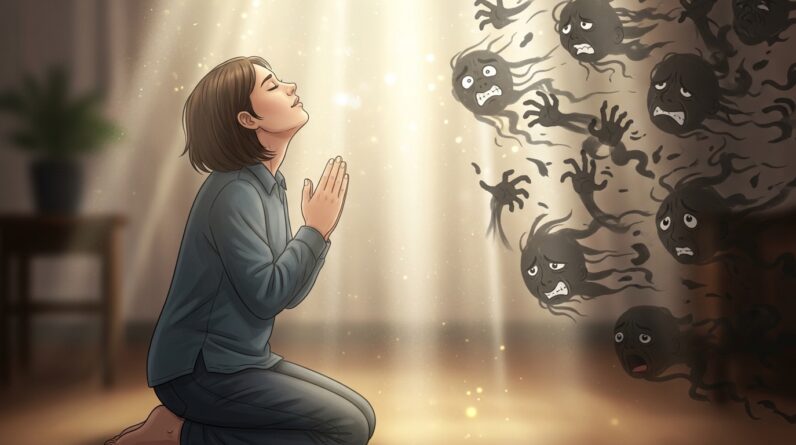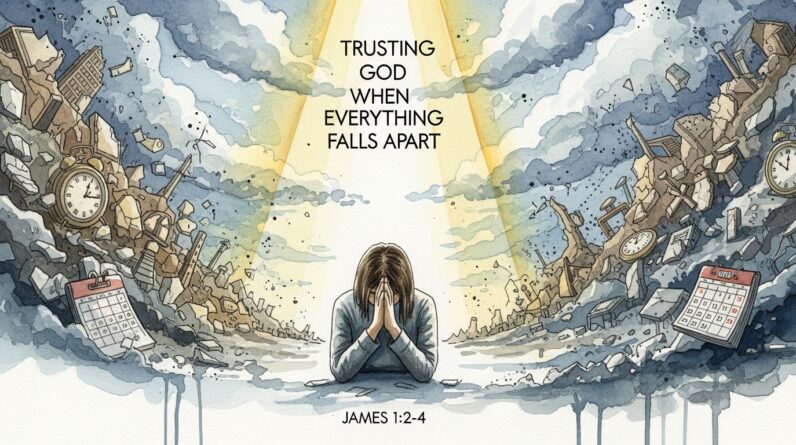



There are seasons in life when your faith feels more fragile than usual. You may still believe in God and long for closeness with Him, yet inside you feel uncertain, spiritually distant, or emotionally drained. Those moments can leave you confused, frustrated, and quietly anxious—wondering if your struggle means something has gone wrong with your faith.
You’re not alone in that experience. Honest doubt, waiting, and hardship are woven through many of the Bible’s most faithful stories. The tension you feel is real, but it doesn’t mean God has abandoned you or that your faith was never genuine. Rather, difficult seasons often become the very soil where faith is tested, refined, and matured.
This article will walk with you through why these struggles happen, what Scripture says about them, how they affect you emotionally and spiritually, and—most practically—how you can keep drawing near to God and growing in faith even while you’re in the valley.

Why These Spiritual Struggles Happen
Difficult seasons in faith are rarely the result of one single thing. More often, they come out of several converging pressures in your life.
First, emotional pressure. When life brings grief, loss, illness, or relational pain, your emotions can numb your spiritual senses. You might find prayer dry, worship flat, or Bible reading empty. That emotional overwhelm makes faith feel like a weight rather than a source of rest.
Second, spiritual discouragement. If answers to prayer seem delayed or outcomes don’t match your expectations, discouragement builds quietly. That discouragement can shift your attention from God’s character to your circumstances, and your trust begins to wobble.
Third, seasons of waiting. Waiting is a spiritual challenge because it asks you to live outside immediate control. Whether you’re waiting for healing, reconciliation, a job, or clarity about a decision, the waiting itself is a test of endurance.
If you’re currently struggling with unanswered prayers, uncertainty, or delayed outcomes, you may find encouragement in Why Waiting On God Feels So Difficult Sometimes — How to Find Strength and Trust in the Wait, which explores how God often works through seasons of waiting to deepen trust and perseverance.
Scripture even invites you to consider trials with a purpose: “Consider it pure joy, my brothers and sisters, whenever you face trials of many kinds” (James 1:2-4). That doesn’t erase the difficulty, but it reframes trials as part of faith’s formation.
Fourth, life hardship and human weakness. You weren’t designed to be spiritually perfect. You’re susceptible to fatigue, boredom, distraction, and sin. All of these can create spiritual drift—where your routines slip, your heart grows hard, and your relationship with God feels out of rhythm.
Finally, faith challenges can come from the deeper purpose of refinement. Scripture often portrays trials as a means God uses to shape your character and perseverance (Romans 5:3-5). Knowing that hardship can have redemptive and formative power doesn’t make pain pleasant, but it does offer a hopeful lens through which to see your suffering.
What the Bible Says About These Seasons
The Bible is honest about hard seasons. It doesn’t pretend faithful people are exempt from pain; it shows how God meets them in the middle of it.
Look at Job, who experienced devastating loss and confusion, yet his story points to God’s sovereignty and mystery. David poured out his soul in the Psalms when he felt far from God—“Why, my soul, are you downcast? Why so disturbed within me?” (Psalm 42:11). That raw honesty models how you can bring your questions and feelings before God instead of hiding them.
The New Testament directly addresses the purpose of trials: “Count it all joy when you fall into diverse trials, knowing that the testing of your faith produces patience” (James 1:2-4). Paul, too, writes about how suffering produces perseverance, character, and hope (Romans 5:3-5). He doesn’t say suffering is good in itself; rather, God can bring good out of suffering for those who love Him.
Job’s refining imagery echoes elsewhere: God sometimes allows heat so impurities can be burned away. “He knows the way that I take; when he has tested me, I shall come forth as gold” (Job 23:10). Trials test and reveal what your faith is really anchored to—your own strength, a particular outcome, or the character of God.
You can also find encouragement in promises of God’s nearness during pain: “The Lord is close to the brokenhearted and saves those who are crushed in spirit” (Psalm 34:18). Jesus himself promised hardship but also his presence: “In this world you will have trouble. But take heart! I have overcome the world” (John 16:33). Those words remind you that trials are real, but they’re not the last word.
Hebrews talks about disciplined growth: “No discipline seems pleasant at the time, but painful. Later on, however, it produces a harvest of righteousness” (Hebrews 12:11). That “harvest” is often spiritual maturity, perseverance, and a deeper dependence on God.
Notice how Scripture balances realism and hope: it names pain without minimizing it, yet it consistently offers a vision of God working within suffering to form deeper faith.

How These Struggles Affect Faith Emotionally and Spiritually
When you’re in a difficult season, the effects ripple into every corner of your spiritual life. Understanding the common patterns can help you respond with self-compassion and wise action.
Uncertainty becomes your baseline. You may wake up unsure where God is in the mess, and that uncertainty breeds anxious questions. That’s normal; faith and certainty aren’t identical. Faith can exist with honest questions—sometimes it becomes stronger because those questions force you to move beyond assumptions and rest on God’s revealed character.
For many believers, uncertainty can also fuel cycles of fear, worry, and mental exhaustion. If that’s something you’re experiencing, read How to Stop Living in Constant Fear and Worry | Faith Under Pressure: Waiting, Strength & Comfort for practical biblical encouragement.
Spiritual drift often follows. Routine spiritual practices—prayer, Bible reading, church involvement—may slip because doing them feels hollow or exhausting. That doesn’t mean those practices no longer matter; it often means you need to recalibrate how you do them. Smaller, simpler habits can sustain you where your energy is low.
Emotional discouragement can also lead to isolation. You might withdraw because you’re embarrassed about how little progress you feel you’ve made. But isolation is dangerous; it hides you from community and the encouragement you need. The Bible repeatedly points to community as a place of bearing burdens together.
Loss of motivation is another common effect. Even activities and relationships that once fueled your faith can feel like chores. When this happens, gentleness is key. Pushes to “try harder” rarely help; what helps is focusing on small, faithful acts—short prayers, a verse memorized, a brief moment of listening to God.
Finally, internal faith tension appears. You might say you trust God, but your choices reveal anxiety-driven control. That tension is an invitation to honest evaluation and gradual re-learning of what trust looks like in practice.
Recognizing these effects gives you permission to be patient with yourself. Spiritual growth through hardship is often slow and non-linear. Your feelings are part of the process, not the final measure of spiritual health.
Practical Ways to Stay Spiritually Grounded
When you’re in a difficult season, practical steps help you keep your feet under you spiritually. The point isn’t performance; it’s connection and continuing movement toward God.
- Be honest in prayer. Bring the raw stuff—anger, confusion, doubt—into your conversations with God. The Psalms are full of honest prayers that model this for you. Speak plainly; God can handle your questions and emotions. Prayer doesn’t always have to be eloquent. Short, honest sentences are often the most faithful.
- Slow down your expectations. If your spiritual life has felt intense and consistent before, give yourself permission to scale back. Consistent small habits are better than sporadic grand efforts. A five-minute daily Scripture reading and a short prayer can be more sustainable than trying to replicate a season that isn’t possible right now.
- Prioritize Scripture reflection rather than speed-reading. Read one verse or short passage slowly and let it sit with you. Ask God what it might be saying to your current heart. Meditative reading often opens doors to comfort and perspective when you can’t handle long study sessions.
- Reconnect gradually to spiritual rhythms. If you’ve been avoiding church or community, try a small re-entry: attend a low-pressure gathering, join a prayer group for one meeting, or invite a friend for coffee and honest conversation. Spiritual friendship matters more than spiritual performance.
- Keep a “witness list” of God’s goodness. When hardships cloud your view, remembering specific moments where God was faithful can anchor you. They don’t erase pain, but they reorient your memory toward God’s ongoing care.
- Practice small acts of obedience. These are not about earning God’s favor but about training your soul to trust. Acts like giving thanks for one thing a day, offering a short prayer for a neighbor, or serving in a small way can cultivate hope and remind you that you are not passive in the process.
- Seek wise spiritual counsel. A trusted pastor, mentor, or Christian counselor can walk with you, offer perspective, and help you interpret your spiritual experience in healthy ways. You don’t need to figure everything out on your own.
- Allow yourself to grieve and to rest. There are times when spiritual growth requires intentional rest rather than constant striving. If exhaustion and discouragement have left you feeling depleted, explore How to Spiritually Recover After Emotional Burnout — Hope & Restoration for practical guidance on finding renewed strength in God. Growth sometimes requires space for grief. Rest is not laziness; it’s a recognition that you cannot produce spiritual fruit by sheer effort alone.
- Remember spiritual disciplines are means to an end. They strengthen your relationship with God, but they aren’t magic. If your prayer life feels barren, ask God for a small, specific desire—like the willingness to sit quietly with him for three minutes. Small consistency often yields movement.
- Lean into Scripture promises about God’s presence. Verses like “The Lord is close to the brokenhearted” (Psalm 34:18) and “I will be with you when you pass through the waters” (Isaiah 43:2) are not trite platitudes; they are steady anchors for your soul.
These steps are practical and humble. They don’t pretend pain away, but they help you remain spiritually open and available to God’s refining work.

What You Should Not Assume About God During These Seasons
When faith feels weak, you might be tempted to draw conclusions about God that are unhelpful or untrue. It’s important to correct those assumptions gently but firmly.
Don’t assume God has abandoned you. The absence you feel isn’t necessarily God’s absence. Scripture repeatedly shows God present in the midst of pain, often in ways you wouldn’t expect. Remember: suffering isn’t proof of divine distance.
Don’t assume your faith is fake. Doubt and confusion don’t nullify sincere faith. Many biblical heroes—David, Elijah, Paul—expressed deep struggle while remaining fundamentally faithful. Your struggle can be part of faith’s honest wrestling rather than its negation.
Don’t assume you’re spiritually condemned. Shame can be a powerful and paralyzing reaction to struggle. God’s response to your brokenness is not condemnation but invitation and compassion: “He heals the brokenhearted” (Psalm 147:3). Grace is present even when your faith wobbles.
Don’t assume the worst about God’s character. If your theology shrinks to “God is only for happy, successful people,” you have a distorted view. The Bible reveals a God who meets you in the valley and who often chooses to work in weakness rather than bypass it.
Don’t assume you must “fix” your feelings on your own timetable. Spiritual growth often takes longer than you want. Patience with yourself—and with God—creates space for enduring transformation.
Correcting these assumptions doesn’t minimize your pain; it invites you to hold your experience within the larger story of God’s work and character.
Encouragement for Continuing Forward in Faith
You don’t have to emerge from difficult seasons fully formed—God is at work in the small, often unseen ways. The New Testament repeatedly points to suffering as an instrument that produces depth and endurance: “We also glory in our sufferings, because we know that suffering produces perseverance; perseverance, character; and character, hope” (Romans 5:3-4). That hope is not wishful thinking; it’s rooted in God’s faithfulness and the promise that he works all things together for your good when you love him and are called according to his purpose (Romans 8:28).
You’re invited to keep taking small faithful steps: honest prayer, patient endurance, quiet obedience, and community. Those steps may not remove your pain right away, but they position you to be shaped by it rather than defined by it.
Look for the soft signs of growth: a renewed ability to praise in small things, a clearer sense of priorities, greater compassion for others who suffer, or a deeper trust that God will carry you. These are often the by-products of seasons you wish hadn’t been necessary, but which produce spiritual maturity you couldn’t have developed otherwise.
Remember Jesus’ words: “In this world you will have trouble. But take heart! I have overcome the world” (John 16:33). Your faith’s resilience isn’t manufactured by you alone; it is a fruit that grows as you entrust yourself to God, even when the road is steep.
Short Prayer
Lord, in the midst of this difficult season, help me to be honest with you and patient with myself. Remind me of your presence when I can’t feel it. Strengthen my faith not by removing every trial, but by shaping my heart to trust you more deeply. Bring comfort where there is pain, clarity where there is doubt, and perseverance where I am tempted to give up. Amen.
Related Spiritual Encouragement
If you’re experiencing doubt, spiritual distance, or difficult seasons in your faith, these related articles may help strengthen your relationship with God:
- Why Waiting On God Feels So Difficult Sometimes.
- How to Stop Living in Constant Fear and Worry
- What the Bible Says About Feeling Spiritually Lost
Each article offers biblical encouragement and practical ways to continue seeking God during spiritually difficult seasons.
Bible Verses to Hold On To (Quick Reference)
- James 1:2-4
- Romans 5:3-5
- 2 Corinthians 4:8-9
- Psalm 34:18
- Hebrews 12:11
- 1 Peter 1:6-7
- Romans 8:28
- Isaiah 43:2
- Psalm 23:4
- John 16:33