


You’ve likely felt it—the pressure at work, the whisper of doubt in prayer, the subtle erosion of joy that comes from persistent spiritual opposition. Spiritual warfare isn’t always dramatic; it’s often quiet, persistent, and personal. The good news is that God has given you words, promises, and armor to stand firm and walk in victory. This article gathers Bible verses about spiritual warfare, explains their context, and shows how you can apply them today for strength, wisdom, and hope.
Read this as if we’re sitting together in a living room with Bibles open: I want to encourage you, ground you in Scripture, and equip you to live confidently in Christ.

Direct answer: What Bible verses help in spiritual warfare?
If you need a short, direct answer: start with Ephesians 6:10–18 for the full teaching on the Armor of God; rely on verses like James 4:7, 1 Peter 5:8–9, 2 Corinthians 10:3–5, and promises such as Romans 8:37 and Isaiah 54:17. These passages give instructions, warnings, and assurances that will strengthen your faith and help you stand firm.
Now let’s unpack these passages, put them in context, and show how you can use them in daily life.
Biblical foundation: What does the Bible mean by spiritual warfare?
Spiritual warfare refers to the reality that evil opposes God’s purposes and, by extension, His people. Scripture presents this conflict both as cosmic (good vs. evil in the unseen realm) and personal (temptation, deception, and attacks on your soul). The New Testament emphasizes that your battle is spiritual and that God equips you with spiritual resources, not merely human strength.
- Paul tells you to “put on the full armor of God” so you can stand against the devil’s schemes in Ephesians 6:11–12. He’s stressing the spiritual nature of the struggle and the need for God-given defenses.
- Jesus’ life shows you how to resist temptation: He used Scripture to counter the tempter in Matthew 4:1–11.
- The apostles repeatedly remind you that faith, prayer, humility, and truth are essential in combatting the enemy’s attacks (see James 4:7; 1 Peter 5:8–9).
Taken together, Scripture teaches that spiritual warfare requires posture (humility, readiness), weapons (God’s Word, prayer, faith), and promises (victory in Christ).
Key verses to anchor your faith and fight
Below are grouped verses with explanation and application. Each verse links to the exact passage on Bible Gateway so you can read it in context.
The Armor instruction: Ephesians 6:10–18
Start here. Paul’s “Armor of God” passage is the organizing framework for spiritual warfare.
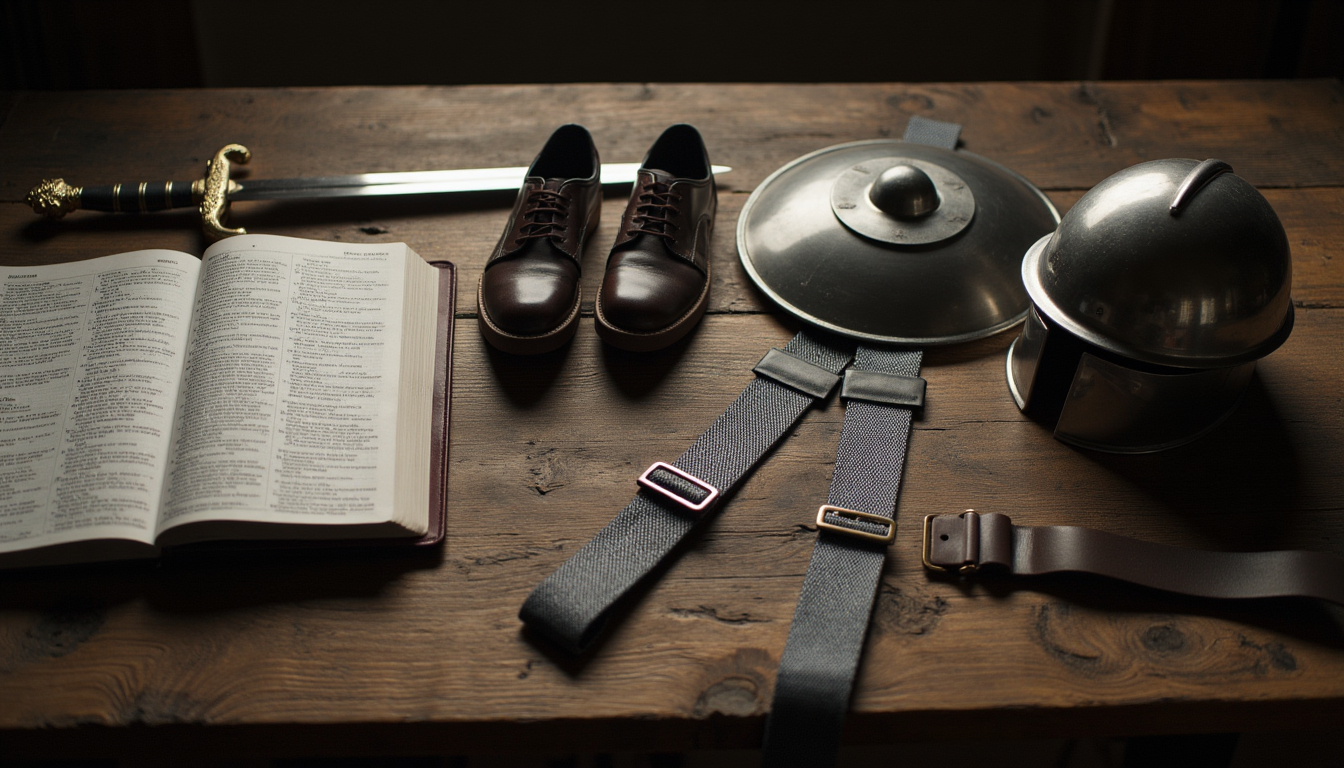
- Ephesians 6:10–18 — Paul tells you to be strong in the Lord, put on God’s armor, and stand firm. Each piece corresponds to a spiritual reality: truth, righteousness, readiness, faith, salvation, the Spirit, and the Word.
Context: Paul writes to a church facing internal and external pressures. He uses military imagery familiar to his readers to teach spiritual preparedness.
Application: Memorize the passage, reflect on each piece daily, and use it as a prayer checklist when you face trials. If you want a deeper walkthrough of each piece, see The Armor of God Explained: The Meaning of Each Piece.
Commands to resist: James 4:7 and 1 Peter 5:8–9
These short verses give tactical instructions.
- James 4:7 — “Submit yourselves, then, to God. Resist the devil, and he will flee from you.” The sequence—submission, then resistance—matters. Resist with humility and dependence on God.
- 1 Peter 5:8–9 — Be sober-minded and watchful because the enemy prowls like a lion. Stand firm in the faith.
Context: James addresses a morally mixed community; Peter encourages persecuted believers. Their counsel applies to you: spiritual vigilance plus dependence on God.
Application: When you sense an attack—be it anxiety, temptation, or despair—first submit to God (confess, pray, reaffirm His promises), then take a stand by speaking Scripture and seeking accountability.
Weapons of the believer: 2 Corinthians 10:3–5 and Hebrews 4:12
Scripture clarifies the weapons you wield.
- 2 Corinthians 10:3–5 — Your battles are spiritual, but your weapons tear down strongholds: arguments, pretensions, and thoughts brought into obedience to Christ.
- Hebrews 4:12 — God’s Word is living and discerning; it penetrates the heart and mind.
Context: Paul warns Corinthians about false teachings and spiritual pride; Hebrews points to the power of God’s Word. Together, they show that truth spoken and applied dismantles enemy lies.
Application: Use Scripture not as a weapon for victory over others, but as a means to renew your mind and expose the enemy’s lies. Daily Bible reading and memorization are practical defenses.

Promises of victory: Romans 8:37 and Isaiah 54:17
You need promises to stand on when the battle feels overwhelming.
- Romans 8:37 — Paul assures you that in all things you are “more than conquerors” through Christ who loves you.
- Isaiah 54:17 — God promises no weapon formed against you will prosper; you will refute accusations.
Context: Romans situates victory in union with Christ; Isaiah comforts the exiled Israel with God’s protection. Both point you to the certainty of God’s care.
Application: When you’re afraid, pray these verses back to God and journal how they apply to your current situation. The promise doesn’t remove hardship but reframes it in light of God’s final victory.
Spiritual authority and Christ’s work: Luke 10:19 and Colossians 2:15
Remember whose victory you share.
- Luke 10:19 — Jesus gives authority to overcome “all the power of the enemy.”
- Colossians 2:15 — Christ disarmed the spiritual rulers and authorities and triumphed on the cross.
Context: Luke records Jesus’ commissioning of the seventy-two and the authority granted to them; Colossians celebrates Christ’s supremacy.
Application: Live from victory, not fear. Pray with the awareness that Christ has already won the decisive battle; your role is to stand in His triumph and exercise authority through prayer and obedience.
Hope in trials: John 16:33 and Philippians 4:6–7
Trials will come, but you’re not left alone.
- John 16:33 — Jesus: “In this world you will have trouble. But take heart! I have overcome the world.”
- Philippians 4:6–7 — Bring worries to God in prayer; God’s peace will guard your heart.
Context: Jesus prepares the disciples for opposition; Paul gives practical counsel for anxious living. Both show you how to respond to hardship.
Application: When fear or anxiety rises, pray Philippians 4:6–7 back to God, and remind yourself of Jesus’ words in John 16:33. Make these verses part of your personal prayer life.
Examples of perseverance: Revelation 12:11 and Acts 16:25–34
Scripture gives real examples of victory through faithfulness.
- Revelation 12:11 — Believers overcome by the blood of the Lamb and the word of their testimony; they didn’t love their lives so much as to shrink from death.
- Acts 16:25–34 — Paul and Silas sing praises in prison, leading to the jailer’s conversion and release.
Context: Revelation offers cosmic perspective on victory; Acts shows faith in action amid trial.
Application: Testify to what God has done in your life—your testimony is a powerful spiritual weapon. When you praise God in adversity, you open doors for others and honor Him.
The mind and heart: Romans 12:2 and Philippians 2:5
You must renew your mind and adopt Christlike attitudes.
- Romans 12:2 — Don’t conform to the world; be transformed by renewing your mind.
- Philippians 2:5 — Adopt the humble mindset of Christ.
Context: Paul calls the church to counter-cultural transformation driven by God’s mercy and the Spirit.
Application: Combat lies by filling your mind with truth. Replace negative thought patterns with Scripture and choose humility and service over self-protection.
The Armor of God: practical connection to specific verses
If you want to go deeper into each piece of the armor, these verses help you apply biblical truth to everyday life:
- Belt of Truth — John 17:17 (Sanctify by truth); for more, read The Belt of Truth Explained.
- Breastplate of Righteousness — Romans 5:17; see The Breastplate of Righteousness Explained.
- Shoes of the Gospel of Peace — Romans 10:15; see The Shoes of the Gospel of Peace Explained.
- Shield of Faith — Hebrews 11:1; see The Shield of Faith Explained.
- Helmet of Salvation — 1 Thessalonians 5:8; see The Helmet of Salvation Explained.
- Sword of the Spirit (Word of God) — Hebrews 4:12; see The Sword of the Spirit Explained.
These internal resources will deepen your understanding of how each piece relates to the verses above and how to live them out daily. You may also find practical routines in How to Put on the Armor of God Every Day: A Practical Biblical Guide and prayers in A Prayer for Putting on the Armor of God Every Day.
Practical application: How you can use these verses today
Scripture is meant to be lived. Here are practical steps to make these verses part of your daily response to spiritual warfare.
1. Build a daily armor routine
Spend 5–10 minutes each morning or evening reading Ephesians 6:10–18 and praying through each piece. Ask God to clothe you with truth, righteousness, readiness, faith, salvation, and the Spirit.
2. Memorize strategic verses
Choose 4–6 verses for your current season—verses that speak to your specific struggle. For example, memorize James 4:7 for temptation and Philippians 4:6–7 for anxiety.
3. Use Scripture in prayer
When you pray, quote God’s promises back to Him. Pray Romans 8:37 when you feel defeated, and ask for the help of the Spirit to live out the truth.
4. Testify and confess
Share how God has helped you—your testimony is a spiritual weapon (see Revelation 12:11). Confess fears and sins to a trusted friend or leader; James 5:16 (read in Bible Gateway) encourages confession for healing.
5. Practice spiritual disciplines
Regular Bible reading, worship, fasting, fellowship, and service make you resilient. Spiritual disciplines aren’t magic; they shape your heart and put you in tune with God.
6. Choose accountability
Don’t fight alone. Invite a mature believer or group to pray with you, study Scripture, and hold you accountable—and use practical resources like How to Stand Firm Against the Devil According to Ephesians 6.

Common misconceptions about spiritual warfare
Clarifying misunderstandings helps you fight wisely rather than fearfully.
Spiritual warfare equals every problem is demonic
Not every struggle is a demonic attack. Scripture shows that sin, human weakness, consequences of choices, and spiritual opposition all play roles. Test experiences by Scripture and wise counsel—see 2 Corinthians 10:3–5.
You must be extraordinary to overcome
Victory doesn’t require spiritual showmanship. God equips ordinary people who trust Him. Paul’s commands (submission, faith, prayer) are accessible to all believers.
Speaking Scripture automatically drives out evil
Quoting verses without faith, repentance, and obedience reduces God’s Word to a formula. Jesus used Scripture in submission to the Father—your reliance must be on Christ and the Spirit, not on words alone.
Christian life is always triumphant and problem-free
You will face trials. The Bible promises victory in Christ, not a life free from trouble (John 16:33). Growth often occurs through hard times.
Frequently asked questions
Q: Can Christians lose in spiritual warfare?
Scripture shows believers sometimes fall into sin or doubt, but ultimate defeat belongs to the enemy. Your responsibility is to repent, return to God, and stand firm. For a deeper study, see Can Christians Lose Spiritual Battles? What the Bible Teaches.
Q: Is spiritual warfare only for pastors and missionaries?
No. Every believer is called to put on the armor (Ephesians 6). Spiritual warfare happens in homes, workplaces, and churches. See The Armor of God for New Believers: A Simple Beginner’s Guide.
Q: How do I know if an attack is from the enemy or just life’s difficulties?
Discernment comes from Scripture, prayer, and wise counsel. If an experience promotes sin, deceit, or fear that pulls you from Christ, it likely has spiritual roots. If it’s a natural consequence, respond biblically and practically.
Q: Can prayer alone defeat spiritual attacks?
Prayer is essential, but God also calls you to put on the armor, resist the devil, and live obediently. Prayer and obedience work together (see James 4:7).
Key takeaways
- Spiritual warfare is real and spiritual, but God has provided armor, weapons, and promises for victory.
- Ephesians 6:10–18 is your anchor passage; make it a daily posture.
- Resist the devil with submission to God and active faith (James 4:7; 1 Peter 5:8–9).
- The Word of God (Hebrews 4:12) and prayer (Philippians 4:6–7) are powerful in battle.
- Christ’s victory (Colossians 2:15; Luke 10:19) means you live from victory, not for victory.
- Apply Scripture practically through routines, memorization, testimony, and fellowship.
Closing encouragement
You are not alone. The same Spirit who raised Jesus from the dead lives in you and equips you to stand even when the pressure is intense. Spiritual warfare isn’t a reason to panic; it’s an invitation to draw nearer to Jesus, to depend on Him, and to practice the disciplines He gave. Keep returning to Scripture, prayer, and fellowship. Lean into the pieces of the armor daily, and remind yourself regularly: you are more than a conqueror through Christ who loves you (Romans 8:37).

A closing prayer
Heavenly Father, thank You for the truth of Your Word and the victory we have in Christ. Help me put on Your armor today: clothe me in truth, righteousness, readiness, faith, salvation, and the Spirit. Give me the courage to resist temptation, the wisdom to know Your voice, and the peace that guards my heart. Strengthen my faith when doubts come and help me stand firm in community with other believers. In Jesus’ name, Amen.
Frequently Asked Questions (expanded)
How do I memorize verses for spiritual warfare?
Choose a few short, powerful verses and repeat them daily. Use flashcards, phone reminders, or sing them. Pair memorization with reflection—ask what the verse promises and how it applies to your life.
What role does confession and repentance play?
Confession cleanses. Scripture links unconfessed sin to spiritual struggle; repentance restores fellowship with God and removes footholds the enemy may exploit (see 1 John on confession).
Should I seek deliverance ministries?
Some situations require pastoral or deliverance ministry, especially when spiritual oppression is severe. Seek leaders grounded in Scripture and prayer. Discern carefully and make sure any ministry aligns with biblical teaching.
Can fasting help in spiritual warfare?
Fasting, paired with prayer, can heighten spiritual sensitivity and dependence on God. Jesus models fasting for spiritual preparation (see Matthew 4:1–11). Use fasting as a spiritual discipline, not a formula.
How do I support others fighting spiritual battles?
Pray consistently, encourage Scripture reading, offer practical help, and provide accountability. Bring them to a trusted pastor if needed and stand with them in prayer.
Conclusion
The Bible gives you both the diagnosis and the cure for spiritual warfare. It identifies the nature of the battle, equips you with armor and weapons, and promises ultimate victory in Christ. Your part is to submit to God, put on the armor, use Scripture and prayer, and stand with fellow believers. Over time you’ll grow stronger—not because you become powerful in yourself, but because you become more rooted in Christ.
Read Next:
- The Armor of God Explained: The Meaning of Each Piece
- How to Put on the Armor of God Every Day: A Practical Biblical Guide
- Spiritual Warfare Explained: What the Bible Really Says
- How to Stand Firm Against the Devil According to Ephesians 6
- A Prayer for Putting on the Armor of God Every Day