

Faithfulness is easy to admire but often difficult to practice.
It is easy to make a promise when we feel motivated. It is harder to keep that promise when circumstances change.
It is easy to follow God when life is going well. It is harder when prayers seem unanswered, difficulties continue, or obedience becomes costly.
It is easy to begin serving, giving, praying, or pursuing something God has placed before us. The challenge is continuing when the excitement disappears.
This is why faithfulness as a fruit of the Spirit matters so much.
In Galatians 5:22–23, Paul writes:
“But the fruit of the Spirit is love, joy, peace, patience, kindness, goodness, faith, gentleness, and self-control.”
Faithfulness is part of the character the Holy Spirit develops in the life of a believer.
It means becoming someone who can increasingly be trusted—someone who remains committed to God, keeps promises, follows through on responsibilities, stands firm during difficulty, and continues doing what is right even when nobody is watching.
Faithfulness as a fruit of the Spirit is the Holy Spirit developing in us a steady, trustworthy, and dependable character that remains committed to God and faithful to others.
Faithfulness does not mean we never struggle.
It means that through the Holy Spirit’s work, we learn to keep returning to God, trusting Him, obeying Him, and remaining committed to what He has called us to do.

What Is Faithfulness as a Fruit of the Spirit?
When we hear the word faithfulness, we may immediately think about believing in God.
Faith is certainly part of the Christian life, but biblical faithfulness includes more than simply believing that God exists.
Faithfulness involves trustworthiness, loyalty, dependability, steadfastness, and commitment.
A faithful person is someone whose words and actions increasingly agree.
If they make a promise, they seek to keep it.
If they accept a responsibility, they follow through.
If circumstances become difficult, they do not immediately abandon what is right.
If nobody is watching, they still seek to honor God.
Faithfulness is therefore not usually demonstrated in one spectacular moment.
It is demonstrated through repeated choices over time.
A faithful marriage is built one day at a time.
A faithful friendship is built through years of trust.
Faithful service is built through showing up repeatedly.
Faithful stewardship is built through consistent decisions.
A faithful walk with God is built through continuing to trust and obey Him through both joyful and difficult seasons.
This is why faithfulness belongs among the Fruit of the Spirit.
The Holy Spirit is not merely changing isolated behaviors.
He is shaping our character so that our lives increasingly reflect the dependable character of God.
Faithfulness Begins with God
Before Scripture calls us to be faithful, it repeatedly shows us that God is faithful.
Our faithfulness is a response to His.
Deuteronomy 7:9 says:
“Know therefore that Yahweh your God himself is God, the faithful God, who keeps covenant and loving kindness to a thousand generations with those who love him and keep his commandments.”
God does not make careless promises.
He does not forget His covenant.
He does not abandon His people because His mood changes.
He does not become unreliable when circumstances become difficult.
What God promises, He is able to fulfill.
This truth appears throughout Scripture.
When Abraham and Sarah waited many years for the son God had promised, God’s promise did not disappear simply because the waiting became long.
When Israel repeatedly failed God, His redemptive purposes continued.
When generations passed between Old Testament promises and the coming of Christ, God had not forgotten.
And when believers face temptation and difficulty today, Scripture continues to remind us that God remains faithful.
1 Corinthians 1:9 says:
“God is faithful, through whom you were called into the fellowship of his Son, Jesus Christ our Lord.”
Our circumstances may change.
Our emotions may rise and fall.
Other people may disappoint us.
But God’s character does not change.
We learn faithfulness by first learning to trust the faithful God.

What Is the Difference Between Faith and Faithfulness?
Faith and faithfulness are closely connected, but they are not identical.
Faith emphasizes trusting God—believing Him, relying on Him, and placing our confidence in Him.
Faithfulness emphasizes the dependable life that grows from that trust.
Faith says:
“I trust God.”
Faithfulness says:
“Because I trust God, I will continue walking with Him.”
Faith trusts God’s promises.
Faithfulness keeps obeying while waiting for those promises.
Faith believes God’s ways are right.
Faithfulness continues choosing those ways when another path seems easier.
Faith receives a responsibility from God.
Faithfulness carries that responsibility over time.
In this sense, faithfulness is faith demonstrated through endurance and consistent obedience.
Faithfulness Is More Than Keeping Promises
Keeping promises is an important part of faithfulness, but biblical faithfulness reaches further.
It affects every area of life.
We can be faithful in our relationship with God.
We can be faithful to our spouse and family.
We can be faithful in friendships.
We can be faithful in our work.
We can be faithful with money and possessions.
We can be faithful in ministry.
We can be faithful with opportunities God gives us.
And we can be faithful in small responsibilities that may seem unimportant.
Jesus emphasized this principle in Luke 16:10:
“He who is faithful in a very little is faithful also in much.”
We sometimes imagine faithfulness only in dramatic situations.
But much of faithfulness happens in ordinary life.
Showing up when you said you would.
Finishing something you agreed to do.
Keeping a confidence.
Paying what you owe.
Doing your work honestly.
Keeping your marriage vows.
Caring for your family.
Serving when nobody applauds.
Praying when you don’t feel especially spiritual.
Following Christ when life becomes difficult.
These repeated choices may appear small, but together they form a faithful life.

Biblical Example: Daniel Remained Faithful Under Pressure
Daniel gives us one of Scripture’s clearest pictures of faithfulness.
He lived far from his homeland after being taken into Babylonian captivity.
He served under foreign rulers.
Governments changed.
Kings changed.
His circumstances changed.
But Daniel’s commitment to God remained.
Later in Daniel’s life, officials who were jealous of him tried to find something they could use against him.
They examined his work.
They looked for corruption.
They searched for negligence.
But Daniel 6:4 says:
“They could find no occasion nor fault, because he was faithful. There was no error or fault found in him.”
What a description.
Daniel’s faithfulness was visible not only in his religious life but also in his work.
His enemies could not find corruption or negligence in him.
Then they discovered that the only way to trap Daniel was through his devotion to God.
A law was established forbidding prayer to anyone except the king for thirty days.
Daniel knew about the law.
He also knew the consequences.
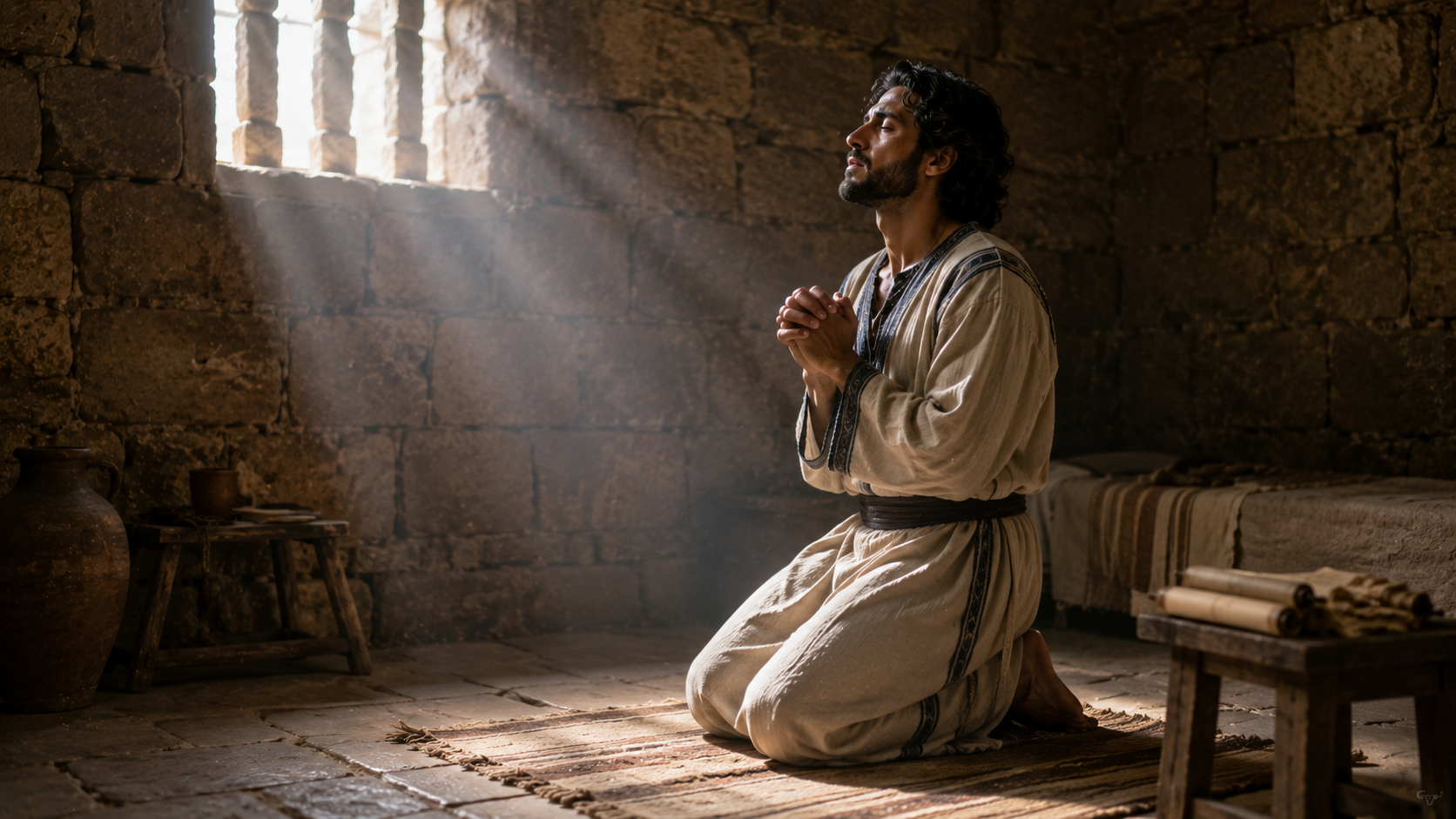
Yet Daniel 6:10 tells us that he continued praying as he had done before.
Daniel did not suddenly begin praying because there was a crisis.
Prayer was already part of his life.
That is one of the great lessons of his story:
Faithfulness during a crisis is often built through faithfulness before the crisis arrives.
Daniel had developed a pattern of trusting God.
When pressure came, he continued doing what he had already been doing.
Faithfulness Means Continuing When It Becomes Difficult
Almost anyone can remain committed when everything is easy.
Faithfulness becomes visible when continuing costs something.
Consider Ruth.
After her husband died, Ruth could have returned to her own people and attempted to rebuild her life.
Her mother-in-law Naomi even encouraged her to return.
But Ruth chose to remain with Naomi.
In Ruth 1:16, she made a remarkable commitment:
“Where you go, I will go; and where you stay, I will stay. Your people will be my people, and your God my God.”
Ruth could not see how her story would end.
She did not know that she would eventually marry Boaz.
She did not know she would become part of the family line leading to King David and ultimately to Jesus.
She simply chose faithfulness in the situation directly in front of her.
That is often how faithfulness works.
We usually cannot see the entire road ahead.
We simply know what God is asking of us today.
Stay honest.
Keep serving.
Continue praying.
Care for the person God has entrusted to you.
Keep your promise.
Remain obedient.
Take the next right step.
Faithfulness does not require knowing everything that will happen.
It requires trusting God enough to continue.
Faithfulness and Goodness Work Together
Faithfulness follows goodness in Paul’s list in Galatians 5, and the two qualities work naturally together.
Goodness asks:
“What is right?”
Faithfulness asks:
“Will I keep doing what is right?”
Goodness may lead you to help someone once.
Faithfulness may lead you to continue supporting that person through a long season of difficulty.
Goodness may lead you to make an honest decision.
Faithfulness builds a pattern of honesty over many years.
Goodness may lead you to begin serving.
Faithfulness keeps you serving when the excitement fades.
This is why spiritual maturity cannot be measured only by occasional moments of generosity, courage, or obedience.
God is developing character that lasts.
If you haven’t read it yet, continue with Goodness as a Fruit of the Spirit: What It Means and How to Grow in Goodness to see how the Holy Spirit develops a commitment to doing what is right.
Faithfulness Does Not Mean Perfection
At this point, someone may think:
“If faithfulness means being dependable and consistent, I have already failed.”
All of us have.
Peter is a powerful reminder.
He confidently told Jesus that he was willing to follow Him even to death.
Yet on the night Jesus was arrested, Peter denied three times that he even knew Him.
That was a serious failure.
But it was not the end of Peter’s story.
After His resurrection, Jesus restored Peter and entrusted him with responsibility.
Peter continued following Christ and became an important leader in the early church.
This teaches us something important about Christian faithfulness.
Faithfulness does not mean never failing.
It means that failure does not have to become our final destination.
When we sin, we confess.
When we fall, we return to God.
When we break something, we seek to make it right where possible.
When we discover an area of unfaithfulness, we allow God to change us.
Our confidence is not that we will never stumble.
Our confidence is that the God who calls us is faithful.
Why Do We Struggle with Faithfulness?
Faithfulness can be difficult because we live in a world that often rewards convenience and immediate results.
We want quick answers.
Quick success.
Quick spiritual growth.
Quick solutions.
But much of what God develops in us requires time.
Prayer requires persistence.
Relationships require commitment.
Spiritual maturity requires repeated obedience.
Ministry requires endurance.
Forgiveness may require continuing to surrender resentment.
Character develops through thousands of choices nobody else notices.
Sometimes we become unfaithful because we become tired.
Sometimes because we become distracted.
Sometimes because another opportunity looks more exciting.
Sometimes because we do not see immediate results.
Sometimes because circumstances become painful.
And sometimes because our feelings simply change.
But faithfulness cannot be controlled entirely by feelings.
Feelings matter, but they change.
Commitment provides stability when feelings fluctuate.
This is one reason Galatians 6:9 encourages believers:
“Let us not be weary in doing good, for we will reap in due season, if we don’t give up.”
Sometimes one of the most spiritual things we can do is simply not give up.

How to Grow in Faithfulness
Faithfulness develops over time.
We cannot produce spiritual fruit independently of the Holy Spirit, but we can cooperate with His work through trust, obedience, discipline, and surrender.
Here are practical ways to grow.
1. Remember God’s Faithfulness
Our faithfulness begins with His.
When you become discouraged, remember how God has already carried you.
Remember answered prayers.
Remember His provision.
Remember what Scripture says about His character.
Remember the cross.
Remember His promises.
Keeping God’s faithfulness in view strengthens us when our own commitment becomes weak.
2. Keep Your Word
Do not make promises carelessly.
Jesus taught His followers to become people whose words can be trusted.
If you say you will do something, make a sincere effort to do it.
If circumstances prevent you from keeping a commitment, communicate honestly rather than disappearing or making excuses.
Faithfulness grows when our words become dependable.
3. Be Faithful in Small Things
Don’t wait for a major opportunity.
Take today’s responsibilities seriously.
Do the work in front of you.
Answer the message you promised to answer.
Pay the bill you agreed to pay.
Return what you borrowed.
Finish the task.
Show up on time.
Pray today.
Read Scripture today.
Encourage someone today.
Jesus’ teaching about being faithful in little things reminds us that ordinary responsibilities are training grounds for character.
4. Build Spiritual Habits Before the Crisis
Daniel did not wait until prayer became illegal to develop a prayer life.
He already prayed consistently.
Likewise, don’t wait for a crisis before learning to seek God.
Build habits now.
Read Scripture regularly.
Pray regularly.
Worship regularly.
Stay connected with other believers.
Practice obedience.
Store God’s Word in your heart.
Deep roots help us remain standing when storms arrive.
5. Don’t Let Feelings Make Every Decision
There will be days when you don’t feel motivated to pray.
Days when serving feels tiring.
Days when work feels frustrating.
Days when relationships require effort.
Days when obedience feels costly.
Faithfulness means learning that not every right decision requires the right feeling first.
Sometimes obedience comes before emotion.
6. Remove Distractions That Keep Breaking Your Commitments
Sometimes our problem isn’t rebellion.
It is distraction.
We intend to pray, but the phone consumes the time.
We intend to spend time with family, but work follows us home.
We intend to serve, but our schedule becomes overcrowded.
We intend to finish an important responsibility, but less important things continually take priority.
Ask yourself:
What repeatedly distracts me from the things I say matter most?
Then make practical changes.
7. Stay Accountable
Faithfulness grows in community.
Allow mature believers to encourage you.
Tell someone about an area where you want to become more consistent.
Ask for prayer.
Invite correction.
Christian community is not merely about attending meetings.
God often uses other believers to strengthen us when our commitment becomes weak.
8. Return Quickly When You Fail
Do not allow one failure to become an excuse for continued unfaithfulness.
If you miss a day of prayer, pray again.
If you break a commitment, acknowledge it and make it right.
If you fall into sin, confess and return to God.
If you become spiritually distracted, turn back.
The enemy would like one failure to convince you that continuing is pointless.
Grace tells us to get up and keep walking.
What Does Faithfulness Look Like in Everyday Life?
Faithfulness touches nearly every part of life.
In your relationship with God, it means continuing to trust, pray, worship, obey, and seek Him through changing circumstances.
In marriage, it means loyalty, honesty, keeping your vows, and continuing to love through different seasons.
In family life, it means being present, keeping promises, caring for those entrusted to you, and becoming someone your family can depend on.
At work, it means honesty, consistency, responsibility, and doing your work well even when your supervisor isn’t watching.
In friendship, it means keeping confidences, being present during difficult seasons, telling the truth with love, and not disappearing when friendship becomes inconvenient.
At church, it means serving without constantly needing recognition, following through on responsibilities, praying for others, and contributing to the health of the body of Christ.
With money, it means honest stewardship, paying obligations, avoiding deception, and handling what God provides responsibly.
Faithfulness is not confined to “spiritual” activities.
It is a way of living.
How Can You Tell If You Are Growing in Faithfulness?
You may be growing in faithfulness when:
- You keep commitments more carefully.
- People can increasingly depend on your word.
- You continue praying even when you don’t see immediate answers.
- You remain obedient when doing so becomes inconvenient.
- You take small responsibilities seriously.
- You recover more quickly after failure.
- You become less controlled by changing emotions.
- You are more willing to stay when perseverance is needed.
- You seek God’s approval more than recognition from people.
- Your private life increasingly agrees with the faith you profess publicly.
Faithfulness develops slowly.
You may not notice the growth from one day to another.
But over months and years, repeated Spirit-led choices form a dependable character.

Frequently Asked Questions About Faithfulness as a Fruit of the Spirit
What does faithfulness mean as a fruit of the Spirit?
Faithfulness as a fruit of the Spirit means the Holy Spirit develops trustworthy, loyal, steadfast, and dependable character in believers. It includes remaining committed to God, keeping our word, carrying out responsibilities, and continuing to do what is right over time.
What is the difference between faith and faithfulness?
Faith primarily emphasizes trusting and relying on God. Faithfulness emphasizes living consistently because of that trust. Faith believes God; faithfulness continues following Him.
What is a biblical example of faithfulness?
Daniel is an excellent example. Daniel 6:4 says his enemies could find no corruption or negligence in him because he was faithful. Even when prayer became dangerous, Daniel continued his established practice of praying to God.
Does being faithful mean I can never fail?
No. Christians still fail. Peter denied Jesus three times but was later restored and continued serving Christ. Faithfulness includes repentance, returning to God, learning from failure, and continuing to follow Him.
How can I become more faithful to God?
Remember God’s faithfulness, build consistent habits of prayer and Scripture reading, obey Him in small things, keep your commitments, remove unnecessary distractions, stay connected to other believers, and depend on the Holy Spirit for strength.
A Simple Prayer for Growing in Faithfulness
Father, thank You because You are always faithful.
You keep Your promises, and Your character never changes.
Thank You for remaining faithful even when I have been inconsistent.
Please let Your Holy Spirit develop faithfulness in me.
Help me become someone whose words can be trusted and whose actions match what I say I believe.
Teach me to be faithful in small things, not only when people are watching but also when nobody sees.
When I become tired, strengthen me.
When I become distracted, redirect me.
When I become discouraged because I cannot see results, remind me that obedience to You is never wasted.
Help me remain faithful in my relationship with You, my family, my work, my friendships, my responsibilities, and every opportunity You place before me.
And when I fail, give me humility to confess it, receive Your grace, make things right where I can, and continue walking with You.
Make my life increasingly dependable and steadfast so that others can see Your faithfulness reflected through me.
In Jesus’ name, amen.
Faithfulness Is Built One Choice at a Time
A faithful life is rarely built through one dramatic decision.
It is built through thousands of ordinary ones.
Praying again.
Showing up again.
Keeping your word again.
Choosing honesty again.
Serving again.
Forgiving again.
Obeying again.
Trusting God again.
Some of those choices will feel significant.
Many will seem almost invisible.
But over time, they form character.
Daniel’s faithfulness was not created on the day he was threatened with the lions’ den. His response in that crisis revealed a life that had already been shaped by years of devotion.
Ruth’s faithfulness was not based on knowing exactly how her future would unfold. She simply chose loyalty and trust with the circumstances God had placed before her.
And Peter’s story reminds us that even serious failure does not have to be the final chapter.
The Holy Spirit continues His transforming work.
So don’t measure faithfulness only by whether you have ever failed.
Ask instead:
Am I learning to return to God, trust Him, obey Him, keep my commitments, and continue doing what He has called me to do?
Faithfulness grows one Spirit-led choice at a time.
And behind every step of our faithfulness stands the God who has always been faithful to us.
Continue Growing in the Fruit of the Spirit
Faithfulness is one part of the beautiful character the Holy Spirit develops in those who follow Christ. Continue exploring the Fruit of the Spirit and allow God to shape every area of your life.
🍇 The 9 Fruits of the Spirit Explained
Explore how love, joy, peace, patience, kindness, goodness, faithfulness, gentleness, and self-control work together as evidence of a Spirit-led life.
Read The 9 Fruits of the Spirit Explained
🌿 Goodness as a Fruit of the Spirit
Goodness teaches us to recognize and choose what is right. Faithfulness helps us continue doing what is right over time.
Read Goodness as a Fruit of the Spirit
🌱 Continue Through the Series
Explore Love, Joy, Peace, Patience, Kindness, and Goodness to see how the Holy Spirit develops Christlike character in every area of life.
➡️ Next: Gentleness as a Fruit of the Spirit
Faithfulness teaches us to remain steady and dependable. Next, discover why biblical gentleness is not weakness and how the Holy Spirit develops strength under control.