



Bible verses about caring for elderly parents show that honoring a mother or father involves more than respectful words. Scripture calls families toward practical responsibility, compassion, and truthful care. It also teaches mutual help and acknowledges human limits. One adult child should not assume that love means becoming the entire care system.
As parents grow older, you may face questions that the family has never discussed: who can help, how to respect a parent’s preferences, and what to do when needs exceed what you can provide. The Bible does not prescribe one household arrangement for every family. It gives principles that can shape a wise, loving response.
Read These Verses as Guidance for Faithful Care
Some passages below directly address family responsibilities. Others teach broader truths about dignity, wisdom, or shared burdens. Their applications should be considered in context rather than turned into identical instructions for every situation.
A parent’s needs, the adult child’s circumstances, the history of the relationship, and available support all matter. If decisions involve health, safety, or legal responsibilities, seek appropriate professional guidance. Biblical encouragement can accompany that work.
Our guide to studying the Bible in context explains how to move from a passage’s original meaning toward a careful application. Begin by asking what faithful love requires here, rather than assuming there is only one acceptable care arrangement.
1. Exodus 20:12: Honor Continues as Parents Age
Read Exodus 20:12. God’s command to honor father and mother belongs within His covenant instruction to Israel. It gives parents a place of respect within family life.
For an adult child, honor can include listening, speaking without contempt, taking needs seriously, and considering practical help. It does not require pretending that a difficult history never happened. Nor does it settle every disagreement about where someone should live or who should perform a particular task.
A useful question is whether your words and plans recognize your parent as a person worthy of dignity. Even when you must disagree, you can seek a response that is honest and respectful. Our overview of Moses and the Ten Commandments places the command within its broader setting.
2. Mark 7:9–13: Religious Language Must Not Hide Neglect
Read Mark 7:9–13. Jesus challenges a tradition that allowed a religious declaration about resources to undermine responsibility toward parents. The problem was not devotion to God; it was using a supposed act of devotion to set aside God’s command.
The passage invites honest examination. Are you using spiritual language to avoid a responsibility you could reasonably share? It is possible to speak warmly about family while leaving all the practical work to someone else.
A faithful response may begin with one concrete action: make a needed call, join a care discussion, or take responsibility for a task you can reliably complete. This application concerns real responsibility, not a demand to promise support beyond your ability.
3. 1 Timothy 5:3–8, 16: Family Responsibility and Shared Support
Read 1 Timothy 5:3–8, 16. Paul addresses care for widows and distinguishes family responsibilities from the church’s support for those who are genuinely without help. He treats practical provision as a serious expression of faith.
The setting matters. Paul is not providing a modern care budget or assigning every task to a daughter or son who happens to live closest. His instruction challenges a family’s willingness to care and makes room for the church to support people who lack family resources.
Ask what the whole family can reasonably contribute. One person may provide regular visits, another coordinate information with permission, and another handle a recurring errand. The contributions may differ while all remain meaningful.
Write down responsibilities clearly enough that the arrangement does not depend on one exhausted person repeatedly asking for help. A promise is useful when the person can understand it, agree to it, and keep it.

4. Leviticus 19:32: Respect the Older Person Before You
Read Leviticus 19:32. This instruction connects respect for older people with reverence for God. Aging is not a reason to dismiss someone or speak as though they are no longer present.
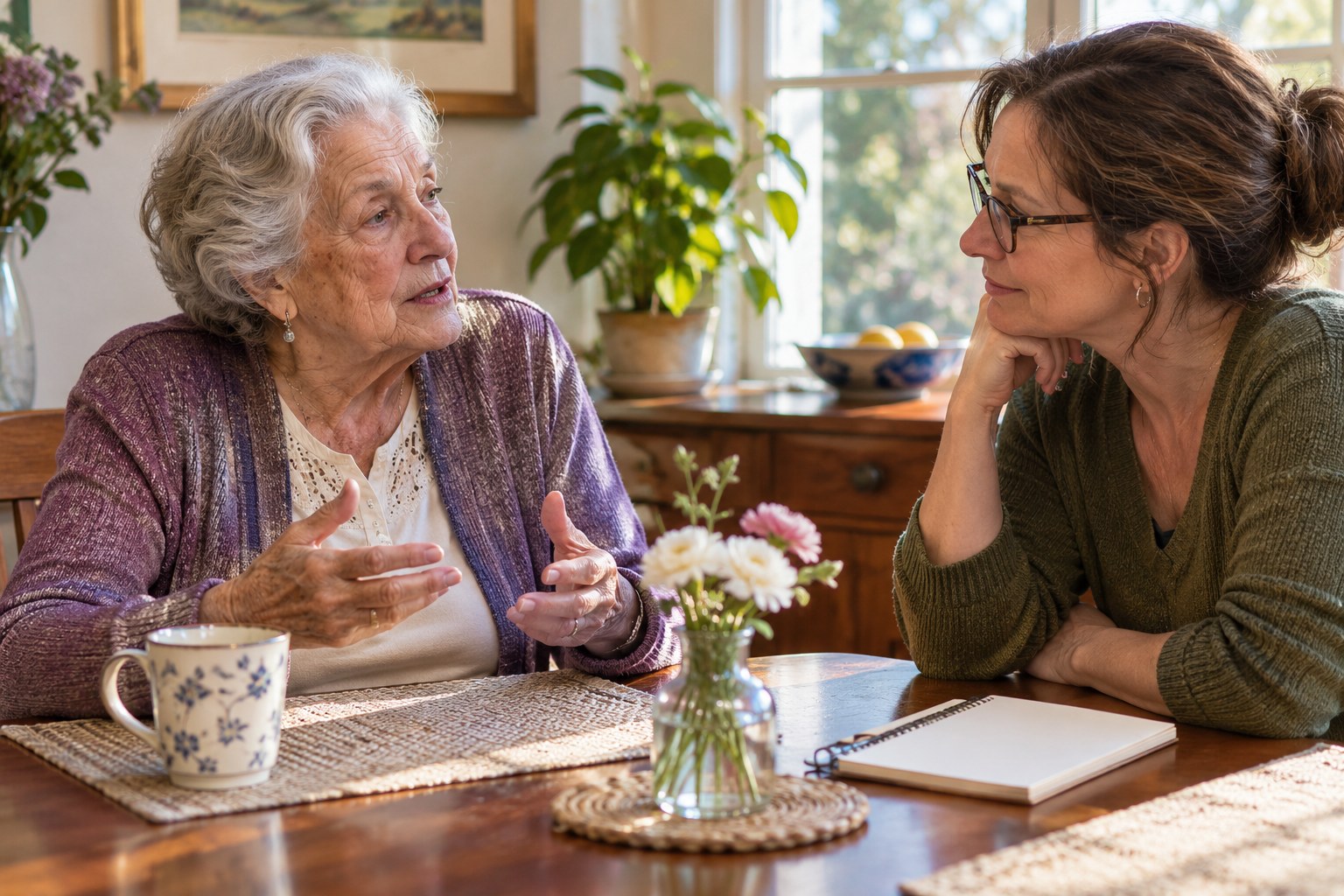
In a family conversation, speak to your parent as well as to the people helping them. Ask about preferences and listen as they are able to respond. Needing assistance does not automatically remove someone’s voice from decisions about their life.
Respect can also mean preserving privacy. Share personal care information only with people who appropriately need it. Avoid using an embarrassing moment as a family joke or public story. Our reflection on kindness as a fruit of the Spirit explores how small interactions can express love.
5. Galatians 6:2–5: Share the Burden Without Abandoning Responsibility
Read Galatians 6:2–5. Paul instructs Christians to help carry one another’s burdens while also speaking of personal responsibility. These are complementary parts of life together.
Applied to family care, the passage challenges two extremes: refusing any involvement and assuming that one person must do everything. Love can include asking for help, accepting assistance, and agreeing honestly about what each person can do.
A sibling who lives far away may still contribute in ways that do not involve hands-on care. A nearby caregiver may need dependable relief more than general encouragement. Discuss the actual needs rather than measuring commitment only by hours spent in the home.
For example, instead of saying, “Someone should help more,” you might say, “Can you handle this recurring errand each week? I need a dependable arrangement.” A clear request allows the other person to answer honestly.
6. James 1:5: Ask for Wisdom Before Making Promises
Read James 1:2–5. James encourages believers facing trials to ask God for wisdom. Wisdom involves living faithfully within difficulty; it does not mean having immediate certainty about every option.
Before committing to a care plan, consider what is needed, what you can realistically provide, and what additional help may be necessary. Ask questions and seek appropriate advice. A promise made out of guilt may need revision if it cannot be sustained.
You can pray plainly: ask God for humility to listen, courage to speak truthfully, and love that takes everyone’s needs seriously. Our beginner’s prayer guide offers a simple way to begin.

7. Colossians 3:12–14: Let Compassion Shape Difficult Conversations
Read Colossians 3:12–14. Paul calls God’s people toward compassion, humility, gentleness, patience, forgiveness, and love. These qualities matter when family discussions become tense.
Patience does not require agreeing with everything. It can mean listening before answering, avoiding humiliating language, and explaining a limit without attacking the person. You can be firm and still seek their good.
You might say, “I want you to have dependable help. I cannot safely provide all of it myself, so we need to discuss other support.” That statement honors the need without pretending you have unlimited capacity. Read Patience as a Fruit of the Spirit for further reflection on responding faithfully under strain.
8. Mark 6:30–32: Service Does Not Remove the Need for Rest
Read Mark 6:30–32. Jesus recognizes the apostles’ need to come away and rest after their work. The surrounding story shows the demands of serving people.
This is not a modern schedule for family care. It does remind us that human servants have needs. Planning relief and receiving help can support faithful service rather than undermine it.
If you are depleted, describe the situation honestly to someone who can help. Our reflection on spiritual exhaustion can help you name part of what you are carrying. Practical support and professional guidance may also be needed.
What If the Relationship Is Painful or Unsafe?
Honoring a parent does not require calling harmful behavior good or placing someone in danger. The history of the relationship matters. Where abuse or serious threats are involved, seek appropriate local help and qualified advice rather than handling the situation through family pressure alone.
Depending on the circumstances, care may need to be arranged through other relatives, professionals, or services rather than provided through direct contact. A trusted pastor can help you consider the spiritual questions, while people with relevant expertise can advise on safety and care responsibilities.
It is possible to seek someone’s good while acknowledging that a particular arrangement is not workable. The goal is truthful, responsible care, not an appearance of family harmony that conceals harm.
Common Questions About Caring for Elderly Parents
Does the Bible Require a Parent to Live With an Adult Child?
The passages above teach honor and responsibility; they do not prescribe one living arrangement for every family. Consider the parent’s needs and preferences, available support, and the household’s ability to provide suitable care.
Is Receiving Professional Help a Failure to Honor My Parent?
No. Receiving suitable help can be part of taking a parent’s needs seriously. The question is whether the arrangement supports their care and dignity, not whether an adult child personally performs every task.
What If My Siblings Will Not Help?
Explain the needs and make specific requests. Be honest about your own limits, and seek help planning what happens when family support is insufficient. You cannot guarantee another person’s cooperation, but you can avoid making promises that depend on help they have not agreed to provide.

A Prayer for Honor, Wisdom, and Shared Care
Heavenly Father, help me honor my parent with truthful words and practical love. Give our family wisdom about the care that is needed and humility to share responsibility. Keep us from neglect, resentment, and promises we cannot keep. Help us listen, receive appropriate help, and preserve dignity. Strengthen those who are tired, and teach us to serve with compassion through Jesus Christ. Amen.
Honor God Through the Care You Give
Caring for elderly parents can involve costly love and difficult decisions. Scripture calls us toward responsibility, respect, wisdom, and shared support. Begin with the next faithful action you can take, and seek help for what lies beyond your ability.
Our strength comes from the Lord, whose wisdom exceeds our own. May He shape our families into people who care honestly and patiently, and may every act of love bring honor to Him. To God be the glory.
Continue Growing
Continue with Kindness as a Fruit of the Spirit, Patience as a Fruit of the Spirit, and God’s Comfort During Emotionally Heavy Seasons. Let these readings support wise, faithful care.