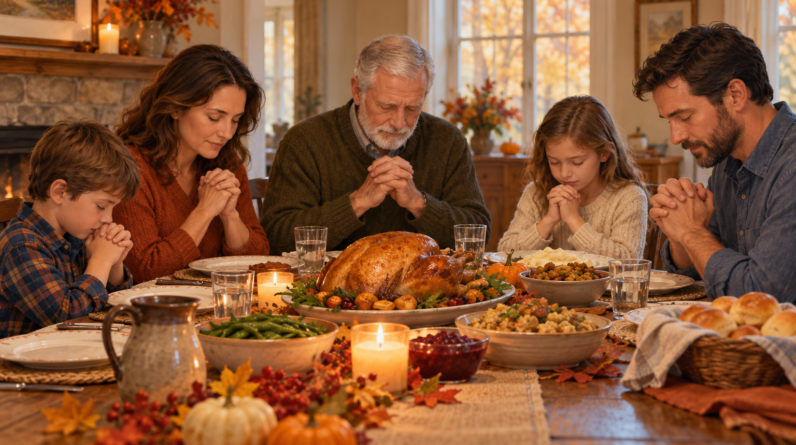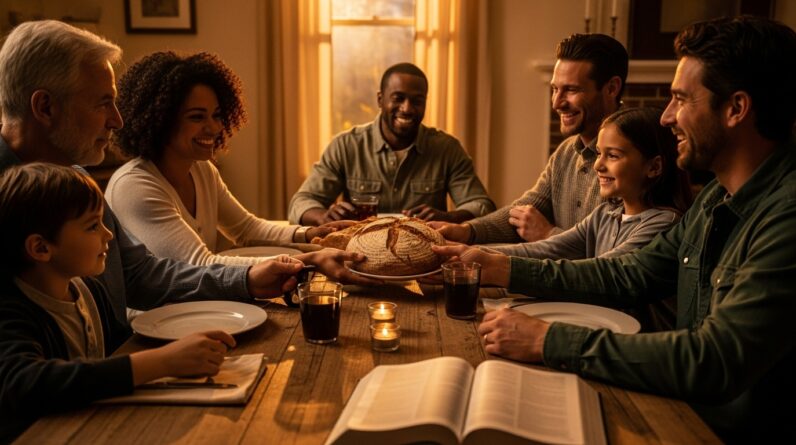



Thanksgiving can become a busy sequence of preparing food, welcoming guests, and trying to keep everything on time. A short pause with Scripture can help your family remember whom you are thanking.
This Thanksgiving devotional for families offers a ready-to-use reading, a brief reflection on Jesus, discussion questions, and an original prayer. The core devotion is designed for about ten minutes. You can use it before dinner, after breakfast, or at another quiet point in the day.
You do not need to lead a sermon or find a perfect answer to every question. Open the Bible, listen together, and help one another respond to the Lord with gratitude.
Before You Begin
Choose one person to read the passage and guide the short reflection. Keep a Bible or the linked BibleGateway passage nearby. Optional paper and a pencil can help children who prefer to draw a response.
The ten-minute outline below is the part to use with your family. The preparation, adaptations, and questions later in this article are optional help for the person leading. You do not need to read the whole article aloud.
Ten minutes is an approximate guide, not a rule. A child’s question may lead to a longer conversation. On another day, a short reading and a simple prayer may be what your household can manage. For a broader rhythm beyond Thanksgiving, see how to make family worship part of your home.

Your 10-Minute Thanksgiving Devotional
Theme: Receiving God’s gifts with gratitude and turning our attention toward Jesus.
Main reading: Luke 17:11-19. Open the passage and read it from your Bible or BibleGateway. The explanation below is original commentary, not a quotation of the passage.
Minute 0–1: Settle and Pray
Invite everyone to pause. You might say, “Before we thank God for our meal, let’s listen to an account of someone who returned to thank Jesus.”
Opening prayer: Father, help us listen to Your Word. Show us more of Jesus, and teach us to receive Your gifts with thankful hearts. In His name, amen.
Minutes 1–3: Read the Bible Passage
Read Luke 17:11-19 aloud. Ask everyone to listen for three things: what the men ask Jesus for, what happens as they go, and what one man does afterward.
Give the reading enough time. If a younger child is reading, let them finish without rushing to keep the schedule. Hearing the passage matters more than finishing at a precise minute.
Minutes 3–5: Read This Short Reflection
Jesus is traveling toward Jerusalem when ten men with leprosy call out for mercy. They remain at a distance. He tells them to show themselves to the priests, and they are cleansed as they go.
One man sees that he has been healed and returns, praising God and thanking Jesus. Luke identifies him as a Samaritan. Jesus draws attention to his return and speaks about his faith.
The account directs our attention to Jesus’ mercy and the man’s thankful response. All ten were cleansed before the one returned. His gratitude was a response to mercy he had received, rather than a payment that purchased it.
At Thanksgiving, we can become busy receiving and enjoying good things. This passage gives us a reason to pause and turn toward the Lord Himself. What do His gifts lead us to notice about His goodness?
Our deepest gratitude rests in Jesus’ saving work. He gave His life for sinners and rose again. We can thank Him for daily provision while remembering that we need His mercy more than we need a perfect celebration.
Minutes 5–7: Discuss One or Two Questions
Choose the questions that fit the ages around your table. There is no need to answer every one.
- What did the man do when he saw that he had been healed?
- What does this account help us notice about Jesus?
- What is one gift we want to thank God for, and what does it remind us about His care?
Listen without turning each answer into a test. If someone asks a question you cannot answer, you can say, “Let’s look into that together.”
Minutes 7–8: Name One Practical Response
Invite each person who wants to participate to finish this sentence: “Today, I want to thank God for…” Then choose one way your household can show care to someone else.
That response might be calling a relative, thanking the person who prepared the meal, sharing food, or welcoming someone who would otherwise be alone. Choose a response you can actually carry out.
Minutes 8–10: Close With Prayer
Father, thank You for Your mercy and for the good gifts we often overlook. Thank You for the food we receive, the people who care for us, and the help You have given through others. Above all, thank You for Jesus Christ, who died for sinners and rose again. Forgive our pride and our habit of receiving without giving thanks. Help us trust Your Son and respond with love. Please comfort those who are hurting and show us someone we can encourage or help. May Jesus be honored in our home today. In His name, amen.
Leave room for anyone who wishes to add a short prayer. You can then return to your meal or other activities, carrying the passage into the rest of the day.

Keep the Bible Account in Its Original Context
This account belongs to Luke’s presentation of Jesus’ ministry as He journeys toward Jerusalem. Its central event is an act of Jesus’ mercy toward people who call to Him for help. The man’s return gives the family a clear example of gratitude directed toward God and Jesus.
Use the account with care. It does not promise that every thankful person will be physically healed. It also does not tell us everything about the later lives or final spiritual condition of the other nine men. Keep the discussion close to what Luke records.
The modern US Thanksgiving holiday is an occasion to apply this lesson, rather than the original subject of the passage. Our guide to studying the Bible in context can help your family distinguish the passage’s meaning from a modern application.
Adapt the Devotion to Your Household
For Young Children
Read the passage yourself and give a brief explanation in simple language. Ask, “Who came back to say thank You?” Then help your child name one person or provision they can thank God for.
A child can draw a picture rather than speak in front of the group. Avoid comparing children’s answers or measuring how spiritual they sound. Your own patient example will teach alongside the words you read. For more on that everyday influence, see modeling genuine faith to your children.
For Teenagers
Give them space to think about a question such as, “What can make us enjoy a gift without paying attention to the giver?” Let their response lead into an honest conversation about hurry, assumptions, and gratitude.
If a teenager is comfortable leading, invite them to read the passage or ask a discussion question. Participation should be an invitation to learn together, not a demand to perform for visitors.
For a Small Household or One Person
You can use the same reading and prayer with two people or on your own. Read slowly, answer one question in a notebook or aloud, and choose a practical response. A smaller gathering does not make thanksgiving less meaningful.
For Guests Who Do Not Share Your Faith
Explain that the family is taking a few minutes for a Christian Bible reading and prayer. Welcome guests to listen and allow them to choose whether to join the conversation. You can speak clearly about Jesus and offer sincere hospitality at the same time.

A Simple Optional Gratitude Activity
Give each person a small piece of paper. Invite them to write or draw one thing they want to thank God for and one person they could encourage. They may share their response, keep it private, or pass.
Bring the activity back to the Lord with a simple question: “How can we thank God for this gift?” This helps the activity remain an expression of faith rather than only a list of possessions.
Our collection of simple Christian gratitude habits offers other ways to continue after the holiday. Choose one manageable practice instead of adding several obligations to an already busy week.
When Someone at the Table Is Hurting
Some families hear the invitation to give thanks while carrying grief, illness, or uncertainty. Let the devotion make room for honesty. A person can thank God for His mercy and still say that they are struggling.
You might add, “Lord, we are grateful to be together, and we also bring You what is painful.” Then leave a little silence. No one needs to explain their private circumstances to participate.
In 1 Thessalonians 5:12-24, thanksgiving appears alongside patience, prayer, encouragement, and care for those who are weak. Read that wider setting before treating thankfulness as a demand to appear cheerful. Our article on gratitude during hard times offers further encouragement.
Let Thanksgiving Lead Into Care for Others
Consider what your family can share: a meal, time, a thoughtful message, or practical help. You do not need a large project to begin caring for another person.
2 Corinthians 9:6-15 concerns support for believers in need. Paul explains how generosity meets needs and leads to thanksgiving to God. Applying that principle today can help your family connect gratitude with concrete care, without treating giving as a way to purchase blessings.
For more on the shared life that grows from gratitude, read how gratitude strengthens Christian community. You can also use everyday prayers of gratitude to keep thanking God after the holiday has passed.
Questions About This Thanksgiving Devotional
Does it have to take exactly ten minutes?
No. The timings offer a simple guide. Allow more time for questions, different reading speeds, or a person who needs encouragement. You can also shorten the discussion and keep the reading and prayer.
Can we use it on a day other than Thanksgiving?
Yes. Its main passage teaches about Jesus and gratitude, so it can serve a family at other times of year. Adapt the introduction to the occasion.
What if no one answers a question?
Give people a little time. You can offer your own short response and move on without pressure. Listening to Scripture together is worthwhile even when the conversation is quiet.
What if someone asks why God has not healed them?
Listen with compassion. This account shows what Jesus did for these men; it does not give a timetable for every person’s healing. You can pray for healing, acknowledge that you do not know why a particular suffering continues, and offer practical support.

Conclusion: May Jesus Receive Our Thanks and Our Worship
A family devotion is a small part of the day, but it can help us direct our gratitude toward the Lord. May we notice His gifts without losing sight of His character. May the mercy shown through Jesus Christ lead us to trust Him, turn from sin, and love others with greater care.
Our Savior is worthy of more than a holiday acknowledgment. He is the crucified and risen Lord, and our hope rests in Him. May the Father be glorified as His Word shapes our homes, may the Holy Spirit help us understand and obey, and may Jesus Christ be magnified in our prayers and our ordinary acts of love.
Read More: Continue Growing in Prayer and Faith
- Short Prayers for Beginners
- The ACTS Prayer Method Explained
- How to Turn Scripture Reading Into Prayer
Let every season point our hearts to Jesus Christ.