

Introduction
When Jesus entered Jerusalem on Palm Sunday, one vivid detail stands out: He rode a donkey. At first glance that might seem like a small logistical choice—just an animal to get from point A to B. But if you pause, you’ll see that this decision was loaded with meaning, prophecy, and purpose.
You might be wondering: Why didn’t Jesus ride a horse, like a conquering king? Why a colt, humble and unremarkable? If you’ve ever wrestled with the tension between the Jesus of power and the Jesus of humility, you’re not alone. This moment exposes a central truth about who Jesus claimed to be and how God’s kingdom operates.
In this guide you’ll discover:
- The biblical and prophetic background of the donkey episode.
- What the donkey symbolized to first-century observers and what it still points to today.
- Practical ways you can apply this message of humility and peace in your daily life.
You’ll walk away with a deeper grasp of the moment when palms met pavement, and why a small animal became a grand announcement about God’s unfolding plan.

Key Bible Text
The main passage tied to this event and the prophecy it fulfills is Matthew 21:5:
“See, your king comes to you, gentle and riding on a donkey, and on a colt, the foal of a donkey.”
Matthew 21:5
This verse references an older prophetic word and connects Jesus’ action directly to God’s promises.
What Happened (Biblical Context)
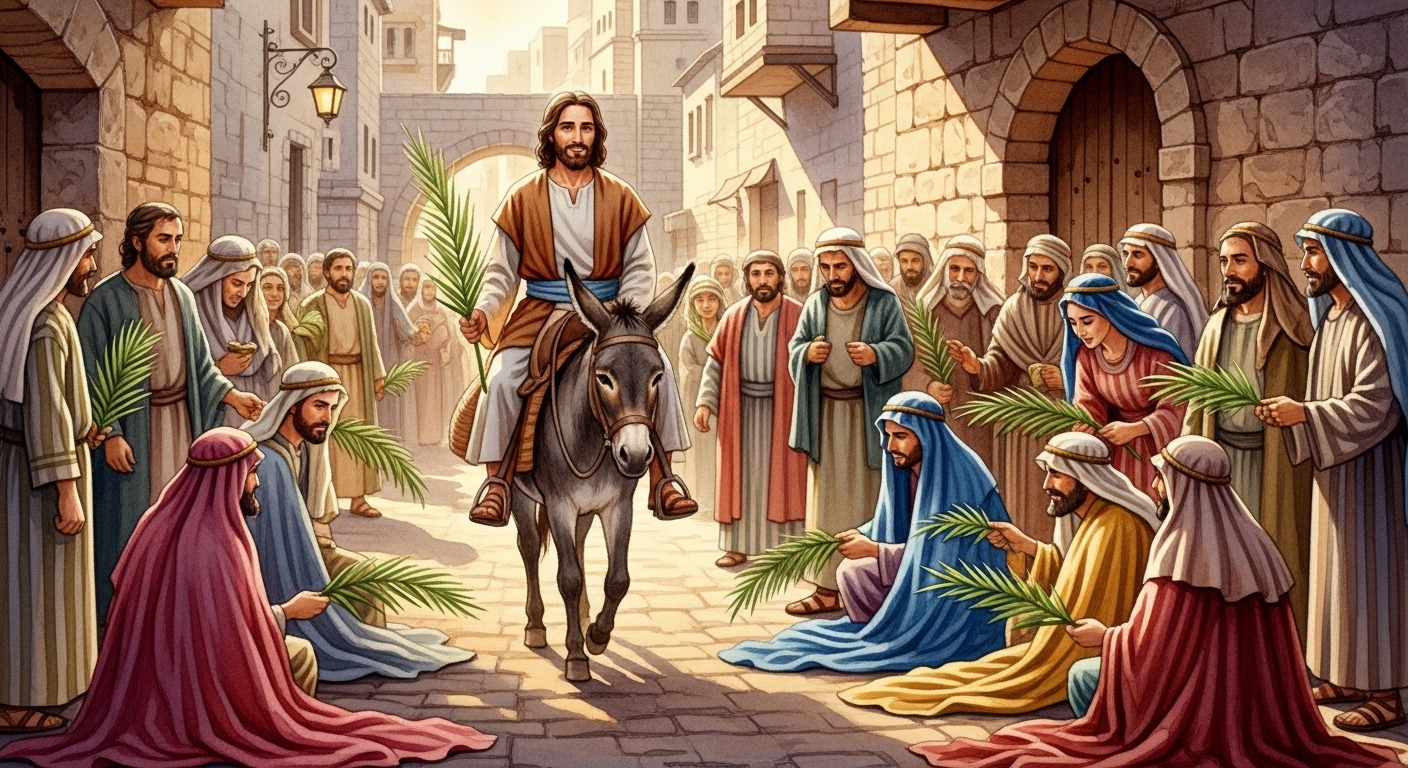
Days before His crucifixion, Jesus made a deliberate journey into Jerusalem, the religious and political heart of Israel. The Gospel writers record how crowds spread garments and palm branches on the road as people shouted praises and “Hosanna!” This scene is recorded across the Gospels and is commonly called the Triumphal Entry.
You can read the fuller Gospel accounts for context: Matthew 21:1-11, Mark 11:1-11, and Luke 19:28-44. John’s account adds personal detail about the crowd’s reaction: John 12:12-19.
Each Gospel emphasizes the crowd’s recognition of Jesus as a special figure and the way Jesus’ actions fulfilled prophecy. The timing is deliberate: this public entry happens as Holy Week begins, setting the stage for the conflict that will lead to the cross.
The Prophecy Jesus Fulfilled
When the crowds saw Jesus on the donkey, they were not just admiring an interesting image. The event was a fulfillment of a specific prophetic text: Zechariah 9:9.
“Rejoice greatly, Daughter Zion! Shout, Daughter Jerusalem! See, your king comes to you, righteous and victorious, lowly and riding on a donkey, on a colt, the foal of a donkey.”
Zechariah 9:9
By entering Jerusalem this way, Jesus was deliberately identifying Himself with that prophetic promise. He was making a public claim: the promised King had arrived. But the nature of His arrival—humble and peaceful—shaped how that promise would be understood.
What Does the Donkey Symbolize?
1. Humility Instead of Power
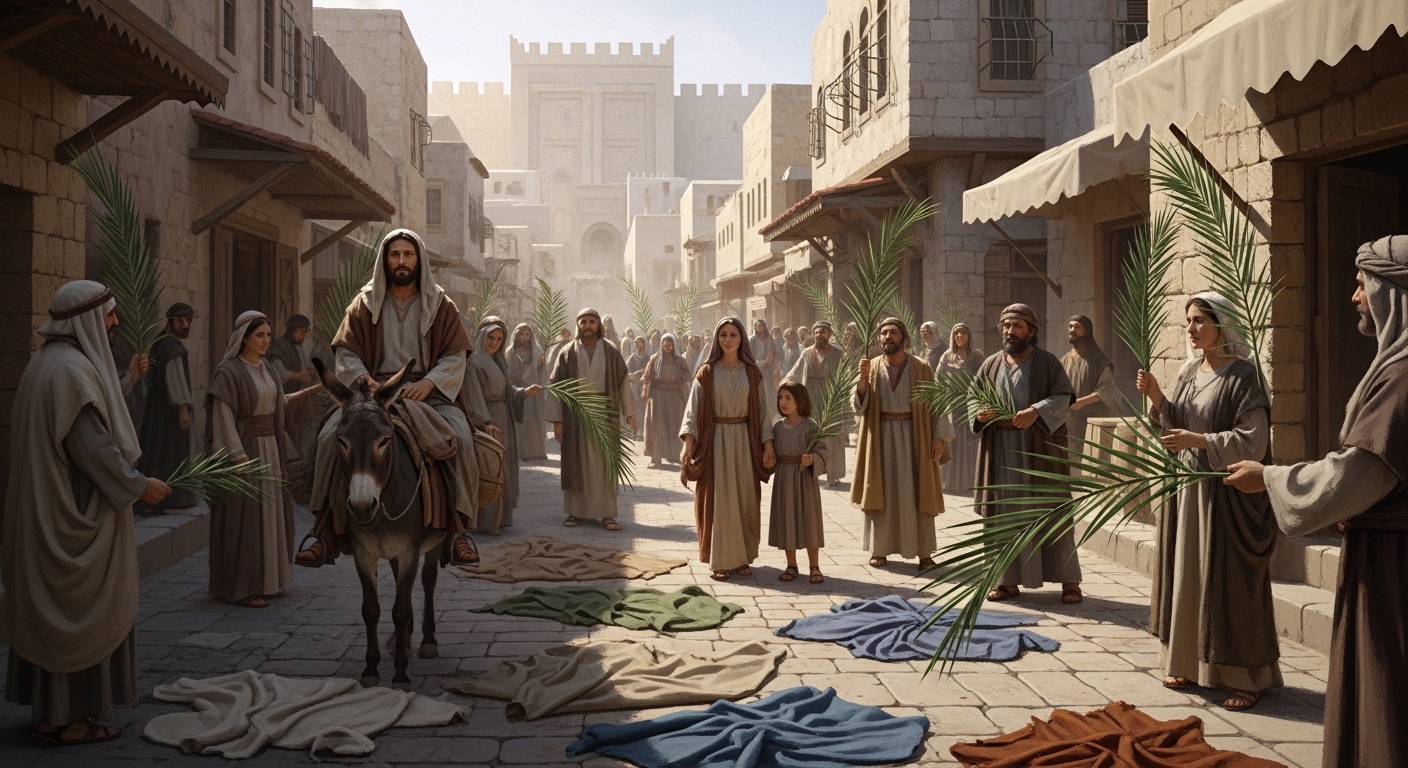
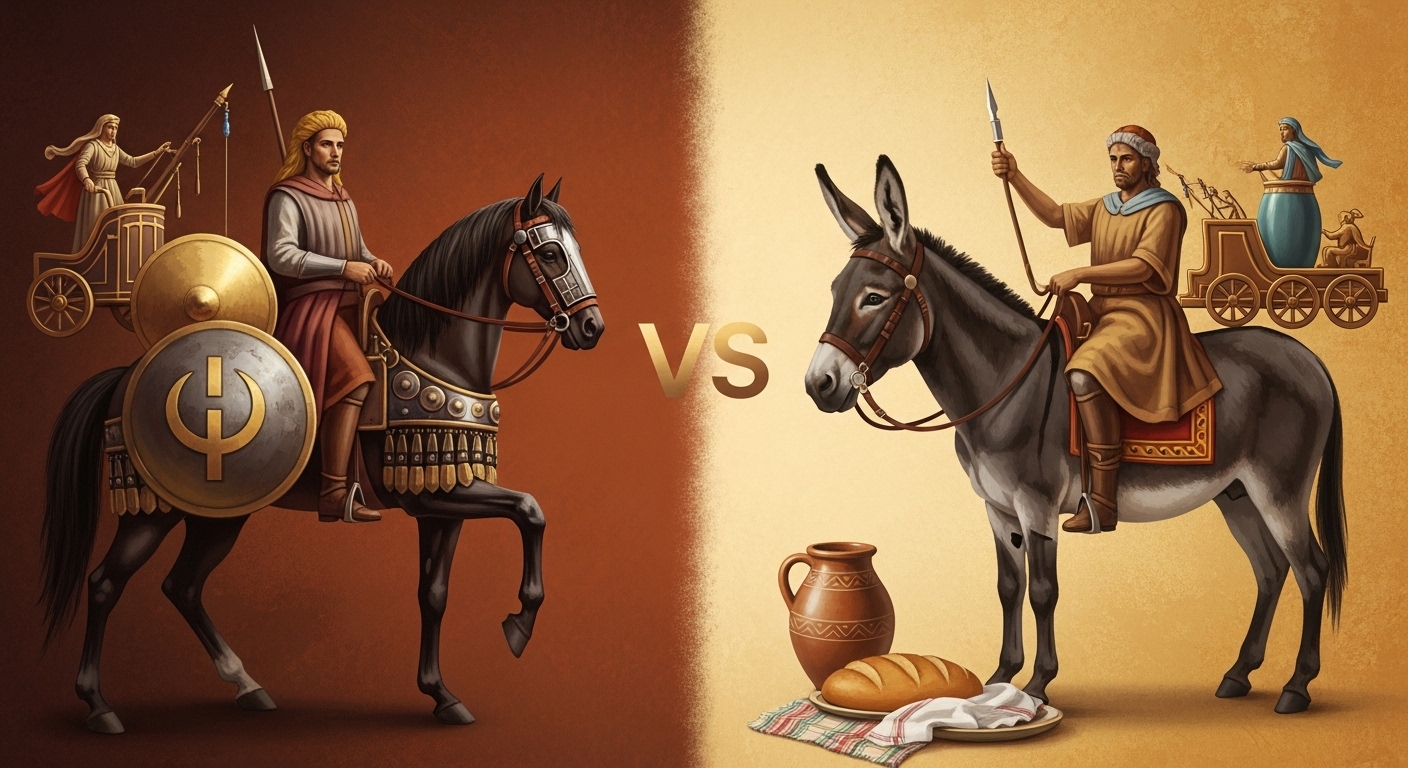
In the ancient world, animals carried cultural meaning. Horses were typically associated with war, power, and military might. Donkeys were associated with ordinary life, service, and peace. By choosing a donkey, Jesus presented Himself as a different kind of king—one who embodies humility rather than dominance.
This message confronts the tendency to equate leadership with status and spectacle. Jesus’ entrance says that God’s reign is visible in meekness, not merely in showy displays of force. In practical terms, when you lead, work, or relate to others, you’re invited to prefer humility over self-promotion.
2. A King of Peace, Not War
Zechariah’s prophetic image of a king arriving on a donkey explicitly contrasts with military imagery. The Messiah’s role here is restorative and peaceful—bringing reconciliation rather than launching a revolt.
Jesus’ own words confirm this orientation: He said, “My kingdom is not of this world.” That reminds you that His mission didn’t aim to topple Rome by force but to defeat sin and death through self-giving love. See John 18:36.
As you reflect, ask where you can bring peace instead of escalating conflict: in your family, workplace, or neighborhood. The donkey invites you into peacemaking.
3. Fulfillment of Prophecy and Divine Intentionality
Jesus’ choice was intentional to fulfill Scripture. When you study the accounts, He sends disciples to fetch the colt (see Matthew 21:1-3), instructing them in a way that shows foreknowledge and control. This reveals that even apparently small actions were part of God’s plan.
When you feel uncertainty about how God works, this moment encourages trust. God sometimes fulfills promises through small, unexpected means rather than theatrical upheavals. Remember that God’s timeline and methods can differ from yours, but that doesn’t mean He’s absent.
4. A Different Kind of Kingdom
Jesus’ entry on a donkey highlights the nature of His kingdom. It is not primarily political. Instead, it is spiritual—an authority rooted in truth, love, and sacrificial service.
When you measure success by worldly standards—power, wealth, recognition—you’re using categories that don’t fully capture the values of God’s kingdom. Jesus shows that true leadership and success are measured by faithfulness, compassion, and the willingness to serve.
The Cultural and Historical Background
To understand the depth of the donkey image, you should know how animals signaled different things in the ancient Near East and Mediterranean worlds. Kings going to war often rode horses or chariots, symbols of military strength. Donkeys, by contrast, were everyday beasts of burden, associated with domestic life, commerce, and peace.
In Jewish culture, riding a donkey could signal a peaceful visit. Even outside Israel, Roman triumphs and military processions involved horses and chariots, which further sharpened the contrast when Jesus appeared on a humble colt. That contrast was likely very visible and intentionally provocative: a messianic entrance that deliberately inverted popular expectations.
Archaeological and textual studies reinforce that in many Near Eastern societies, the donkey’s symbolism included notions of service, endurance, and stability. Jesus’ choice communicated that enduring service, not fleeting glory, defines His reign.
Why a Colt? (And Why Two Animals Sometimes Mentioned)
The Gospel writers refer specifically to a colt or the foal of a donkey. There’s a prophetic tie-in: Zechariah mentions both a donkey and its colt. In practice, names like this can highlight innocence, youth, and untrained strength—symbols of something fresh and unthreatening.
When you read the narratives, Jesus sends two disciples to fetch the colt. The detail of the animal being unused to riding (Mark 11:2 describes a colt with its mother nearby) emphasizes that this was no staged royal parade meant to impress the military. Instead, it underscores authenticity and fulfillment.
This specificity also shows how the Gospel writers and Jesus Himself were careful to align actions with prophetic patterns. So when you wonder about details, know they often carry theological weight beyond simple storytelling.
You can read the specific instruction Jesus gave to the disciples here: Matthew 21:2-3.
The Shouts of the Crowd: “Hosanna” and Psalm Echoes
The crowd shouting “Hosanna” connects the Triumphal Entry to the Psalms that celebrate God’s saving power. “Hosanna” is a cry of praise and petition meaning “save now” or “please save.” The crowd’s words also echo Psalmic language: see Psalm 118:25-26 and how Matthew cites this in the crowd’s acclamation: Matthew 21:9.
This connection shows the crowd hoping for deliverance, and Jesus fulfills that hope in a way that redefines deliverance. Instead of political liberation from Rome, the salvation Jesus brings is spiritual, restoring humanity’s relationship with God.
Theological Implications
Messiahship Without Militancy
Jesus’ entry on a donkey reframes what it means to be the Messiah. The Jewish expectation included a deliverer who would free Israel from oppression. While some expected a militant liberator, Jesus redefined the role: He is the Messiah who saves through suffering and service. This challenges simplistic assumptions about divine power.
When you believe in a God of rescue, this scene asks you to think about the nature of that rescue. It invites you to embrace salvation that includes forgiveness, spiritual renewal, and the promise of ultimate restoration, not merely political liberation.
Servanthood as the Model for Discipleship
Jesus placed servanthood at the center of His mission. Riding a donkey is an emblem of that servanthood. He came to serve, and He modeled the path you are called to follow: humility, sacrifice, and compassionate leadership.
If you lead in any capacity, this is transformative. The way you serve family, colleagues, and community becomes a spiritual practice that reflects the heart of Christ’s kingdom.
God’s Sovereignty in Small Things
The Triumphal Entry shows that divine purpose works through the ordinary: an animal, a crowd, a road. God’s sovereignty can weave meaning into everyday events. That can comfort you when God’s activity seems subtle or slow; even small events may carry great significance in God’s plan.
Practical Applications: Living What the Donkey Teaches
Choose Humility in Your Relationships
Humility is more than modesty—it’s a posture that seeks the good of others. Practice listening more than speaking, giving credit, and serving without expecting return. In everyday life, small acts of humility cultivate profound spiritual fruit.
Become a Peacemaker
Where can you bridge tensions rather than inflame them? Being a peacemaker follows Jesus’ example. Choose reconciliation over retaliation, patience over provocation, presence over performance.
Trust God’s Timing and Methods
God often accomplishes His purposes by surprising means. When things don’t look the way you expect, remember Jesus’ unexpected entry. Trust that God can use small, quiet acts to fulfill big promises.
Rethink Success and Leadership
Evaluate success by kingdom values—faithfulness, love, justice—rather than by popularity, wealth, or acclaim. Let your decisions be shaped by eternal metrics, not merely short-term applause.

A Simple Daily Devotional Pattern
To let the meaning of the donkey shape your spiritual life, try this rhythm each day. It’s practical and can fit into busy schedules:
- Read the verse slowly and listen for a single word or phrase. Example: Matthew 21:5
- Understand the context by briefly reading surrounding passages. Example: Matthew 21:1-11
- Reflect on how the passage challenges or encourages you today.
- Apply one truth—choose a small, specific action you can take.
- Pray honestly, asking God to shape your heart to be humble and peaceful.
This pattern helps you internalize Scripture rather than treating it as abstract text.
Frequently Asked Questions
Didn’t Old Testament kings ever ride donkeys?
Yes, historical records show that some rulers rode donkeys for peaceful visits. The key contrast remains: horses signaled conquest, while donkeys suggested humility and peace. Jesus purposely drew on that cultural language to define His kingship.
Was Jesus trying to look like a commoner?
Not in a stigmatizing way but in a deliberate, prophetic way. By appearing as a humble king, Jesus was signaling that God’s reign operates differently—through service and sacrificial love rather than coercive force.
Does the donkey story minimize Jesus’ authority?
No. It reframes authority. Jesus demonstrates that true authority is grounded in self-giving love and truth. That authority has power but it’s power exercised for restoration rather than dominance.
Why do the Gospel accounts differ in details?
The four Gospels focus on different theological emphases and audiences, so minor details vary. The core truth—that Jesus intentionally entered Jerusalem on a donkey to fulfill prophecy and reveal the nature of His kingdom—remains consistent.
Internal Resources to Go Deeper
If you want to study related parts of Holy Week and Palm Sunday more deeply, these topics will help you explore the theme of kingship, humility, and prophecy:
- Main Holy Week Hub: Holy Week Timeline: Events and Meaning
Before you leave, take a moment to go deeper:
- Holy Week Timeline: Events, Meaning, and Daily Devotional Guide
- Meaning of “Hosanna” in the Bible
- Lessons from Palm Sunday: Humility & Kingship
- Palm Sunday Bible Verses (Top Verses for Reflection)
These articles and resources will help you connect the Triumphal Entry to the broader story of Jesus’ passion and resurrection.
Conclusion
The image of Jesus riding a donkey into Jerusalem is small in physical scale but vast in spiritual significance. Jesus chose humility, peace, and prophecy-fulfillment to announce a kingdom that operates by different rules: servant-hearted leadership, restorative love, and quiet power.
As you reflect on this moment, let it shape your outlook. Seek humility rather than recognition, be a peacemaker where you can, and trust God’s purposes even when they unfold in small, surprising ways.
Closing Prayer
Lord, thank You for showing us what true kingship looks like—gentle, humble, and full of mercy. Teach me to walk in humility and to seek peace. Help me trust Your timing and Your ways, even when they differ from my expectations. Shape my heart to follow Jesus’ example each day. Amen.
Sponsored recommendation

Acknowledgment: All Bible verses referenced in this article were accessed via Bible Gateway (or Bible Hub).
“Want to explore more? Check out our latest post on Why Jesus? and discover the life-changing truth of the Gospel!”