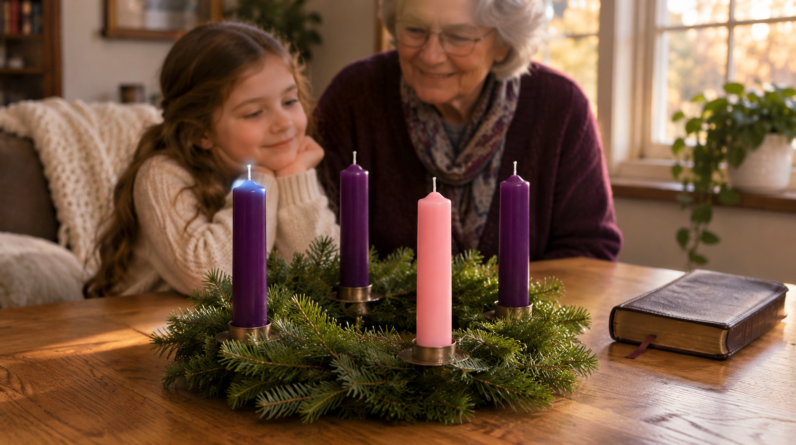



The Bible does not directly command or forbid the modern custom of decorating a Christmas tree. Discussions of Christmas trees and the Bible usually center on Jeremiah 10, but that passage describes manufactured idols in contrast with the living God. Applying its warning requires reading the whole passage, not assuming that every decorated wooden object has the same purpose.
A Christmas tree is an optional household custom. It must never become an object of worship, a supposed source of spiritual protection, or a reason to pressure someone against conscience. Christians should consider what they are doing, what it communicates, and whether their choices honor the Lord.
An Imagined Family Pause Before Decorating
Imagine a family opening its ornament box on a Saturday afternoon. A teenage son has seen a video claiming that Jeremiah forbids Christmas trees. He asks his mother whether they should put the box away. She has years of happy memories attached to those ornaments, but she notices that he is asking because he wants to obey God.
Instead of dismissing his question, imagine her setting the ornaments aside and opening the Bible with him. They read the surrounding verses. They notice the craftsmen, the manufactured figures, and the contrast with the Creator. They discuss the difference between decoration and worship, while allowing time for his concern to be understood.
This is an illustration, not a report about a real family. Its value is the pause. A child’s question about obedience deserves more than a quick defense of family tradition. Sometimes the most valuable moment in decorating is the moment when everyone stops to listen.
Read Jeremiah 10 in Its Own Context
Read Jeremiah 10:1–16 before deciding what the passage means. It begins with a warning about adopting the ways of the nations. It describes wood worked by a craftsman, decorated with valuable materials, and secured in place. The objects cannot speak or move themselves and must be carried.
The surrounding verses make the contrast clear: these manufactured gods have no life, while the Lord is the living God and Creator. Verse 14 explicitly addresses images made by a metalworker and their lack of breath. The subject is the futility of idols, not instructions for a later Christian holiday.
Certain details can sound familiar to a modern reader who pictures a tree in a stand. Similarity in materials is not enough to identify the practice being condemned. The question is what the passage says people are making and treating as divine. We should not remove the description from its larger argument.
The warning remains serious. It challenges us to reject false worship and misplaced spiritual trust. Explaining its historical subject does not make idolatry harmless; it helps us apply the warning accurately.
A Related Passage Makes the Problem Clear
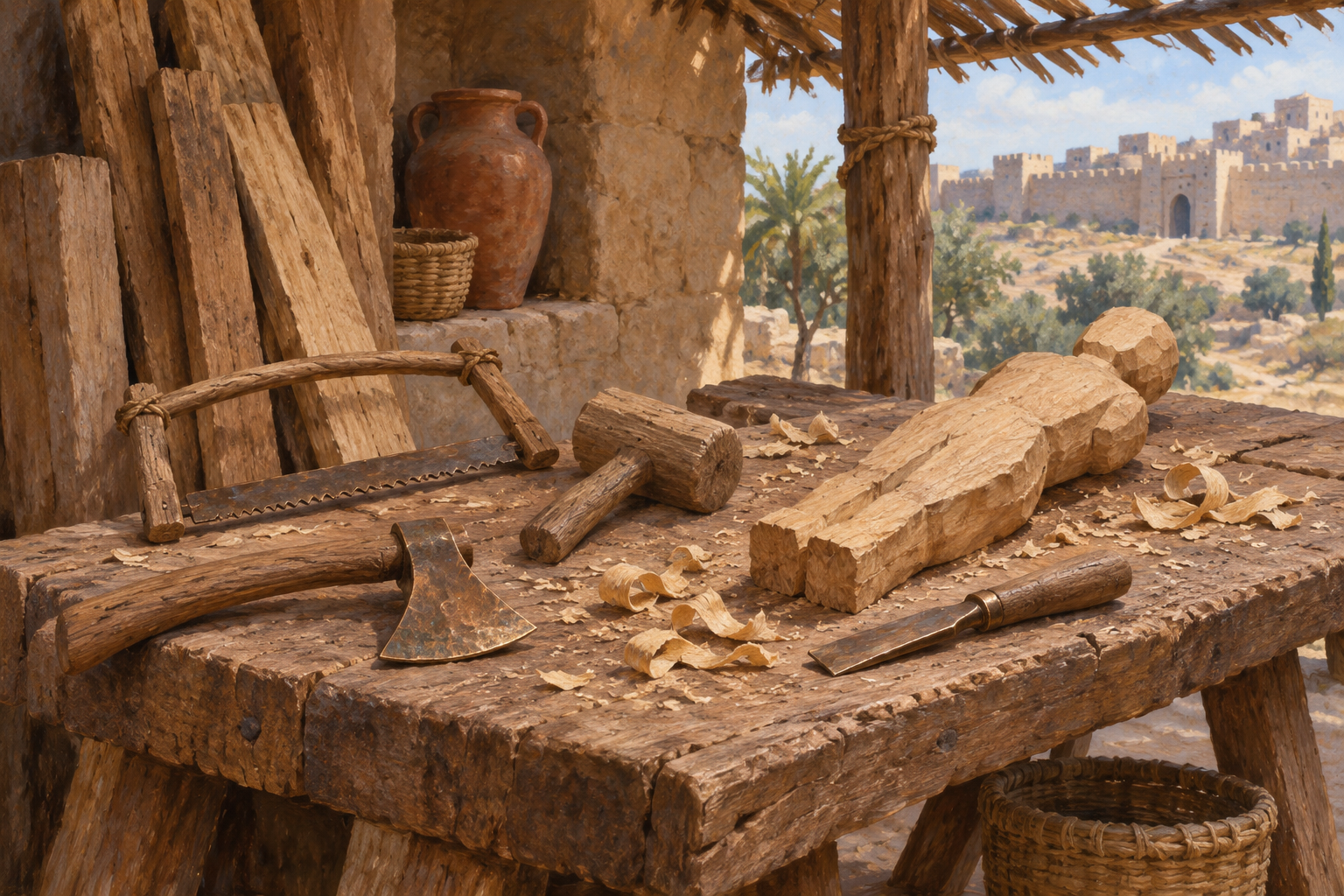
Isaiah 44:9–20 describes the absurdity of fashioning a god from wood. A person uses part of the material for ordinary needs and makes another part into an object of religious devotion. The contrast exposes the folly of relying on something human hands have made.
Wood itself is not the enemy. The issue is treating a created object as a god or relying on it for what only God can provide. A chair, a carved decoration, and an idol can share a material without sharing a purpose. At the same time, an object being familiar or beautiful does not excuse using it in false worship.
Ask where your trust rests. An evergreen cannot secure God’s favor, keep evil away, or guarantee a peaceful household. Neither can an ornament, a color, or a particular arrangement of decorations. Our confidence belongs in the Lord, not in a seasonal object.
Our explanation of Jesus’ birth and why it matters directs attention toward the Savior. Christian hope rests in who He is and what He has done, not in how a room is arranged.
What About the Prohibition of an Asherah Pole?
Deuteronomy 16:21–22 prohibits setting up an Asherah beside the Lord’s altar and erecting a sacred stone. This instruction concerns forbidden religious objects and practices in Israel’s worship. It reinforces the seriousness of worshiping God as He directs.
It should not be reduced to a rule that every tree near every place where a believer prays is automatically an Asherah. Nor should we dismiss it as irrelevant to our worship. Read the passage for what it prohibits, then examine whether a present practice actually involves rival worship, superstition, or disobedience.
A good intention cannot make participation in idolatry acceptable. Conversely, a claim of ancient resemblance does not by itself prove that an ordinary family decoration is an act of worship. Careful application needs both truth and attention to the actual situation.

Christmas Tree History and Biblical Interpretation Are Different Questions
The modern domestic Christmas tree belongs to a much later setting than Jeremiah’s ministry. The Henry Ford museum’s account documents German tree customs and their spread in America. The National Records of Scotland also presents an 1838 letter describing a decorated German tree at a gathering.
Those records help us discuss a particular later custom. They do not establish that every earlier use of greenery was identical, or that every present household assigns the same meaning to a tree. Avoid repeating a neat invention story unless its evidence can be checked. A familiar account about a famous person may be a legend rather than a documented origin.
History can inform the conversation, but Scripture should be interpreted in its own setting first. We do not need to insert a modern object into an ancient passage to take God’s warnings seriously.
Can a Christian Decorate a Tree With a Clear Conscience?
A believer may treat a tree as an ordinary decoration while giving worship to God alone. Another may decide to abstain because of conscience, past experience, cost, or a desire for a simpler season. The custom itself is not a condition of salvation or Christian belonging.
Romans 14:1–6, 13–23 supplies principles about disputed practices, accountability, conscience, and building others up. Applying those principles here does not mean Paul directly addressed Christmas trees. It means we can learn how to handle a disagreement without contempt or coercion. Clear commands against idolatry remain binding.
If your conscience is troubled, do not force yourself to decorate to satisfy someone else. Take time to study and speak with a trusted church leader about the particular concern. If your conscience is clear, do not make another believer feel foolish for abstaining. Love can make room for a different household decision.
Our reflection on Jesus as the Prince of Peace offers a useful focus for that conversation. A defense of a Christmas custom should not become an excuse to speak harshly to someone Christ calls us to love.

Practical Questions for Your Household
Consider whether the decoration is serving your household or becoming a burden. Are spending, comparison, or arguments pushing aside worship and care? Could you simplify without resentment? You may decide to use a small tree, keep the decorations you have, or skip them. None of those choices prevents you from thanking God for Jesus.
Ask what children are learning from the way adults respond to questions. You can explain why your family uses a star or an evergreen as a reminder, while making clear that the Bible does not prescribe that Christmas symbol. You can also acknowledge that a tradition you love is still optional.
Our guide to family worship in a Christ-centered home can help make Scripture part of the conversation. If you need words to begin, use our beginner’s guide to prayer to thank God and ask for wisdom. Prayer is not a technique for approving a decision already made; come willing to learn.
Finally, consider a practical act of love. Could you help someone with groceries, include an isolated friend, or spend unhurried time with an older relative? Our devotional on the true gift of Christmas brings the season back to God’s grace. Let gratitude become care for people, whatever your decorating decision.

Returning to the Family’s Question
The family in our illustration may need more than one afternoon to discuss everything. That is all right. The goal is not to win a quick argument or preserve an ornament at any cost. It is to grow in faithfulness to God and in understanding of one another.
Their son can learn that Scripture deserves careful reading. His mother can show that a loved tradition does not have to be defended with impatience. Whether the box is opened again that evening or stays closed, they can pray together and give Christ the honor that belongs to Him.
A Prayer for Wisdom and an Undivided Heart
Father, thank You for Your Word and for sending Jesus. Keep our worship directed toward You alone. Help us recognize false trust, read Scripture carefully, and listen with humility. Give us a clear conscience and patience with family members who have questions. Let our choices serve love and faithfulness rather than pressure or pride. In Jesus’ name, amen.
Honor Christ With or Without a Tree
Jeremiah’s message directs us away from lifeless idols toward the living God. Carry that truth into your home. A decorated tree cannot bring salvation, and choosing not to have one cannot earn it. Receive God’s grace through Christ, worship Him alone, and let His love shape the way you live together.
Continue Growing
Read a short Christmas devotional for a busy heart.
Make time for God with a simple daily prayer routine.