


What is Advent? Advent is a season in which many Christians prepare to celebrate Jesus Christ’s birth and look forward to His return. In many Western churches, it includes the four Sundays before Christmas. The word comes from a Latin term connected with coming or arrival.
Advent invites us to slow down and consider whom Christmas celebrates. Its focus is Jesus: the Son of God who came among us, accomplished our salvation, and will come again. A wreath, candle, calendar, or reading guide can support that attention, but none is the center of the season.
If you are new to Advent, you do not need to begin with elaborate traditions. You can start by reading a short Bible passage, praying, and asking how the hope of Christ shapes the day before you.
When Does Advent Begin?
In the Western four-Sunday observance, Advent begins on the fourth Sunday before Christmas and continues through the approach to Christmas. Its starting date changes from year to year, falling between November 27 and December 3.
In 2026, the first Sunday of Advent is November 29. The following Sundays are December 6, December 13, and December 20. The U.S. Conference of Catholic Bishops’ Advent guide confirms the November 29 start for 2026.
A printed Advent calendar often begins on December 1 for convenience. That is not always the same date as the first Sunday of the church season. If a calendar helps your family read Scripture together, you can use it without confusing the two starting points.
Check your congregation’s calendar if you want to follow its services and readings. Christian communities do not all mark the season in precisely the same way.

Why Does Advent Look Back and Look Forward?
Advent holds together gratitude for Christ’s coming and expectation of His return. Looking back, Christians remember the promises of God and the birth of Jesus. Looking forward, they await the completion of His saving purposes.
Read Galatians 4:4–7. Paul connects the sending of God’s Son with redemption and our place in God’s family. Christmas is therefore more than an inspiring story about a birth. It belongs within the larger gospel of what God has done through His Son.
Read also Titus 2:11–14. The passage connects God’s grace with a changed way of life while believers wait for Christ. Expectation is not presented as a reason to abandon today’s responsibilities.
Advent can therefore lead us toward gratitude, repentance, faithful action, and hope. We remember the Savior who came and seek to live as people who belong to Him.
Is Advent in the Bible?
The Bible does not command Christians to observe a four-week season called Advent or prescribe an Advent wreath. These are church practices that developed around biblical truths. The coming of Jesus, the call to repentance, and the hope of His return are taught in Scripture.
That distinction helps us receive a useful tradition without giving it an authority it does not have. Observing Advent does not earn salvation, and not following a particular custom does not automatically mean someone cares less about Christ.
Ephesians 2:8–10 directs our attention to salvation by God’s grace through faith and to the good works that follow. A seasonal practice can serve discipleship, but it cannot replace the gospel.
Some churches follow a detailed liturgical calendar; others mark the weeks informally or do not use the name Advent. Ask what your church teaches and how the practice can help you attend to Scripture. Our guide to studying the Bible in context can help you distinguish a passage’s teaching from a later custom.
What Do Advent Candles Mean?
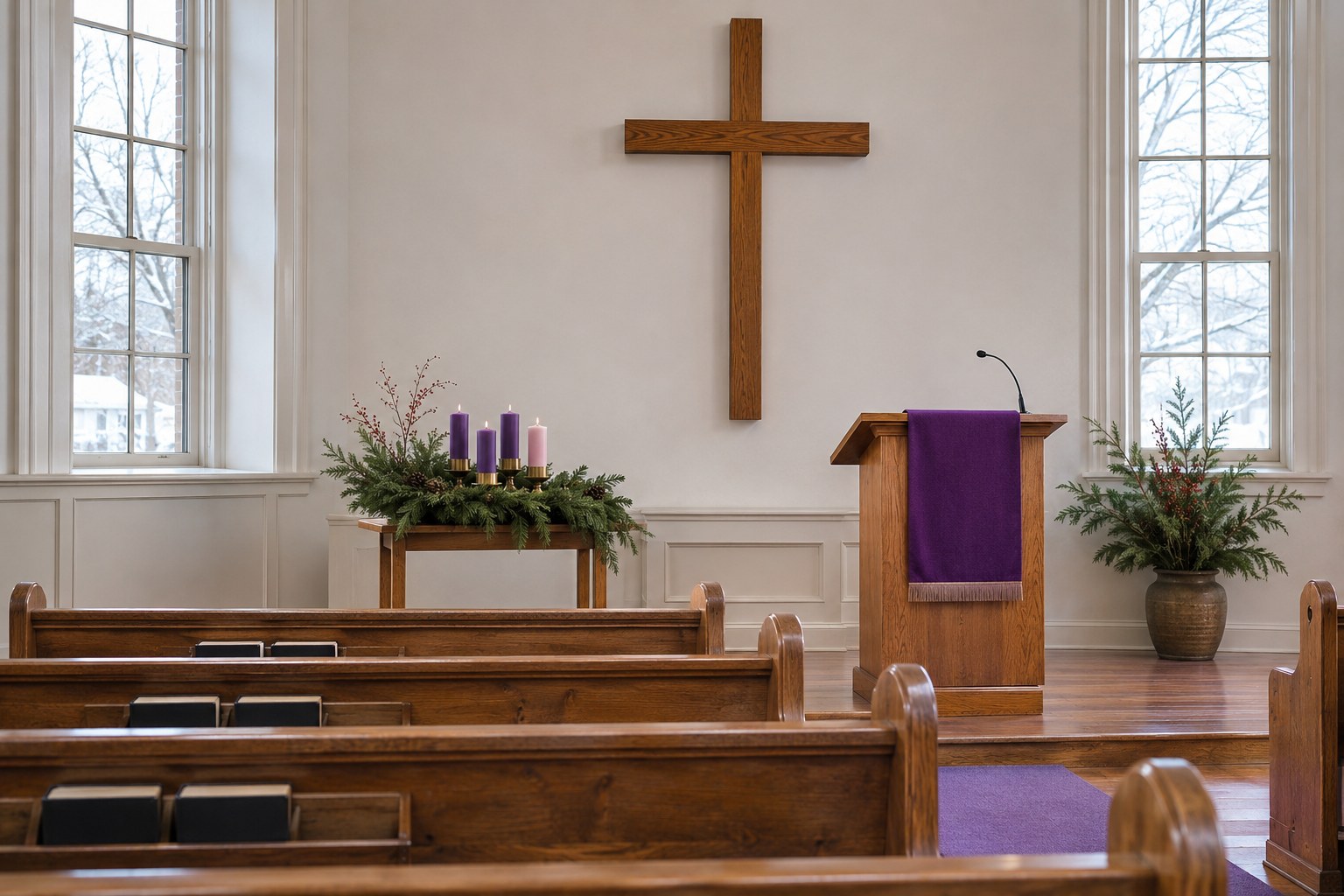
An Advent wreath commonly has four candles, with another candle lit as the Sundays progress. Some arrangements include a central candle associated with Christ and Christmas. The greenery and growing light help worshipers reflect on Christian hope.
Candle colors and weekly themes vary. A familiar arrangement uses purple candles with one rose-colored candle. The Church of England’s explanation of Advent customs describes a wreath with four outer candles and a central white one. It notes the use of a pink candle on the third Sunday in a common pattern.
Do not assume that every church assigns identical meanings to each candle. For example, the Church of England’s overview of the liturgical year describes themes associated with the patriarchs and prophets, John the Baptist, and Mary. Follow your congregation’s guidance if you are joining its observance.
The candle itself does not create God’s presence or guarantee a spiritual result. It is a visual aid. An unlit or battery-operated candle can also serve as a reminder; reading Scripture and praying do not depend on having a particular object.
What Bible Passages Can a Beginner Read?
Isaiah 9:1–7: A Promise of Light and a Coming King
Read Isaiah 9:1–7. The passage speaks into darkness with the promise of a royal child and a kingdom associated with justice and peace. Christians read it within the wider biblical witness to the Messiah.
Begin with the passage’s own setting and language. Then consider how the New Testament presents Jesus as the promised Savior. Advent reading is an opportunity to understand that biblical story more deeply, rather than use a verse as a seasonal slogan.
Mark 1:1–8: Prepare to Receive the Lord
Read Mark 1:1–8. John the Baptist points beyond himself to the One who is coming. His ministry connects preparation with repentance.
Advent preparation can therefore include an honest response to God. Is there a known wrong to confess, a person to treat more justly, or a responsibility you have avoided? The aim is responsive faith, not simply a more attractive home.
Luke 1:26–38: Hear the Announcement About Jesus
Read Luke 1:26–38. Gabriel’s announcement identifies the child Mary will bear and points toward God’s work. Pay attention to what the passage says about Jesus’ identity and kingdom.
You do not need to add details that the passage does not give. Read slowly and ask what the announcement reveals about the Lord’s purpose and faithfulness.
Luke 2:1–20: Receive the Good News of the Savior
Read Luke 2:1–20. The account moves from an ordinary setting of travel and birth to the announcement of good news and the shepherds’ response.
Ask who Jesus is and why His coming matters. If you would like a broader introduction to Him beyond the Christmas passages, our 30-day Bible reading plan for beginners begins with the Gospel of John.
How Can You Observe Advent Simply?
Choose a Realistic Time
Set aside a few minutes that fit your household. It might be before breakfast, after dinner, or during a quiet moment alone. A small practice you can return to is more useful than a plan that immediately becomes a burden.
You may use one passage each week and return to it, or choose a reading guide. This article explains the season; a daily plan can provide the separate task of choosing what to read each day.
Read, Reflect, and Pray
Read the passage with its context. Ask what it reveals about God, Jesus, and the response of faith. Then speak to the Lord about what you have learned.
You could thank Him for His faithfulness, confess a specific wrong, or ask for help loving someone well. Our guide to praying Scripture offers help turning reading into an honest prayer without treating the words as a formula.
Let the Reading Shape an Act of Love
Consider one appropriate response: offer practical help, listen to someone who is lonely, make peace where possible, or speak the truth kindly. These actions do not purchase God’s favor. They can express gratitude for the grace we receive.
Our study of kindness as a fruit of the Spirit explores how faith becomes visible in ordinary relationships. Advent is a fitting time to remember that people matter more than completing every seasonal activity.

What If Your December Is Busy or Painful?
Not everyone approaches Christmas with uncomplicated happiness. Work, caregiving, grief, illness, or family strain may make the season difficult. Advent does not require you to hide that reality before you can seek the Lord.
A short reading and honest prayer may be enough for the time you have. You can participate with your church where possible and release activities that are beyond your capacity. Our simple daily prayer routine can help you begin with something manageable.
The gospel announces God’s action in a world that needs redemption. Its hope is deeper than a cheerful schedule. You may bring both gratitude and sorrow to Christ.
Common Questions About Advent
Is Advent Only for Catholics?
No. It is observed in Catholic churches and in many Protestant churches, including Anglican communities. Practice differs among congregations. Some Christians use the season informally for Bible reading and prayer, while others follow a set pattern of worship.
Is Advent the Same as Christmas?
Advent is a period of preparation and expectation; Christmas celebrates Christ’s birth. In churches that follow a liturgical calendar, they are distinct seasons. Everyday speech and commercial calendars often use the terms more loosely.
Do We Need a Wreath or Calendar?
No. Those items can help, but they are not requirements for reading Scripture or praying. You can begin with a Bible and a little time. If you are new to prayer, use our beginner’s guide.
What If I Start Late or Miss a Day?
Resume with a passage that fits where you are. An optional reading practice is not a competition or a way to earn acceptance with God. Let it serve understanding and worship rather than become another source of pressure.

A Prayer for the Advent Season
Heavenly Father, thank You for sending Your Son. Help us understand the good news of Jesus more deeply and respond with faith, repentance, and love. Give us wisdom about our time and compassion for the people around us. Strengthen our hope as we remember Christ’s coming and look forward to His return. May our worship and our daily choices bring glory to Him. Amen.
Prepare Your Heart for Christ
Advent is an opportunity to remember whom we await and whom we celebrate. Its customs are useful when they help us hear Scripture, pray honestly, and live in response to God’s grace.
Keep Jesus at the center. He is more than the subject of a seasonal tradition: He is the Savior and Lord. May this season deepen our gratitude for His first coming, strengthen our hope in His return, and lead us to honor Him in the lives we live.
Continue Growing
Continue with 30-Day Bible Reading Plan for Beginners: Start With Jesus, Praying Scripture, and How to Study the Bible in Context. Let the season lead you into a lasting habit of attending to God’s Word.