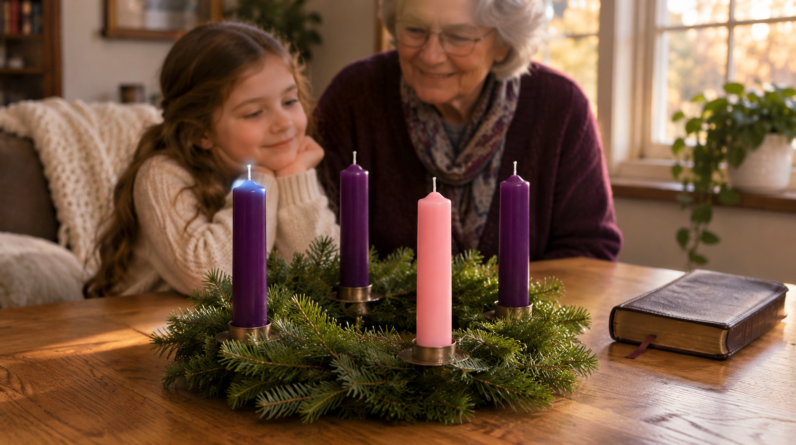



Christmas symbols can help us remember Jesus’ birth, His identity, and the hope He brings. Stars, lights, gifts, greenery, and Nativity scenes do not all have the same kind of connection to Scripture. Some point to details in the biblical accounts; others are later customs that Christians use as reminders. None is a requirement for receiving God’s love.
Imagine a grandmother opening a small box of ornaments with her grandson. A wooden star lies beside an old ribbon. The child asks what the star means, and for a moment the decorating stops. The grandmother has an opportunity to do something more lasting than arrange a beautiful tree: she can tell him about Jesus.
Perhaps your decorations carry memories of someone you miss. Perhaps you have no decorations this year. You can still pause, open Scripture, and remember the Savior. The purpose of a Christian symbol is to direct attention toward Him, rather than make a home look complete.
A Bible Story About Remembering God’s Works
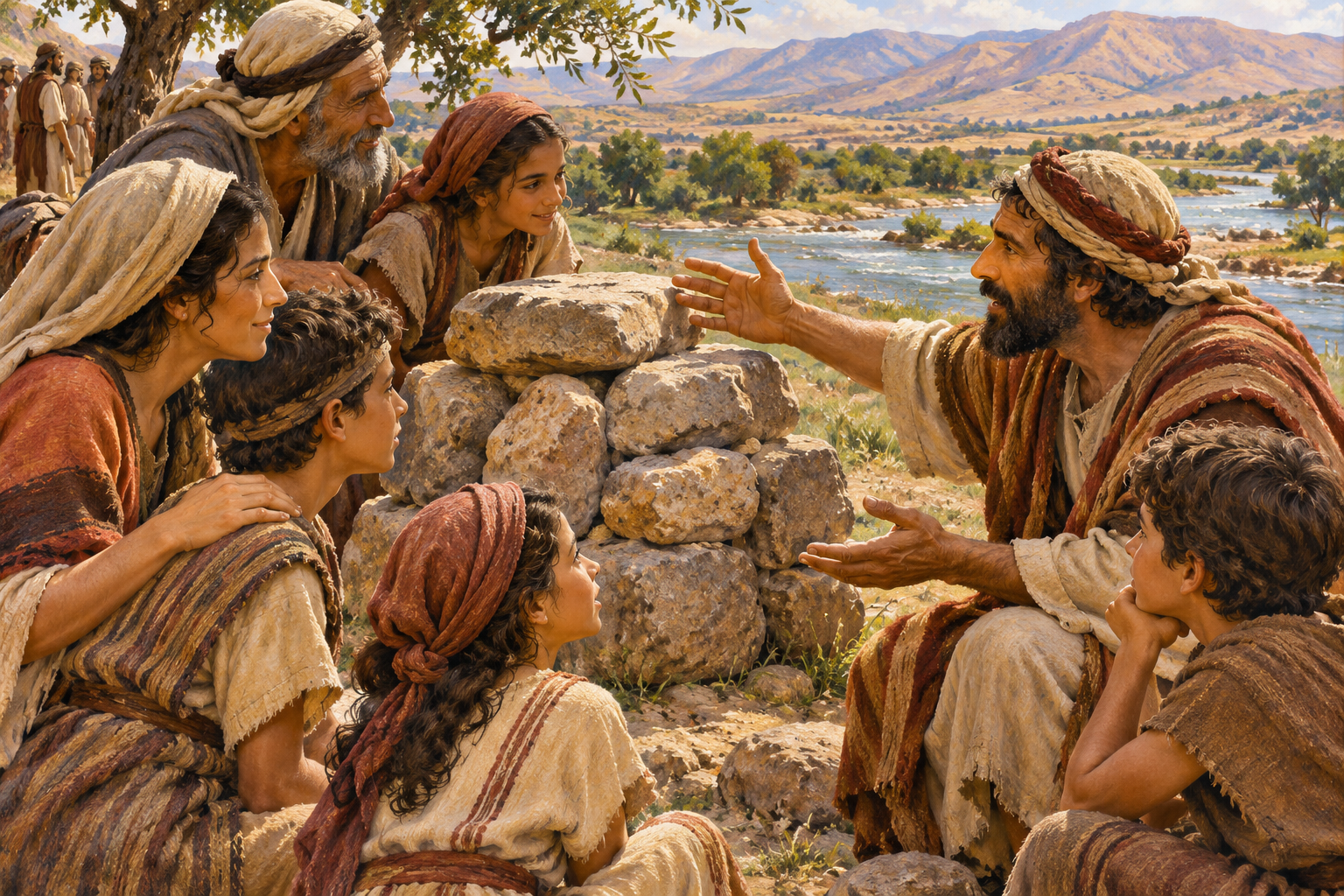
In Joshua 4:1–9, 20–24, Israel had crossed the Jordan through God’s provision. Twelve men, representing the tribes, carried stones from the river. Joshua set the memorial stones at Gilgal. The account looks ahead to children asking about them, giving parents a reason to explain what the Lord had done.
The stones mattered because of the event they recalled. They were not a source of power, and they did not replace trust in God. The next generation needed to hear about the Lord’s faithfulness, not simply admire a pile of stones.
That story offers a useful principle about remembering, but it is not an origin story for Christmas decorations. God specifically directed Israel’s memorial; Scripture does not prescribe our Christmas ornaments. We should keep that difference clear. A later family custom may provide an opportunity to teach, without becoming a command for every Christian household.
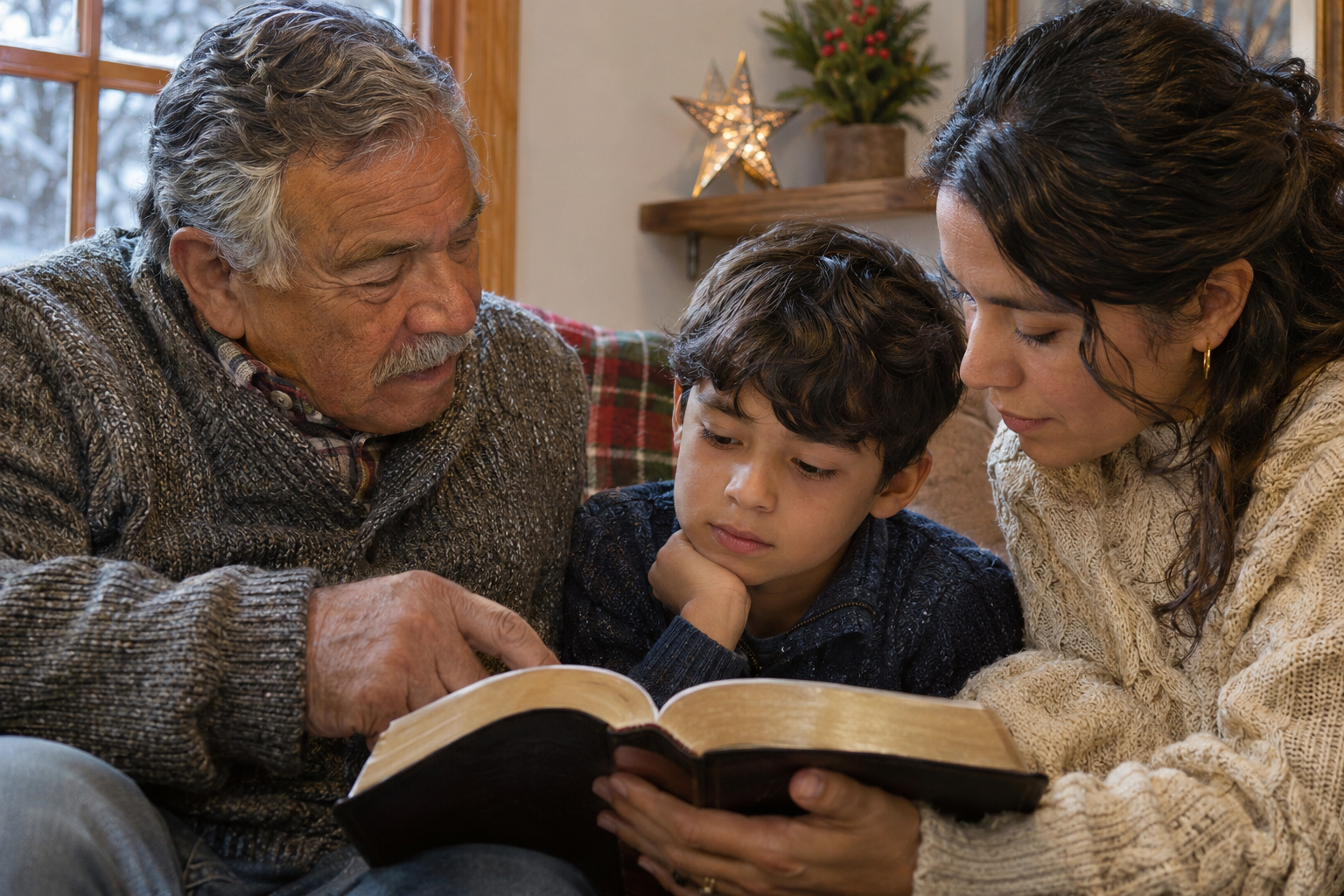
When a child notices something in your home, you can explain the connection you are making and read the relevant passage together. Our guide to family worship in a Christ-centered home offers encouragement for making those conversations part of ordinary life.
The Star: Remember the Magi’s Search for Jesus
A Christmas star commonly reminds Christians of the star in Matthew 2:1–12. The Magi came seeking the king of the Jews and eventually found the child with Mary. Their response was worship and the presentation of gifts.
Matthew does not describe the star as a five-point ornament, identify three visitors, or place their visit at the manger on the night of the birth. An ornament is a simplified reminder, so explain it alongside the actual account. The central person in the story is Jesus; the star directs the visitors toward Him.
You might ask your family what receives the most attention in your Christmas preparations. Let the question invite reflection rather than blame. Our explanation of Jesus’ birth and why it matters can help connect a familiar image with His saving purpose.
Lights and Candles: Reflect on Christ as Light
Christmas lights can provide a helpful reminder of biblical teaching about light. John 8:12 directs us to Jesus as the light of the world, while Isaiah 9:2 speaks of light for people in darkness. These passages have meanings deeper than a cheerful room.
Electric lights and candles are not the light described in those passages. They cannot remove sin, guarantee protection, or make a prayer more effective. Christians may use them to prompt remembrance of the One who reveals God and gives life. Our reflection on Isaiah 9:2 and light in darkness explores that hope more fully.
If someone in your household is grieving, do not use a bright room to demand a bright mood. You can thank God for Christ while making room for sadness. A quiet conversation, an honest prayer, and patient companionship may mean more than another activity.

The Nativity Scene: Read the Accounts Behind the Figures
A Nativity scene can help children and adults remember Jesus’ birth. Read Luke 2:1–20 for the birth in Bethlehem and the announcement to the shepherds. Read Matthew 2 separately for the Magi’s visit.
Traditional displays often gather figures from different moments into one scene. That can be a convenient way to recall the wider story, but it should not determine our explanation of the timeline. Luke records a manger without describing every feature of the building. Matthew describes the Magi entering a house. Scripture should guide what we confidently teach.
The humble circumstances matter, but Christmas is more than a lesson in simplicity. The child is the Savior. His birth belongs with His life, death for our sins, and resurrection. If your family uses a display, let it open the Bible rather than substitute for reading it.
Gifts: Let Gratitude Become Generosity
The Magi’s gifts are part of Matthew’s account. Modern gift exchanges can also provide an occasion to remember God’s generosity, but not every present has a biblical origin or prescribed spiritual meaning. A gift’s price does not measure the giver’s faith or the recipient’s worth.
1 John 4:9–11 connects God’s sending of His Son with our responsibility to love one another. Consider a gift that meets a real need: a meal, a useful item, time with an isolated friend, or help with a tiring task. Ask what would serve the person rather than impress an audience.
Our devotional on the true gift of Christmas can help keep gratitude for Christ at the center. You do not need to spend beyond your means to show sincere love. A thoughtful note or an unhurried visit may become a treasured memory.

Evergreen Trees and Wreaths: Useful Reminders, Optional Customs
Some Christians use evergreen branches as a reminder of enduring life, or a circle as a reminder of eternity. Those are devotional associations, not definitions assigned to Christmas greenery by a Bible verse. The Henry Ford museum’s account of Christmas trees documents their place in German and American domestic customs. Present-day meanings and historical origins are separate questions.
A family may enjoy a wreath or tree without treating it as sacred. Another may choose not to use one. Neither arrangement can create fellowship with God. Where Christians differ about an optional custom, Romans 14:1–6, 19–23 provides principles for conscience, accountability, and building one another up. It does not permit idolatry or cancel clear biblical commands.
Be honest when explaining a tradition. You can say that your household uses a circle to remember God’s faithfulness, while acknowledging that Scripture does not command a Christmas wreath. That distinction teaches children to value both creativity and truth.
Angels, Bells, and Familiar Christmas Colors
Angel decorations can prompt us to read the announcement in Luke 2. The angels direct praise toward God and announce the Savior. A decorative angel is an artistic representation, not a picture that establishes what every angel looks like or a source of household protection.
Bells and colors can carry meanings assigned by a church, family, or local custom. Red may remind someone of Christ’s sacrificial death, and white of purity. Such associations can be helpful, but the Bible does not supply a universal Christmas color code. Explain them as chosen reminders rather than hidden facts everyone must accept.
The same care applies to a candy cane or a particular ornament. A creative teaching illustration is not automatically a verified account of how an object was invented. If you cannot establish an origin story, simply explain the lesson you choose to associate with the object. Faith does not need an attractive legend presented as history.
A Simple Conversation That Gives the Symbols Meaning
Choose one object your family already has. Ask what it reminds people of, then read a short passage connected with your answer. Give children time to ask questions, and be comfortable acknowledging a detail you do not know. A short, honest conversation is more valuable than an elaborate explanation built on guesses.
End by choosing a response: thank God, ask forgiveness, contact someone who is lonely, or help a neighbor. Symbols serve us best when remembrance leads toward faithful living. Our study of Jesus as the Prince of Peace offers a further starting point for thinking about His identity and the peace He brings.
A Prayer for a Christ-Centered Home
Father, thank You for sending Jesus. Help us remember Your goodness without confusing our traditions with Your commands. Give us patience with questions, honesty about what we know, and love for people who celebrate differently. Let our home make room for Scripture, prayer, and practical kindness. May the things we choose to display direct our attention toward the Savior. In Jesus’ name, amen.
Remember the Savior Beyond the Season
The grandmother in our opening illustration does not need an expensive ornament to pass on something precious. She needs a willingness to listen and tell the truth about the Lord. A familiar object can start that conversation, but God Himself is the One worthy of trust and worship.
Whether your home is decorated or simple, crowded or quiet, remember Christ. May gratitude for His coming shape your words, your generosity, and your care for others long after the ornaments are put away.
Continue Growing
Read our short Christmas devotionals for busy hearts.
Build a sustainable habit with a simple daily prayer routine.