

Communion is one of the most meaningful and intimate practices in the Christian life. You might come to it as a weekly ritual, a special observance, or a deeply personal moment of worship—and you may wonder what the Bible says about it, why it matters, and how it shapes your relationship with Jesus. This article will walk you through the most important Bible verses about Communion, help you understand their context and meaning, and give practical suggestions for how to approach the Lord’s Table with reverence, honesty, and joy.
You’ll explore the institution of Communion at the Last Supper, Paul’s instructions to the early church, and other New Testament passages that help you see Communion’s theological and communal dimensions. By the end, you’ll have concrete ideas for preparing your heart, participating well, and using Communion to draw closer to Christ and your church family.
Recommended AI images (exactly 4)
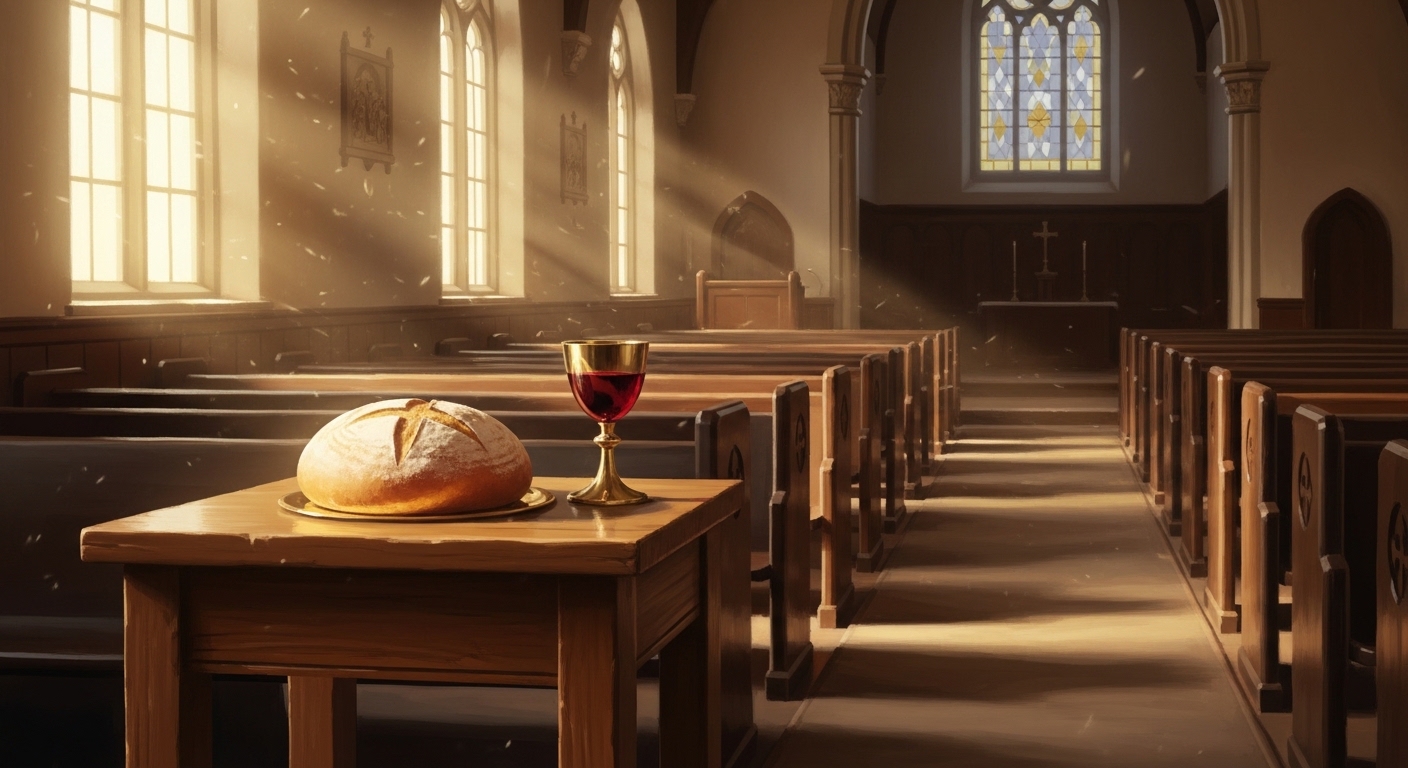
- Header / Hero image (placement: top of article, beneath the title): Prompt — “Warm, inviting church interior at sunrise with a simple wooden communion table in the foreground holding a loaf of bread and a cup of wine; soft golden light, gentle depth of field, realistic painterly style, welcoming and contemplative atmosphere.”
- Body image 1 (placement: after “The Institution of Communion” section): Prompt — “A close-up of hands breaking a loaf of rustic bread at a table, natural lighting, high detail, intimate and reverent tone, realistic photography style.”
- Body image 2 (placement: after “A Time for Self-Examination” section): Prompt — “Person kneeling in quiet prayer before a small plate and cup, soft focus background, warm tones, peaceful and reflective mood, cinematic realism.”
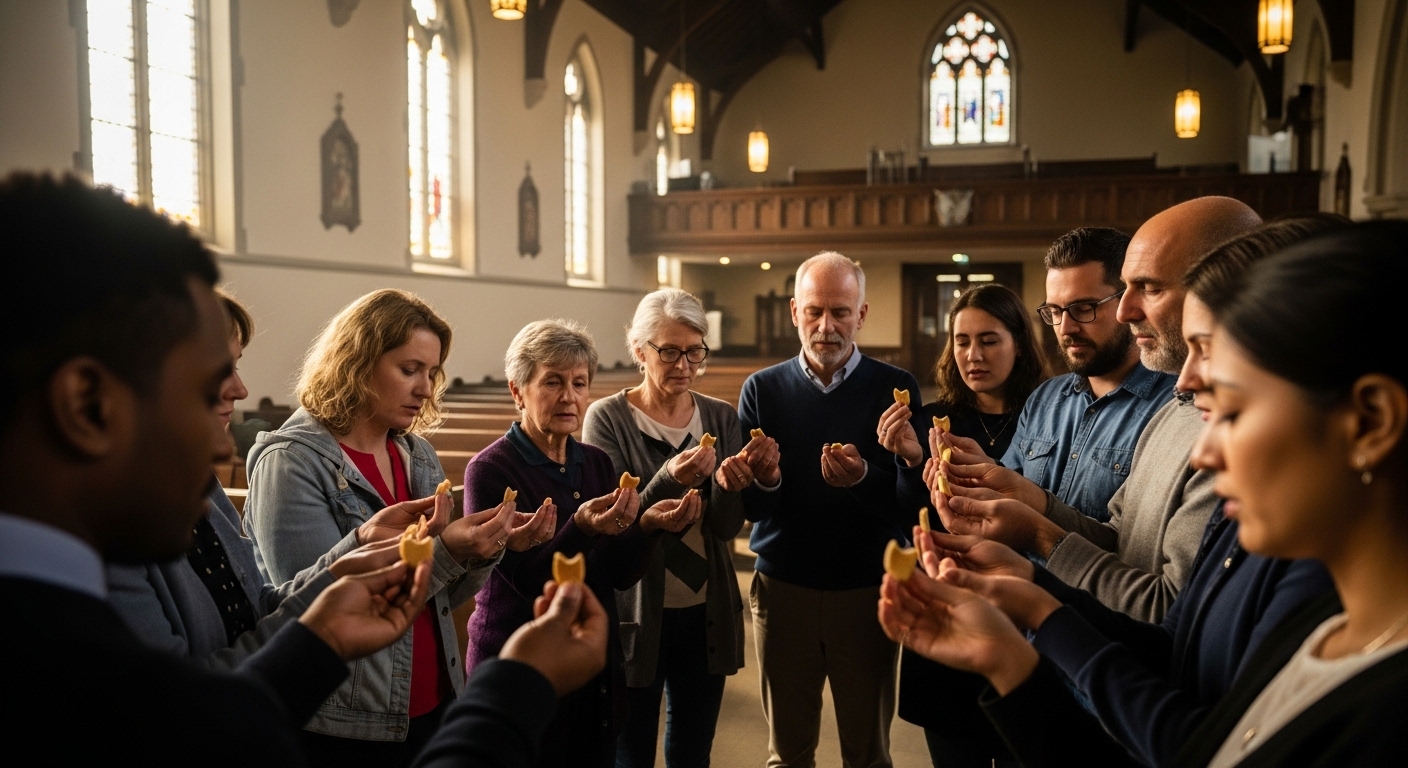
- Body image 3 (placement: after “A Symbol of Unity” section): Prompt — “Diverse group of people standing in a circle holding pieces of bread, outdoor setting, inclusive representation, bright hopeful lighting, documentary photography style.”
Introduction: Why Communion Matters to You
Communion is more than ritual—you experience it as a living memory of Jesus’ sacrifice, a present encounter with His grace, and a forward-looking proclamation of His return. It’s a sacred habit that invites you to remember, examine, repent, and celebrate. Yet Communion can also feel routine, confusing, or even divisive in some churches. You might struggle with questions about who can take it, what the elements truly mean, or how to avoid hollow repetition.
This guide promises to clear up those doubts by grounding you in Scripture. You’ll discover key Bible verses about Communion, learn how to interpret them in context, and find practical ways to make your Communion times meaningful and spiritually nourishing. Whether you’re preparing for a church service, a small group, or a private devotion, these passages will help you see Communion for what it truly is: a holy act that shapes your faith and communal identity.
The Institution of Communion
Luke 22:19–20 — Where It All Began
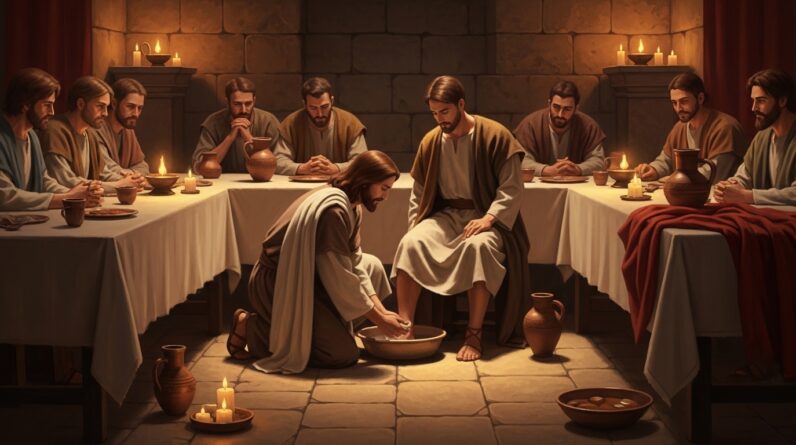
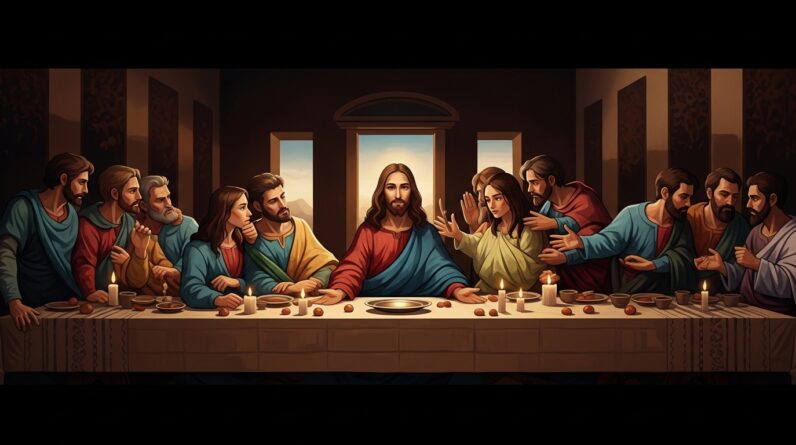
Read the record of Jesus’ Last Supper and you’ll find the moment Communion is instituted. See Luke 22:19–20. In this passage Jesus takes bread and the cup and redefines them: the bread is His body given for you, and the cup is the new covenant in His blood.
In context, Jesus is sharing a final meal with His disciples before His suffering. He takes ordinary elements and gives them extraordinary meaning. You learn that Communion originates not as a human invention but as an act given by Christ Himself—a visible sign of the invisible reality of His sacrifice and the covenant established through His blood.
As you meditate on these verses, allow yourself to be drawn into the scene: Jesus speaks directly to you through this act. The bread and cup are tangible reminders that His body was broken and His blood shed for the forgiveness of sins. Approaching Communion with this awareness leads you into gratitude and humility.
Matthew and Mark: Parallel Accounts
The Synoptic Gospels also record this institution. See Matthew 26:26–28 and Mark 14:22–24. Each account highlights Jesus’ words and the link between the meal and His impending crucifixion.
These parallel passages reinforce the central point: Communion is rooted in Christ’s sacrificial work. They also show the communal and covenantal dimensions of the meal—Jesus institutes a new covenant through His death, and He invites His followers into that covenantal reality by sharing this meal together.
When you read all these gospel passages alongside one another, you get a fuller picture: Communion was commanded, commemorated, and infused with covenantal significance from the very beginning.

A Command to Remember
1 Corinthians 11:24–25 — “Do this in remembrance of Me”
Paul passes on Jesus’ instruction and emphasizes the intentionality behind Communion. See 1 Corinthians 11:24–25. By telling the Corinthians to “do this in remembrance of Me,” Paul makes clear that Communion is an ongoing practice rooted in Christ’s own command.
This isn’t merely a historical nod to a single event. It’s an active, repeated remembrance that shapes the community’s identity and spiritual life. Paul’s words show you that Communion is meant to be practiced—regularly and purposefully. It’s a discipline that keeps the cross central in your theology and the risen Christ central in your worship.
Approach Communion, then, with intention. When your church or small group celebrates the Lord’s Supper, don’t let it pass as background ritual. Remember on purpose. Reflect on who Christ is, what He has done, and what His work means for your daily life.
Proclaiming and Remembering
Paul also connects remembrance with proclamation. Taking the elements is an act of telling the story of Christ’s death and declaring His significance in the present. Communion functions as both memorial and proclamation, helping your community to tell and retell the gospel story.
A Time for Self-Examination
1 Corinthians 11:28 — Examine Yourself Before You Eat
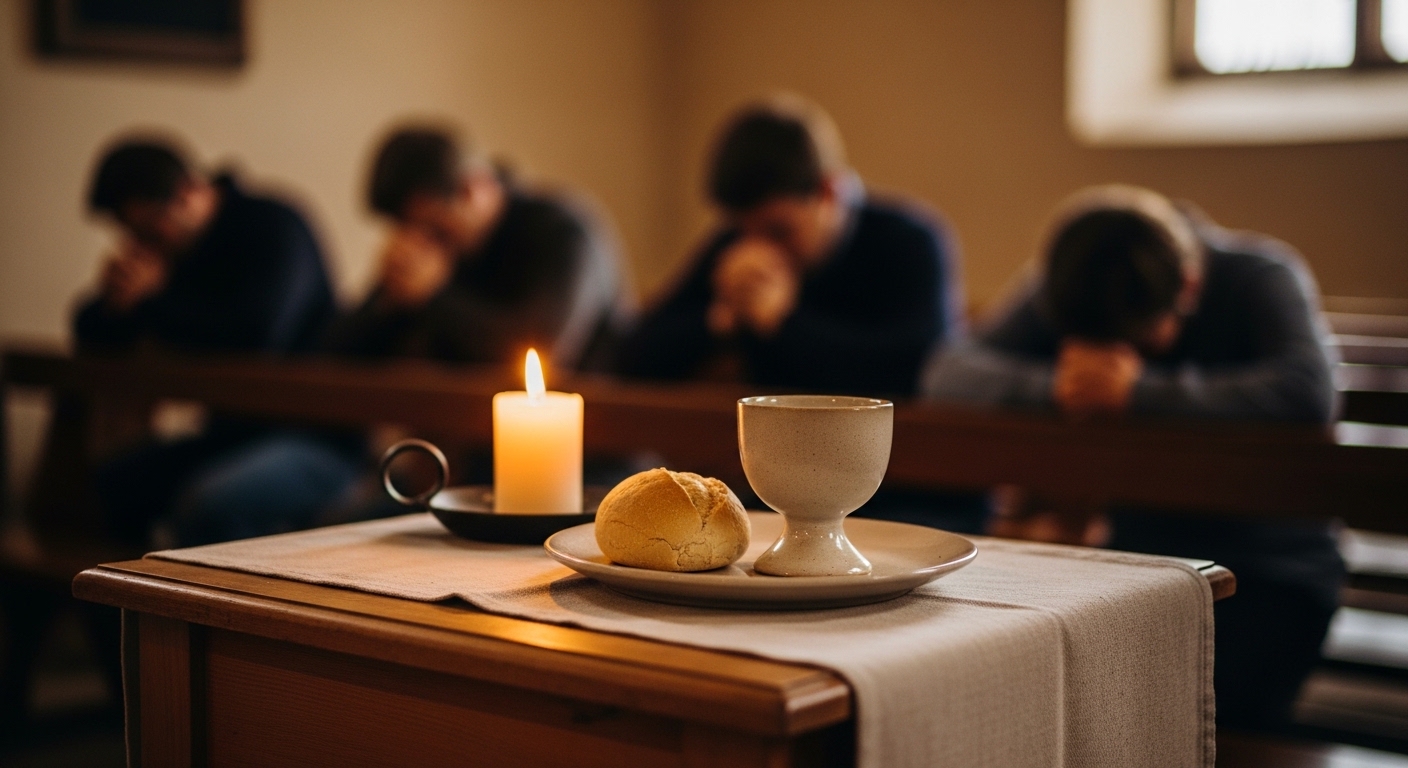
Paul offers pastoral counsel: “Everyone ought to examine themselves before they eat.” See 1 Corinthians 11:28. This is an invitation to intentional self-awareness, not an invitation to legalism.
Self-examination means pausing to consider your relationship with God and with others. It’s an opportunity to confess sin, to seek reconciliation, and to ensure that you’re approaching the table with a sincere heart. In the Corinthian context, Paul warns against irreverence and division. Your heart matters when you partake.
Before Communion, practice a short spiritual check: confess what needs confessing, forgive where you need to forgive, and ask God to prepare your heart. This prepares you to receive the elements not as mere symbols but as means of grace and communion with Christ.
1 Corinthians 11:27–29 — The Danger of Eating Unworthily
Paul warns further, “Whoever eats the bread or drinks the cup of the Lord in an unworthy manner will be guilty of sin” (see 1 Corinthians 11:27–29). This sobering caution is not meant to scare you but to encourage reverence.
Eating “unworthily” here speaks to a heart unmoved by repentance and love—perhaps a heart characterized by selfishness, disregard for the community, or outright denial of the gospel. Take the warning seriously: let it lead you to honesty and confession, not paralysis. The goal is restoration and participation in the grace Christ offers.
A Symbol of Unity
1 Corinthians 10:17 — One Loaf, One Body
Paul connects the act of sharing bread to the unity of the body: “Because there is one loaf, we, who are many, are one body, for we all share the one loaf.” See 1 Corinthians 10:17. Communion is inherently communal.
When you take the bread and cup with your church family, you’re physically enacting the spiritual reality that you belong to one body in Christ. This has implications for how you treat one another. Communion calls you away from individualism and toward mutual care, forgiveness, and love.
If you’re part of a congregation, let Communion shape your relationships. Approach it as an act that binds you to others spiritually and practically. If you’re gathering in a small group, use Communion to cultivate humility and unity. The table can become a place where divisions are confessed and healed.
Acts 2:42 — Early Church Fellowship and the Breaking of Bread
The early church “devoted themselves to the apostles’ teaching and to fellowship, to the breaking of bread and to prayer.” See Acts 2:42. Here Communion, or the breaking of bread, is inseparable from life together—teaching, fellowship, and prayer.
This snapshot of the early Christian community shows Communion as part of ordinary Christian life. It’s not just liturgy; it’s a lived expression of shared faith and mutual accountability. Let this model guide you: Communion should flow out of everyday discipleship, not be isolated from it.
Proclaiming the Lord’s Death
1 Corinthians 11:26 — A Continuous Proclamation
Paul writes, “For whenever you eat this bread and drink this cup, you proclaim the Lord’s death until he comes.” See 1 Corinthians 11:26. Communion is both remembrance and witness. Each observance points back to the cross and forward to Christ’s return.
When you participate in Communion, you’re testifying to the central event of history: Jesus’ death and the salvation it secured. It’s a proclamation that shapes not only worship but mission. As you remember, you are also declaring hope—His death has meaning, and His return is promised.
This forward-looking aspect of Communion can transform your hope and service. You don’t simply commemorate a past event; you live in light of the accomplished work of Christ and the future He inaugurated.
Bread and Wine: What Do the Elements Mean?
Symbolism and Theology
Different traditions interpret the elements—bread and wine—differently, but Scripture consistently ties them to Jesus’ body and blood. See Luke 22:19–20, Matthew 26:26–28, and Mark 14:22–24. For some traditions, the elements are sacramental means of grace; for others, they are powerful symbols that reorient your faith.
Whatever your tradition, center the elements on Christ. Don’t get lost in debates about metaphysical mechanisms; instead, focus on what Scripture emphasizes: the bread signifies His body given for you, and the cup signifies the covenant sealed by His blood. Both point to atonement, forgiveness, and new life.
John 6:53–56 — Eating and Drinking as Union with Christ
Jesus’ language in John 6:53–56 about eating His flesh and drinking His blood can sound stark, but it underscores union with Him. The physical language is meant to convey spiritual reality: participating in Christ’s life, death, and resurrection.
As you take Communion, think of it as an act of spiritual union. You’re not only remembering Christ’s death; you’re entering into the life He offers. This helps you see Communion as nourishing, transformative, and deeply personal while still belonging to a communal practice.
The Eucharist and Different Traditions
Catholic, Orthodox, Protestant Perspectives
Communion is practiced across Christian traditions with varied theological emphases. In Catholic and Orthodox churches, Communion is often understood as more than symbolic—communicants receive the real presence of Christ in the sacrament. Protestant traditions often emphasize symbolic remembrance or a spiritual presence, with variations across denominations.
Understanding these differences helps you appreciate the richness of Christian worship and navigate liturgical contexts with respect. If you attend a church with a tradition different from your own, ask questions, listen to teaching, and approach the table with humility. Where differences persist, prioritize unity in essentials and charity in non-essentials.
Why Differences Don’t Undermine the Practice
Despite theological differences, almost every Christian tradition values Communion deeply. The shared aspects—remembrance of Christ, confession of sin, communal participation—point to common ground. These shared commitments can encourage you to see Communion as a vital part of your spiritual life regardless of nuances in theology.
Approach conversations about differences as opportunities for growth. Seek to learn from other traditions while staying rooted in the Scriptural priorities of remembrance, faith, and unity.
Practical Tips for Meaningful Communion
How to Prepare
Preparing for Communion can be simple yet spiritually rich. Follow Paul’s counsel to examine yourself (see 1 Corinthians 11:28). Spend a few minutes in confession and gratitude, ask God to reveal anything that needs repentance, and pray for reconciliation with others.
Create a short personal liturgy if you’re gathering privately: read a gospel passage, pray, confess, and then partake slowly and intentionally. Let your actions match your words. Preparation is less about perfection and more about openness: bring your honest heart to the table.
Frequency: How Often Should You Participate?
Scripture doesn’t mandate a set frequency. The early church regularly broke bread together (see Acts 2:42), and Paul presumes ongoing observance (see 1 Corinthians 11:26). Many churches celebrate weekly, some monthly, others seasonally.
Consider your own spiritual rhythm and the practice of your church. Regular participation helps form you spiritually; whether weekly or less frequently, let the practice shape your discipleship.
Who May Participate?
Different churches have different practices—open communion invites all believers, while closed communion reserves the table for church members who share specific convictions. Scripture emphasizes both the importance of unity (see 1 Corinthians 10:17) and the need for self-examination (see 1 Corinthians 11:28).
If you’re unsure, ask your church leaders. If you’re hosted by a church with a different policy, respect that practice while seeking clarity. Above all, let your decision be guided by love, truth, and a desire to honor Christ.
Common Questions and Pastoral Guidance
Why Does Paul Reprimand the Corinthians?
Paul’s rebuke in 1 Corinthians 11 addresses abuse and irreverence around the Lord’s Supper. The Corinthians were allowing divisions and insensitivity to mark the meal. See 1 Corinthians 11:17–34 for the fuller passage.
Paul wants Communion to be an act that builds up the body, not tears it down. His correction is pastoral: he urges order, mutual care, and reverence. If you’re part of a community, use Communion as a barometer of how well you’re loving one another. If conflict exists, let the table be a place where healing begins.
Can Children Participate?
Churches differ on this. Some practice paedocommunion (children participate) while others require a profession of faith or catechesis. Scripture doesn’t prescribe a uniform rule, though it does portray households being included in early church life. See Acts and other passages for a sense of family discipleship (see Acts 2:42).
If you’re a parent, teach the meaning of Communion to your children and prepare them spiritually. Follow your church’s guidance, and if you disagree, discuss your convictions with church leadership.
Meditations and Prayers for Communion
Short Meditations
- Before the meal: Read Luke 22:19–20 slowly, and let each phrase sink in. Consider Christ’s body given for you and His blood poured out for you.
- During the bread: Reflect on the physical cost of your salvation—Christ’s brokenness for your healing.
- During the cup: Rejoice in the covenantal promise, the sealing of your forgiveness, and the hope of the final consummation.
These simple practices can anchor your participation and turn a routine moment into a prayerful encounter.
A Simple Communion Prayer
Lord Jesus, thank You for giving Your body and blood for my salvation. As I take this bread and this cup, remind me of Your sacrifice, renew my faith, and unite me to You and to my brothers and sisters. Forgive what I have done wrong, help me to forgive others, and teach me to live in the power of Your resurrection. Amen.
You can personalize this prayer, add confession, or include thanksgiving for specific sins forgiven and mercies experienced.
Simple Reflection
Spend time with these questions to help Communion change you, not just move you:
- Do I understand what Communion represents?
- Am I approaching it with sincerity and reverence?
- Is my heart aligned with God and with my brothers and sisters in Christ?
Answering these honestly prepares you to experience Communion as a means of grace.
 Internal Resources to Explore
If you want to explore Palm Sunday, Holy Week, and related themes more deeply, these resources will help you understand how this moment fits into the larger story of Jesus’ mission:
Main Hub
Related Articles
- What Is Communion? (Beginner-Friendly Guide)
- Meaning of the Last Supper Explained
- Maundy Thursday (The Last Supper – Matthew 26:17–30)
- What Happened on Good Friday?
- The Theology of the Cross: Why It Matters
These resources will help you place Communion within the broader story of salvation history and Christian worship.
Final Encouragement
Communion is both simple and profound. It’s simple because it uses ordinary bread and wine; it’s profound because it points to the extraordinary reality of Jesus’ sacrifice, your union with Him, and the future hope you share with all who believe. Let every observance reshape your mind and heart—drive you to repentance when needed, strengthen your faith, and stir you to love others well.
As you practice Communion, be intentional about preparation, honest in self-examination, and generous in grace toward others. Let the table be a school of humility and worship where Christ is central.
Closing Prayer
Lord, Thank You for the gift of Communion and what it represents. Help me remember Your sacrifice with a sincere and grateful heart. Teach me to live in a way that honors You daily. In Jesus’ name, Amen.
Sponsored recommendation

Acknowledgment: All Bible verses referenced in this article were accessed via Bible Gateway (or Bible Hub).
“Want to explore more? Check out our latest post on Why Jesus? and discover the life-changing truth of the Gospel!”