



Christmas Bible verses help us remember who Jesus is, why He came, and how His coming calls us to respond. Begin with Luke 2:1–20 for the birth story, Matthew 1:18–25 for the angel’s message to Joseph, and John 1:1–14 for the identity of the Son who became human.
Below are 20 Scripture passages with BibleGateway links and brief explanations. Choose one or two to read in context; you do not need to rush through the whole collection. The explanations are original summaries, not quotations of the verse text.
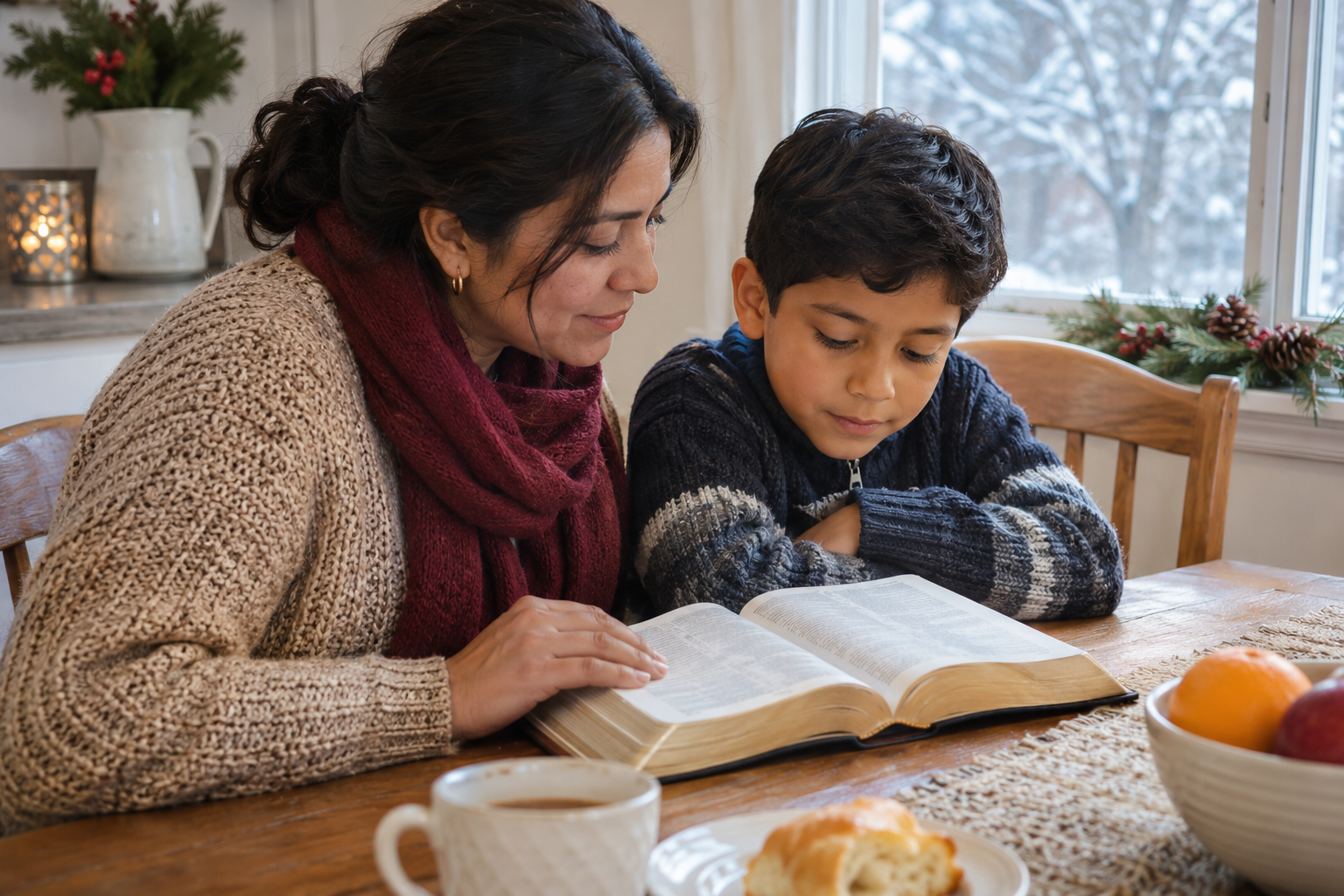
Imagine a family clearing space on a crowded table for an open Bible. There are still dishes to wash and messages waiting on a phone. They cannot make the evening perfect, but they can pause long enough to listen. Scripture gives that ordinary moment a focus larger than the unfinished tasks.
A Christmas Story About Hearing and Responding
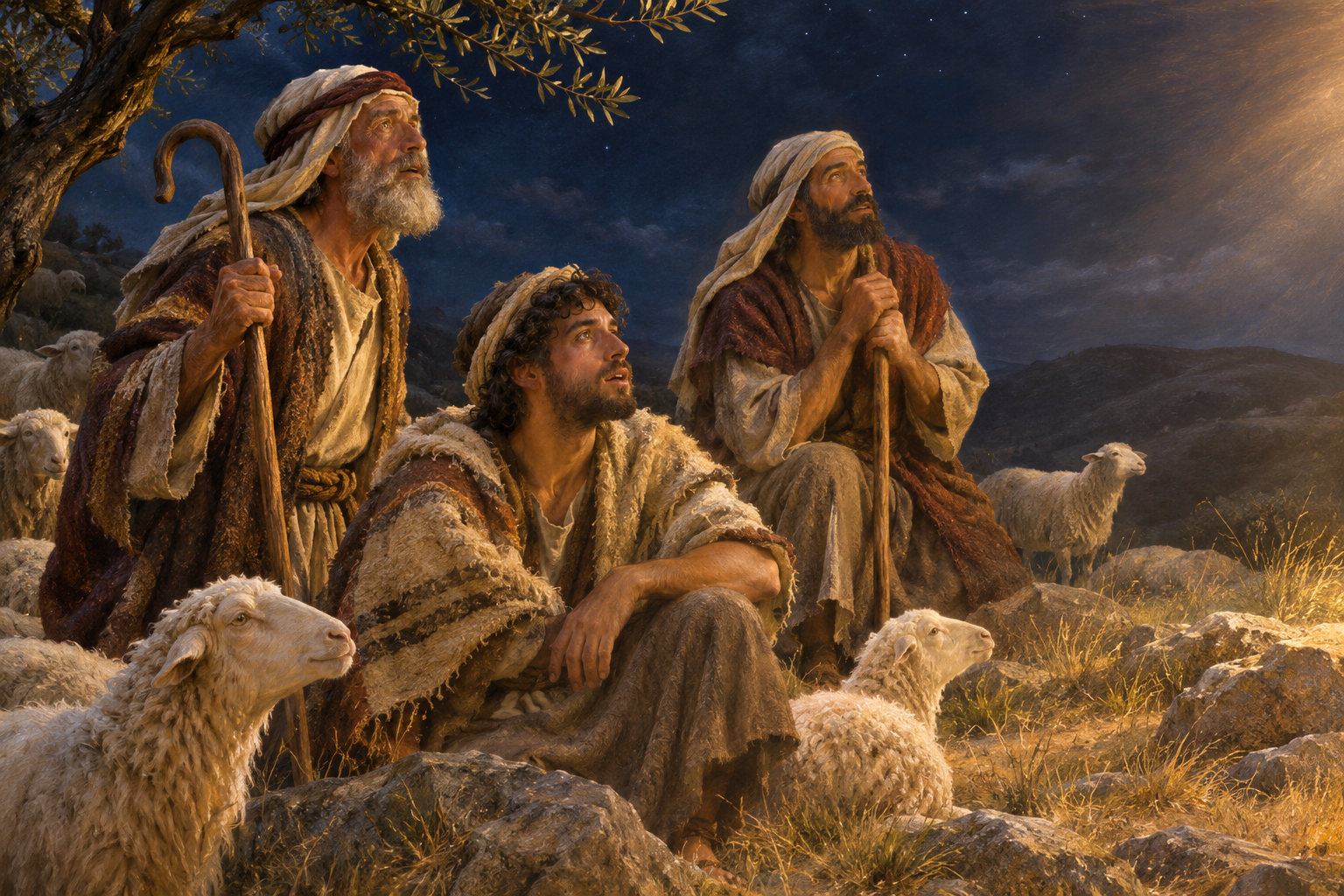
In Luke 2:8–20, shepherds were caring for their flock at night when an angel brought news of the Savior’s birth. They were frightened, then given a message of joy and a sign by which to recognize the child. A heavenly multitude praised God.
The shepherds went to Bethlehem and found Mary, Joseph, and the baby lying in a manger. They shared the message they had received, and they returned praising God. Mary treasured what had happened and reflected on it.
Their response gives us a helpful way to approach Christmas Scripture: listen carefully, consider what God has made known, and respond in worship and obedience. We do not need to invent the shepherds’ names or private conversations to make their story meaningful. The good news itself is worth our attention.
For more context around the events, read our explanation of Jesus’ birth. This collection is designed to help you choose and reflect on passages, rather than retell every part of the Nativity.
Christmas Bible Verses About God’s Promises
1. Isaiah 9:2 — Light for People in Darkness
Read Isaiah 9:2. This promise of light belongs within Isaiah’s larger message of judgment and hope. Christians read it alongside the New Testament’s witness to Jesus, including Matthew 4:12–16. Christmas hope does not ask us to pretend the world is free of darkness; it directs us toward God’s saving work.
When you feel discouraged, ask what it would mean to bring that concern into the light of God’s truth today. Our study of Isaiah 9:2 and light in darkness explores the passage more fully.
2. Isaiah 9:6–7 — The Promised Ruler
Read Isaiah 9:6–7. The promised child’s royal titles and enduring reign give the passage its weight. Christian readers connect this hope with Jesus, whose authority and peace reach beyond our changing circumstances.
Our study of the Prince of Peace can help you reflect on the titles without reducing them to a holiday slogan.
3. Micah 5:2 — A Promise Connected With Bethlehem
Read Micah 5:2. Matthew connects Bethlehem with the promised ruler in the account of the Magi. Read Micah in its own setting, then consider how Matthew presents the fulfillment. God’s purposes are not measured by a place’s size or public importance.
4. Luke 1:30–33 — The Announcement to Mary
Read Luke 1:30–33. Gabriel announces Jesus’ birth and kingship to Mary. The emphasis is on the child and His enduring kingdom. The passage invites us to take seriously the identity of the One whose birth we celebrate.
Christmas Bible Verses About the Birth of Jesus
5. Luke 1:35 — The Holy Spirit and the Son’s Birth
Read Luke 1:35. The angel’s explanation directs attention to God’s power and Jesus’ identity. The birth is God’s initiative. Christian faith does not rest on our ability to make ourselves worthy of a Savior.
6. Matthew 1:20–21 — Why Jesus Came
Read Matthew 1:20–21. Joseph is told about the child’s conception and saving purpose. Jesus came to save His people from their sins. That purpose keeps Christmas connected with repentance, forgiveness, and the gospel rather than kindness alone.
7. Matthew 1:22–23 — God With Us
Read Matthew 1:22–23. Matthew relates the birth to the promise associated with Immanuel. The good news is rooted in God’s action through Christ. We can respond with trust even when we do not feel a strong sense of closeness at every moment.
8. Luke 2:1–7 — The Birth in Bethlehem
Read Luke 2:1–7. Luke places Jesus’ birth amid a census, a journey, and humble circumstances. Mary wraps her child and lays Him in a manger. Notice what Luke actually records, and leave room where he does not supply details.
If you are reading with children, our Nativity story for children is a related resource to read alongside the biblical account. Let Scripture guide your explanation and the details you emphasize.
9. Luke 2:8–12 — Good News for the Shepherds
Read Luke 2:8–12. The announcement centers on the Savior, Messiah, and Lord. These titles explain why the birth matters. The shepherds receive news to believe and a sign that leads them to the child.
10. Luke 2:13–14 — Praise That Gives Glory to God
Read Luke 2:13–14. The heavenly praise turns attention to God’s glory and the peace connected with His favor. Christmas worship begins with who God is and what He has done. It can reshape our priorities when the season feels centered on ourselves.
11. Luke 2:15–20 — A Response of Witness and Worship
Read Luke 2:15–20. The shepherds go, see, share, and return praising God. Mary reflects on what she has heard. Different responses can belong together: thoughtful attention, spoken witness, and grateful worship.
12. Matthew 2:9–11 — The Magi Worship Jesus
Read Matthew 2:9–11. The Magi find the child with Mary and honor Him with worship and gifts. Matthew describes a house and does not say there were three visitors. Read the account on its own terms rather than making every Nativity tradition part of the text.
Christmas Bible Verses About Who Jesus Is
13. John 1:1–5 — The Word and the Light
Read John 1:1–5. John’s Gospel begins before the manger, declaring the Word’s relationship with God, His divine identity, and His role in creation. The One born in Bethlehem did not begin to exist there.
14. John 1:14 — The Word Became Human
Read John 1:14. The incarnation means that the eternal Son truly became human. This is more than a picture of kindness or a seasonal feeling of closeness. It is central to the Christian confession about Jesus.
15. Philippians 2:5–8 — The Humility of Christ
Read Philippians 2:5–8. Paul connects Christ’s humility with His obedient life and death. The passage also calls believers to a changed attitude toward others. Consider one place where pride is making it difficult to serve, listen, or apologize.

16. Colossians 1:15–17 — Christ’s Greatness
Read Colossians 1:15–17. This passage directs us toward the Son’s supremacy and His relationship to creation. Read it alongside the birth accounts to remember the greatness of the One who entered our human life in humility.
Christmas Bible Verses About Salvation and Our Response
17. Galatians 4:4–7 — God’s Timing and Adoption
Read Galatians 4:4–7. Paul connects the sending of God’s Son with redemption and adoption. The passage gives believers a reason for belonging and gratitude. It does not promise that every personal deadline will unfold as we prefer.
18. Titus 3:4–7 — Mercy Rather Than Earning
Read Titus 3:4–7. God’s kindness and mercy are the foundation of salvation. Let this passage free you from treating a well-organized Christmas, generous gifts, or a successful family gathering as a way to earn His acceptance.
19. 1 John 4:9–11 — Love Shown in Sending the Son
Read 1 John 4:9–11. God’s love is demonstrated through His Son, and believers are called to love one another in response. Ask who might need your patient attention or practical help this week.
20. 2 Corinthians 9:15 — Gratitude for God’s Gift
Read 2 Corinthians 9:15. Paul’s thanksgiving appears in a discussion of generosity and God’s provision. Read the surrounding chapter before using the verse on a card or in a prayer. Gratitude for God’s generosity should shape the way we give.
How to Use These Christmas Bible Verses
Choose a passage suited to the moment. For the birth account, read Luke 2:1–20. For a conversation about Jesus’ saving purpose, begin with Matthew 1:20–21. For reflection on His identity, read John 1:1–14. Reading a paragraph or chapter around a verse helps keep its meaning in view.
Ask three simple questions: What does this passage show about God? What does it show about Jesus or our need for Him? How can I respond faithfully today? Let the answer lead toward prayer and action, not only a pleasant thought.
Our guide to praying Scripture can help you turn your reflection into an honest conversation with God. If you need a sustainable place to begin, try a simple daily prayer routine rather than attempting a long reading session every day.

A Prayer After Reading
Father, thank You for making Yourself known through Your Word and for sending Jesus. Help us read carefully, believe what You have revealed, and respond with humble obedience. Forgive our sins and turn our attention toward the grace of Christ. Let our gratitude become patient love for the people around us. In Jesus’ name, amen.
Carry the Good News Into Ordinary Life
The shepherds returned to the life they knew with a new reason to praise God. We can also carry what we read into ordinary responsibilities. Christmas Scripture reminds us that Jesus is worthy of trust and worship after the decorations are put away. May the hope of His coming shape how we listen, serve, forgive, and speak about Him.
Continue Growing
Reflect on the true gift of Christmas.
Read a short Christmas devotional.