


Introduction
You’ve probably heard about the crucifixion more times than you can count—on Good Friday services, in hymns, in art, and in the core teachings of Christianity. Yet even if the phrase feels familiar, the reality behind it can be hard to grasp. Crucifixion was an exceptionally brutal method of execution, and the fact that Jesus endured it raises questions that cut to the heart of faith, justice, suffering, and love.
You may struggle with the apparent cruelty of the cross, the injustice Jesus faced, or what it all means for your life today. Maybe you wonder why God would allow such suffering or how a single historical event can affect your daily decisions and sense of identity. This can leave you feeling uncertain, overwhelmed, or spiritually stalled.
This article promises to walk you through crucifixion in a clear, compassionate, and practical way. You’ll gain a historical understanding of the practice, see how the Bible interprets Jesus’ death, and discover how the crucifixion shapes your relationship with God, your sense of forgiveness, and your hope for new life. By the end, you’ll be able to explain what crucifixion is, why Jesus was crucified, and how the cross matters to you now.
✝️ The Key Bible Passage
Verse: Luke 23:33
“When they came to the place called the Skull, they crucified Him there…”
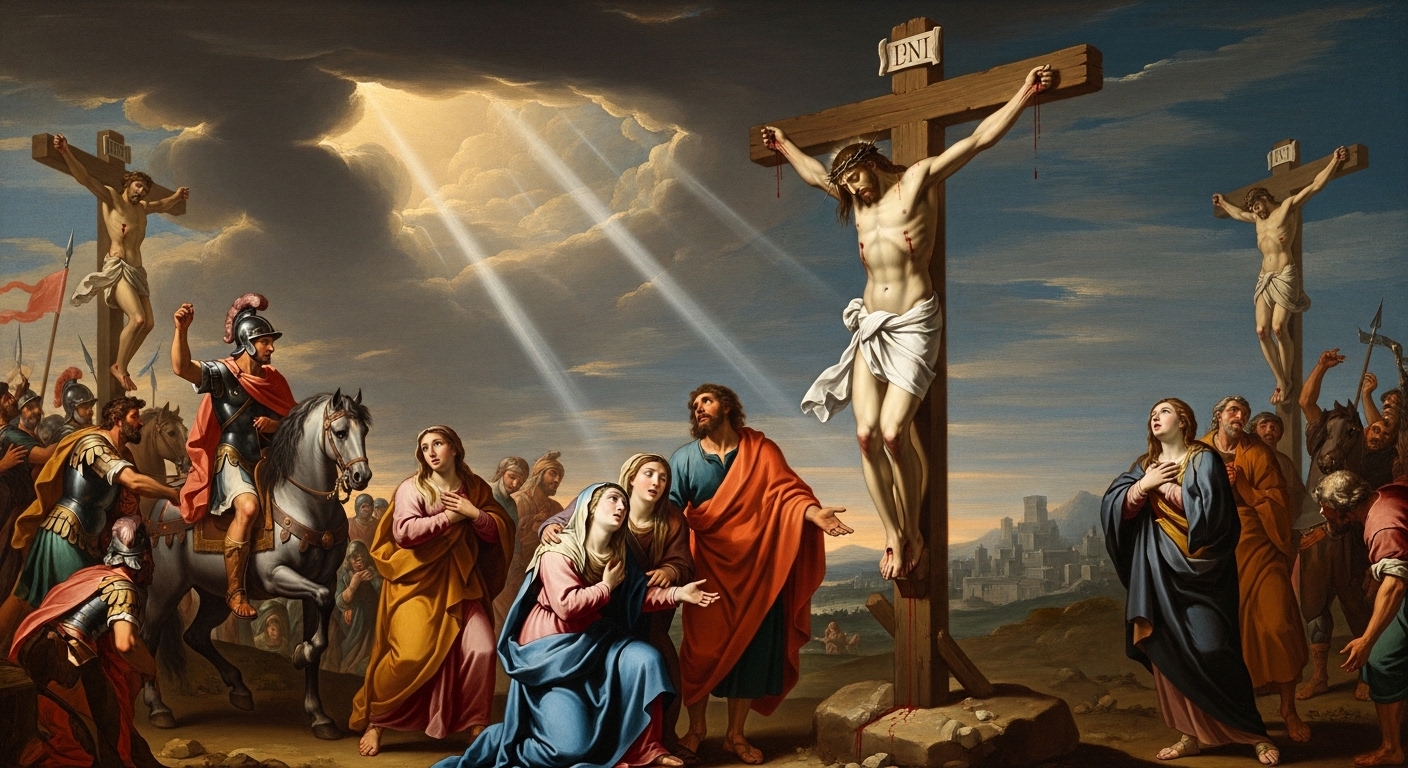
Context: In Luke’s account, you see the climax of Jesus’ earthly ministry. He is led to Golgotha (the Skull), and there the Roman authorities execute Him by crucifixion. This moment is laden with prophetic fulfilment, public humiliation, and theological significance. It’s the scene that anchors the Christian story of redemption.

1. What Is Crucifixion?
Crucifixion was a Roman method of execution designed to be exceptionally cruel and publicly humiliating. When you picture crucifixion, think of a slow, painful death where the condemned person is exposed, often stripped, and displayed on a wooden cross or stake for hours or even days. The purpose wasn’t merely to kill; it was to make an example of the person, striking fear and shame into onlookers so that others would be deterred from similar crimes.
Crucifixion involved several brutal elements: flogging that could reduce the body to raw torn flesh, the forcing to carry the crossbeam to the execution site, nails driven through hands and feet (or cords binding limbs), and prolonged exposure to the elements and the slow asphyxiation that resulted from the body’s position. The process was sometimes prolonged to intensify suffering, with death coming through shock, blood loss, dehydration, and inability to breathe.
Meaning: When you understand the physical reality of crucifixion, you begin to appreciate the depth of what Jesus endured. His pain wasn’t symbolic or mild—it was physical, psychological, and public. That understanding deepens the theological claims Christians make about substitutionary atonement and the seriousness of sin.
Application: Let this reality shape your gratitude, humility, and worship. When you grasp the cost behind the cross, your response can be more than intellectual assent—you can live in gratitude, allow that memory to shape your moral choices, and approach God with reverence and love.

1.1 The Mechanics of Roman Crucifixion
History and archaeological evidence show that Roman crucifixion was systematically cruel. Victims were often scourged with a multi-thonged whip embedded with metal or bone, removing skin and soft tissue. The condemned were forced to carry the patibulum—the crossbeam—to the site, and then either affixed to a cross by nail or tied. The crucified were left on display so that death would be prolonged, serving as a warning.
Understanding these mechanics helps you see that crucifixion was both punitive and performative: punishment for the condemned and a performative demonstration of the power of the state. The spectacle intended to publicly humiliate and demonstrate dominance, denying the victim dignity and community.
Application: Reflect on the social and political implications of the cross. When Jesus was crucified, the act was both a judicial sentence and a message to the populace. When you consider your own societal structures, you can ask how power, shame, and violence function and how the cross reorients your response to injustice.
1.2 Why the Details Matter for Theology
The nails, the blood, the cry of abandonment—these details are not incidental to Christian theology. The brutal reality underscores theological claims about substitution, suffering, and sacrificial love. If Jesus simply died at the hands of a disease or a quick execution, the imagery of substitutionary suffering would be less vivid. But the extremity of crucifixion magnifies the narrative that someone took upon themselves the full weight of human brokenness and sin.
Application: Use the details as catalysts for worship and confession. When you read gospel narratives or sing hymns that reference the physicality of the cross, let the details serve as an invitation to own your need for grace and to respond with repentance and gratitude.
2. Why Was Jesus Crucified?
Verse: John 19:16
“Finally Pilate handed Him over to them to be crucified.”
Context: The Gospel of John records how political pressure and religious hostility converge. Pilate, the Roman governor, ultimately yields to the crowd’s demand for crucifixion despite recognizing Jesus’ innocence. Religious leaders accuse Jesus of blasphemy and sedition, and the crowd calls for His death. The sentence of crucifixion is both a legal and social act that marks Jesus as a condemned criminal in public view.
Meaning: Jesus was crucified for several intertwined reasons. He was rejected by religious authorities who felt threatened by His teaching and influence. He was misunderstood by many who expected a political or military Messiah rather than a suffering servant. And, central to Christian belief, His crucifixion unfolded as part of God’s redemptive plan—what you might call a suffering Messiah who would bear the sins of many.
Application: When you face rejection, unfair judgment, or misunderstanding, remember how Jesus experienced the same. His crucifixion invites you to trust God’s purposes even when human processes feel unjust. It reassures you that suffering can have redemptive meaning without denying the emotional and physical reality of pain.
2.1 Political and Religious Motives
From a human perspective, multiple actors contributed to Jesus’ crucifixion. Some Jewish religious leaders saw Jesus as a theological threat. Roman authorities feared potential unrest and were motivated by political stability. The crowd, swayed by leaders or by the spectacle, called for a decisive action. Pilate’s hand-washing is a vivid image of the moral complexity of political compromise.
Application: Consider how your choices intersect with larger systems. Where do you compromise for convenience or fear? Recognizing the interplay of politics, religion, and personal cowardice in the crucifixion can help you make stronger ethical choices and stand up for truth and compassion.
2.2 Jesus’ Voluntary Submission
Beyond political and social explanations, Christian theology emphasizes Jesus’ willing submission. Scripture portrays Him as the obedient Son who “laid down His life” (John 10:18), choosing the path of suffering to accomplish a greater good. This voluntary submission changes the narrative: it is not merely victimhood but a purposeful act of love.
Application: Follow Jesus’ example of willing service and sacrificial love. When you choose to suffer for the sake of others—whether through time, resources, or standing in place of someone—you participate in the same spirit of self-giving that defines the cross.
3. The Crucifixion Reveals God’s Love
Verse: John 3:16
“For God so loved the world that he gave his one and only Son…”
Context: This verse captures the heart of Christian proclamation: the cross is an expression of God’s love. It reframes suffering and death not primarily as defeat, but as a deliberate act of self-giving aimed at restoring broken relationships between humanity and God.
Meaning: The crucifixion is an ultimate demonstration of God’s love. The Father’s giving of the Son and the Son’s willing sacrifice reveal that love is willing to enter pain and shame to redeem. The cross shows you that God’s love is costly, personal, and transformative.
Application: Let the cross inform your relationships. If God’s love is this sacrificial, you’re called to practice a love that forgives, serves, and seeks the good of others—even when it costs you. This doesn’t mean you seek suffering, but that you willingly accept cost for the sake of love when appropriate.

3.1 Love That Enters Suffering
The cross tells you that God doesn’t watch from a distance. Instead, God enters the human condition, experiencing pain, isolation, and even the sting of abandonment. This is profoundly comforting when you face hardship: your suffering does not go unnoticed by a remote deity; it is known intimately by one who has suffered similarly.
Application: When you feel alone, remember the presence of Christ who identifies with suffering. You can approach God not with a polished exterior but with honest lament, knowing God understands the depth of your pain.
4. The Payment for Sin
Verse: 1 Peter 2:24
“He himself bore our sins in his body on the cross…”
Context: The New Testament presents the cross as the place where Jesus takes upon Himself the consequences of sin. Sin—understood as moral brokenness that separates you from God—requires accounting. The cross is depicted as the moment sin is confronted and dealt with through Jesus’ sacrificial act.
Meaning: The language used in passages like this expresses core themes: substitution, justice, and grace. Jesus stands in your place (substitution), satisfying the demands of justice (sin has consequences), and offering unmerited forgiveness (grace) to those who believe.
Application: Receive the forgiveness offered on the cross. Let go of attempts to earn acceptance by your own works. Instead, live from the identity of someone who has been forgiven, allowing that to reshape how you treat others and yourself.
4.1 Substitution and Justice
The idea of substitution can feel jarring: why would an innocent person suffer for the guilty? Christian theology explains that God’s justice requires the reality of consequence, but God’s mercy provides a substitute—Jesus—who accepts that consequence so you don’t have to. This satisfies justice without abandoning mercy.
Application: Allow this theology to free you from legalistic attempts to earn favor. You’re invited into a relationship based on grace, which fuels humility rather than entitlement. This humility empowers ethical living out of gratitude, not obligation.
4.2 Grace You Can Live In
The cross doesn’t simply cancel penalties and leave you unchanged. The grace it offers invites transformation: you are forgiven and called to live in ways that reflect that forgiveness—loving your neighbor, seeking justice, and stewarding mercy.
Application: When you make mistakes, do not default to despair. Confession and repentance are pathways to restoration, rooted in the reality of Jesus’ payment for sin. Practice confession and receive forgiveness as a habit that connects you daily to the cross.
5. A Path to New Life
Verse: Romans 6:6
“For we know that our old self was crucified with him so that the body of sin might be done away with…”
Context: Paul’s letters make a vital connection: the crucifixion isn’t only about penal substitution; it’s also about identity and transformation. When you put your faith in Christ, you are united with His death and resurrection—your “old self” is regarded as crucified so you can live a new life.
Meaning: The cross initiates a process where the power of sin over you is broken. New life isn’t just future hope; it begins now. Your identity shifts from being dominated by sin to being alive in Christ, empowered by the Spirit to pursue holiness.
Application: Live practically in this newness. That might mean changing patterns, forming new habits, and intentionally participating in spiritual disciplines (prayer, scripture, community) that reinforce your identity as someone crucified with Christ and raised to newness of life.
5.1 Daily Participation in Resurrection Life
New life is not an abstract doctrine—it’s daily reality. In your choices to forgive, serve, and resist temptation, you are living out the resurrection power that flows from the crucifixion and resurrection of Jesus. Growth is often slow and patient, but it is real.
Application: Anchor daily rhythms around the cross: start your day with gratitude for what Christ has done, confess your failures, and choose acts of love that reflect the new life you claim. Over time, these small patterns shape your character and witness.
6. From Death to Victory
Verse: Colossians 2:14–15
“He canceled the charge of our legal indebtedness… having disarmed the powers and authorities, he made a public spectacle of them, triumphing over them by the cross.”
Context: Paul, writing to the Colossians, frames the cross as a cosmic victory. It’s not merely a human trial or a tragic end; it is where God defeats the powers of evil, sin, and death. The cross is the turning point from apparent defeat to decisive victory.
Meaning: The imagery in these verses shows that through the cross, God nullified the legal case against humanity and publicly triumphed over spiritual forces that oppose God’s will. The cross represents both legal resolution (your debt forgiven) and cosmic triumph (evil disarmed).
Application: Live confidently in that victory. Your spiritual life isn’t a precarious balancing act; it rests on the accomplished work of Christ. This confidence should lead to boldness in prayer, perseverance in spiritual struggle, and hope in the face of suffering.

6.1 Victory That Changes How You Face Adversity
Because the cross is a victory, suffering does not have the final word. You can endure hardship with the assurance that God uses even painful events for redemption and restoration. The cross reframes suffering as potentially fruitful when set within God’s redemptive story.
Application: In trials, practice the discipline of perspective: ask what God might be doing in and through the struggle. Pray for endurance, seek community, and let the cross’s victory shape your hopes and reactions.
Simple Reflection
Ask yourself these questions to internalize the meaning of the cross in your life:
- Do I understand what the cross cost?
- Am I living in the freedom it provides?
- Have I accepted what Jesus has done for me?
Take time to write out answers or discuss them with a friend or mentor. Reflection turns intellectual knowledge into personal conviction. As you reflect, allow the cross to either reassure you of your salvation, convict you where change is needed, or motivate you to live more sacrificially for others.
 Internal Resources to Explore
 Internal Resources to Explore
To understand the crucifixion within Holy Week:
Main Hub
Related Articles
- What Happened on Good Friday?
- Why Jesus Had to Suffer and Die
- The Theology of the Cross: Why It Matters
- Holy Saturday (Jesus in the Tomb – Matthew 27:57–66)
- Resurrection Practices: Living in Easter Hope
Each of these will help you connect the cross to the broader story of Jesus’ death, burial, and resurrection, and will give you practical steps for devotional life.
Conclusion
The crucifixion is more than a historical event; it’s the foundation of Christian hope. It reveals the seriousness of sin, the depth of God’s love, and the pathway to new life. The cross shows you that what looked like defeat was actually the greatest victory: sin paid for, death disarmed, and reconciliation made possible.
When you internalize the meaning of the crucifixion, your life changes—from the way you pray and worship to how you treat others and endure suffering. The cross invites you into a life shaped by gratitude, humility, and courageous love.
Closing Prayer
Lord, Thank You for the sacrifice of Jesus on the cross. Help me understand its meaning and live in its truth every day. Teach me to walk in freedom, gratitude, and faith. In Jesus’ name, Amen.
Sponsored recommendation

Acknowledgment: All Bible verses referenced in this article were accessed via Bible Gateway (or Bible Hub).
“Want to explore more? Check out our latest post on Why Jesus? and discover the life-changing truth of the Gospel!”