



What if the story didn’t end at the empty tomb? Many people think the resurrection is the climax—but the truth is, what happened next is just as transformative. For 40 days after rising from the dead, Jesus appeared, taught, restored, and commissioned His followers, turning fear into faith and confusion into clarity.
In this article, you’ll walk through a clear, biblical timeline of post-resurrection events, understand the spiritual meaning behind each appearance, and see how these truths impact your life today. By the end, you won’t just see the resurrection as a historical moment—you’ll see it as the beginning of a living, relational, and purposeful movement that still reaches into your life.
You’ll learn:
- The full 40-day timeline of what happened after Jesus rose from the dead.
- The biblical evidence and spiritual meaning behind each event.
- Practical ways you can respond and live in light of the resurrection.
Here is a simple timeline of what happened after Jesus rose from the dead. This sequence gives you a framework to follow as you dig deeper:
- Jesus appears to Mary Magdalene
- Jesus appears to the disciples (in the locked room)
- The road to Emmaus—two disciples recognize Him
- Jesus restores Peter at the Sea of Galilee
- The Great Commission—Jesus sends His followers out
- The Ascension—Jesus returns to the Father
Each of these moments builds on the last. They are not random appearances; they are purposeful milestones in a 40-day period that prepared the first followers and established the church’s mission. You can think of the timeline as part revelation and part training—a combination of proof, pastoral care, and commissioning that equips you to live out the resurrection.
-
Key Bible Verse
Verse: Acts 1:3
“After His suffering, He presented Himself to them and gave many convincing proofs that He was alive.”
This verse is a concise summary of the 40 days after the resurrection: Jesus appeared repeatedly, offering convincing proof of His bodily resurrection and preparing the disciples for what would come next. The appearances were not only evidence; they were teaching moments and relational encounters meant to transform fear into faith and confusion into clarity.
Full Timeline Breakdown
1) Jesus Appears to Mary Magdalene
Verse: John 20:14–16
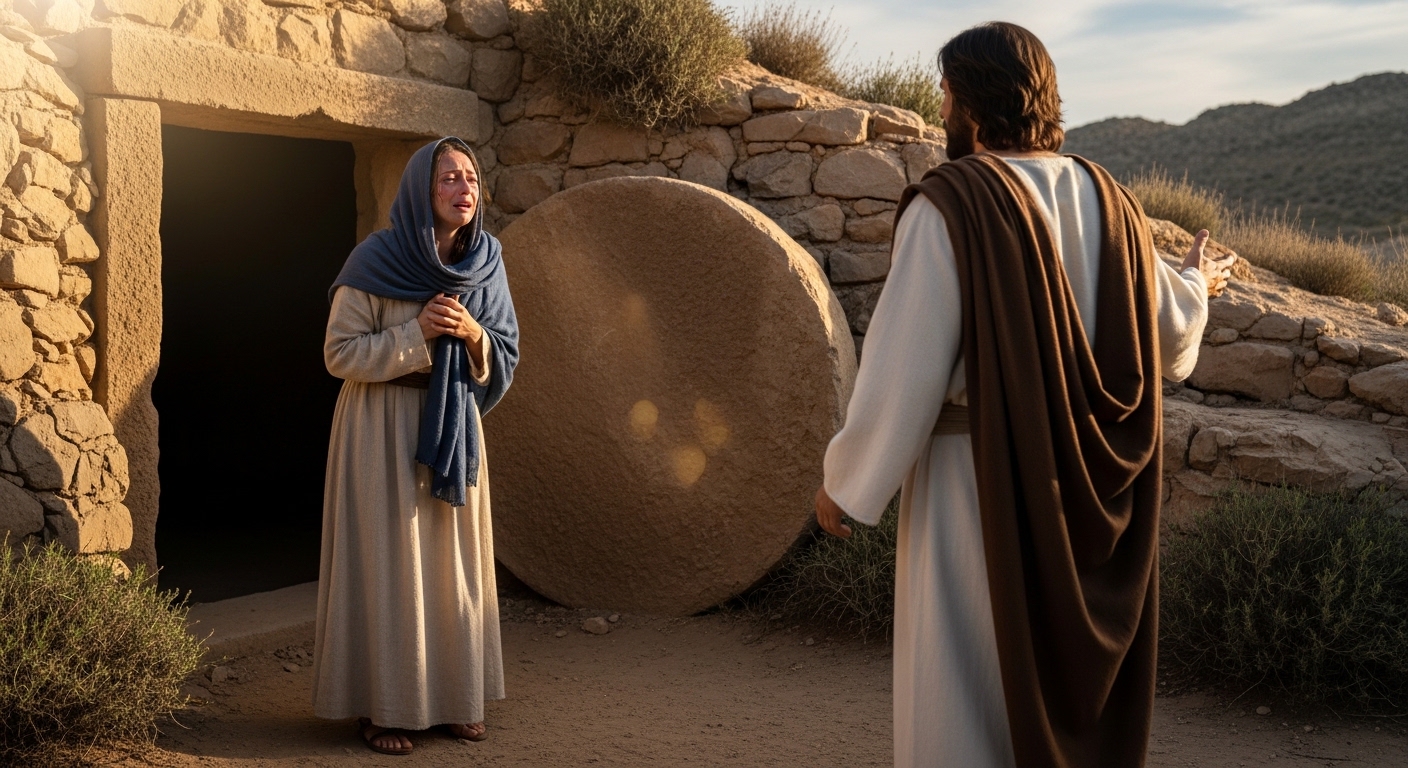
You find Mary at the tomb, weeping, when Jesus calls her by name. She turns and recognizes Him and calls Him “Teacher.” This moment is intimate and tender. Mary is the first recorded person to see the risen Christ, and that fact tells you something about how Jesus relates to people—He seeks out those who are grieving and meets them personally.
Context: Mary had come to the tomb early and found it empty. She didn’t initially recognize Jesus until He spoke her name, which shows that the risen Lord could reveal Himself in ways that still required relational recognition. The encounter is both personal and pastoral: Jesus comforts a broken heart and commissions Mary to go and tell the others.
Meaning: The resurrection is not only a historical fact but a deeply personal reality. Jesus meets people in their grief, validates their love and loyalty, and turns despair into commission. Mary’s encounter shows you that the resurrection reaches into brokenness and transforms it.
Application: If you’re grieving, confused, or feeling distant from God, remember that Jesus knows you by name and meets you where you are. Your encounter with the risen Lord might start quietly, in a moment of sorrow or prayer, and then lead to the task of telling others what He’s done. Let that truth encourage you to look for Jesus even in the hardest moments.
2) Jesus Appears to the Disciples (In the Locked Room)
Verse: Luke 24:36–39
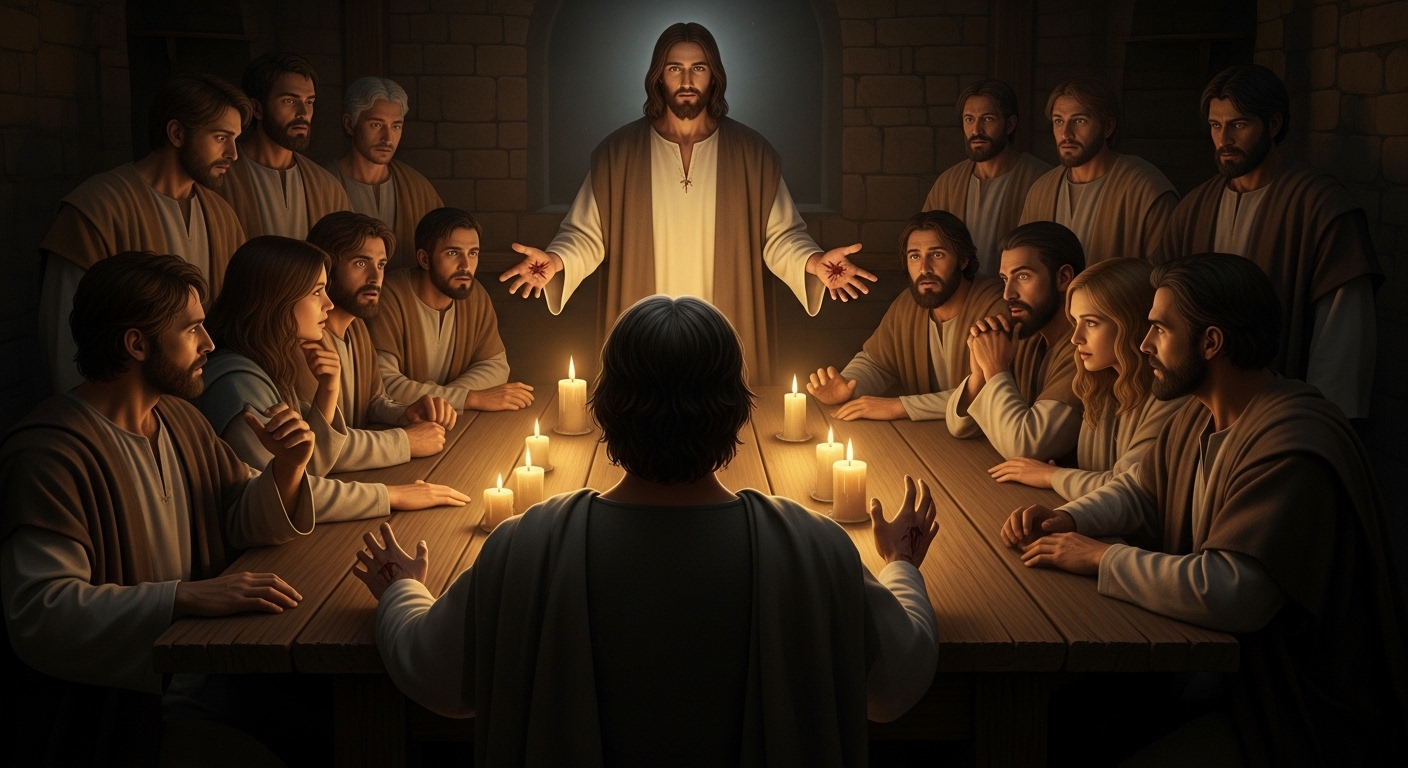
Jesus appears to His disciples while they’re gathered behind locked doors, afraid and bewildered. He says, “Peace be with you,” and invites them to look at His hands and feet to prove that He is physically risen. He even asks for something to eat to demonstrate that He’s not a ghost.
Context: The disciples were hiding because they feared persecution and were disoriented by the events of the crucifixion. Jesus’ sudden appearance is a pastoral intervention—He brings peace (shalom) and offers physical evidence to transform doubt into belief. This is one of several appearances where Jesus deliberately shows His wounds to authenticate His identity.
Meaning: The bodily resurrection matters. Jesus’ physical body—bearing the marks of the crucifixion—validates the continuity of identity between the crucified and the risen Christ. This dispels the idea that the resurrection was merely spiritual or metaphorical; it affirms that God’s redeeming work encompasses the whole person, body and soul.
Application: If you struggle with doubt or fear, the disciples’ story reassures you that doubt can be honest, and Jesus meets honest doubt with tangible truth. You can bring your questions and wounds to Him and expect not condemnation but peace and evidence that supports faith. Your faith can be rooted in reality, not wishful thinking.
3) The Road to Emmaus
Verse: Luke 24:30–31
Two disciples are walking to Emmaus, discussing the events of the last few days, when Jesus joins them—though they don’t recognize Him. He walks with them, explains the Scriptures concerning Himself, and finally reveals Himself to them in the breaking of bread.
Context: The disciples are discouraged and confused; their hopes for a triumphant earthly kingdom seem dashed. Jesus enters the ordinary flow of life—walking, talking, and explaining Scripture—and it’s only in the simple act of breaking bread that their eyes are opened. This pattern of revelation through Scripture and sacrament becomes a model for how you might recognize Jesus today.
Meaning: The Emmaus event shows that revelation is often gradual and embedded in community and worship. Jesus interprets Scripture for them, showing that the Old Testament points to His suffering and resurrection. The recognition at the breaking of bread highlights the sacramental rhythm of Christian life—where word and meal together reveal Christ.
Application: When you feel Jesus is distant, search the Scriptures and participate in simple acts of worship and communal life. Often Jesus will be revealed to you not in dramatic visions but in steady teaching, fellowship, and the ordinary practice of faith. Trust the slow work of Scripture and community to open your eyes.

4) Jesus Restores Peter
Verse: John 21:17
After Peter’s threefold denial, Jesus meets him at the shore, asks him three times, “Do you love me?” and then tells him to “Feed my sheep.” This conversation isn’t a rebuke that leaves Peter condemned; it’s a restorative commissioning that renews his calling.
Context: Peter had denied knowing Jesus during the crucifixion, and the memory of that failure would have been heavy. Jesus’ threefold question mirrors Peter’s three denials, but instead of shaming Peter, Jesus uses the repetition to restore and recommission him for leadership. It’s a gracious and public reinstatement.
Meaning: Failure is not final. Jesus’ restoration of Peter demonstrates that grace can rewrite your story. Your past mistakes don’t disqualify you from the mission God still has for you. Moreover, restoration often includes renewed responsibility—Jesus doesn’t simply forgive Peter privately; He entrusts him with the care of others.
Application: If you carry guilt or feel unworthy to serve, remember Peter. Confession and Jesus’ love can restore your calling. Be open to God’s restoration process, and allow Him to send you again into meaningful service, even if it involves vulnerability and responsibility.

5) The Great Commission
Verse: Matthew 28:19–20
Jesus gives the disciples a clear mission: “Go and make disciples of all nations, baptizing them…and teaching them to obey everything I have commanded you.” This is not a private statement—His promise to be with you “to the very end of the age” frames the mission with presence and authority.
Context: After the resurrection, Jesus wasn’t just restoring personal relationships; He was creating a movement. The Great Commission shifts the focus from following Jesus in a local setting to sending followers into the world. It defines the church as sent people, engaged in making disciples, baptizing, and teaching.
Meaning: The resurrection has missional implications. Jesus’ victory over death is meant to be announced and embodied by His people. The mission is comprehensive—across nations and cultures—and it’s grounded in Jesus’ authority and presence, promising you companionship as you carry out the task.
Application: Your faith is meant to be shared, taught, and lived out in community. Think about simple ways you can participate in the Great Commission: tell others your story, participate in local discipleship, or support global mission efforts. The resurrection gives you both the mandate and the presence of Christ to go forward.

6) The Ascension
Verse: Acts 1:9
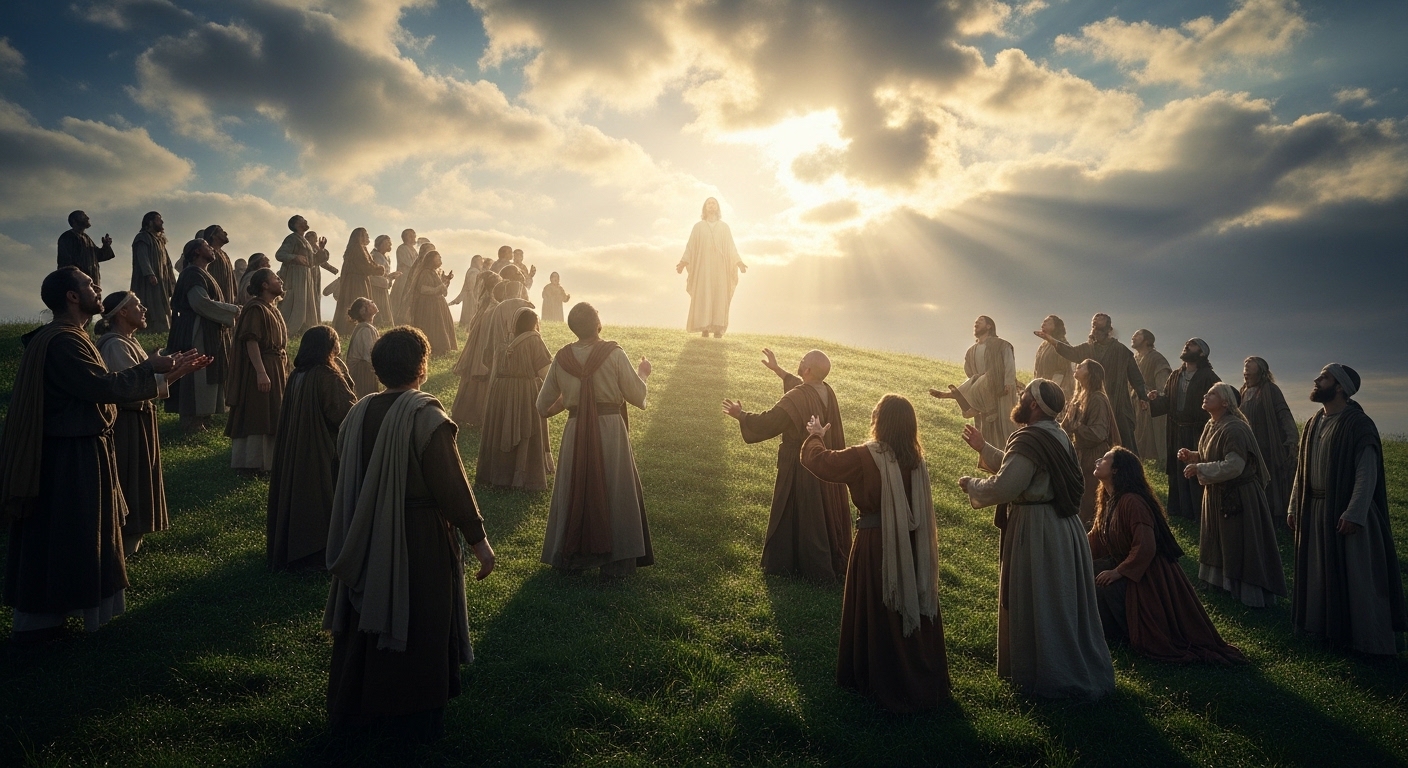
After forty days of appearances and teaching, Jesus is taken up into heaven while the disciples watch. Clouds conceal Him from their sight, and the ascension signals both an ending and the inauguration of a new phase—Jesus’ physical presence changes, but His spiritual presence and authority are now realized in a different way.
Context: The ascension concludes Jesus’ earthly, post-resurrection ministry. He returns to the Father, but not as a departing loser—He goes as the exalted Lord. The disciples are left with a mission and a promise: they will receive power from the Holy Spirit and be witnesses in Jerusalem, Judea, Samaria, and to the ends of the earth.
Meaning: The ascension means Jesus’ mission on earth is complete in one sense, but it also marks the transition to the church’s era. Christ reigns from heaven, intercedes for you, and sends the Spirit to empower the community for witness and service. The ascension is both reassurance (He’s Lord) and commissioning (you’re sent).
Application: You live in the upside-down reality of an ascended Savior who reigns and sends. This gives you confidence in prayer (Jesus intercedes) and responsibility in mission (the Spirit empowers). You’re part of a continuing story, and you’re invited into the work He began.
Additional Biblical Confirmations and Appearances
To help you see the breadth of post-resurrection appearances and testimony, consider passages that list multiple sightings and witnesses. The Apostle Paul summarizes several appearances in 1 Corinthians 15:3–8, noting appearances to Cephas (Peter), the twelve, more than five hundred at once, James, and finally Paul himself. Another Gospel note highlights Mary Magdalene’s role in Mark 16:9. These references reinforce that the resurrection was attested by many credible witnesses over a period of time, not a single private vision.
Timeline Summary
The sequence of events after the resurrection moves you from personal encounter to communal mission:
- Personal revelation: Mary Magdalene’s intimate meeting marks the resurrection’s relational entry point.
- Communal confirmation: Appearances to the disciples and large groups establish physical reality and credibility.
- Scriptural interpretation: Jesus explains the Scriptures on the road to Emmaus, showing continuity with God’s promises.
- Personal restoration: Peter’s reinstatement models grace after failure.
- Missional commissioning: The Great Commission turns restored followers into sent witnesses.
- Heavenly enthronement: The Ascension places Jesus on the throne, sending the Spirit and inaugurating the church era.
Each step is purposeful: revelation, proof, instruction, restoration, mission, and enthronement. Together, they show you how the resurrection creates a community that is both forgiven and sent.
Frequently Asked Questions
How long did Jesus stay on earth after the resurrection?
Jesus remained on earth for forty days after His resurrection, appearing to His followers and teaching them before ascending to heaven. You can read this summary in Acts 1:3, which highlights both the duration and the purpose of those appearances—proving He was alive and preparing the disciples.
Who saw Jesus first after He rose?
According to the Gospel narratives, Mary Magdalene was the first recorded person to see the risen Jesus. This encounter is recorded in John 20:14–16 and emphasized in other Gospel accounts. The fact that a grieving woman is the first witness tells you about the personal and counter-cultural nature of God’s revelation.
Where did Jesus go after the resurrection?
After the 40 days, Jesus ascended into heaven, returning to the Father. The event of the ascension is narrated in Acts 1:9 and marks the shift from Jesus’ physical presence among His followers to His reigning presence in heaven and spiritual presence through the Holy Spirit.
Did Jesus appear to more than just the disciples?
Yes. The New Testament records multiple appearances to different people and groups—including individuals like Mary Magdalene and groups such as the disciples and a gathering of over 500 witnesses referenced by Paul in 1 Corinthians 15:3–8. These varied appearances helped establish the resurrection as an event testified by many.
What does all this mean for you today?
The events after the resurrection mean that Jesus is alive, His mission didn’t end at the tomb, and you are invited into a living movement. You can be confident that your faith is anchored in historical reality and personal relationships. The church’s mission flows directly from the risen Christ, and you are included in that mission through restoration, empowerment, and purpose.
What This Means As a Whole
Taken together, the post-resurrection events show you that the resurrection is a multi-dimensional reality. It’s historical—it happened in time and space, witnessed by many. It’s relational—Jesus meets people individually and cares for their wounds. It’s instructional—Jesus uses Scripture to show how suffering and glory are connected. It’s restorative—failure doesn’t remove you from service. It’s missional—the living Savior sends His people into the world. And it’s eschatological—the Ascension announces Jesus’ reign and the ongoing work of the Holy Spirit.
When you internalize this, your faith shifts from being a private sentiment to a lived reality that reshapes how you relate to God, to others, and to your purpose. The resurrection is not a single event to celebrate once a year; it’s the hinge of history that calls you into a life of witness, service, and hope.
Simple Reflection
Take a few moments to reflect with these questions:
- Which post-resurrection moment speaks to you most and why?
- Are there places in your life where you need restoration like Peter?
- How might you share the reality of the risen Christ in your everyday relationships?
Use Scripture, prayer, and simple acts of obedience—like hospitality, testimony, or discipleship—to allow the resurrection to shape your daily life.
Further Reading and Internal Resources
If you want to dig deeper, consider reading these related pieces to expand your understanding and practical application:
- 10 Things Jesus Did After the Resurrection (You May Not Know #4)
- How Long Did Jesus Stay on Earth After He Rose?
- Where Did Jesus Go After the Resurrection? (Bible Explained)
- The 40 Days After the Resurrection: What It Means for Your Faith
Engaging longer studies and commentaries can help you see the theological implications and pastoral applications for your life and community.
Conclusion
What happened after Jesus rose from the dead changes everything. The resurrection was not a private triumph but the beginning of a living movement that meets you in your grief, validates your doubts, restores you after failure, teaches you through Scripture and sacraments, commissions you for mission, and enthrones Christ as Lord. These events show that hope is not temporary—it is eternal. They also show that your life is meant to be a response: to worship, to witness, and to serve.
As you walk through the days ahead, remember that the same power that raised Jesus is at work in your life—bringing restoration, purpose, and the ability to live out the mission He entrusted to His people.
Closing Prayer
Lord, thank You that the resurrection was not the end of the story but the beginning of our hope. Help me to recognize Your presence in moments of grief and joy, to accept Your restoration when I fail, and to live courageously in the mission You’ve given me. Fill me with Your Spirit so I can testify faithfully to the life and power of Jesus. Amen.
Sponsored recommendation

Acknowledgment: All Bible verses referenced in this article were accessed via Bible Gateway (or Bible Hub).
“Want to explore more? Check out our latest post on Why Jesus? and discover the life-changing truth of the Gospel!”