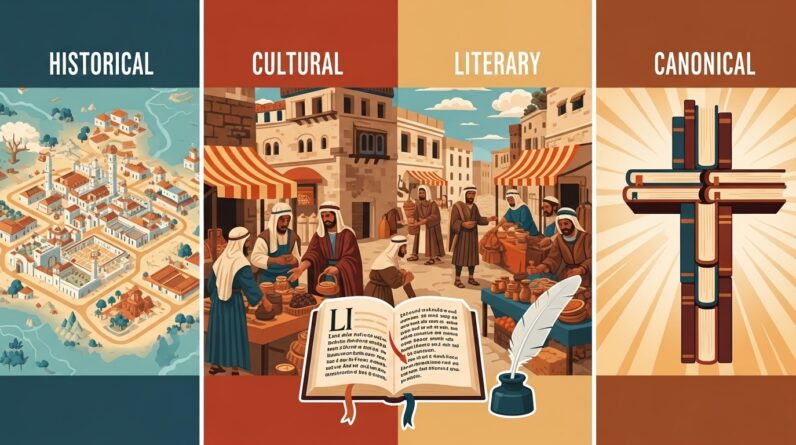



You want to understand the Bible. That desire matters. Whether you’re curious, returning to faith, or starting fresh, this guide is for you. You’ll get a simple, practical framework to read Scripture with confidence — not to impress others, but to let God’s Word shape your life.
You don’t need a seminary degree. You need a willing heart, a clear method, and consistent practice. This guide is written in a friendly, step-by-step voice so you’ll know what to do the next time you open your Bible.

Why This Topic Matters
Understanding the Bible changes how you live. It’s not meant to be confusing or distant; it’s meant to teach, correct, and transform you. As Scripture says, “All Scripture is God-breathed and is useful for teaching, rebuking, correcting and training in righteousness” — 2 Timothy 3:16. When you learn to read the Bible well, you’re not just gaining knowledge — you’re gaining spiritual insight, wisdom, and life direction.
If you’ve ever felt overwhelmed by chapter-and-verse references, cultural distance, or different translations, you’re not alone. But the Bible was written for real people in real situations, and you can access its life-giving truth with the right approach. Understanding begins with how you come to the text and what you do with it after you read.
The Simple Framework You Need to Understand This
If you feel stuck, remember this simple flow:
Pray → Read → Understand Context → Interpret → Apply
This framework is straightforward and repeatable. Each step builds on the previous one so your reading moves from confusion to clarity and then to transformation. Over time, these five practices will become habits that deepen both your understanding and your relationship with God.
Treat this framework as your basic toolkit. With it, you can approach any passage — whether narrative, prophecy, poetry, or teaching — and draw out practical, faithful meaning.
Pray → Read → Understand Context → Interpret → Apply (Overview)
Praying prepares your heart; reading exposes you to the text; understanding context guards against error; interpreting seeks the original meaning; applying brings the message to life. Keep this pattern simple and steady. You don’t need to do everything perfectly; you just need to start and keep going.
Step 1: Pray for Understanding
Before you open your Bible, ask God for help. Scripture encourages you to seek wisdom: “If any of you lacks wisdom, you should ask God…” — James 1:5. Understanding the Bible is more than an intellectual exercise; it’s spiritual. Jesus promised the Holy Spirit would teach and remind you: “But the Advocate, the Holy Spirit… will teach you all things…” — John 14:26.
When you pray first, you’re signaling humility and dependence. This doesn’t guarantee instant illumination like a light switch, but it opens your heart to learn and helps you avoid prideful or selective readings.
Application:
- Ask God for clarity and humility before you read.
- Invite the Holy Spirit to guide your understanding.
- Read with expectation rather than skepticism.
Spend a minute or two praying. You’ll find your heart calmer and more open to the text.

Step 2: Read with Context
Never treat a verse as a stand-alone slogan. Context is crucial. Every verse sits within a passage, a chapter, a book, and the whole Bible’s storyline. Ask basic questions: Who wrote this? Who was the original audience? What situation prompted these words?
Psalm 119 puts it beautifully: “Your word is a lamp for my feet, a light on my path” — Psalm 119:105. But to know how a verse lights your path, you need to see where it sits in the broader passage.
Practical steps:
- Read the whole chapter or the surrounding chapters.
- Note the paragraph breaks and changes of scene or speaker.
- Consider historical background: Is this a letter? A historical account? Poetry?
Context prevents misapplication. For example, a commanding-sounding line in a poem might be metaphorical, while a directive in a letter could be addressing a specific group of people in a particular situation.

Step 3: Understand the Type (Genre)
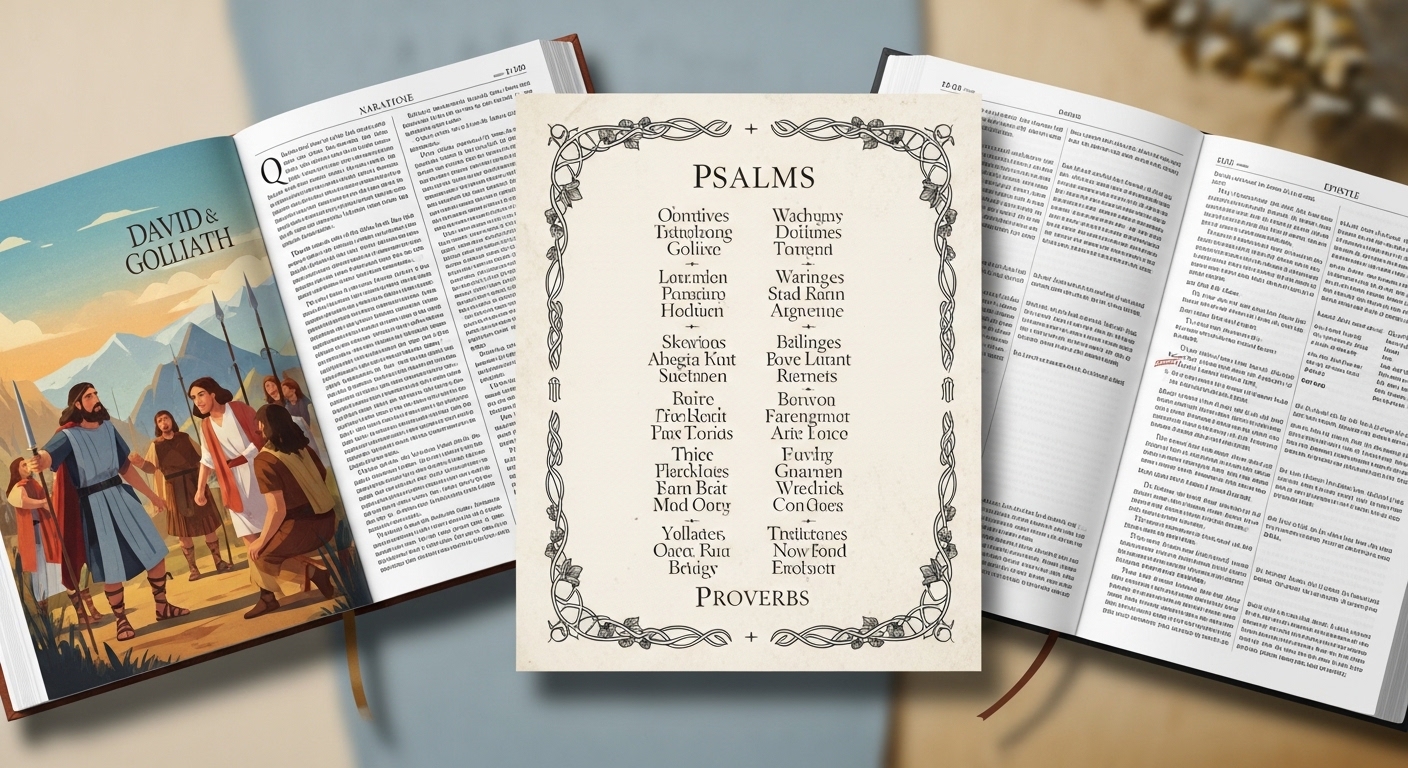
The Bible contains different types of writing (genres), and each communicates truth in distinctive ways. Misreading genre creates confusion. Here are a few common genres and how to approach them:
- Narrative (stories): These tell what happened. Focus on plot, characters, and the author’s emphasis.
- Poetry: Uses metaphor and imagery. Look for emotional truth and symbolic language rather than literal details.
- Prophecy: Often includes symbolic language and future-oriented messages. Pay attention to the immediate meaning for the original audience and prophetic fulfillment.
- Epistles (letters): Provide instruction and practical theology for church life. Look for commands, reasons, and cultural specifics.
- Wisdom literature: Offers principles for living, sometimes as general observations rather than absolute promises.
Identifying genre helps you decide whether a phrase is literal, symbolic, or proverbial. For example, interpreting the Psalms like a historical narrative will miss their poetic intent, and reading apocalyptic literature as straightforward history often leads to error.
Application:
- Identify the genre before you interpret.
- Adjust your expectations and questions based on that genre.
- Use the genre to shape how literally you read images and statements.
Step 4: Interpret the Meaning
Now get to the heart of it: what did the original author intend to communicate, and how would the original audience have understood it? Interpretation is careful work—not guessing or imposing your preferences onto the text. A key rule is to use Scripture to interpret Scripture, letting clearer passages illuminate less clear ones.
Paul explains that not everyone receives spiritual truth apart from the Spirit: “The person without the Spirit does not accept the things that come from the Spirit of God…” — 1 Corinthians 2:14. That means you need both careful study and spiritual openness.
How to interpret:
- Compare related passages (cross-references) on the same topic.
- Look for repeated words and themes within the book.
- Check reliable study notes and trusted commentaries for historical and linguistic insight.
- Ask who, what, when, where, why, and how about the passage.
Important cautions:
- Don’t force your personal opinion into the text. Instead, draw meaning out of it by asking good questions and seeking sound answers.
- Avoid over-spiritualizing a passage that may have a plain historical meaning.
- Be willing to revise your first impressions when you find better textual evidence.
Interpretation is both an art and a skill. Over time you’ll get better at spotting the author’s main point and how the passage fits into God’s larger revelation.
Step 5: Apply It to Your Life
Understanding is incomplete without application. James warns: “Do not merely listen to the word… Do what it says” — James 1:22. Application brings Scripture off the page and into your daily choices, relationships, and priorities.
Ask practical questions:
- What is God telling you to do, stop doing, or start believing?
- What attitude needs to change?
- What action can you take this week to live this truth?
Application is personal and communal. Some applications are individual (repentance, prayer, forgiveness), and some affect your involvement with others (peacemaking, service, accountability). Real change is rarely instantaneous; it’s a process of daily obedience.
Practical ways to apply:
- Write one specific action step in a journal.
- Share what you’re learning with a friend or small group for accountability.
- Practice a spiritual discipline (prayer, fasting, service) connected to the passage.
When you apply Scripture, you test your interpretation. The fruit of genuine understanding is transformation.

Tools and Resources to Help You
You don’t have to figure everything out alone. Helpful tools can speed learning and prevent common mistakes. Here are recommended resources that beginners find practical and accessible.
Recommended tools:
- Bible translations: NIV, ESV, NLT — choose one clear translation as your primary reading Bible to build familiarity.
- Online study platforms: Bible Gateway, Bible Hub — useful for comparing translations and getting quick cross-references and notes.
- Study Bibles and commentaries: Start with a one-volume study Bible (e.g., ESV Study Bible, NIV Study Bible) and a concise commentary series (e.g., Tyndale or NIV Application Commentary).
- Bible dictionaries and background books: Short introductions to historical context and culture are invaluable.
- Journaling tools: A simple notebook or digital app to record prayers, insights, and application steps.
A balanced approach uses both spiritual dependence (prayer and the Holy Spirit) and intellectual tools (translations, commentaries). As Hebrews puts it, Scripture is powerful and active: “For the word of God is alive and active…” — Hebrews 4:12.
Use tools selectively. Don’t let tools replace direct engagement with the text; they should aid, not substitute, your reading.
Common Mistakes to Avoid
Every beginner makes mistakes. Knowing them helps you avoid detours. Here are frequent errors and how to prevent them:
- Ignoring context: Don’t quote a verse as if it stands alone. Read the surrounding text.
- Misreading genre: Treat each passage according to its literary form.
- Skipping application: Understanding without obedience limits spiritual growth.
- Relying only on feelings: Emotions can aid insight but don’t replace careful interpretation.
- Not praying: Spiritual illumination matters; don’t neglect inviting God to teach you.
When you avoid these pitfalls, your Bible reading will be healthier and more fruitful. If you stumble, return to the framework: Pray → Read → Context → Interpret → Apply.
How to Apply This in Real Life
You can start today, even if you’re short on time. Practical, consistent habits beat sporadic marathon sessions.
Start simple:
- Read consistently: Aim for 10–15 minutes daily rather than irregular long sessions. Short, steady reading builds understanding over time.
- Keep a journal: Note verses that stand out, questions you have, and one action step.
- Focus on one passage at a time: Resist the urge to skim many verses superficially.
- Reflect and respond: After reading, take a moment to meditate and choose one thing to do.
Consistency matters more than intensity. A daily routine, even modest, trains your mind to recognize themes and deepens your spiritual life. Over months and years, you’ll be surprised at how much you’ve learned.
Real-life application examples:
- After reading Romans on grace, practice forgiving someone you’ve held a grudge against.
- From a Psalm of lament, bring honest feelings to God in prayer rather than pretending everything is okay.
- From a teaching about generosity, plan a practical step to give time or money.
Application isn’t about legalism. It’s about letting Scripture shape who you are.
Frequently Asked Questions
What is the easiest way to understand the Bible?
- Use the Pray → Read → Understand Context → Interpret → Apply method consistently. Small practices repeated over time produce growth.
Where should I start?
- Start with clear, foundational books like the Gospels (Matthew, Mark, Luke, John) and a short book like Philippians. These provide a strong grasp of Jesus’ life and basic Christian teaching.
Why is this difficult sometimes?
- Difficulty comes from historical distance, cultural context, literary genre, and spiritual depth. Don’t be discouraged; clarity comes through prayerful, patient study.
Do I need deep study tools?
- No. You can begin with a clear translation and a simple study Bible. Tools accelerate growth but aren’t essential to start.
How long does it take to understand the Bible?
- It’s a lifelong journey. You’ll make meaningful progress quickly in understanding key themes and personal application, but a full grasp of every book takes time.
Can I interpret Scripture on my own?
- Yes, you can and should read Scripture personally. At the same time, benefit from church teaching, trustworthy mentors, and scholarly resources to check your understanding.
Should I memorize verses?
- Memorization helps. Commit a few key verses to memory and revisit them. Scripture you carry in your heart shapes your thinking and choices.
Practical Example: Reading a Short Passage
Let’s walk through a quick example together. Suppose you read Luke 10:27 where Jesus summarizes the law with love for God and neighbor.
- Pray: Ask God to teach you what love looks like in your life today.
- Read: Read the passage and the surrounding verses (Luke 10:25–37).
- Context: Recognize this is a narrative and a response to a lawyer’s question about inheriting eternal life.
- Genre: This is teaching embedded in a narrative and includes the parable of the Good Samaritan.
- Interpret: Jesus’ point is that true religion expresses itself in neighborly compassion, not just doctrinal correctness.
- Apply: Ask, “Who is my neighbor today? What practical act of compassion can I perform?” Then choose a concrete action: visit, call, donate, or help.
This short routine takes 10-15 minutes and yields spiritual insight and practical action.
Advanced Tips as You Grow
As you get more comfortable, add these habits to deepen your study:
- Compare translations to see how wording influences meaning.
- Learn basic biblical background (authors, dates, historical context).
- Keep a running list of recurring themes (grace, covenant, kingdom, faith).
- Join a study group to hear different perspectives and gain accountability.
- Use one scholarly commentary for deeper questions, but avoid reading too many conflicting opinions at once.
Growth is incremental. Don’t rush; allow the Scripture to shape you progressively.
Final Encouragement
You don’t need to be an expert to understand the Bible. You need a willing heart, a simple method, and consistency. The Word is alive and powerful: “For the word of God is alive and active…” — Hebrews 4:12. Start small. Take one passage, pray, read slowly, and ask God to meet you there.
Remember Jesus’ promise about truth: “Then you will know the truth, and the truth will set you free” — John 8:32. Understanding Scripture isn’t just information; it’s a path to freedom, transformation, and deeper relationship with God.
Short Prayer Lord, Thank You for Your Word. Teach me, guide me, and give me understanding. Help me not only to read but to obey. Transform my heart through Your truth. In Jesus’ name, Amen.
Suggested Reading Plan for the First 30 Days
Follow this simple plan:
- Week 1: Read one Gospel (start with Mark or Luke) — 10–15 minutes daily.
- Week 2: Continue the Gospel and journal one insight each day.
- Week 3: Read a short New Testament letter (Philippians or James) and apply one verse.
- Week 4: Read Psalms for prayer language and practice praying Scripture.
This plan gives you exposure to narrative, teaching, poetry, and practical doctrine — a balanced start.
Common Questions You Might Ask Yourself
- What does this passage say about God?
- What does it say about humanity?
- What does it command or promise?
- How should this change my thinking or behavior?
These questions help move you from passive reading to active transformation.
One Last Reminder
Reading the Bible should be both reverent and joyful. It’s not a checklist or a source of anxiety. It’s God’s personal communication to you. Come with humility, curiosity, and expectancy. Over time, your confidence will grow and your life will reflect what you learn.
If you want a quick checklist to follow each time you open your Bible, here it is:
- Pray briefly.
- Read the passage and its context.
- Identify the genre.
- Ask interpretive questions.
- Choose one practical application and act.
Keep it simple. Repeat it daily. Watch God transform your life through His Word.
Prayer
Lord,
Thank You for giving us Your Word. As I read the Bible, give me understanding, patience, and a humble heart. Remove confusion and help me see Your truth clearly. Teach me through Your Holy Spirit, and guide me to not only understand Scripture but to live it out daily. Shape my thoughts, renew my mind, and draw me closer to You through every page I read.
In Jesus name
 Internal Resources to Explore
 Internal Resources to Explore
You can also explore more foundational topics in this study as you grow in understanding God’s Word step by step.
🔁 To build a strong foundation in Bible understanding
To see how God’s Word guides your daily life, read What Does Psalm 119:105 Mean? (Simple Explanation).
🧠 To learn a simple step-by-step method
For a practical way to study Scripture, explore Observe Interpret Apply Method (Step-by-Step Guide).
📖 To choose the right Bible version
If you’re unsure which translation to use, read Best Bible Translations for Beginners (Comparison Guide).
🌐 To use tools for Bible study
You can also learn how to use digital tools in How to Use Bible Gateway for Bible Study.
⚠️ To avoid common mistakes
To grow faster in your understanding, see Common Bible Study Mistakes and How to Avoid Them.
🧭 To know where to start reading
If you’re just beginning your Bible journey, read Where to Start Reading the Bible (Beginner Plan).
📚 To understand Bible structure
For help reading different sections of Scripture, explore How to Read Different Genres in the Bible.
🙏 To understand spiritual insight
To grow deeper spiritually, read Role of the Holy Spirit in Understanding Scripture.
📖 To study the Bible correctly
For a stronger foundation, see How to Study the Bible in Context (Beginner Guide).
🌿 To choose your study style
To understand different approaches, read Devotional vs Deep Bible Study (What’s the Difference?).