


You want to stand firm against the devil. You’re not alone—every Christian faces spiritual opposition—and Ephesians 6 gives one of the clearest, most practical guides for standing your ground. In this article you’ll learn how Paul’s teaching about the Armor of God helps you resist the devil, grow in faith, and live in victorious dependence on Christ. You’ll see biblical context, clear explanations of each piece of armor, everyday applications, common misconceptions, and specific steps you can take right now to remain spiritually strong.
If you’re new to this topic, you may also find Spiritual Warfare Explained: What the Bible Really Says helpful for understanding the biblical foundation behind Paul’s teaching.
This is written as a friendly Bible study—practical, Scripture-centered, and encouraging—so you can apply God’s Word confidently.

Direct answer: How do you stand firm against the devil?
You stand firm against the devil by depending on Christ and using the spiritual resources God provides: truth, righteousness, readiness to share the gospel, faith, salvation, God’s Word, and prayer—the Armor of God (Ephesians 6). Paul’s command is not to rely on your own strength but to “be strong in the Lord and in his mighty power”. Paul’s command isn’t about becoming spiritually self-sufficient. Learn more in What Does It Mean to Be Strong in the Lord? (Ephesians 6 Explained) and to “put on the full armor of God”. If you’re wondering what this looks like practically, see How to Put on the Armor of God Every Day: A Practical Biblical Guide.
Biblical foundation: What is Paul teaching in Ephesians 6?
Ephesians 6 is the climax of Paul’s pastoral letter to the church in Ephesus. After teaching unity, holiness, and Christian relationships (ch. 4–5), Paul turns to spiritual realities. He warns that your struggle is not against people ultimately but against “the spiritual forces of evil” (Ephesians 6:12). Understanding the nature of your enemy also helps you recognize Common Spiritual Attacks Christians Face (And How to Stand Firm Biblically), so you’re better prepared to respond with biblical wisdom instead of fear.
Paul’s imagery draws on the common experience of Roman soldiers—something his original readers would have pictured clearly—but he uses that image to make a spiritual point: God provides defensive and offensive tools so you can resist spiritual attacks. The armor is metaphorical, but every piece corresponds to a biblical truth you must live out daily. Read the full passage to keep the context in your heart: Ephesians 6:10-18.
Why “stand firm”? The heart of the command
Paul repeats “stand firm” elsewhere—“stand firm in the Lord” (Philippians 4:1) and “stand firm in the faith” (1 Corinthians 16:13)—because Christian life is often a posture more than a one-time event. Standing implies holding your ground, resisting attack, and remaining faithful when trials or temptations come. James gives a parallel instruction: “Submit yourselves, then, to God. Resist the devil, and he will flee from you” James 4:7. Standing firm is active and relational: it requires submission to God and reliance on the means he gives.
Main teaching: The pieces of the Armor of God and how they help you stand firm
Paul lists six main pieces in Ephesians 6:14–17. Below you’ll find a careful explanation, Old- and New-Testament connections, historical background where helpful, and practical ways to live each out.
The Belt of Truth: Ground yourself in God’s reality
Paul begins, “Stand firm then, with the belt of truth buckled around your waist” Ephesians 6:14. In Roman armor the belt held other pieces in place and secured the soldier’s movements. Spiritually, truth stabilizes you.
What truth? The gospel truth about who God is, who you are in Christ, and what God has done (see John 17:17 about God’s Word as truth: John 17:17). Living in truth means rejecting lies—Satan’s common tactic—and cultivating honesty with God and others.
Practical ways to wear the belt of truth:
- Memorize foundational gospel truths (e.g., your identity in Christ).
- Test your thoughts against Scripture when doubt or doubt-driven stories arise.
- Practice transparency in relationships—confession defangs shame and deception.

The Breastplate of Righteousness: Guard your heart through Christ’s righteousness
Paul’s next image is the breastplate: “with the breastplate of righteousness in place” Ephesians 6:14. The breastplate protects vital organs; spiritually, righteousness guards your heart and relationships.
Righteousness here is not primarily your moral performance but the righteousness that comes from Christ (justification) and the righteousness you pursue by the Spirit (sanctification). Romans and other New Testament letters teach that your right standing before God is a gift (see Romans 3:22), and that transformed living flows from that gift.
How to put on the breastplate of righteousness:
- Trust the righteousness of Christ for your standing before God (daily reliance).
- Practice repentance and obedience—let God’s Spirit produce righteous desires.
- Make moral choices that protect your heart (guard your mind, friendships, and media intake).

Feet fitted with readiness from the gospel of peace: Walk prepared to share hope
Paul says, “with your feet fitted with the readiness that comes from the gospel of peace” Ephesians 6:15. Roman soldiers wore caligae—sturdy sandals—for marching and stability. The gospel gives you a confident, peaceful footing because it reconciles you to God and gives you purpose.
This piece reminds you that standing firm is not passive; it equips you to move, to serve, and to share the peace you have in Christ. When fear or anxiety immobilizes you, the gospel gives you a stable foundation.
Practical steps to fit your feet:
- Remind yourself of the gospel when anxiety rises—your identity and purpose are secure.
- Be ready to share the hope you have; evangelism is part of Christian courage.
- Engage in practical acts of peace—reconciliation, kindness, and peacemaking.
The Shield of Faith: Extinguish the enemy’s flaming darts
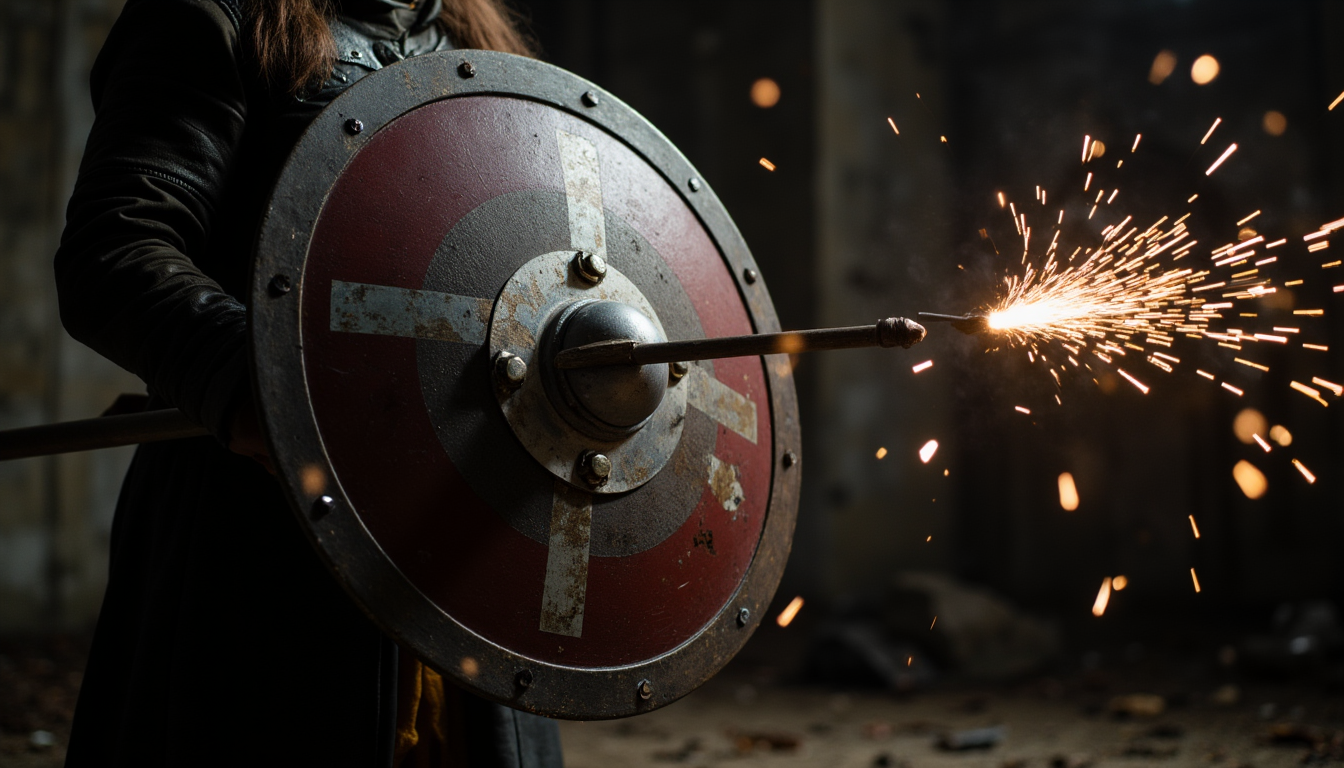
Paul instructs you to take up “the shield of faith, with which you can extinguish all the flaming arrows of the evil one” Ephesians 6:16. Roman shields were large and protective; your faith functions similarly.
What are the “flaming arrows”? Temptations, accusations, lies, fear, and anything Satan launches to unsettle you. Faith doesn’t mean you always feel confident; it means you trust God’s character, promises, and power even when circumstances look bleak.
Ways to wield the shield of faith:
- Remember God’s past faithfulness and promises (scripture memory and testimony).
- Respond to temptation with trust rather than panic—recall verses that apply to your struggle.
- Practice small acts of obedience that build trust in God’s faithfulness.
Cross-reference: 1 Peter 5:8-9 encourages the church to “resist him, standing firm in the faith”.
The Helmet of Salvation: Protect your mind with the hope of salvation
Paul adds “the helmet of salvation” in Ephesians 6:17. The helmet covered the head—your thinking. Salvation’s effect on your mind protects you from discouragement, doubt, and despair.
When you forget what God has done—your redeemed identity, the promise of final victory—you become more vulnerable. The helmet secures your hope.
How to wear the helmet:
- Meditate on salvation truths: forgiveness, adoption, future resurrection.
- Use Scripture and songs to lift your thoughts when doubt creeps in.
- Remind yourself regularly of assurance: God’s promises are trustworthy.
The Sword of the Spirit: Use God’s Word defensively and offensively
The only offensive weapon Paul lists is “the sword of the Spirit, which is the word of God” Ephesians 6:17. Jesus used Scripture to resist Satan in the wilderness (see Matthew 4:1–11), teaching you the power of knowing and applying God’s Word.
The sword is both defense (refuting lies) and offense (proclaiming truth, confronting sin, advancing the gospel). But wielding it requires familiarity: you can’t quote what you don’t know.
Practical ways to use the sword:
- Memorize key verses that address your temptations.
- Learn to apply Scripture gently and wisely in conversations.
- Study the Bible regularly so truth becomes reflexive in times of crisis.
Hebrews 4:12 describes the Word as living and active—able to discern heart issues—making it effective in spiritual conflict Hebrews 4:12.
Prayer: Your commanding posture
Paul finishes with a crucial element: persistent prayer. He urges believers to “pray in the Spirit on all occasions with all kinds of prayers and requests” and to “be alert and always keep on praying” Ephesians 6:18. Prayer is the means by which you communicate with God, receive power, and keep watch.
Prayer ties every piece of armor together. Without prayer, the armor is a set of ornaments; with prayer, it becomes living dependence on God. If you’d like a guided prayer based on Ephesians 6, read A Prayer for Putting on the Armor of God Every Day.
How to cultivate a prayer posture:
- Establish daily rhythms: short morning prayers, mealtime gratitude, evening reflection.
- Pray Scripture back to God; use verses that align with the need.
- Join others in prayer—corporate prayer strengthens individual resolve.
How these pieces work together when you face the devil
You don’t put on just one piece and hope for the best. Standing firm requires the whole armor—truth, righteousness, gospel-readiness, faith, salvation, Word, and prayer. Each piece supports the others:
- Truth holds everything in place so you don’t fall for deception.
- Righteousness protects a heart inclined to compromise.
- Gospel-readiness gives you peace to walk and act for Christ.
- Faith covers you against aerial assaults—doubt, fear, accusation.
- Salvation secures your identity and hope when the enemy attacks your mind.
- The Word is your active response in specific situations.
- Prayer keeps you dependent on God and alert.
Paul’s logic is practical: you will face spiritual opposition. Your job is not to eliminate opposition or control outcomes; your job is to stand in God’s strength, equipped by him.
Practical application: Daily rhythms to stand firm
You’ll grow stronger when spiritual disciplines become daily rhythms rather than occasional activities. Here are practical steps you can start implementing this week:
- Morning: Begin with 10–15 minutes of Scripture reading and prayer. Put on the belt of truth by declaring gospel truths. Pray for protection and wisdom. Seeing how the armor works in ordinary situations can also be encouraging. Read The Full Armor of God in Daily Life: Real Examples for Modern Christians.
- Midday: Use a verse to re-center—say a memorized line when anxious. Take a brief walk and rehearse gospel truths to fit your feet.
- Evening: Confess failures and thank God for his righteousness and salvation. Review where you were tempted and how the armor helped or didn’t.
- Weekly: Join a small group for mutual encouragement and prayer. Accountability helps you keep the breastplate intact.
- Memorize: Choose 12–20 key verses (e.g., Ephesians 6:10–18; James 4:7; 1 Peter 5:8–9; Hebrews 4:12;) and learn one per month.
- Practice: Role-play responses to common temptations with a trusted friend or mentor. Practicing helps you wield the sword under pressure.
Remember, you’re not practicing for victory; you’re practicing from victory. Christ has already won the decisive battle. Your discipline helps you live out that victory daily.
Spiritual warfare is real but not mysterious
It’s tempting to either dismiss spiritual warfare as superstition or make it into a sensationalized obsession. Scripture teaches a balanced view: the enemy is real and dangerous, but he is neither all-powerful nor all-knowing. Your victory is secure in Christ.
2 Corinthians 10:3–5 helps keep things in perspective: “For though we live in the world, we do not wage war as the world does…we take captive every thought to make it obedient to Christ” 2 Corinthians 10:3-5. Much of spiritual warfare is about truth, thought life, and obedience rather than dramatic showdowns.
Common misconceptions and frequently asked questions
Isn’t the Armor of God a mystical formula?
No. The armor is a practical picture of spiritual realities. It’s not a magical chant or a list of rituals. Each piece corresponds to living trust, action, and obedience rooted in Christ.
If I put on the armor, will I never struggle again?
No—struggle is part of Christian life. Putting on the armor helps you resist, recover, and grow. Faithfulness means ongoing dependence, not instant perfection.
Can I resist the devil on my own?
No. James says submit to God first, then resist the devil James 4:7. Your strength comes from God (Ephesians 6:10). The armor is God’s provision, so reliance on him is essential.
Are spiritual attacks always demonic?
Not always. Some struggles are the result of sin patterns, mental health issues, or natural consequences. Discernment matters. Pray, seek wise counsel, and if needed, pursue professional help alongside spiritual disciplines.
What if I’m exhausted—how can I stand firm?
Start small. Put on one piece at a time—speak truth to yourself, pray for a few minutes, recite a promise. God meets you in small steps of faithfulness.
How to build long-term resilience
Standing firm is a lifestyle. Long-term resilience looks like these commitments:
- Grow in knowledge of Scripture—study, not just devotions.
- Cultivate community—you were never meant to stand alone.
- Practice confession and accountability.
- Celebrate small victories; track evidence of God’s work.
- Serve others—ministry strengthens faith and prepares you for opposition.
- Keep the end in view: Christ’s final victory gives you perspective.
Philippians 4:13 is often quoted in this context: “I can do all this through him who gives me strength” Philippians 4:13. The point is not your grit but Christ’s strength.
Key takeaways
- You stand firm by depending on God, not by your own tactics.
- The Armor of God is both defensive and offensive: truth, righteousness, gospel-readiness, faith, salvation, Word, and prayer.
- Put on the whole armor daily—these are practices, not props.
- Spiritual warfare often plays out in your thoughts, choices, and relationships; learn to take thoughts captive (2 Corinthians 10:3–5).
- Community, Scripture, and prayer are indispensable for lasting victory.
Closing encouragement
You’re not left alone to face the devil. Christ equips you with everything you need. When you feel weak, remember that weakness makes room for God’s strength. Keep practicing truth, choosing righteousness, trusting God, and praying without ceasing. Standing firm is a lifelong posture of dependence—and God’s grace will carry you.
Closing prayer
Lord, strengthen my friend to stand firm against the devil. Help them to put on the full armor you’ve given—truth, righteousness, readiness from the gospel, faith, salvation, your Word—and to pray without ceasing. When doubt or temptation comes, remind them of your victory in Christ and guard their heart and mind. Fill them with your Spirit so they can resist the enemy and live boldly for you. Amen.
Frequently Asked Questions
How do I resist the devil practically today?
Start by identifying the most common temptations you face. Choose a Scripture that directly counters that temptation and memorize it. Pray in the morning for discernment and during temptation call on the verse. Build habits that protect your heart (accountability, boundaries, rest).
What role does community play in standing firm?
Community provides encouragement, correction, and prayer support. When you share struggles with trusted believers, you receive perspective and prayer, helping you maintain the breastplate of righteousness and the shield of faith.
Can Christians lose spiritual battles?
Christians can suffer defeats in particular moments, but the Bible teaches ultimate victory in Christ. If you stumble, confess, repent, and return to the practices of the armor. Learn more in Can Christians Lose Spiritual Battles? What the Bible Teaches, where we explain the difference between temporary defeats and the believer’s ultimate victory in Christ.
How important is Bible memorization?
Very important. The sword of the Spirit is effective when you know Scripture by heart. Memorization helps you recall truth in the moment of temptation—just as Jesus did in the wilderness (Matthew 4).
Should I fear the devil?
No—fear is not the posture Scripture commands. Respect the reality of spiritual opposition but trust the supremacy of Christ. Your confidence rests in God’s power, not in minimizing the enemy.
Read Next
- The Armor of God Explained: The Meaning of Each Piece
- How to Put on the Armor of God Every Day: A Practical Biblical Guide
- Common Spiritual Attacks Christians Face
- What Does It Mean to Be Strong in the Lord?
- A Prayer for Putting on the Armor of God Every Day
- The Full Armor of God in Daily Life
- Can Christians Lose Spiritual Battles?
- Armor of God Bible Study: Questions, Reflection, and Practical Application
These links will help you build deeper understanding and practical habits for standing firm.
Final encouragement
Keep practicing the disciplines Paul describes. Don’t rush; spiritual growth is steady. As you put on the armor, pray for God to make these truths your reflexive responses, and invite others to walk with you in the fight. Victory is found in Christ—not in your method—and he will carry you as you stand firm against the devil.