


To be strong in the Lord means depending on God’s mighty power—not your personality, emotions, or willpower—so you can stand firm when temptation, fear, deception, suffering, or spiritual opposition comes. It does not mean pretending you are never afraid, tired, or weak. It means turning to God and relying on everything He has provided through Christ, the Holy Spirit, His Word, prayer, and the full armor of God.
Paul gives this command in Ephesians 6:10: “Finally, be strong in the Lord and in his mighty power.” He then explains why believers need God’s strength: the devil uses schemes, our struggle is not ultimately against people, and we cannot stand firm through human effort alone.
In Ephesians 6:10–18, Paul teaches believers to recognize the true enemy, put on the full armor of God, remain alert in prayer, and stand together in faith. Understanding this passage helps us see that spiritual strength is not something we manufacture. It is strength we receive from the Lord and depend on every day.

What Does “Be Strong in the Lord” Mean?
When Paul tells you to “be strong in the Lord,” he wants you to root your strength in God’s character and resources, not in your own grit. The phrase “in the Lord” locates the source of the strength: it is in relationship with Christ. The emphasis is relational and participatory—you are not simply being told to try harder but to stand, act, and persevere in union with the One who is mighty.
This strength includes trusting God’s promises, drawing life from Jesus (John 15:4–5), and allowing the Holy Spirit to empower your obedience. You see the same idea in Ephesians 1:18–23 and Ephesians 3:14–21, where Paul celebrates God’s power at work in Christ and prays that believers would experience it. (See Ephesians 1:18–23 and Ephesians 3:14–21.)
The strong in the Lord meaning also implies a posture: humility before God, openness to the Spirit, and willingness to wear the defense and offense God supplies. It is both a position in Christ and a practical way of living.

The Context of Ephesians 6:10
Ephesians is a pastoral letter centered on the mystery of Christ and the new identity of believers. Chapters 1–3 explain what God has done for you in Christ—adoption, forgiveness, spiritual blessing, and the cosmic reign of Jesus. When Paul prays in Ephesians 1:18–23, he asks that you understand the hope and power tied to Christ’s exaltation. (See Ephesians 1:18–23.)
In chapters 4–6, Paul moves to how that identity shapes daily life: unity in the church, Christian households, work, and spiritual struggle. Ephesians 6:10–18 follows this pattern: having shown who God is and who you are in Christ, Paul gives a command that flows naturally — rely on God and put on the means of defense He provides. The command “be strong in the Lord” therefore begins a practical section grounded in the theological claims earlier in the letter, and it leads directly into the full armor of God.
These connections help you see that the call to strength is not an isolated slogan but the logical outworking of being united to Christ, who is seated above all. (See Ephesians 3:14–21 for Paul’s deep prayer that you would be rooted and strengthened in love by God’s power.)
God’s Mighty Power, Not Human Willpower
It’s tempting to read “be strong” and think Paul is advocating emotional toughness, relentless striving, or self-help pep talks. But Paul insists the source is God’s might. The Greek emphasizes being strong “in the Lord” and “in the strength of his might” — that double phrasing points you away from yourself and toward God’s energy.
Old Testament images of God as your strength keep this idea consistent. Exodus 15:2 celebrates God as “my strength and my song,” a declaration of reliance rather than self-sufficiency. (See Exodus 15:2.) The prophets and psalmists likewise remind you that strength is a gift God gives when you look to him, not something you manufacture.
Zechariah 4:6 captures this plainly: “Not by might, nor by power, but by my Spirit, says the Lord of hosts.” (See Zechariah 4:6.) Paul’s command echoes that same conviction: your Christian strength is spiritual and supernatural. Therefore you should not measure faithfulness by how emotionally unflappable you are but by how consistently you look to Jesus and receive his power.
Why Spiritual Strength Begins with Dependence
Dependence is not a weakness; it’s the only right posture of a creature before the Creator. When you begin your day or confront temptation, the first move is not a pep talk to yourself but a turn toward Christ. John 15:4–5 says to remain in Jesus as branches remain in the vine—apart from him you can do nothing. (See John 15:4–5.)
Practically, dependence looks like prayer, Scripture, and obedience—means by which God’s power flows into your life. Hebrews 4:14–16 invites you to approach the throne of grace with confidence so you might receive mercy and find grace to help in time of need. (See Hebrews 4:14–16.) That access is how spiritual strength is distributed: not as a performance bonus for the disciplined but as grace for the needy.
Paul’s pastoral language elsewhere picks up the same theme: “Be strong in the grace that is in Christ Jesus” (2 Timothy 2:1). (See 2 Timothy 2:1.) The sequence is consistent—God’s grace precedes and empowers your obedience.
How Weakness Can Lead Us to God’s Strength
One of the most counterintuitive truths in Scripture is that human weakness becomes the stage for God’s power. Paul learned this when he pleaded for relief from a thorn, and God replied, “My grace is sufficient for you, for my power is made perfect in weakness.” Paul’s response—“Therefore I will boast all the more gladly of my weaknesses”—teaches you that weakness is not disqualifying but qualifying for God’s work. (See 2 Corinthians 12:9–10.)
Isaiah promises renewal for the weary: those who wait on the Lord will renew their strength, run without wearying, and walk without fainting. (See Isaiah 40:28–31.) Likewise, Psalm 28:7 calls God your strength and shield, a defender you trust when you cannot carry the load alone. (See Psalm 28:7.) Exodus 15:2 gives another poetic portrait of God as strength and song when the people are delivered. (See Exodus 15:2.)
So when you feel spiritually weak—exhausted from ministry, ashamed after failure, or drained by grief—you are not disqualified from God’s strength. In fact, that is precisely when the Lord’s power can be most visible if you will turn to him and receive help.

How the Armor of God Expresses God’s Strength
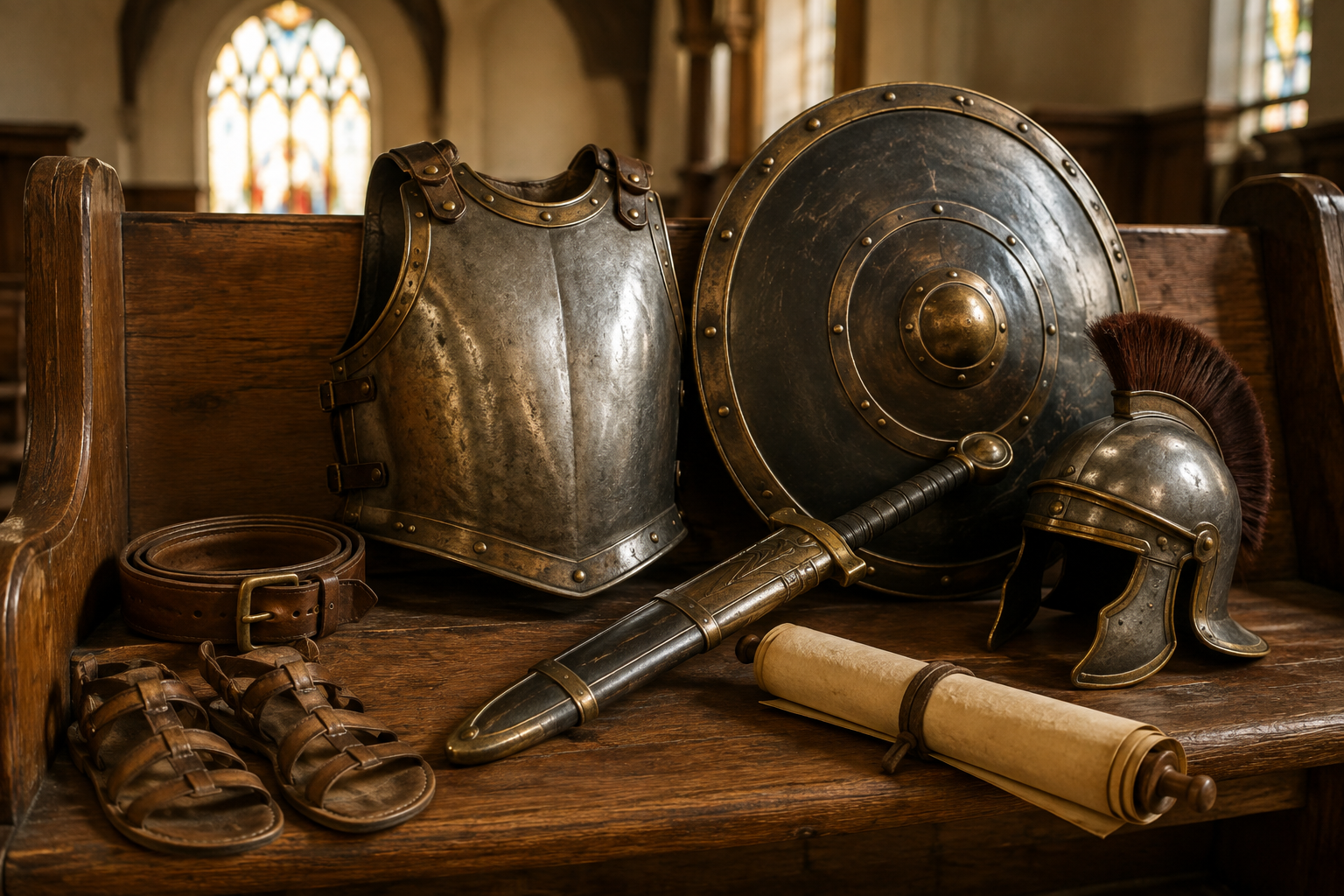
Ephesians 6:11–17 lists the belt of truth, breastplate of righteousness, shoes of the gospel of peace, shield of faith, helmet of salvation, and the sword of the Spirit (Scripture). Each piece is a way God’s strength is given and lived out through you. Read Ephesians 6:10–18 to see how these fit together.
- The belt of truth anchors you in reality: not self-deception but the truth of God.
- The breastplate of righteousness protects inward life—your conscience and relationship with God—through righteousness granted and pursued.
- Shoes of the gospel stabilize you so you stand in peace even when winds blow.
- The shield of faith intercepts the flaming darts of doubt and accusation as you trust God’s promises.
- The helmet of salvation guards your hope—your sure future in Christ.
- The sword of the Spirit, which is Scripture, is God’s active word to you in battle.
Putting these on is not a magic formula; it’s an expression of dependence. Each piece points you back to God’s provision and invites the Spirit to work through truth, faith, hope, and the Word. To explore the symbolic and practical weight of each item, see an accessible overview like Armor of God explained. Paul’s command to “put on the whole armor of God” is therefore a command to receive and apply God’s strength in tangible ways.
If you ask why God supplies these defenses, remember that he gives them because you face real spiritual opposition. For a broader look at the purpose behind God’s provisions, see why God gives us the armor of God.
Practical Ways to Be Strong in the Lord Daily
Being strong in the Lord shows up in ordinary rhythms. Here is a daily pathway you can practice that keeps you depending on God and wearing the armor:
- Admit weakness. Begin by confessing your need before God and any trusted believer. This humility opens you to grace and correction.
- Remember who God is. Read Ephesians 1:18–23 or Ephesians 3:14–21 for reminders of Christ’s authority and God’s power. (See Ephesians 1:18–23 and Ephesians 3:14–21.)
- Remain in Christ. Spend time in abiding prayer and Scripture—John 15:4–5 is a helpful reminder that fruitful life is about connection, not striving. (See John 15:4–5.)
- Receive truth from Scripture. Let the Word shape your thinking and equip your mind; the sword of the Spirit is active through Scripture.
- Pray. Ask for mercy and help (Hebrews 4:14–16) and practice specific, honest requests rather than vague platitudes. (See Hebrews 4:14–16.)
- Put on the full armor. Literally and intentionally rehearse each piece as you pray, asking God to clothe you. For help, try a routine like put on the armor of God every day.
- Obey the next step. Strength is lived out in small decisions—choosing truth, offering forgiveness, speaking gently, or resisting a temptation.
- Seek support from mature believers. Community helps you stand firm. For teaching on spiritual conflict in context, see what the Bible says about spiritual warfare.
Practical examples: when you face temptation online at work, admit your weakness, pray briefly, rehearse a Bible truth (Scripture as your sword), and move to a different task. When family pressure asks you to compromise, put on the breastplate of righteousness, seek counsel, and act in a way that honors Christ. When waiting for an answer from God, remind yourself of God’s power and promises (Ephesians 3:14–21) and practice patient trust rather than anxious striving. (See Ephesians 3:14–21.)
In everyday life, strength looks like consistent small steps reliant on God’s power—not dramatic feats done in your own name. If you want practical applications of the armor in normal routines, read about the full armor of God in daily life.

What Being Strong in the Lord Does Not Mean
It’s important to clear away common misunderstandings. Being strong in the Lord does not mean:
- You will never be afraid, discouraged, or tired. Biblical strength coexists with human weakness (2 Corinthians 12:9–10). (See 2 Corinthians 12:9–10.)
- You must perform perfectly to earn God’s presence or power. The New Testament consistently points to grace, not performance, as the ground of your standing before God (Hebrews 4:14–16). (See Hebrews 4:14–16.)
- You should rely on charisma, self-help techniques, or relentless positivity instead of dependence on the Spirit and God’s Word (Zechariah 4:6). (See Zechariah 4:6.)
- You are guaranteed physical health, wealth, or freedom from suffering simply because you believe. Scripture warns against prosperity theology and points to cross-bearing and perseverance as normal Christian experiences.
Understanding what the phrase does not promise protects you from shame when weakness or hardship comes. It also preserves the gospel’s emphasis on grace and God’s sustaining presence.
Signs You Are Relying on Yourself Instead of God
It’s subtle when independence becomes your operating system. Watch for these signs that you’re leaning on yourself:
- Exhaustion from trying to control outcomes rather than praying about them.
- A defensive attitude toward correction or accountability.
- Spiritual activity that emphasizes image management more than humble devotion.
- Quick resort to worry instead of petition and trust (Philippians 4:6–7).
- An inner sense that you must manufacture faith, rather than receive it as a gift and practice it in obedience (2 Timothy 2:1). (See 2 Timothy 2:1.)
If you see these patterns, the remedy is not guilt but a turn to God: confess, seek Scripture, ask a mature believer to help, and practice receiving grace. Sometimes recovering from a spiritual defeat requires counsel, confession, and re-entry into spiritual disciplines. For guidance when you stumble, see how to recover from a spiritual defeat.
What to Do When You Feel Spiritually Weak
When spiritual fatigue hits, respond with honest, practical steps that align with Scripture:
- Pause and pray. Name your weakness to God and ask for help (Hebrews 4:14–16). (See Hebrews 4:14–16.)
- Read a sustaining passage: Isaiah 40:28–31, Psalm 28:7, or Ephesians 3:14–21 can renew perspective and hope. (See Isaiah 40:28–31; Psalm 28:7; Ephesians 3:14–21.)
- Rest. Strength doesn’t come only from more activity; God often gives strength through Sabbath and restful trust.
- Reconnect to Christian community. A mature believer can pray with you and help you reread Scripture in ways that point to God’s power.
- Put on the armor piece by piece in prayer and ask the Spirit to empower each area of your life (Ephesians 6:11–17).
- Take one obedient step. Obedience, even when weak, invites God’s power into your situation (Colossians 1:10–11). (See Colossians 1:10–11.)
- If you’re repeatedly overwhelmed, seek pastoral care or professional help; strength in the Lord is not an excuse to avoid medical or psychological support.
These steps keep you aligned with God’s means of grace rather than forcing a fake bravado.
Frequently Asked Questions
What does strong in the Lord mean?
- It means receiving and living in God’s power through union with Christ, reliance on the Spirit, and obedience to God’s Word. Read Ephesians 6:10–18 for Paul’s command in context. (See Ephesians 6:10–18.)
How do I receive God’s strength?
- Receive God’s strength by prayer, Scripture, confession, obedience, and community. Approach God’s throne for mercy (Hebrews 4:14–16) and remain in Christ (John 15:4–5). (See Hebrews 4:14–16 and John 15:4–5.)
Can I be strong while feeling weak?
- Yes. Paul emphasizes that God’s power is perfected in weakness, so feeling weak does not disqualify you from being strong in the Lord (2 Corinthians 12:9–10). (See 2 Corinthians 12:9–10.)
Is Philippians 4:13 about doing anything?
- Philippians 4:13 (“I can do all things through him who strengthens me”) must be read in context. Paul is speaking of endurance in Christ-centered contentment and ministry, not a blanket promise to accomplish any selfish aim. Read the surrounding context for clarity. (See Philippians 4:13.)
How does prayer strengthen believers?
- Prayer connects you with God’s mercy and help (Hebrews 4:14–16), reshapes your desires, aligns you with God’s will, and opens you to the Spirit’s empowerment for obedience and endurance. (See Hebrews 4:14–16.)
Can I rely on God’s strength even in ongoing suffering?
- Yes. Scripture repeatedly points to God’s sustaining power in suffering (Isaiah 40:28–31) and calls believers to trust him even amid trials. (See Isaiah 40:28–31.)
How should I respond if I repeatedly rely on myself?
- Confess the tendency, seek accountability, prioritize Scripture and prayer, and practice small acts of obedience. Relearn dependence through community and pastoral care (2 Timothy 2:1). (See 2 Timothy 2:1.)
Continue Growing in the Armor of God
If this study stirred your heart and you want next steps, consider these resources for continued growth:
- The Full Armor of God in Daily Life: Real Examples for Modern Christians
- The Armor of God Explained: The Meaning of Each Piece
- How to Put on the Armor of God Every Day: A Practical Biblical Guide
- Spiritual Warfare Explained: What the Bible Really Says
These will help you move from understanding to practice as you grow in dependence on the Lord.
Conclusion
Being strong in the Lord means living from God’s resources, not your own. It’s a lifelong pattern of humility, prayer, Scripture, obedience, and community. The Armor of God is not a list to check off but a picture of how God gives you what you need for spiritual battle and faithful living. You will still face weakness, fear, and hardship, but such moments become the context in which God’s strength is revealed when you turn to him. Keep coming back to Christ, receive the Spirit’s help, and put on the armor He gives. That is how you stand—not in your might, but in His.
A Short Prayer for Strength in the Lord
Lord Jesus, you are my strength and my song. Help me to rest in your power, not in my willpower. When I am weak, remind me of your promise that your power is made perfect in weakness (2 Corinthians 12:9–10). Fill me with your Spirit, give me the wisdom of your Word, and help me put on the whole armor you provide (Ephesians 6:10–18). Make me humble, courageous, and obedient so that your name is honored. In your strong and gentle name, amen. (See 2 Corinthians 12:9–10 and Ephesians 6:10–18.)