



When Christians hear the words “fruit of the Spirit,” many of us can immediately begin naming the list:
Love. Joy. Peace. Patience. Kindness. Goodness. Faithfulness. Gentleness. Self-control.
But knowing the list is not the same as allowing God to use it to examine our lives.
You may know that patience is a fruit of the Spirit—and still lose patience with your family.
You may understand what kindness means—and still speak harshly when you are stressed.
You may believe that God gives peace—and still struggle to trust Him when life becomes uncertain.
That is why Galatians 5:16–26 deserves more than a quick reading.
It invites us to ask a much more personal question: review the nine fruits of the Spirit explained
to understand the character the Holy Spirit develops in believers.

What is actually growing in my life?
This Bible study will help you examine the larger context of the fruit of the Spirit, understand what Paul is teaching, reflect honestly on your own spiritual growth, and identify practical ways to cooperate with the Holy Spirit’s work in your everyday life.
You can use this study alone, with your family, in a small group, or as part of a church Bible study.
Explore how the fruit of the Spirit shapes relationships through patience, forgiveness, kindness, and self-control.
Start by Reading Galatians 5:16–26
Before answering any questions, read Galatians 5:16–26 slowly.
If possible, read it twice.
The first time, simply notice what Paul says.
The second time, look for contrasts.
Ask yourself:
- What does Paul say about the flesh?
- What does he say about the Spirit?
- What behaviors are produced by the flesh?
- What kind of character is produced by the Spirit?
- What instructions does Paul give believers?
Do not hurry to application yet.
First, allow the passage to speak for itself.
The Fruit of the Spirit Is Part of a Bigger Message
Galatians 5:22–23 is often quoted by itself.
But Paul did not suddenly stop his letter and give Christians nine nice personality traits.
The surrounding passage is about two different ways of living.
One life is directed by sinful human desires.
The other is increasingly shaped by the Holy Spirit.
Earlier in Galatians 5, Paul talks about freedom in Christ. But Christian freedom does not mean that believers are free to live however they please.
Freedom becomes an opportunity to love and serve.
Then Paul describes a conflict that every Christian recognizes: desires that pull us toward sin and the Spirit leading us toward a different way of life.
That is the setting for the fruit of the Spirit.
The list is not merely:
“Here are nine things good Christians should try harder to become.”
It is closer to:
“This is what begins appearing when the Holy Spirit is shaping a person’s life.”
That distinction matters.
Christian growth involves effort, obedience, repentance, discipline, prayer, and deliberate choices.
But the source of genuine spiritual transformation is not human willpower alone.
The Holy Spirit changes us from the inside out.
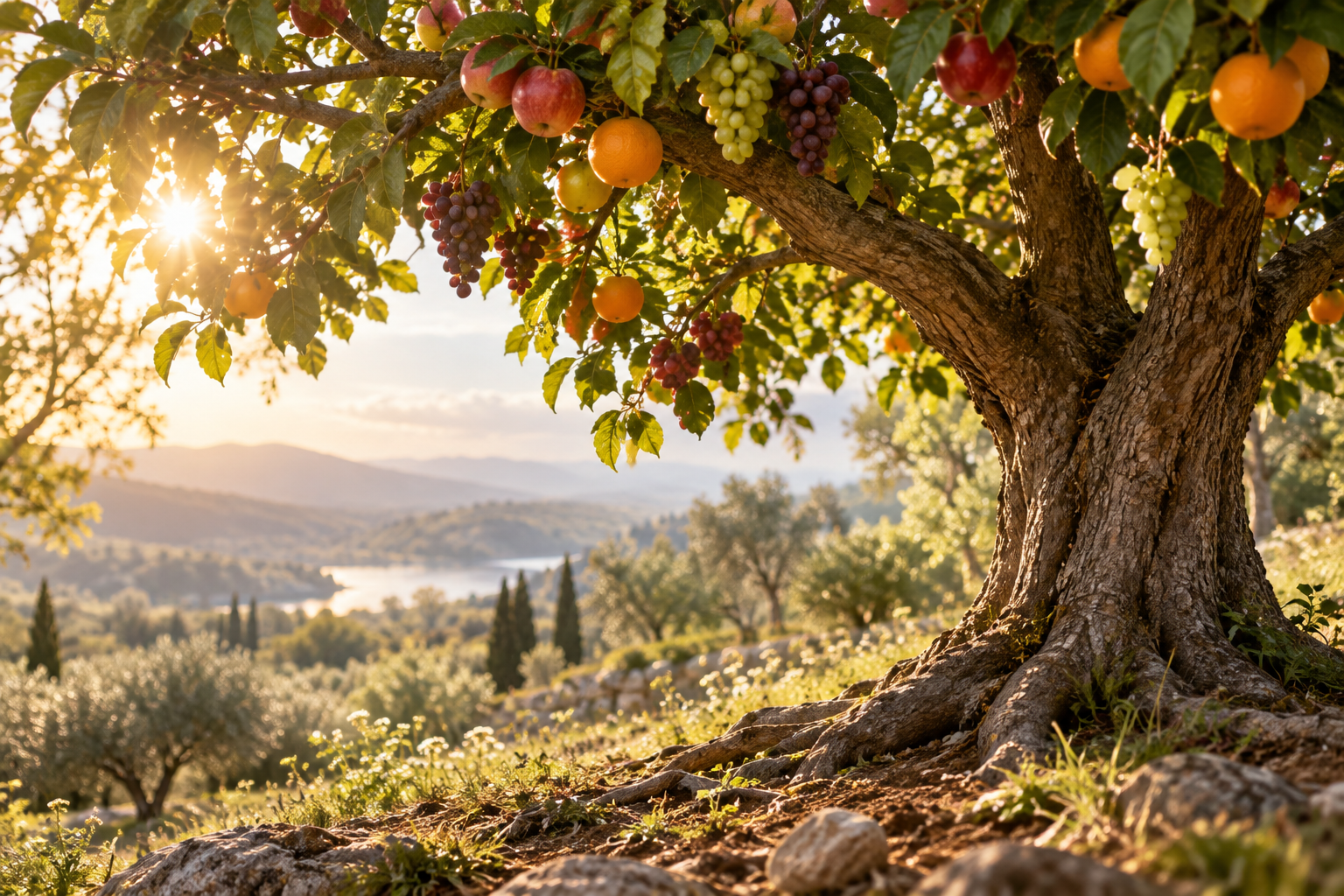
What Does It Mean to Walk by the Spirit?
Galatians 5 repeatedly uses the language of walking, living, and keeping in step with the Spirit.
Walking suggests movement.
It suggests direction.
And it suggests something ongoing.
Walking in the Spirit is therefore not one dramatic spiritual moment.
It is not feeling emotional during worship one Sunday and then ignoring God for the rest of the week.
It is learning to live under God’s direction day after day.
Walking by the Spirit can look surprisingly ordinary.
It happens when you feel anger rising and choose not to say the cruel thing you were about to say.
It happens when you are tempted and turn toward God instead of feeding the temptation.
It happens when someone disappoints you and you choose patience instead of retaliation.
It happens when anxiety tells you that everything is falling apart, but you bring your fears to God and continue trusting Him.
It happens when the Holy Spirit convicts you and you repent instead of defending yourself.
Walking by the Spirit is not spiritual perfection.
It is a growing pattern of dependence, surrender, obedience, and return to God.
Works of the Flesh and Fruit of the Spirit
One of the strongest parts of Galatians 5 is the contrast Paul gives us.
He describes destructive behaviors associated with the flesh and then sets them beside the character produced by the Spirit.
The contrast is not difficult to see.
The flesh divides.
The Spirit produces love.
The flesh encourages jealousy and envy.
The Spirit produces kindness and goodness.
The flesh produces uncontrolled anger.
The Spirit produces patience, gentleness, and self-control.
The flesh pulls people toward selfish desires.
The Spirit reshapes us so that our lives increasingly reflect the character of Christ.
This means the fruit of the Spirit is not only about how spiritual you feel.
It is revealed in how you live.
And very often, it becomes clearest in your relationships.
For a deeper understanding of Paul’s contrast, explore the works of the flesh versus the fruit of the Spirit
Why the Fruit Becomes Visible Around Other People
Sometimes we imagine spiritual growth as something that happens privately.
We pray.
We read the Bible.
We worship.
Those practices are important.
But Galatians 5 is deeply relational.
The surrounding passage speaks about people hurting one another, provoking one another, envying one another, and being consumed by conflict.
That means one of the most revealing places to look for spiritual fruit is not only your prayer room.
It is your kitchen.
Your workplace.
Your church.
Your family group chat.
Your marriage.
Your friendships.
Your conversations with difficult people.
You might feel very peaceful while sitting alone with your Bible.
The deeper test may come ten minutes later when someone interrupts you, criticizes you, misunderstands you, or asks something inconvenient from you.
That does not mean private devotion is unimportant.
It means private devotion should eventually affect public character.
The Spirit changes the way we treat people.
Parents and Sunday school teachers can continue these lessons with nine simple Fruit of the Spirit Bible lessons for kids

A Quick Look at the Ninefold Fruit
Use this table not simply as a definition list, but as a set of personal reflection questions.
| Fruit | What It May Look Like in Everyday Life | Reflection Question |
|---|---|---|
| Love | Seeking another person’s good, even when it costs something | Am I becoming less self-centered in the way I treat people? |
| Joy | Hope and gratitude rooted in God even during difficulty | Is my hope completely controlled by my circumstances? |
| Peace | Trusting God and pursuing reconciliation rather than chaos | Do I bring peace into difficult situations or make them worse? |
| Patience | Enduring delays, weaknesses, and frustrations without exploding | How do I respond when people move slower than I want? |
| Kindness | Treating people with practical compassion and consideration | Who has experienced God’s kindness through me recently? |
| Goodness | Choosing what is right and beneficial even when no one is watching | Do my private decisions match what I profess publicly? |
| Faithfulness | Reliability, loyalty, perseverance, and trustworthiness | Can people depend on me to keep my word? |
| Gentleness | Strength that does not need to dominate or wound | What happens to my tone when someone disagrees with me? |
| Self-control | Refusing to let impulses become your master | Which desire most often controls my decisions? |
If these questions reveal areas where you feel spiritually stuck, consider eight biblical hindrances to spiritual growth
You do not need to pretend that all nine areas are equally mature.
The purpose of reflection is not shame.
It is honesty.
God already knows where you struggle.
Spiritual growth begins when we are willing to bring those struggles into the light.

Bible Study Questions: Observation
These questions help you look carefully at Galatians 5:16–26 before deciding what it means for your life.
- What repeated words or ideas do you notice in the passage?
- What contrast does Paul make between the flesh and the Spirit?
- Which works of the flesh listed by Paul affect relationships between people?
- Which qualities in the fruit of the Spirit directly affect relationships?
- What does Paul tell believers to do in verses 16 and 25?
- What warning appears in verse 26?
- Why do you think Paul places instructions about relationships so close to his teaching about the fruit of the Spirit?
- Does the passage describe spiritual transformation as passive, active, or some combination of both?
Take time to answer from the text before moving forward.
Bible Study Questions: Understanding the Meaning
Now go deeper.
1. Why is it called the “fruit of the Spirit”?
Fruit tells us something about the source.
An apple appears because the branch is connected to a living tree.
In John 15:1–8, Jesus uses a similar picture when He teaches about the vine and the branches.
A branch cannot produce lasting fruit by disconnecting itself from its source of life.
In the same way, Christian character does not grow through independence from Christ.
Spiritual disciplines matter, but they are not magic formulas.
Prayer matters because it draws us toward God.
Scripture matters because God’s truth reshapes our thinking.
Christian community matters because we need encouragement, correction, forgiveness, and accountability.
Obedience matters because faith becomes visible through action.
But underneath all of these is dependence upon God.
2. Why does spiritual fruit usually grow slowly?
Think about actual fruit.
You do not plant a seed in the morning and harvest mature fruit by dinner.
Growth usually involves time.
It also involves seasons.
Sunlight.
Water.
Pruning.
Wind.
Heat.
Sometimes difficult weather.
Spiritual growth is often similar.
God can change someone dramatically, but much Christian character develops through repeated obedience over time.
Patience may deepen through waiting.
Faithfulness may grow through long seasons when no one applauds you.
Self-control may strengthen through hundreds of small decisions.
Gentleness may grow through difficult relationships that expose how quickly you become defensive.
That is why slow growth should not automatically be mistaken for no growth.
The better question is:
Am I moving in the direction of Christ?
3. Does the Holy Spirit produce the fruit, or do Christians have to work at it?
The biblical picture holds both truths together.
The fruit belongs to the Spirit.
We cannot transform ourselves independently of God.
But Scripture also repeatedly calls believers to obey, resist sin, renew their minds, forgive, serve, pray, persevere, and put godly character into practice.
We depend upon the Spirit while actively responding to Him.
Think of a farmer.
The farmer cannot manufacture life inside a seed.
But the farmer still prepares soil, removes weeds, waters, protects, waits, and works.
Dependence upon God is not laziness.
And Christian effort is not self-salvation.
We obey because God is already at work within us.
Personal Reflection: What Is Growing in Me?
Take a few quiet minutes.
Do not begin with the fruit you think you are best at.
Ask instead:
Where does my reaction under pressure reveal that I still need God’s transforming work?
Consider the last seven days.
Think of a moment when:
- someone irritated you;
- something did not go according to plan;
- you were tempted;
- you became worried;
- someone criticized you;
- you felt overlooked;
- you had to wait;
- someone needed your help at an inconvenient time.
What came out of you?
Anger?
Fear?
Pride?
Harshness?
Selfishness?
Or did you notice growing patience, kindness, gentleness, trust, or self-control?
Pressure often reveals what is already growing beneath the surface.
Try This Simple Fruit Reflection Exercise
Create three columns on a piece of paper:
Situation | My Natural Reaction | A Spirit-Shaped Response
For example:
Situation: Someone speaks harshly to me.
Natural reaction: Speak harshly back.
Spirit-shaped response: Pause, listen, answer gently, and refuse unnecessary escalation.
Another:
Situation: Something I prayed for is delayed.
Natural reaction: Complain, panic, assume God has forgotten me.
Spirit-shaped response: Pray honestly, continue obeying, and practice patience and trust.
Do not use the exercise to condemn yourself.
Use it to become more aware.
Awareness can turn an automatic reaction into an opportunity for surrender.
Seven Practical Ways to Respond to This Study
1. Stay close to Christ
Read John 15:1–8 and consider the relationship between abiding and fruitfulness.
Before focusing on becoming more patient or more self-controlled, ask whether you are remaining close to the One who gives spiritual life.
2. Ask God to expose what you cannot see
We are often better at noticing another person’s lack of fruit than our own.
Pray for humility.
Ask God to reveal blind spots.
3. Take one area seriously
You do not need to fix nine things tomorrow.
Perhaps God is exposing impatience.
Begin there.
Perhaps it is uncontrolled anger.
Begin there.
Perhaps it is envy.
Bring that honestly before God.
4. Replace vague intentions with specific obedience
Instead of saying:
“I want to become kinder.”
Ask:
“Who needs kindness from me today?”
Instead of:
“I need more self-control.”
Ask:
“What specific habit do I need to stop feeding?”
Specific obedience turns good intentions into action.
5. Pay attention to relationships
Ask someone mature and trustworthy:
“Where have you seen growth in me? Where do you think I still react immaturely?”
That question requires humility, but it may reveal something you cannot see by yourself.
6. Return quickly when you fail
You will not respond perfectly every time.
When you sin, do not spend three days hiding from God.
Confess.
Repent.
Receive His mercy.
Make things right when another person has been hurt.
Then keep walking.
7. Measure progress over seasons, not moments
One bad afternoon does not erase months of spiritual growth.
And one excellent Sunday does not prove spiritual maturity.
Look at patterns.
Are you quicker to repent than you were a year ago?
Do you forgive more readily?
Are your words becoming gentler?
Do you recover from disappointment without becoming as bitter as before?
Are you increasingly able to say no to temptations that once controlled you?
Those kinds of changes matter.

Group Discussion Questions
If you are using this article in a small group or Bible study, discuss these questions together:
- Which part of Galatians 5:16–26 stood out most to you, and why?
- Why is it dangerous to turn the fruit of the Spirit into a Christian personality checklist?
- Which qualities of spiritual fruit are easiest to display when life is comfortable?
- Which become hardest when you are under pressure?
- Why do relationships reveal so much about spiritual maturity?
- How can Christians pursue growth without falling into legalism or self-reliance?
- Which spiritual habits have helped you remain close to Christ?
- How should Christians respond when they recognize very little fruit in one area of their lives?
- How can a church encourage spiritual fruit without creating an atmosphere of judgment or comparison?
- What is one concrete response you want to make this week?
A Seven-Day Fruit of the Spirit Reflection
You can continue this study throughout the coming week.
Day 1 — Read
Read Galatians 5:16–26 slowly.
Ask: What is the main contrast in this passage?
Day 2 — Examine
Choose one fruit that seems weakest in your life right now.
Ask God to reveal where that weakness appears most clearly.
Day 3 — Observe
Watch your reactions today.
Notice what happens when you are interrupted, disappointed, corrected, hurried, or inconvenienced.
Day 4 — Practice
Choose one deliberate act that reflects the fruit you are studying.
If it is kindness, encourage someone.
If it is patience, listen without rushing.
If it is self-control, say no to one unnecessary impulse.
Day 5 — Ask
Talk to a trusted Christian friend.
Ask where that person has seen God changing you.
Day 6 — Serve
Do something helpful for someone without expecting recognition.
Day 7 — Reflect and Thank God
Look back over the week.
Where did you struggle?
Where did you notice even a small change?
Thank God for what He is doing and ask Him to continue His work.
Frequently Asked Questions
What is the fruit of the Spirit in simple terms?
The fruit of the Spirit describes Christlike character that the Holy Spirit develops in believers: love, joy, peace, patience, kindness, goodness, faithfulness, gentleness, and self-control.
Is it “fruit” or “fruits” of the Spirit?
Galatians 5 uses the singular expression “fruit of the Spirit.” Christians commonly refer to the nine qualities as the “fruits,” but Paul presents them together as the Spirit’s fruit.
Can I produce the fruit of the Spirit by trying harder?
Willpower alone cannot produce spiritual transformation.
At the same time, Christians are not called to passivity. We pray, obey, resist sin, renew our minds with Scripture, serve others, and practice godly responses while depending upon the Holy Spirit.
Why do I seem stronger in some fruit than others?
Spiritual growth is often uneven from our perspective.
Different weaknesses, experiences, relationships, temptations, and seasons expose different areas of character.
The goal is not comparison with someone else but continued transformation toward Christlikeness.
What if I do not see much spiritual growth in myself?
Begin with honesty rather than despair.
Ask God to show you whether there are areas of persistent sin, neglected prayer or Scripture, unhealthy influences, bitterness, isolation, or resistance to correction.
Then take one faithful next step.
You may also benefit from talking with a trusted pastor or spiritually mature Christian who knows you well.
Is the fruit of the Spirit the same as spiritual gifts?
No.
Spiritual gifts concern ways God equips believers for service.
The fruit of the Spirit concerns the character being formed in them.
A Christian may be highly gifted and still need significant growth in character.
A Short Prayer for Spiritual Fruit
Father, thank You for not leaving me unchanged.
Thank You for giving Your Holy Spirit to work within me.
Show me where my attitudes, words, habits, and reactions still reflect selfishness rather than the character of Christ.
Teach me to remain close to Jesus.
Help me respond when You convict me.
Grow love where I have been selfish, joy where I have lost hope, peace where fear controls me, patience where I become easily frustrated, kindness where I have become hard, goodness where compromise tempts me, faithfulness where I become inconsistent, gentleness where my words become harsh, and self-control where my desires try to rule me.
Help me not merely know the fruit of the Spirit, but increasingly live in a way that shows Your transforming work.
In Jesus’ name, Amen.
Final Reflection
The most important question after studying Galatians 5 is not:
Can I name all nine qualities?
It is:
Is the Holy Spirit changing the kind of person I am becoming?
Fruit takes time.
Some seasons may feel slow.
Some areas will require repentance.
Some growth may be easier for other people to see than for you to recognize in yourself.
But do not underestimate what God can do through years of ordinary faithfulness.
Keep returning to Christ.
Keep opening God’s Word.
Keep praying.
Keep obeying.
Keep repenting when you fail.
Keep loving people when relationships become difficult.
And keep allowing the Holy Spirit to form the character of Christ in you.
Little by little, what God is doing inside you will begin to become visible in the way you live.
Continue Growing in the Fruit of the Spirit
Continue your study with:
The 9 Fruits of the Spirit Explained — See how all nine qualities fit together in Galatians 5:22–23.
Love as a Fruit of the Spirit — Explore how Spirit-produced love changes the way we treat others.
Joy as a Fruit of the Spirit — Learn why biblical joy can remain even during sorrow and difficult seasons.
Peace as a Fruit of the Spirit — Discover how peace grows through trust in God.
Patience as a Fruit of the Spirit — Study how patience develops through waiting, relationships, and trials.
Kindness as a Fruit of the Spirit — See what Spirit-shaped kindness looks like in ordinary life.
Goodness as a Fruit of the Spirit — Understand the connection between goodness, integrity, and obedience.
Faithfulness as a Fruit of the Spirit — Learn why steady faithfulness matters even when no one is watching.
Gentleness as a Fruit of the Spirit — Discover why biblical gentleness is strength under control.
Self-Control as a Fruit of the Spirit — Learn how the Holy Spirit reshapes desires and strengthens godly restraint.
7 Ways to Walk in the Fruit of the Spirit Daily — Put the teaching into everyday practice.
How to Walk in the Holy Spirit Daily — Go deeper into daily dependence upon and obedience to the Holy Spirit.