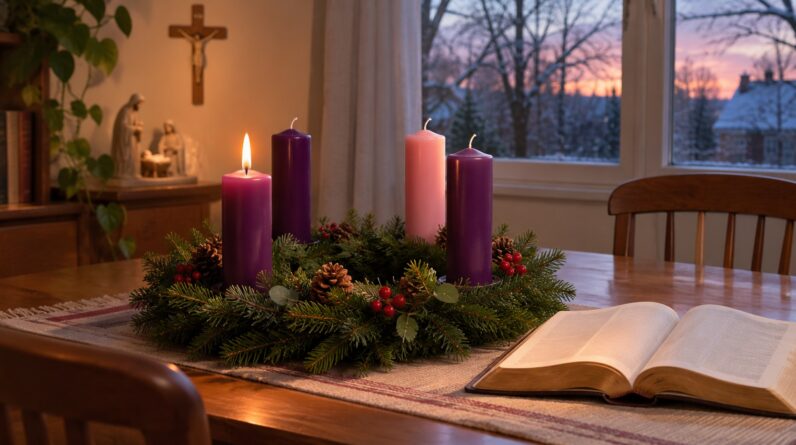


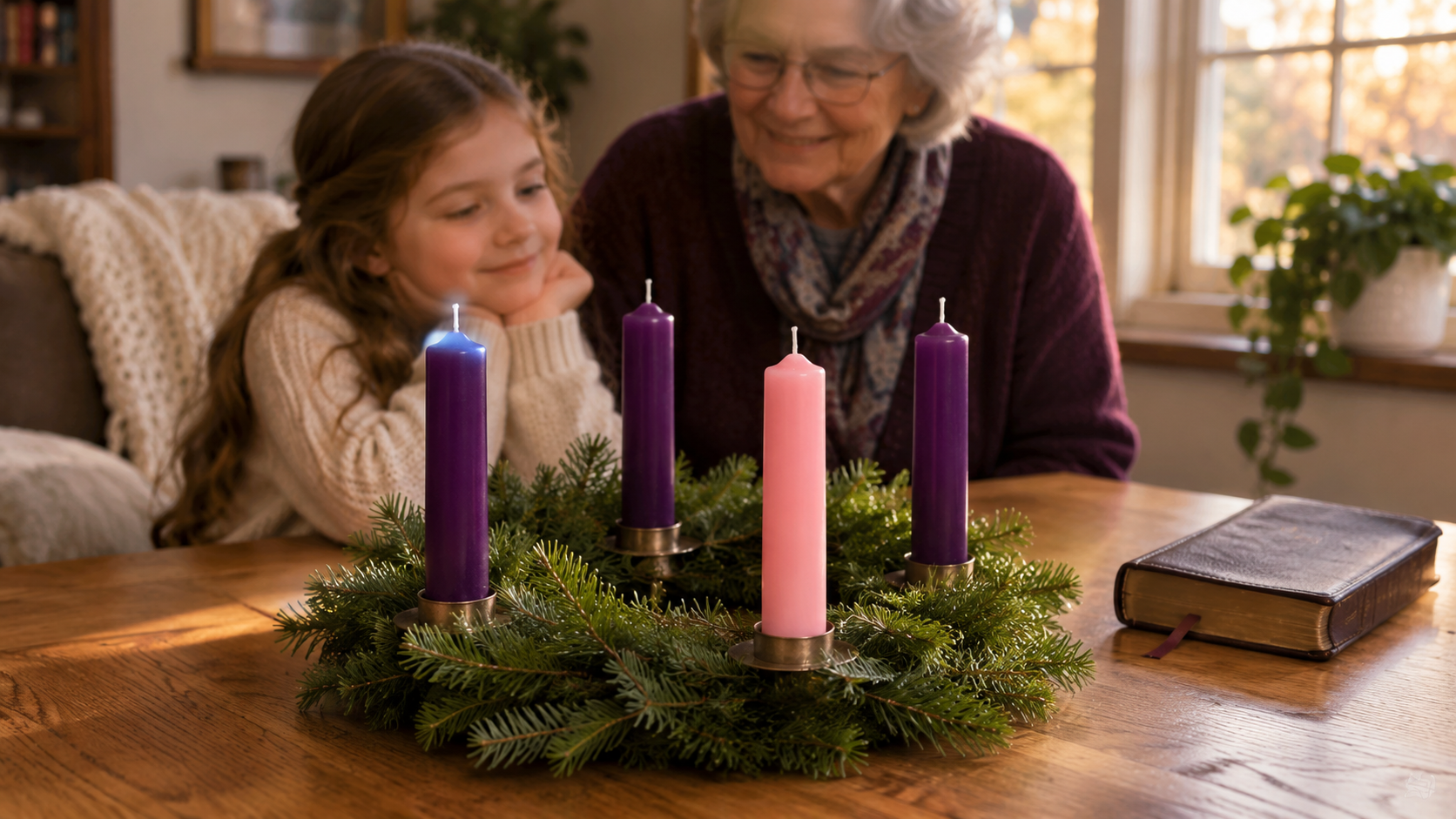
Advent candles are a Christian tradition used to mark the four Sundays before Christmas. Many households and churches light one additional candle each week while reading Scripture and praying. The colors and weekly themes vary between traditions; the candles help people remember Christ, but using them is not a biblical requirement.
Imagine a child looking at an Advent wreath and asking why only one candle is being lit when four are waiting. It is a small question, but it opens a larger conversation: How do we keep trusting God while we wait? A simple family practice can make room for that conversation without turning December into another project to finish.
This guide explains what the candles mean, how their colors and order differ, and how to use them with a heart centered on Jesus. If your home is busy, your budget is tight, or this Christmas feels difficult, you can keep the practice simple.
What Do the Four Advent Candles Mean?
The four candles usually mark the four Sundays of Advent. They are often connected with hope, peace, joy, and love, although the order and names are not the same everywhere. Some churches use a different set of themes drawn from their readings for the season. The candle itself does not bring a spiritual blessing; the practice directs attention to the Lord.
The evergreen circle can serve as a reminder of enduring life and God’s faithfulness. These meanings belong to a Christian devotional custom. The Bible does not prescribe an Advent wreath, its colors, or a weekly lighting ceremony. A believer who does not use a wreath is not missing a condition for being close to God.
The United Methodist explanation of Advent candles is helpful here: congregations have used different themes and colors. Follow the pattern your church explains, or choose a simple arrangement that helps your household read, pray, and remember Jesus together.
A Story of Waiting: Simeon and Anna
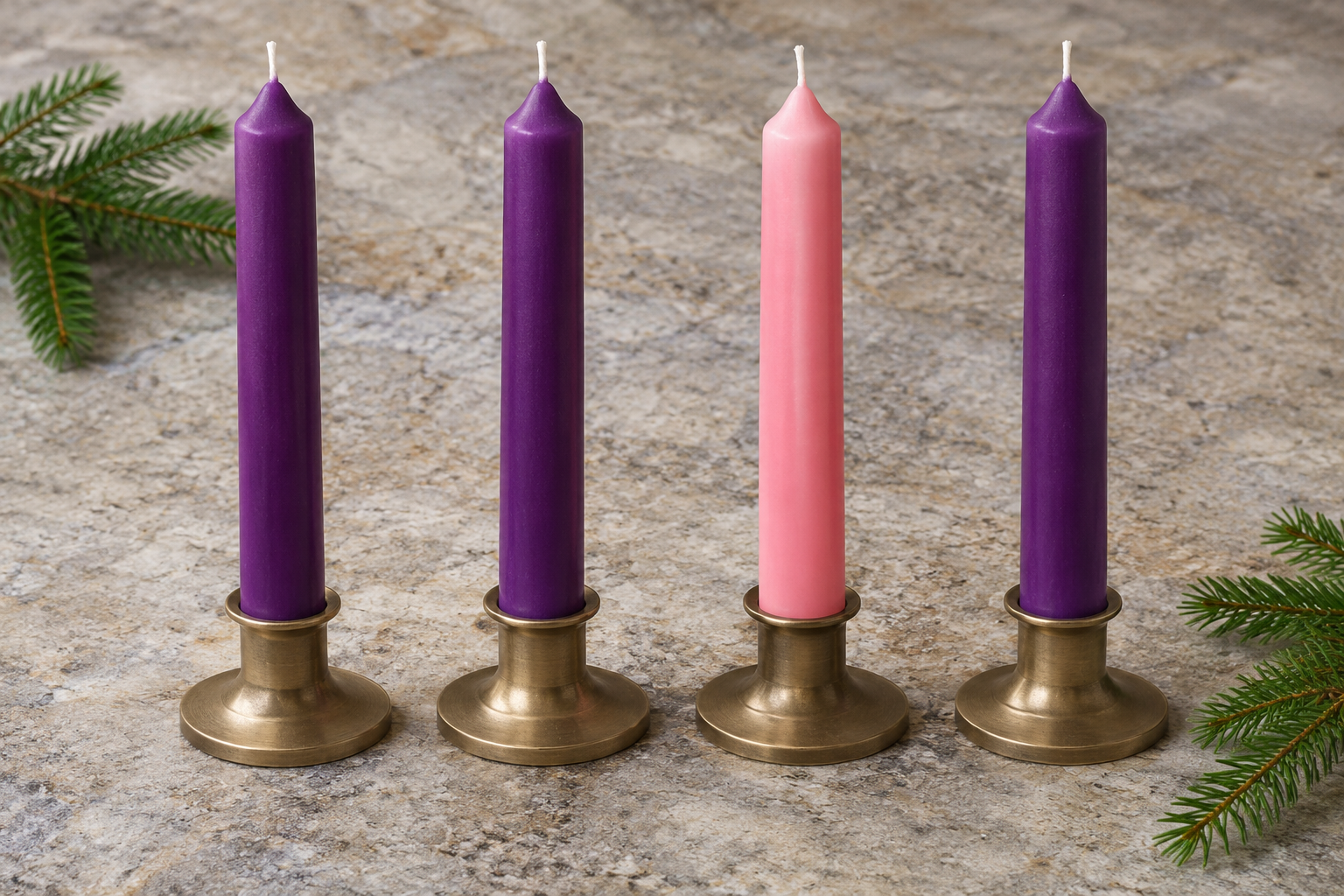
Long before anyone arranged an Advent wreath on a table, two people in Jerusalem were waiting for God’s promised redemption. Their story is recorded in Luke 2:22–38.
Simeon was a righteous man who looked forward to God’s comfort for Israel. The Holy Spirit had assured him that he would see the Messiah before his death. When Mary and Joseph brought the infant Jesus to the temple, Simeon received Him and praised God. His confidence had found its answer in a person.
Anna, a prophetess and widow, was also there. Luke describes her life of worship, fasting, and prayer. When she encountered Jesus, she gave thanks and spoke about Him to others who were looking forward to Jerusalem’s redemption. Her long years had not made her life useless or her worship invisible.
Luke does not tell us every thought either person had during the waiting. We do not need to invent their private conversations to see the point: God kept His promise, and their response was worship. Simeon also spoke about the suffering connected with Jesus’ mission. The hope of Christmas reaches deeper than a pleasant season.
Advent candles can remind us of faithful waiting, but Simeon and Anna’s story is about the faithfulness of God. If you are waiting for a difficult conversation, carrying an unanswered prayer, or wondering whether your quiet service matters, bring that concern to Him. This passage does not promise your preferred outcome by Christmas. It gives you a reason to trust the Savior whom God has already sent.
Our reflection on Simeon’s encounter in the temple explores that response of trust more fully.
Advent Candle Colors and the Usual Lighting Order
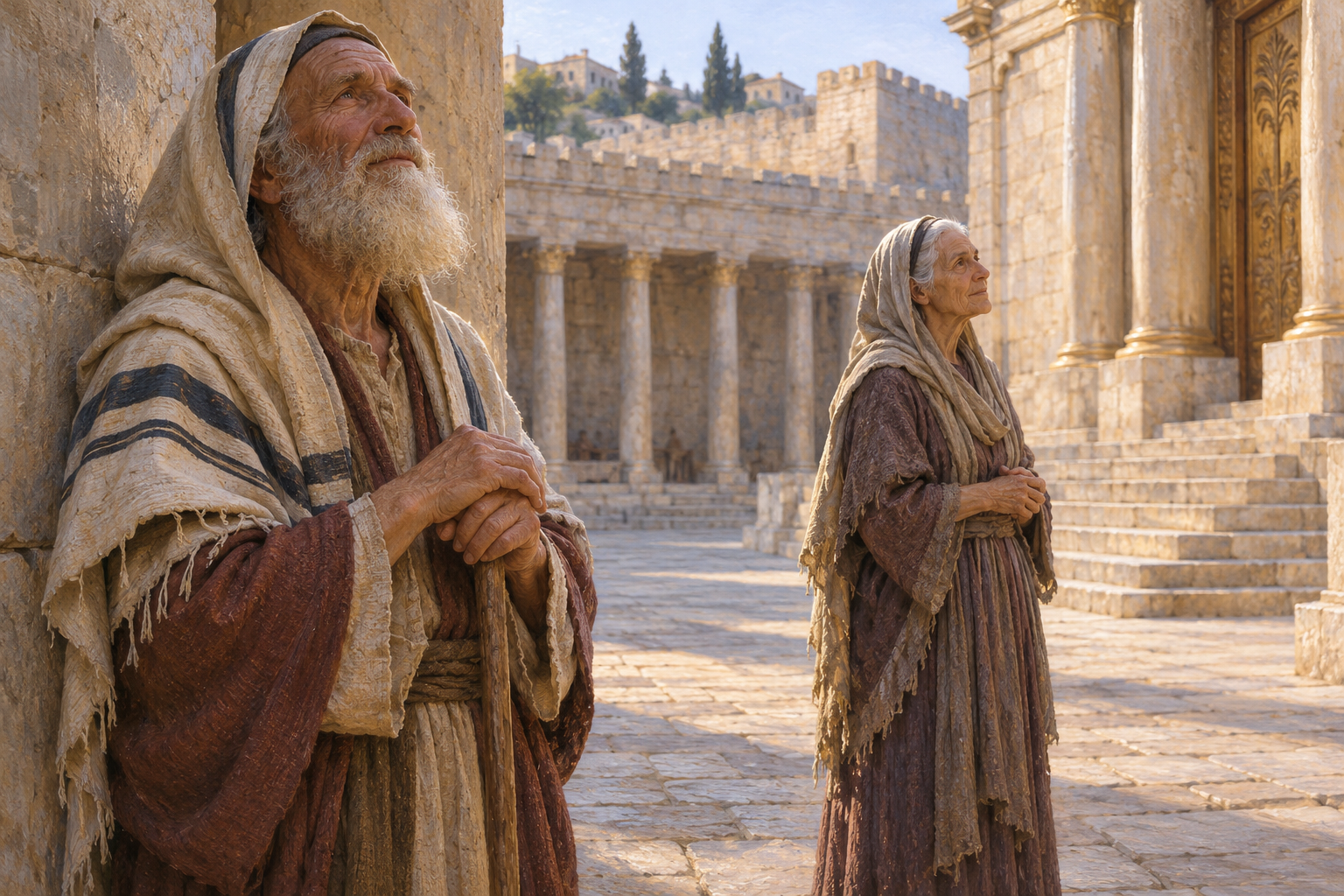
One familiar arrangement uses three purple candles and one rose or pink candle. In that pattern, the rose candle is lit on the third Sunday, associated with rejoicing. The U.S. Conference of Catholic Bishops’ Advent guide describes this practice within Catholic observance.
Other Christian communities use blue candles, four purple candles, or other arrangements. Some add a white candle in the center and light it at Christmas to focus on Christ. A fifth candle is optional, and its use varies. The Wisconsin Evangelical Lutheran Synod’s explanation of Advent candle traditions also illustrates why names and local customs need explanation rather than a claim that one sequence is universal.
If your church uses hope, peace, joy, and love in that order, light the first candle for hope on the first Sunday. On the next Sunday, relight it and add the peace candle. Add the joy candle on the third Sunday and the love candle on the fourth. In a three-purple-and-one-rose arrangement, use the rose candle for that third Sunday. This is one usable pattern, not a command in Scripture.
You do not need to buy a matching set to take part in a family conversation about Jesus. Use what is appropriate for your home, or use flameless candles. Keep real flames away from dry greenery and other flammable material, and do not leave them unattended.
Four Themes That Lead Beyond the Wreath
Hope: Remember What God Has Promised
Hope begins with God’s character, rather than our ability to arrange a good December. Read Luke 2:25–32 and notice the Savior Simeon receives. Christian hope rests in Jesus’ life, death, resurrection, and promised return. It can steady us even when a particular situation remains unresolved.
After reading, name one concern you are carrying and one truth about God that you need to remember. You can write them down without pretending the concern has disappeared.
Peace: Receive Christ’s Peace and Practice It
Read Romans 5:1–2. Peace with God comes through Jesus, not through a successful holiday routine. That foundation can shape the way we speak, apologize, and respond when our plans are interrupted.
Our study of Jesus as the Prince of Peace can help you think about both reconciliation with God and peacemaking with others. Choose one gentle response you can practice today. You do not have to solve every family disagreement in one evening.
Joy: Give Thanks Without Hiding Sorrow
Read Luke 2:8–20. The shepherds had news worth sharing because the Savior had come. Christian joy does not require a person to deny grief or feel cheerful on demand.
If someone in your home is sad this Christmas, allow them to speak honestly. You might thank God for Christ together and also name the person or circumstance they miss. A quiet moment of gratitude can be sincere even when it includes tears.
Love: Let Worship Become Care for Someone
Read 1 John 4:9–11. God’s love is shown in sending His Son. Our response includes loving the people He places near us.
Choose a practical act: check on a neighbor, listen without interrupting, or bring a meal to someone who needs help. Our guide to family worship at home can help connect shared Scripture reading with daily family life.

A Simple Way to Use Advent Candles at Home
Set aside a few minutes when the household can pause. Light the appropriate candles, or switch on a flameless light. Read a short passage, ask one honest question, and pray in ordinary words. Children can name something they are grateful for or someone who needs care. Adults do not need a polished speech.
For example, after reading about Simeon and Anna, ask, What helps us trust God while we wait? Let the answers be brief. Bring them to the Lord without correcting every imperfect sentence. If you need help beginning, our step-by-step prayer guide gives a simple starting point.
If you miss a Sunday, begin again when you can. Avoid making the next gathering a long catch-up session that everyone dreads. You can also use a simple daily prayer routine during the week, with or without candles.
Someone living alone can use the same short pattern. A household of one can read Scripture, pray, and remember Christ. The value of the time is not measured by the number of people around the table.

Common Questions About Advent Candles
Are Advent Candles Mentioned in the Bible?
The four-candle Advent wreath is not a practice commanded in the Bible. It is a later Christian tradition that can support biblical reading and prayer. Keep the distinction clear so the custom serves your faith rather than becoming a test of it.
Which Candle Should Be Lit First?
Follow your church’s stated pattern. If you are using hope, peace, joy, and love, begin with hope. The names assigned to the candles differ among churches, so a different order does not automatically mean someone is doing Advent incorrectly.
Do We Need a White Christ Candle?
No. Some households and churches add one at Christmas, but it is optional. Jesus remains the center of Christian worship whether a wreath has four candles, five, or no candles at all.
A Prayer for a Waiting Heart
Father, thank You for keeping Your promises and sending Jesus. As we remember His coming, help us pay attention to Your Word and to the people around us. Give us patience in what remains unresolved, courage to obey You today, and compassion for those whose Christmas is difficult. Let our hope rest in Christ. In Jesus’ name, amen.
Let the Light Lead You to Jesus
The wreath will eventually be put away. The Lord whom Simeon and Anna worshipped will still be worthy of your trust. Let your Advent practice help you remember Him, receive His grace, and love someone in His name. The lasting gift is Jesus Himself.
Continue Growing
Read about Anna’s prayer of worship.
Explore the meaning of Jesus’ birth.