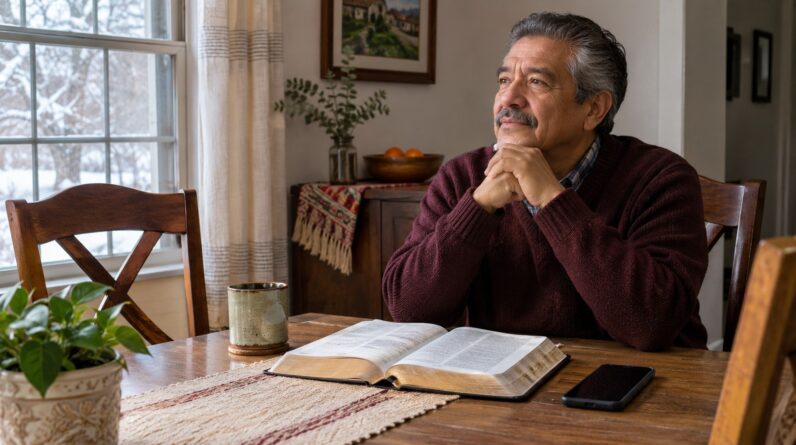


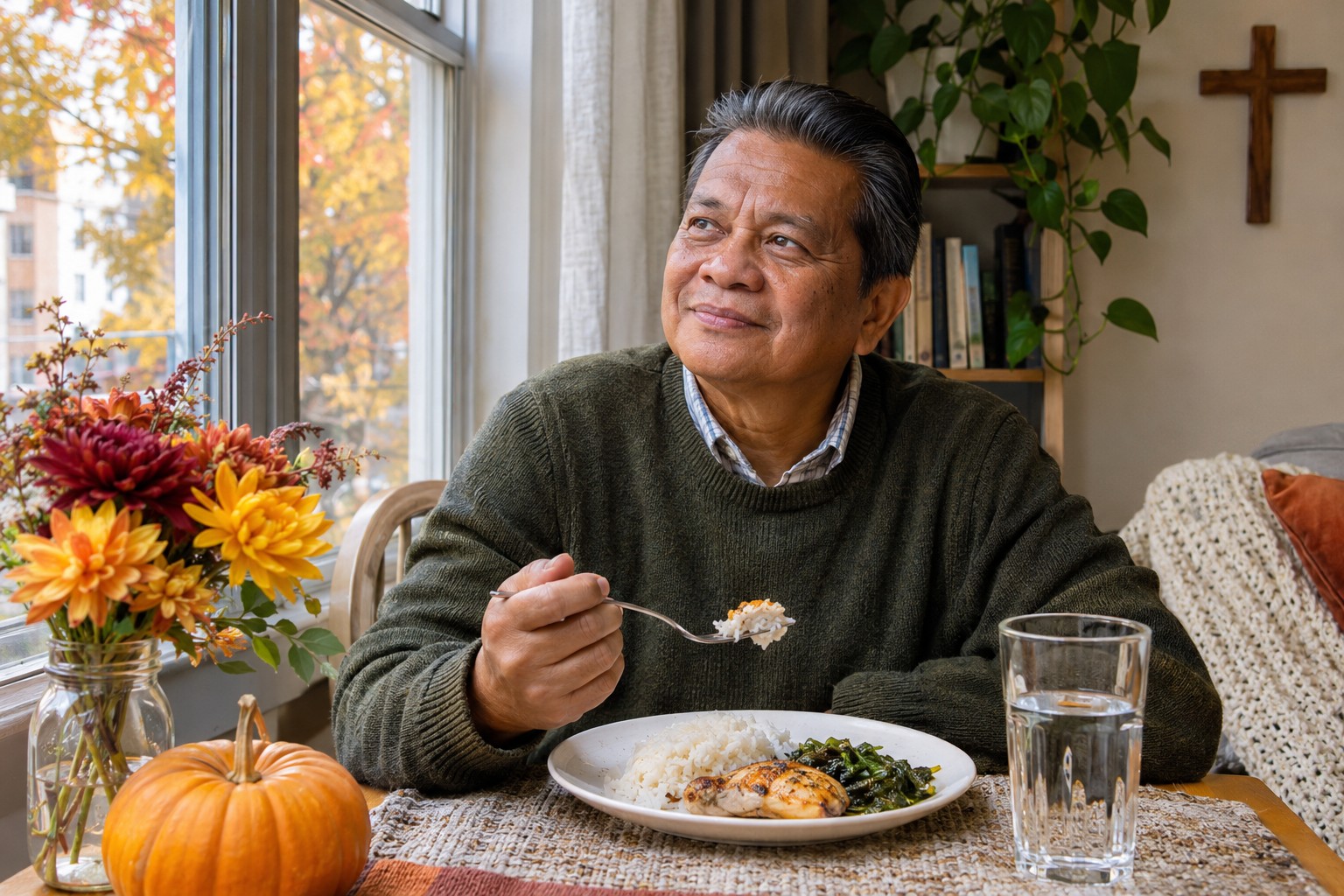
Perhaps the travel plans fell through. You may be working, living far from family, caring for someone, or facing a holiday that simply does not include an invitation. Whatever brought you here, spending Thanksgiving alone can feel different from an ordinary quiet Thursday.
You do not have to create a perfect solo celebration or pretend you would not prefer company. You can give the day a gentle shape, make room for honest prayer, and choose a few small ways to care for yourself and connect with others.
This Christian guide includes a practical plan and original prayers you can adapt. Being alone for a holiday is a circumstance, not a measure of your worth or your place in God’s care.
Start by naming what this day feels like
You might feel lonely, relieved, disappointed, peaceful, or a mixture of those things. A quiet holiday may be welcome after a demanding season. It may also be something you would never have chosen. You do not have to describe it the way other people expect.
Begin with a plain sentence to God: “I wish I had company today,” or “I need rest, but I am surprised by how sad I feel.” In Psalm 62:5–8, confidence in God is joined with an invitation to bring one’s heart before him. Honest prayer does not have to wait until your feelings are neatly arranged.
If you struggle to begin, our guide to how to pray when you do not know where to start offers a simple starting point.
A gentle plan for spending Thanksgiving alone
1. Choose one thing to look forward to
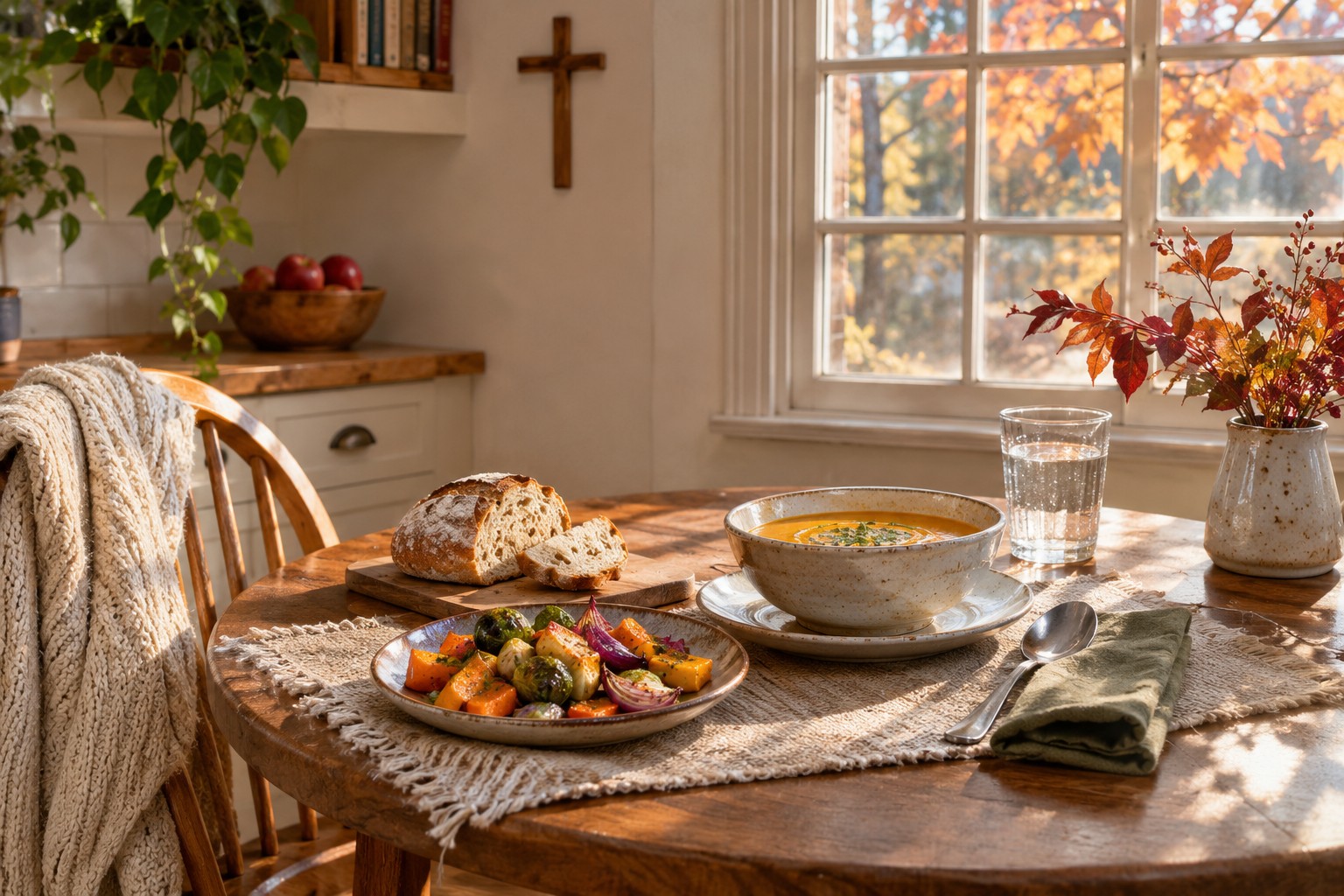
Pick something that fits your money, energy, and circumstances. It might be a favorite breakfast, a familiar film, time with a book, or a meal you do not usually cook. You do not need to reproduce a large family dinner for one person.
If preparing food feels like too much, choose something simple and available. Soup and bread can be a real meal. A small treat can be enjoyed without turning it into proof that you are having a wonderful day. The aim is to care for the person living through this holiday—you.
2. Give the day a few anchors
A loose plan can make an empty-looking day feel more manageable. Decide roughly when you will eat, rest, spend a little time in prayer, and do one activity you enjoy. Leave space between those things. This is a guide for the day, not another set of obligations.
If you are on a work shift or caring for someone, your Thanksgiving moment may be ten quiet minutes rather than a whole afternoon. Our simple daily prayer routine can help you make space for God within an ordinary schedule.
3. Make one clear offer of connection
Instead of waiting all day for someone to guess what you need, consider sending a specific message: “Would you have ten minutes for a call this afternoon?” A voice message, brief video call, or conversation with a neighbor may also be possible.
People may be busy or in a different time zone. If someone cannot respond, that does not settle the question of how much you matter to them. Make a plan that allows for a call without leaving the whole day suspended around your phone.

4. Receive an invitation if it is a good fit
You are allowed to ask a church friend whether there is an open gathering. You are also allowed to decline an invitation that would be exhausting or uncomfortable. If you go, you can explain that you will stay for a short visit.
Check event details before traveling, especially on a holiday. If there is no suitable gathering nearby, a short conversation on another day can still be meaningful. Thanksgiving does not need to carry every hope for connection in your life.
5. Spend a little time away from the comparison screen
Photographs of full tables can make a quiet home feel smaller. Consider checking messages at chosen times, then setting the phone aside for a while. You can be glad for other people’s gatherings and still recognize that scrolling through them all afternoon is unhelpful today.
Choose something in your own surroundings to notice: the taste of your meal, a familiar song, light through the window, or a message from someone who remembered you. Gratitude can begin with what is actually present rather than with an effort to compete with someone else’s holiday.
6. Move through the day in a way that suits you
If you are able and conditions are suitable, a brief walk or time outside can give the day a change of scene. If you need to stay indoors, try moving to a different room, opening the curtains, or spending some time on a small task you enjoy.
There is no required Thanksgiving activity. You may prefer a quiet day at home. You may want the company of a public place that is open. Choose with attention to your own needs and the practical conditions around you.

7. Offer kindness without making yourself disappear
You could send an encouraging message, arrange to help with a community meal, or check on someone else who might be alone. If volunteering appeals to you, contact the organizers ahead of time rather than assuming you can arrive and help.
Serving can be meaningful, but you do not have to earn your own right to care by becoming useful to everyone else. You can both offer kindness and acknowledge that you would appreciate companionship. Our reflection on kindness as a fruit of the Spirit considers the value of modest, attentive acts.
What does the Bible offer when you feel alone?
Hebrews 13:1–6 brings together love, hospitality, care for others, contentment, and confidence in God’s presence. The promise of his faithfulness is not a promise that every holiday will include the company we want.
God’s presence also does not make human friendship unnecessary. The same passage calls believers to care for one another. You can trust God and ask another person for a conversation. Those responses need not compete.
In 1 Thessalonians 5:11–18, the call to thanksgiving appears alongside encouragement, patient care, and prayer. You do not have to thank God for loneliness as though it were pleasant. You can thank him for a particular gift while also asking for help with what hurts.
For encouragement beyond the holiday, read how to keep faith during difficult seasons. A difficult day can be brought to God without turning it into a verdict on the strength of your faith.
A prayer for spending Thanksgiving alone
Father, You know the circumstances that brought me to this day. You know the people I miss, the company I hoped for, and the feelings I find hard to explain. Thank You for Your mercy through Jesus and for the gifts that are still part of my life. Help me notice today’s kindness without denying today’s loneliness. Give me courage to reach out where I can, freedom to rest where I need to, and patience when the day does not look as I hoped. Lead me toward people with whom I can share life, and help me receive their care. Amen.
Read it slowly, or use just one sentence that expresses what you want to bring before God. For other words of thanks around a meal, our collection of Thanksgiving prayers includes short prayers you can adapt for one person.
A short prayer before eating alone
Lord, thank You for this food and for the people whose work helped bring it to my table. Help me receive it with gratitude. Remember those who need food and company today, and show me an appropriate way to share Your kindness. Amen.
A prayer when you miss someone far away
Father, please care for the people I wish could be here. Help us stay connected across distance and different schedules. Give me patience with the limits of today, and help me express love in the ways that are possible. Amen.
A prayer at the end of a quiet Thanksgiving
Thank You, Lord, for carrying me through this day. I bring You the moments that were peaceful and the ones that hurt. Help me rest tonight and take the next small step toward friendship, hope, and faithful living tomorrow. Amen.

If the loneliness continues after the holiday
Think beyond one celebration. A regular church group, an existing friendship you can renew, or a manageable community activity may offer repeated opportunities to know people. Begin with one realistic step rather than expecting instant belonging.
If persistent loneliness is weighing heavily on daily life, speak with someone you trust and consider appropriate professional support. A pastor can help with spiritual questions and community connection; a qualified counselor can help you explore ongoing distress. Asking for help does not mean your prayers have failed.
Our reflection on joy as a fruit of the Spirit explores a life rooted in God without requiring a cheerful feeling in every circumstance.
Continue Growing
Choose a meal, one moment of prayer, and one possible point of connection for this Thanksgiving. Let those be enough to begin. May the day draw your attention to the faithful care of the Lord, who receives your gratitude and your honest need.
For further encouragement during the holiday and beyond, explore these related articles:
The God Who Sees in the Shadows (Genesis 16:13) — Finding Comfort in His Presence — Reflect on God’s care when you feel unnoticed or overlooked.
The Power of Belonging to a Church Family — Explore how Christian community can offer friendship, shared prayer, and practical support beyond a single celebration.
When Your Heart Feels Heavy: Finding Peace in God’s Promises (Psalm 34:18) — Find encouragement to bring loneliness and sadness honestly before God while receiving care from others.