


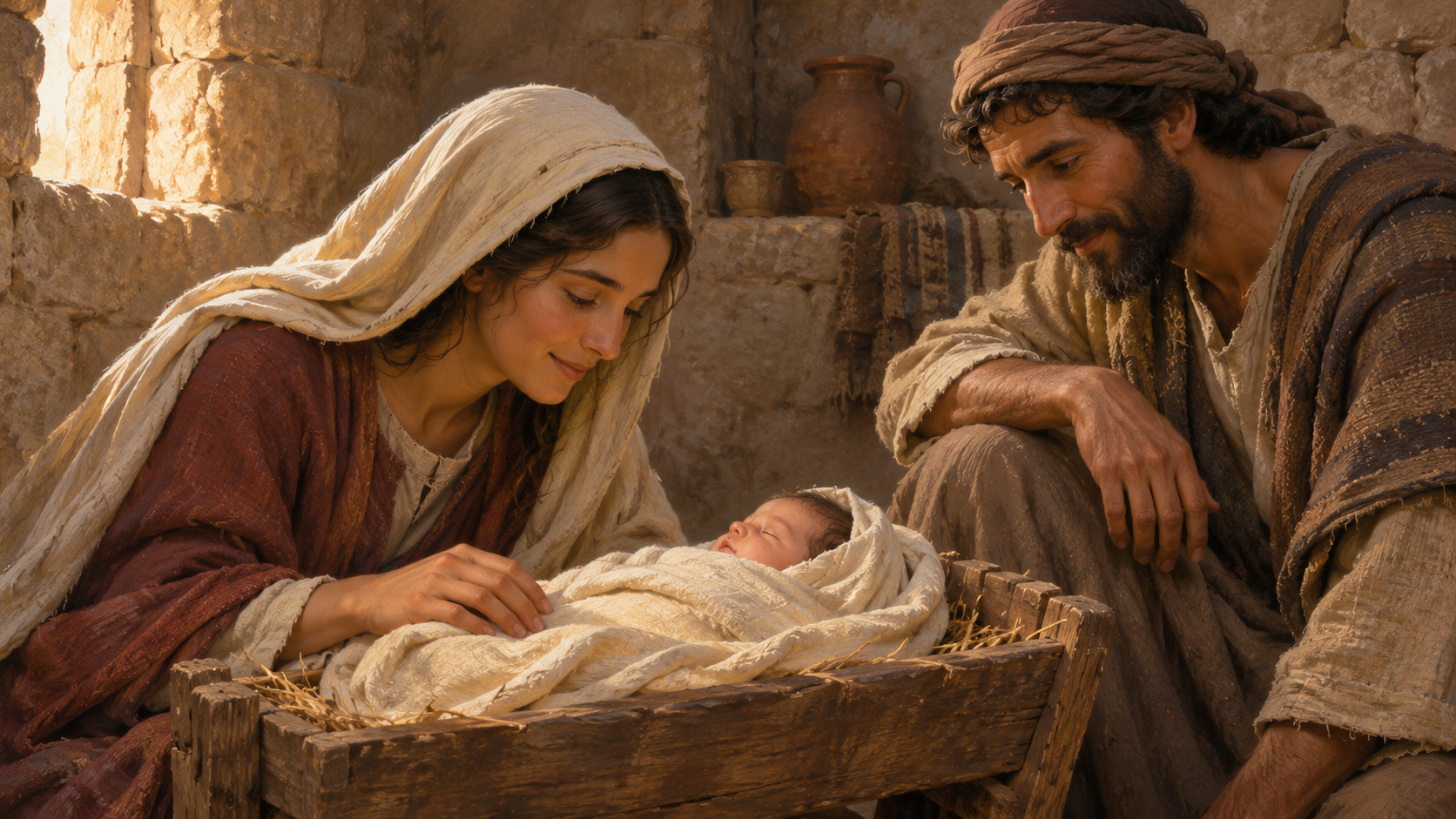
A manger is a container used to hold food for animals. In the Christmas account, Mary wrapped her newborn Son in cloths and laid Him in one because there was no available space for them in the guest room. Luke mentions the manger three times: when Jesus is born, when the shepherds receive a sign, and when they find Him. This ordinary object becomes a memorable detail in the announcement of the Savior.
Understanding the manger meaning helps us read the Christmas story carefully. It shows the humble circumstances of Jesus’ arrival and identifies the child the shepherds were told to seek. Luke does not describe every feature of the building, the material of the trough, or the people nearby. We can appreciate the account without filling those gaps with details presented as facts.
A Mother’s Care and a Shepherd’s Sign
Read Luke 2:1–20. Joseph and Mary had gone to Bethlehem, and while they were there, the time came for her child to be born. Luke describes Mary’s practical care: she wrapped her Son and placed Him in a manger. His account is brief, yet the setting stays with us.
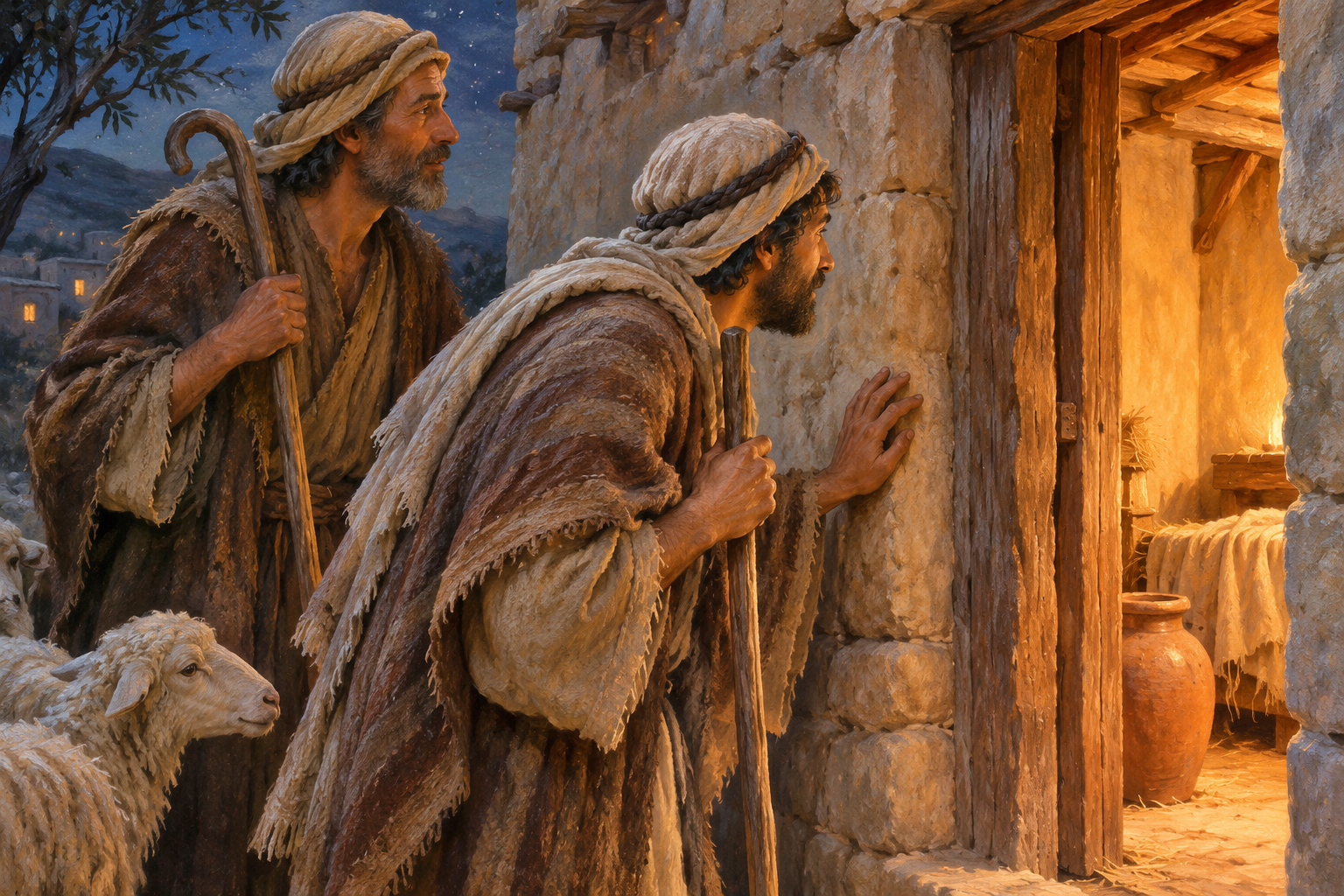
Nearby, shepherds were watching their flock at night. An angel announced the birth of the Savior, Messiah, and Lord. They were given a sign: a baby wrapped in cloths and lying in a manger. After the heavenly praise, they went to Bethlehem and found Mary, Joseph, and the child, just as they had been told.
They shared what they had heard and returned praising God. Mary treasured these events and reflected on them. The repeated detail connects the announcement with their encounter. The child in those humble circumstances was the One the message concerned.
It is easy to hurry through that part of the story because we know it so well. Pause over the contrast between the child’s identity and His surroundings. The Lord had come into human life in real vulnerability. Our explanation of Jesus’ birth and why it matters places this moment within His larger saving mission.
What Was a Manger Used For?
The BibleGateway encyclopedia entry on the manger explains the word as an animal feeding trough or container for fodder. Its ordinary function helps us understand why Luke’s detail is striking. It was not a specially prepared royal cradle.
The word does not tell us that Jesus was fed from the trough or that it had a secret spiritual power. Mary used it as a place to lay her child. When explaining the account to children, begin with that straightforward meaning. A familiar wooden Nativity ornament may illustrate a manger, but its appearance does not establish the exact object Luke describes.
We can recognize the humble setting without claiming to know precisely how comfortable or uncomfortable it was. Luke directs our attention toward the child and the message about Him. The object helps us picture the circumstances; the child is the center of the good news.
Why Does Luke Say Jesus Was Laid There?
Luke 2:6–7 gives the immediate explanation: there was no available room for them in the guest accommodation. English translations have used terms such as inn, lodging place, or guest room. Those differences deserve care when imagining the scene.
The account does not introduce an innkeeper who angrily refuses a desperate couple. It does not describe Joseph knocking on a series of doors or state that Mary gave birth immediately upon arriving in Bethlehem. Luke says the birth happened while they were there. Such additions may appear in a play, but a retelling should distinguish them from the biblical text.
Likewise, we should be cautious about turning the shortage of space into proof that every person in Bethlehem rejected Jesus. Luke supplies a circumstance, not a detailed account of everyone’s motives. Respecting that limit allows us to hear what he actually records.
Was the Manger in a Stable, a Cave, or a House?
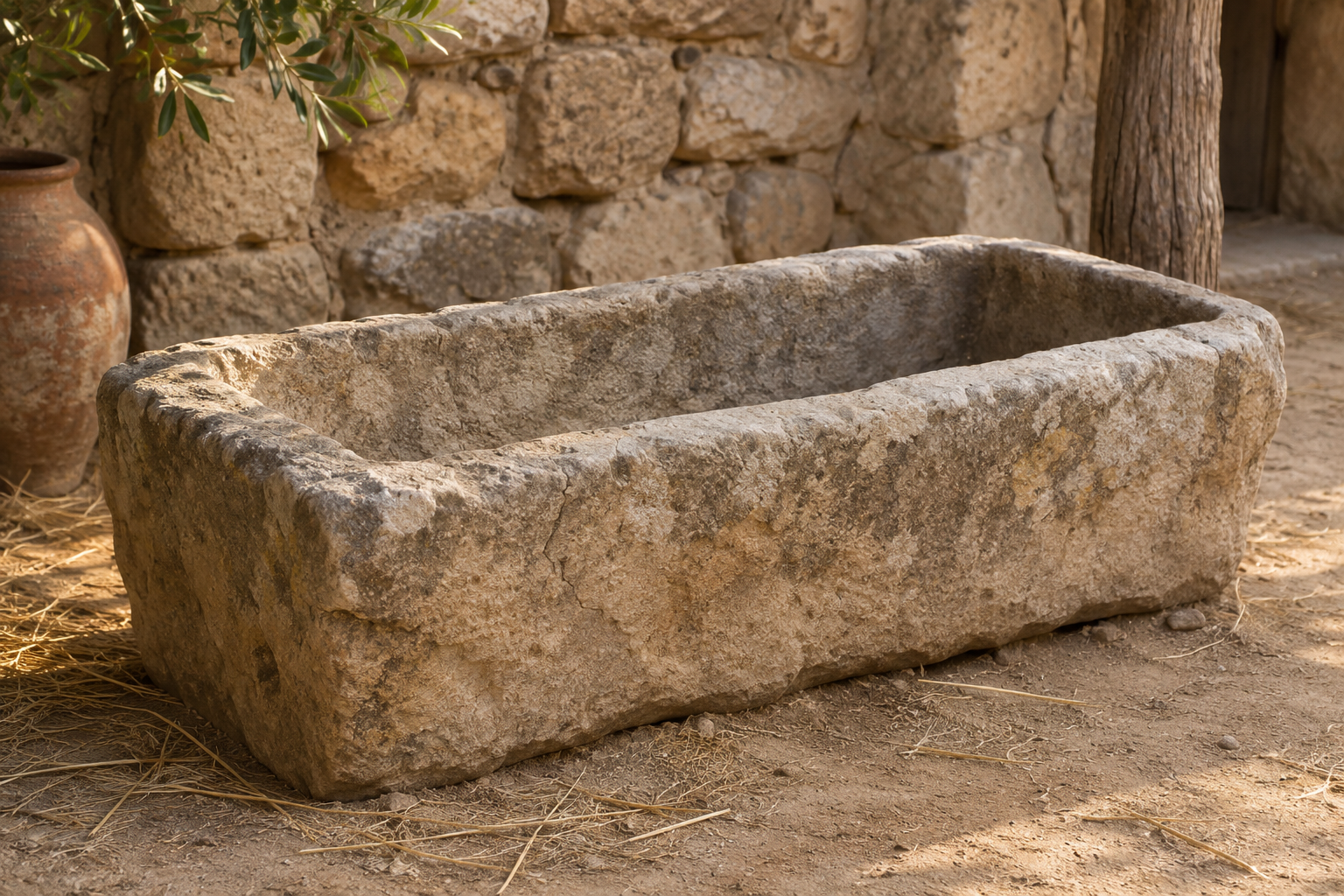
Christians have pictured different settings for the birth, including a separate shelter, a cave, or an area within a dwelling where animals were kept. The encyclopedia discusses several kinds of ancient animal accommodation and notes the existence of stone troughs. Those possibilities do not identify the precise layout of this birth scene.
Luke names the manger without describing the architecture around it. A careful explanation can acknowledge the possibilities and leave the building uncertain. It can also avoid insisting that the trough was made of wood or stone when the passage does not specify its material.
That uncertainty need not take away the wonder of Christmas. We have enough detail to understand the humble circumstances and follow the shepherds’ response. We do not need to reconstruct every wall and doorway before thanking God for the Savior.
What Did the Manger Mean for the Shepherds?
In Luke 2:10–16, the manger is part of the sign the shepherds receive. The announcement identifies the child as Savior, Messiah, and Lord; the sign tells them what they will find. When they arrive, Luke repeats the detail, joining what was promised with what they saw.
The passage does not tell us the shepherds’ names, every step of their route, or their private thoughts. It does show a response: they go, find the family, speak about the message, and praise God. Their example invites us to take God’s revealed truth seriously and respond in faith.
Our Nativity story for children can support a family conversation, while the biblical passage remains the guide. Ask a child which detail appears more than once and why it matters. Let their observation lead into the identity of the child, rather than a quiz about decorations.
The Humility of Jesus’ Coming
The manger fits the humble circumstances of the birth. For the wider Christian meaning of Christ’s humility, read Philippians 2:5–11. Paul directs attention to the Son’s willing service, obedience, and death, followed by His exaltation. The passage also calls believers toward a changed attitude in their relationships.
Christmas humility is more than admiring a simple room. Jesus’ coming leads us toward His life, cross, and resurrection. Our study of Jesus as the Prince of Peace offers another way to connect His identity with the hope He brings.
You do not need an impressive home or a perfect family gathering to worship Him. A modest table, a quiet room, and an honest prayer can make space for gratitude. At the same time, the manger should never be used to romanticize hardship or tell someone that their unmet needs do not matter. Christian humility includes practical care.
Reading Familiar Christmas Claims Carefully
Some popular explanations attach additional symbolism to the feeding trough, the cloths, or the shepherds’ occupation. Before presenting a particular claim as history, ask whether the biblical text states it and whether reliable evidence supports it. An attractive connection may be a later reflection rather than a documented fact about that night.
We can draw a devotional connection while identifying it honestly. For example, a feeding place might remind a reader of Jesus’ later teaching about giving life. That does not prove Luke intended every detail as a hidden reference to another passage. Let the meaning of each passage emerge from its own context before drawing a connection.
A useful family reflection can begin with a simple question: what does Luke emphasize? Notice the repeated manger detail, the identity announced for the child, and the shepherds’ response. Those observations provide plenty to discuss without searching for an elaborate hidden explanation.
Let the Story Shape Your Care for Others
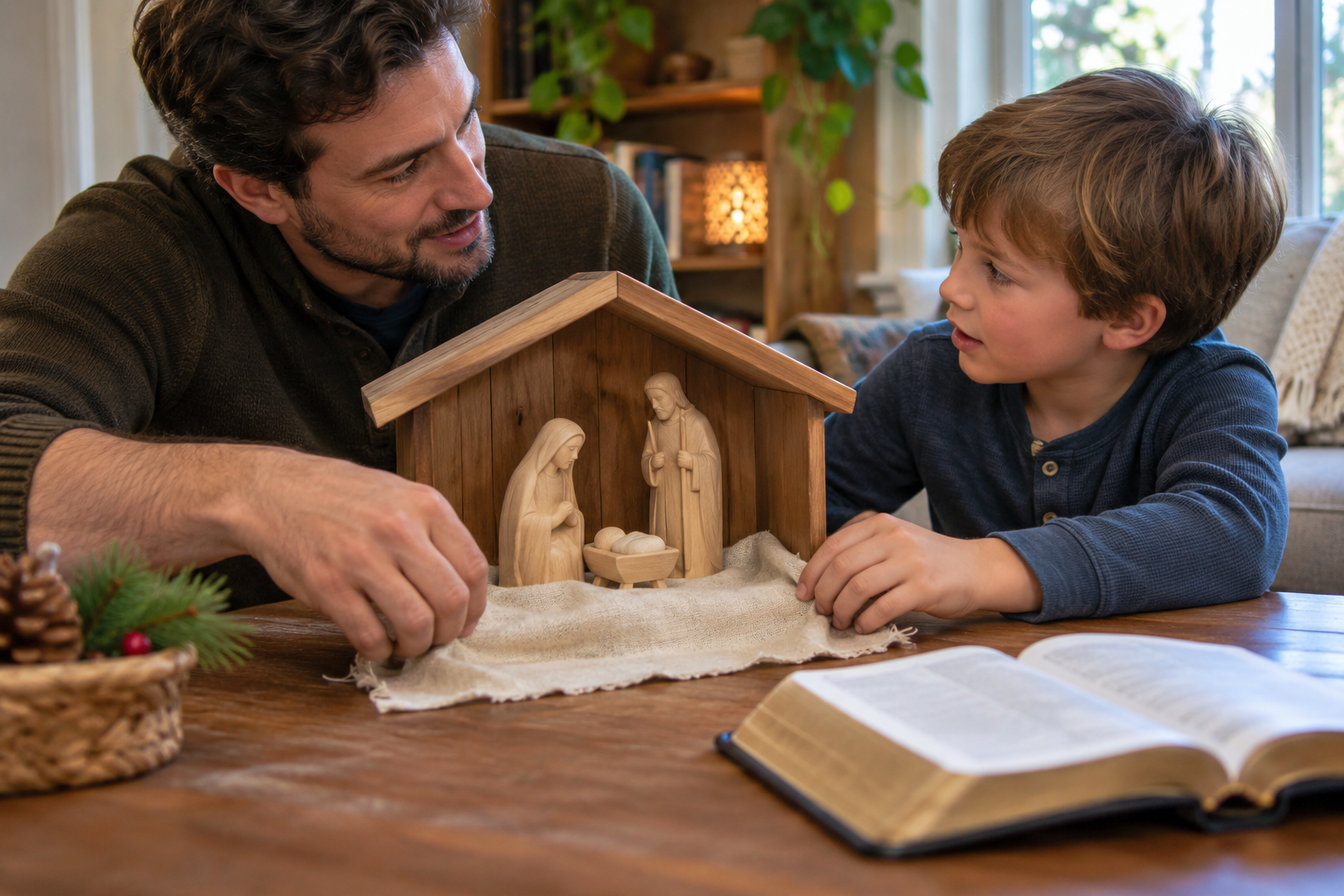
Imagine a father and child putting a simple Nativity display on a shelf. The child notices how small the manger looks. Their conversation turns toward people who need care: a tired neighbor, an older relative, or a family with a new baby. They decide to make a call and offer something useful. This is an imagined illustration of responding to Scripture, not a reported testimony.
Our reflection on the true gift of Christmas can help gratitude become generosity. You might bring a meal, listen without rushing, or share a responsibility that has become heavy for someone. Ask what would actually help rather than assuming.
If you want a simple way to begin that family conversation, our guide to worshiping together at home encourages short times of reading and prayer. A few attentive minutes can matter more than an elaborate activity everyone is too tired to enjoy.

A Prayer Beside the Christmas Story
Father, thank You for sending Jesus into our world. Help us receive the good news with humble faith. Teach us to read Your Word carefully, worship the Savior sincerely, and notice people who need our care. Forgive our pride and our hurry. Let the simplicity of this story turn our hearts toward Your great mercy. In Jesus’ name, amen.
Remember the Child in the Manger
The manger’s meaning begins with an ordinary feeding trough and leads us back to an extraordinary announcement. The Savior had come. Mary cared for Him, the shepherds found Him, and God received their praise. As you remember that scene, let its humble detail deepen your attention to the Lord Jesus and your gratitude for His saving love.
Continue Growing
Read a short Christmas devotional for a busy heart.
Build an ordinary habit with a simple daily prayer routine.