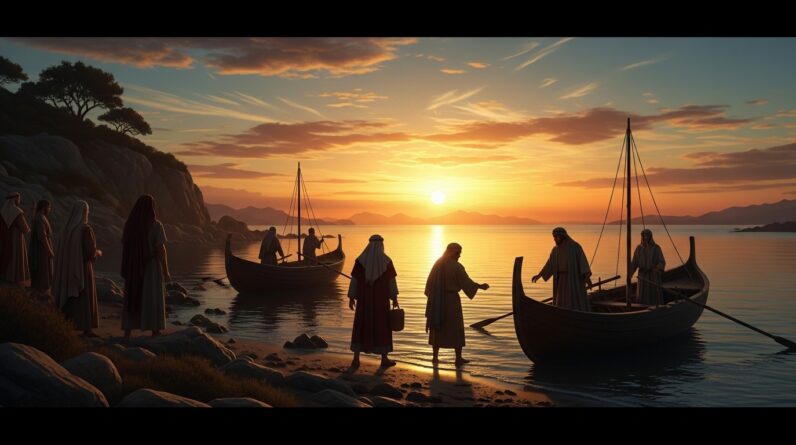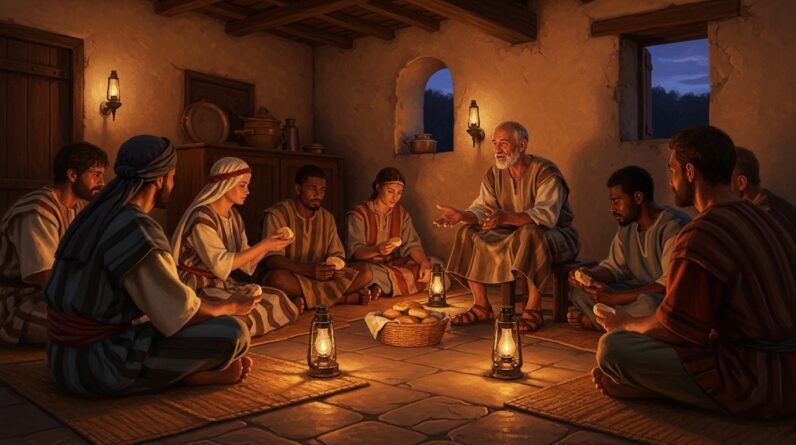


Pentecost is one of the most powerful—and often misunderstood—events in the Bible. For you, it’s not just a distant story; it’s an invitation. It marks the moment when the Holy Spirit arrived, the Church began, and followers of Jesus were transformed from fearful followers into bold witnesses. In this guide, you’ll walk through what happened, why it mattered then, and how it still shapes your life now.
You don’t need to be a Bible scholar to grasp the main points. This article will help you understand the key Bible passages, unpack the theological significance, and give you practical ways to live out Pentecost’s reality in your everyday life.

The Key Bible Passage: Acts 2:1–2
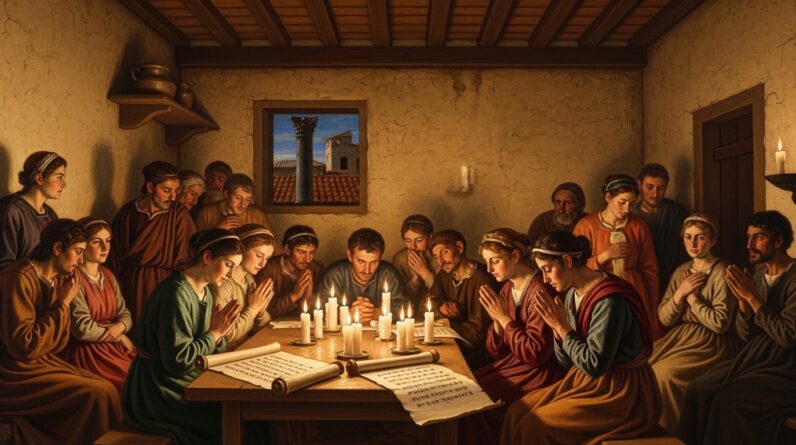
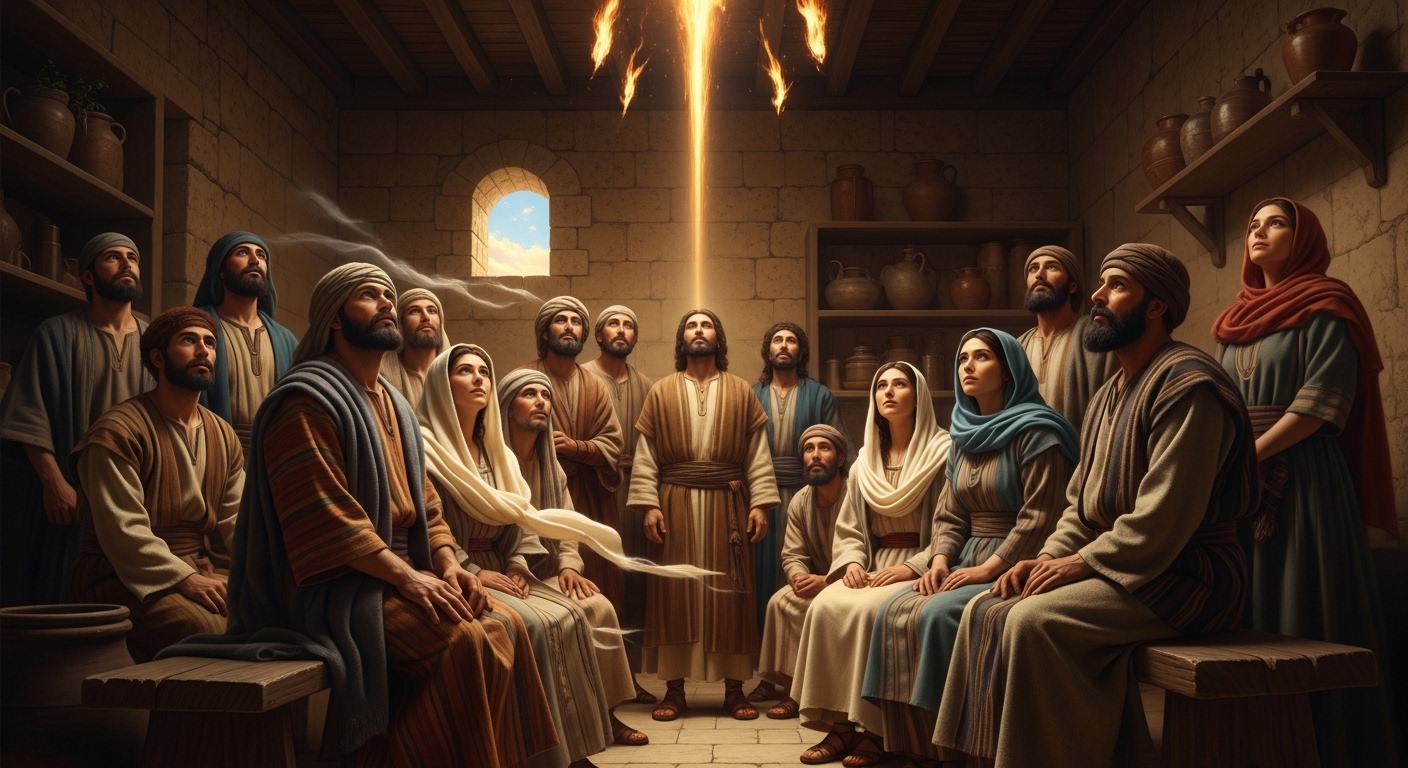
Begin at the scene itself. Read the event that changed everything: Acts 2:1–2. The passage opens in a simple, human way: the followers of Jesus are gathered together, and suddenly something supernatural happens. A sound like a violent wind comes from heaven and fills the place where they are sitting.
That simple sentence sets the tone. You’re seeing a moment where heaven intersects with earth. It’s physical—wind, tongues of fire—and it’s spiritual—the arrival of the Holy Spirit. Acts 2 gives you a snapshot of God’s presence moving into the community of believers and beginning a new era.
1. The Coming of the Holy Spirit
When you read Acts 2, the first and clearest truth is this: Pentecost marks the moment when God gave the Holy Spirit to the followers of Jesus. Earlier, Jesus promised this. Over and over in the Gospels, He spoke about the Advocate who would come after Him. Take a look at how Jesus framed this promise in scripture: John 14:16–17 and John 16:7. Jesus said the Spirit would come to be with and in you. Understanding the Holy Spirit’s role helps you see how God actively guides, strengthens, and transforms believers beyond Pentecost into daily Christian living.
This is personal. Pentecost is not merely an event for a small group two thousand years ago. It’s the inauguration of God’s permanent presence with His people. When you open your life to Jesus, the same Spirit that arrived at Pentecost is invited to live in you, to guide, comfort, convict, and empower. The imagery in Acts—wind and fire—points to power and purification. The Spirit breathes life into what was limp and lights a refining fire in what was fearful.
As you consider this, remember that the promise of the Spirit means you aren’t left alone. The Spirit is your companion, counselor, and power. He gives insight into scripture, helps you pray when words fail, and equips you to live with godly character. You don’t need to manufacture spiritual life; you can cooperate with the Spirit who already lives within you.
2. Power to Live and Witness
Pentecost is deeply tied to mission. Before He left, Jesus told His followers exactly what the Holy Spirit would do for them: “You will receive power when the Holy Spirit comes on you…” Read the promise at Acts 1:8. The power was never meant solely for personal comfort; it was given so you could bear witness to Jesus. Spiritual empowerment is closely tied to learning how to walk daily in dependence on God rather than relying on human strength alone.
That power shows up in different ways. It gives boldness in telling your story, endurance in the face of opposition, and creative courage to serve and love in risky contexts. When the Spirit arrived in Acts 2, the disciples who previously hid behind locked doors walked into public and proclaimed the gospel. Their words were filled with conviction and authority. The crowd noticed.
For your daily life, Pentecost means you can expect divine enablement when you step out in faith. It doesn’t promise the absence of struggle or suffering, but it does promise the presence of empowerment. You can ask God to fill you with boldness to speak truth in love, to persevere in service, and to embody Christlike compassion in practical ways. The Spirit equips you not to perform for applause, but to live out God’s mission.

3. The Gospel Is for Everyone
One of the most striking moments in Acts 2 is cultural: people from many nations heard the message in their own languages. The text records that each one heard the disciples speaking in the language they understood. See Acts 2:6. That detail isn’t decorative—it’s theological.
Pentecost reverses Babel. Where Genesis 11 shows human pride producing division and confusion of languages, Acts 2 shows God’s reconciling power overcoming those divisions. The gospel breaks through cultural barriers and speaks to the heart of every person. God’s mission is inclusive: every ethnicity, language, and social group is invited to hear and respond.
For you, this matters because the Spirit’s arrival signals that the message of Jesus is not culturally limited. Your faith should naturally flow toward others, especially those who are different from you. Embracing diversity in your church and witness is a faithful response to Pentecost. When you share the gospel, do so with cultural sensitivity, humility, and respect. Celebrate the universality of God’s love and let the Spirit guide how you bridge cultural gaps.

4. The Birth of the Church
Pentecost is often called the birthday of the Church, and with good reason. The Spirit’s coming birthed communal life in a way that had not existed before. After Peter’s sermon on that day, thousands believed and were baptized. Acts records that about three thousand were added to their number that day—see Acts 2:41. The early church then devoted itself to teaching, fellowship, breaking bread, and prayer.
The Church is not a building; it’s a people empowered by the Spirit to carry out God’s mission together. Pentecost establishes the pattern of Christian community: open worship, mutual care, shared resources, and public witness. The life of the new community was marked by deep relational bonds and practical generosity. The early church experience did not end at Pentecost—it continued through the expansion of the resurrection message and the early mission of Jesus’ followers.
If you belong to a local church, Pentecost gives you a theological reason to invest in community. You are part of something larger than your individual faith. That community is the context in which spiritual gifts are exercised, discipleship happens, and mission is organized. If you’re not connected, Pentecost encourages you to look for a faithful community where the Spirit is at work and where you can both receive and contribute.
5. A Transformed Life
When the Spirit came, the disciples were transformed from fear-filled followers into bold, faithful leaders. Pentecost demonstrates how the Spirit changes hearts and habits. It’s less about dramatic spectacle (though there was certainly drama) and more about deep inner transformation. The same Spirit who produces power also cultivates Christlike character—you see this throughout the New Testament as the fruit of the Spirit described in Galatians 5:22–23.
Transformation looks like humility replacing pride, patience replacing anger, and love replacing self-centeredness. This inner transformation is closely connected to the visible character growth described as the fruit of the Spirit in the life of a believer. The Spirit doesn’t just power you for ministry; He forms you into the image of Christ. You can’t separate empowerment from sanctification: the two go together. As you live in obedience and open your life to the Spirit, expect your desires, priorities, and relationships to change.
Practically, this means you’ll need daily surrender. Transformation isn’t a single event; it’s a process. Daily prayer, repentance, Scripture, and community are channels through which the Spirit molds your character. Don’t be discouraged by setbacks; the Spirit is patient and persistent in forming you.
Pentecost as Fulfillment of Prophecy
Pentecost doesn’t occur in a vacuum. Peter himself points back to prophecy when he explains what’s happening to the crowd. He cites the prophet Joel’s words about God pouring out His Spirit in the last days—see Joel 2:28–29. That linkage is important: Pentecost shows that God is moving forward with His long-standing promise to renew and restore.
When you connect Pentecost to prophecy, you see God’s story unfolding. The arrival of the Spirit is a step toward the ultimate restoration of creation. It’s a sign that God is at work renewing hearts and communities in preparation for the coming fullness of His kingdom. That gives you hope: Pentecost signals that God’s promises are trustworthy and that history is headed in a redemptive direction.
Why Pentecost Matters Today
Pentecost still matters for multiple reasons. First, it guarantees God’s presence with you. The same Spirit who fell on the first disciples lives in believers now. That presence is not abstract; it changes how you think, pray, and act. Second, Pentecost equips the church for mission. The Spirit empowers ordinary people for extraordinary witness—this is how the early church grew rapidly and how you can participate in the spread of the gospel today.
Pentecost also matters because it calls the church to unity-in-diversity. The early church was a multicultural community, and your church should reflect that same openness. Moreover, Pentecost fuels justice and compassion. When the Spirit moves, hearts stray from self-preoccupation toward loving service—feeding the hungry, advocating for the oppressed, and stewarding creation.
Finally, Pentecost matters because it grounds your spiritual life. The Spirit helps you interpret scripture, pray with purpose, and understand God’s will. A deeper understanding of the Spirit’s work also helps believers recognize God’s guidance, correction, and prompting in everyday decisions. If you’re discouraged, the promise of the Spirit offers encouragement. If you’re insecure about speaking or serving, the Spirit gives boldness. If you feel isolated, the Spirit connects you to the global body of Christ.
How You Can Experience Pentecost Today
Pentecost was an historical event, but its reality is ongoing. You can expect to experience the Spirit’s presence and power in your life in concrete ways. Here are practical steps that help you stay open to Pentecost’s reality:
- Cultivate a listening posture. Spend time in prayer and Scripture, not to manipulate God but to be shaped by Him.
- Ask for the Spirit. Jesus encouraged His followers to pray for what they needed. Boldly ask God to fill you with His Spirit and to equip you for service.
- Practice obedience. The Spirit’s work is often given to those who take small steps of faith. Obedience opens the door for deeper transformation and empowerment.
- Engage community. The Spirit works through the body of Christ. Serve, worship, and learn with others so spiritual gifts can be exercised and your faith strengthened.
- Expect both character change and empowerment. Pray for the fruit of the Spirit and for boldness to witness.
These steps aren’t formulas for spiritual performance. They’re ways to cooperate with the Spirit. Be patient. Spiritual growth is a journey, not a single dramatic event. Still, you can expect God to answer when you ask, seek, and walk in faith.
Common Questions About Pentecost
You might have questions. Below are several common ones, answered briefly with scriptural grounding.
- Did the tongues of fire mean the Spirit only empowers a few? No. The tongues and wind are symbols of what the Spirit does for all believers. Pentecost signaled the Spirit is available to anyone who follows Jesus (Acts 2:1–2).
- Does speaking in tongues define Pentecostal experience? Not necessarily. Speaking in tongues is one way the Spirit has manifested, but it’s not the only sign of the Spirit’s presence. Scripture emphasizes a variety of gifts and the fruit of the Spirit (Galatians 5:22–23).
- Is Pentecost only for the first-century church? Pentecost inaugurated the ongoing presence of the Spirit. The promise is for all generations—Peter cited Joel’s prophecy that the Spirit would be poured out “in the last days” (Joel 2:28–29). The last days began with Christ’s ascension and continue until His return.
- How does Pentecost relate to baptism? Early Christian practice linked repentance, baptism, and receiving the Spirit. In Acts, many received the Spirit after turning to Christ, often in the context of baptism and community (Acts 2:41).
- Will the Spirit make me perfect? The Spirit guides and sanctifies, but you’ll still wrestle with sin. Growth is a cooperative process of God’s grace and your obedience. Expect progress, not perfection.
If you want deeper answers to any of these questions, consider talking with a pastor or a mature believer in your community. The Bible and the Spirit together provide wisdom for your journey.
Practical Examples: How Pentecost Changes Everyday Life
Pentecost’s impact isn’t confined to sermons. It shapes everyday decisions, relationships, and priorities. Think about how the Spirit influences these concrete areas of life:
- Work: The Spirit gives you integrity, diligence, and the ability to serve coworkers with humility. You can be a witness through excellence and kindness.
- Family: The Spirit produces patience and love in parenting and marriage, helping you respond rather than react in tense moments.
- Community: The Spirit prompts you to care for neighbors, fight injustice, and welcome strangers.
- Prayer life: The Spirit intercedes when you don’t have words, helping you pray in tune with God’s will (Romans 8:26–27).
These examples show the Spirit’s work is both personal and practical. Pentecost equips you to live faithfully wherever you are.
Reflection and Short Prayer
Take a moment to reflect. Ask yourself honest questions: Are you relying on the Holy Spirit in your daily life? Do you live boldly for the gospel? Are you part of a faith community where the Spirit can work through you?
If you want a short prayer to help you begin, here’s a simple one you can use: Lord, thank You for the gift of the Holy Spirit. Fill me with Your power, guide my steps, and help me live boldly for You. Use my life to share Your truth and love with others. Amen.
This prayer echoes the heart of Pentecost—dependence on God, openness to transformation, and desire to witness.
Final Thoughts: Pentecost Is a Living Reality
Pentecost is not merely a historical event to be studied; it’s a living reality to be experienced. It tells you that God is present, that His Spirit empowers, and that the mission continues. The same Spirit who moved in Acts 2 is at work in your life today, giving you courage, shaping your character, and calling you into community and mission.
So don’t relegate Pentecost to a festival or a footnote. Let it shape how you pray, how you serve, and how you relate to others. Embrace the Spirit’s work in you and in the Church around you. Expect transformation, seek unity, and join in the mission.
Suggested reading to explore Pentecost within the wider story:
- The Life of Jesus Timeline (Birth to Ascension Explained – Full Story Guide)
- Resurrection Timeline (What Happened After Jesus Rose From the Dead)
- Ascension → Acts (What Happened After Jesus Returned to Heaven)
- Who Is the Holy Spirit? (Beginner-Friendly Explanation)
- The Early Church Explained (How Christianity First Spread)
BIBLE VERSES CITED
- Acts 2:1–2
- Acts 1:8
- Acts 2:6
- Acts 2:41
- John 14:16–17
- John 16:7
- Joel 2:28–29
- Galatians 5:22–23
- Romans 8:26–27