

You might rightly ask: if God is all-powerful, present, and sovereign, why do you need armor at all? The short answer is this: God gives you the Armor of God not because He is weak or absent, but because He lovingly calls you to depend on His strength and to participate faithfully in resisting evil. The image of armor in Ephesians is a pastoral, gospel-shaped invitation: God supplies everything you need to stand—steadfast, truthful, and courageous—so you won’t have to rely on your own strength or on sensational experiences. Read Paul’s command to “put on the full armor” and you’ll find an appeal to trust, unity, and perseverance, not to self-confident bravado. See Ephesians 6:10–20 (NIV) for Paul’s instruction.

Why Does God Give Christians Spiritual Armor?
God gives you spiritual armor as an act of grace that both protects and trains you. The armor is woven into the broader argument of Ephesians: it flows from the gospel realities Paul celebrated earlier in the letter—God’s raising and exalting of Christ, your union with Him, and the Spirit’s power at work in you. When Paul urges you to “be strong in the Lord,” he points you not to your own resources but to the magnificent power God has already shown in Christ (see Ephesians 1:18–23 and Ephesians 3:14–21 (NIV)). The armor is practical language for how that saving work shows up in daily life: truth, righteousness, peace, faith, salvation, and the Word of God.
Paul’s metaphor does more than list virtues; it describes how God equips His people to live out the new life described in Ephesians 4:1–6:9 (NIV). Those chapters call for truthful speech, holiness, forgiveness, humility, and solid doctrine. The Armor of God imagery reinforces that this transformed life is not optional—it is how you stand when opposition comes. For a deeper overview, see Armor of God explained

The Armor Reveals Our Need for God’s Strength
The armor underscores that you are not self-sufficient. Paul begins the passage by telling you to “be strong in the Lord and in his mighty power” (Ephesians 6:10 NIV). That imperative points away from human effort and toward divine enablement. Your trials, temptations, and spiritual opposition expose your limitations—and that’s the point. In those places of weakness, God demonstrates His strength through you (see Ephesians 3:14–21 (NIV) and Colossians 1:11–14 (NIV)). The armor, then, isn’t a badge of self-reliance; it’s God’s way of saying, “Rely on me; I’ve provided what you need.”
The Armor Helps Us Recognize the Real Battle
When Paul warns you about “spiritual forces of evil in the heavenly realms,” he’s reframing your struggles. They’re not primarily against other humans or social systems, although those can be vehicles for evil. The real battlefield is spiritual, meaning the roots of many visible problems are unseen. This insight frees you to respond wisely: you don’t become obsessed with demons or sensational experiences, but you refuse to trivialize the spiritual dimension of life. Compare Paul’s realism with other New Testament warnings to understand the balance: see 2 Corinthians 10:3–5 (NIV) and 1 Peter 5:8–10 (NIV).
The Armor Enables Believers to Stand Firm
Paul repeats the word “stand” in this passage for a reason. The aim of the armor is steadfastness—not theatrical victories or constant victories in every skirmish. The verbs and tone in Ephesians emphasize endurance, resistance, and faithfulness. Scripture repeatedly shows that God’s people are called to stand: James tells you to “submit yourselves, then, to God. Resist the devil, and he will flee from you” (James 4:7 NIV), and Paul exhorts the Thessalonians to hold firm to faith and hope amid trials (see 1 Thessalonians 5:8 (NIV)). The armor strengthens your resolve so you can keep the faith when pressures intensify.
The Armor Protects Christian Character and Witness
The pieces of the armor are not random; they map onto moral and doctrinal realities. The breastplate of righteousness guards your heart—your moral life and integrity—so your witness to the world is credible. The belt of truth centers your convictions so you speak honestly and resist deceptive doctrine. The shield of faith protects your trust in God when doubts and accusations fly. In short, God’s armor preserves what matters for Christian witness: character and truth. That protection helps you keep your testimony clear and winsome even under fire (see Romans 13:12–14 (NIV)).
The Armor Prepares Us to Resist Lies and Temptation
The world, the flesh, and the devil work together to tempt you. The armor equips you to identify and resist those lies. The sword of the Spirit—the Word of God—gives you the content and power to answer deception with truth (see 2 Timothy 3:16–17 (NIV)). The helmet of salvation secures your identity so you don’t get shaken by discouragement or doubts about God’s promises. Ultimately, the armor doesn’t make you immune to temptation, but it supplies the means to resist and be restored.
The Armor Helps the Church Stand Together
Paul’s language in Ephesians is collective. He addresses the church as a body. The “stand firm” language implies a united formation, not isolated fighters. You and your brothers and sisters help one another through prayer, truth-speaking, encouragement, restoration, and accountability. Collective resources—shared teaching, corporate prayer, and mutual care—are part of the armor in practice. Ephesians 4–6 pictures a community that embodies truth, unity, and peace; the armor imagery reinforces the necessity of Christian unity and mutual support. For more on practical community life, see what the Bible really says about spiritual warfare and common spiritual attacks.
The Purpose of Each Piece Working as One
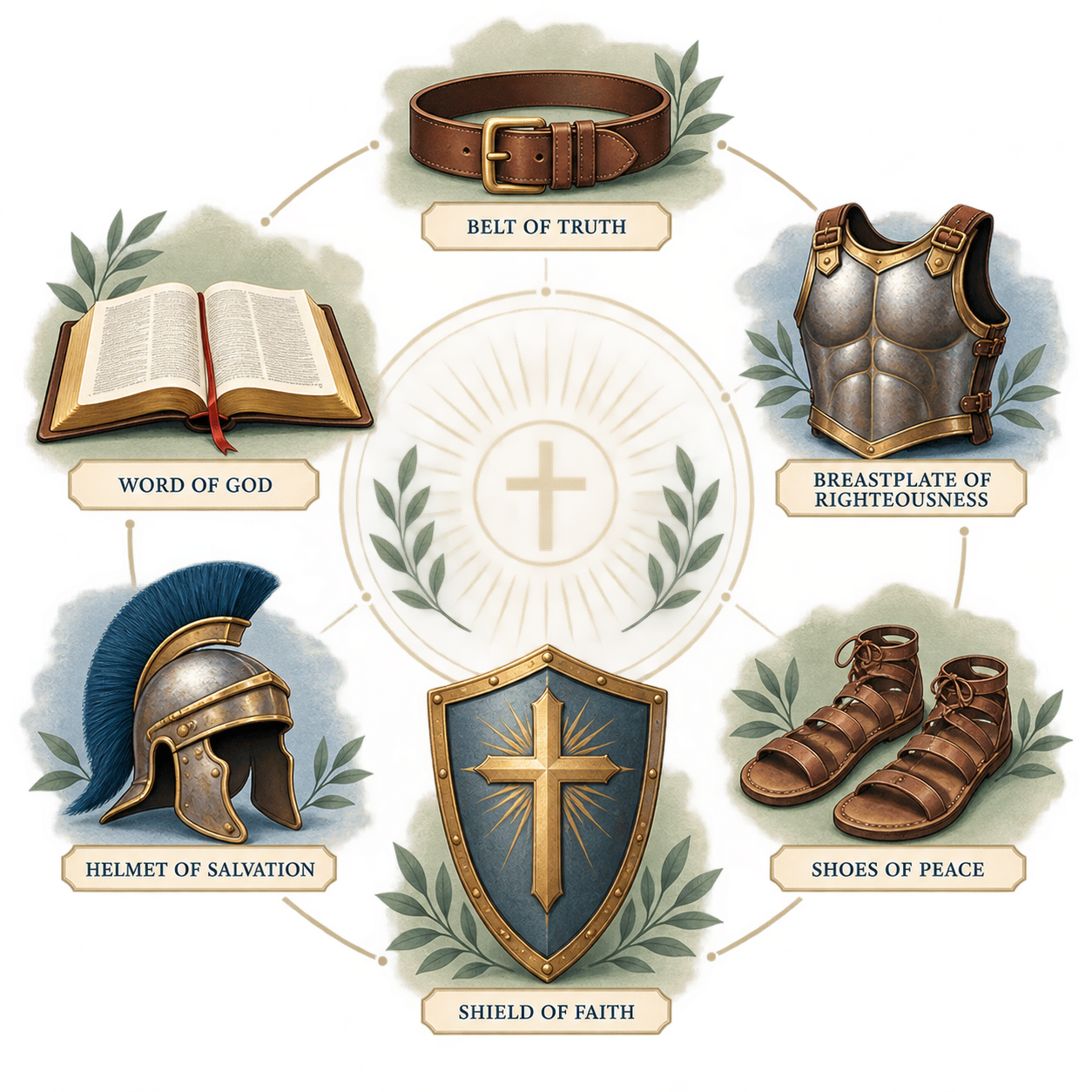
The armor’s power comes from its wholeness. Paul lists six pieces that, together, equip you to stand. When you “put on” the full armor, you take on a posture of dependence on God’s gifts. Briefly, the pieces are: the belt of truth, the breastplate of righteousness, the shoes of the gospel of peace, the shield of faith, the helmet of salvation, and the sword of the Spirit (the Word of God). As you read the list, remember Paul intends them to function together—truth anchors you, righteousness protects you, peace guides your readiness, faith deflects attacks, salvation secures your mind, and God’s Word is both defensive and offensive.
When listing these six pieces, you may want to explore individual treatments: learn more about the belt of truth, the breastplate of righteousness, and the shield of faith in practical application by visiting Armor of God explained. For guidance on daily practice, see how to put on the armor in daily life in The Full Armor of God in Daily Life and practical tips to put on the armor of God every day.
The Belt of Truth
The belt of truth anchors the rest of the armor. Truth is not merely intellectual accuracy; it is your center—what you believe about God, about Christ, and about who you are in Him. Truth stabilizes your decisions, your speech, and your moral choices. In Ephesians, truth connects to the life of honesty and integrity Paul calls for earlier (see Ephesians 4:25 (NIV) within Ephesians 4:1–6:9 (NIV)). The belt is literally worn around the waist, and the imagery tells you: let truth hold things together.
The Breastplate of Righteousness
The breastplate covers the vital organs—symbolic of moral and spiritual health. Righteousness here reflects both the imputed righteousness of Christ that secures your standing before God and the practical righteousness that grows in your conduct. Isaiah anticipates this when he speaks of righteousness as a breastplate (see Isaiah 59:16–17 (NIV)). The breastplate protects your heart from accusations, bitterness, and immoral compromise that would damage your witness.
The Shoes: Readiness Given by the Gospel of Peace
The shoes make you ready to move with the gospel of peace. Gospel readiness implies confidence in your mission, calmness amid conflict, and the ability to bring peace where possible. Isaiah celebrates the messenger who brings good news and proclaims peace (see Isaiah 52:7 (NIV)). Shoes enable you to travel, to stand, and to move where God calls, armed with the goodwill and reconciliation of the gospel.
The Shield of Faith
The shield is a broad protective device designed to quench the flaming darts of the enemy—doubts, accusations, temptations, and discouragements. Faith is not mere optimism; it is trust in God’s promises and presence. Paul and others repeatedly emphasize faith as the means by which you stand in spiritual conflict (see 1 Thessalonians 5:8 (NIV) and Romans 13:12–14 (NIV)). When you raise your shield, you do not pretend storms won’t come; you trust God through them.
The Helmet of Salvation
The helmet protects your mind. Salvation secures your identity, hope, and future. When your mind is under attack—by despair, by distortion of the gospel, by false teaching—the helmet reminds you who you are in Christ and what He has accomplished. Paul’s teaching about salvation as present possession and future hope gives the helmet its power (see Ephesians 1:18–23 (NIV)). Guard your thinking so your faith isn’t derailed.
The Sword of the Spirit: The Word of God
The sword is the only offensive element of the armor. It’s the Word of God—the Spirit’s instrument for truth, conviction, correction, and proclamation. Scripture is both defense and active witness. Jesus used Scripture to resist temptation (see Matthew 4 for a Gospel example and consider Paul’s broader use of Scripture in 2 Timothy 3:16–17 (NIV)). Use the Word not as a weapon for spiritual showmanship, but as the faithful means of honoring God, discerning truth, and speaking hope.
What the Armor of God Does Not Promise
It’s important to correct common misconceptions. The Armor of God does not promise that you will never suffer, that you will be physically safe from harm, or that you will win dramatic spiritual showdowns every day. Scripture does not teach that Christians are exempt from trials; indeed, Paul himself models hardship even as he urges standing (see 2 Corinthians and Philippians). The assurance is not comfort from all trouble, but God’s enabling presence to stand and persevere.
Also, the armor is not a license for aggressive or sensational spiritual practices. It is defensive—meant to protect and to enable faithful testimony—while the Word (the only offensive piece) is used primarily for truth, correction, and proclamation. Avoid demon-obsessed speculation; Scripture gives realistic, sober warnings without encouraging curiosity-driven pursuit of spiritual encounters (see 1 Peter 5:8–10 (NIV)).

How to Respond to God’s Provision
Receiving God’s armor is a daily, practical response. You don’t manufacture these pieces by sheer will; you “put them on” by faith—through prayer, obedience, Scripture, and community. Here are concrete steps you can take to respond:
- Start each day in prayer asking God to clothe you with truth, righteousness, peace, faith, salvation, and His Word (see Colossians 1:11–14 (NIV) for prayer-language about strength in God).
- Read Scripture regularly so the Word becomes your ready, true guide (see 2 Timothy 3:16–17 (NIV)).
- Confess and repent when your integrity or witness is compromised; let righteousness be more than a garment but a lived reality.
- Cultivate faith by rehearsing God’s past faithfulness and speaking truth over fear—lift your shield in community, not in private isolation (see James 4:7 (NIV) about resisting the devil).
- Engage with the church: the armor functions best in community as believers pray and stand with you.
Throughout, remember that God’s provision is grounded in His character. He is your defender, sustainer, and helper, and the armor is one way He shows that love.
A Short Table: How the Pieces Work Together
| Armor piece | God’s provision | What it helps believers do |
|---|---|---|
| Belt of Truth | A center of gospel truth and doctrinal clarity | Hold beliefs and speech together; resist deceit |
| Breastplate of Righteousness | Imputed and practical righteousness in Christ | Protect moral and spiritual life; guard the heart |
| Shoes of the Gospel of Peace | Readiness and confidence in the gospel mission | Stand firm and move with peace and reconciliation |
| Shield of Faith | Trust in God’s promises and presence | Deflect doubts, accusations, and discouragement |
| Helmet of Salvation | Assurance of identity and hope in Christ | Protect the mind from despair and falsehood |
| Sword of the Spirit (Word of God) | Scripture empowered by the Spirit | Discern truth, resist temptation, and proclaim the gospel |
For deeper articles on each piece, see Armor of God explained and practical application in The Full Armor of God in Daily Life.
The Armor in the Context of Ephesians
To appreciate the armor fully, read it as Paul’s climax to a letter overflowing with gospel realities. Earlier chapters (Ephesians 1–3) celebrate Christ’s exaltation, your identity in Him, and God’s power at work in you (see Ephesians 1:18–23 (NIV) and Ephesians 3:14–21 (NIV)). Chapters 4–6 translate those truths into conduct: truth-speaking, humility, purity, family life, fair labor, and faithful worship (see Ephesians 4:1–6:9 (NIV)). The Armor of God (Ephesians 6:10–20 (NIV)) is the pastoral application—stand firm because of what God has done. Paul’s “be strong in the Lord” language reminds you where the strength comes from; expand your study by reading about What Does It Mean to Be Strong in the Lord? (Ephesians 6 Explained).
The Collective Language: The Church as a Body
Paul addresses the church corporately. The armor isn’t just an individual checklist; it’s a corporate formation. When you stand together, you cover more ground. Your faith protects others; their truth steadies you. The New Testament consistently pictures mutual care—prayer, correction, restoration—as central to resisting evil. When you pray for one another and live transparently in community, the armor’s protective effect multiplies (see Colossians 1:11–14 (NIV) on mutual encouragement and strength). If you want to understand common spiritual challenges faced by churches and how community responds, see common spiritual attacks.
What the Armor of God Does Not Make You
The armor doesn’t make you invulnerable, superior, or free from sorrow. You will still grieve, learn, and sometimes fall. But because of God’s provision, your failure doesn’t mean permanent defeat; the Spirit, Scripture, and community are means of restoration. Paul’s model is pastoral realism: expect opposition, work to be prepared, and rely on God to restore when you stumble (see 1 Peter 5:8–10 (NIV)).
Frequently Asked Questions
Q: Why do we need armor if God protects us?
A: God protects you, but He often protects through means—through truth, faith, Scripture, prayer, and community. The armor is God’s provision for living faithfully under real opposition, so your protection is rooted in dependence on Him, not in self-sufficiency. See Ephesians 6:10–20 (NIV) and Colossians 1:11–14 (NIV).
Q: Is the armor literal or spiritual?
A: The armor is spiritual language grounded in real-life behaviors and resources—truth, righteousness, faith, the gospel, salvation, and Scripture. It is metaphorical, not physical, teaching you how to live and stand in the spiritual realities God provides (see 2 Corinthians 10:3–5 (NIV) and 2 Timothy 3:16–17 (NIV)).
Q: Is the armor for individual Christians or the church?
A: Both. Paul uses collective language and envisions a community standing together, yet each believer is called to wear the armor. You are strengthened both personally and corporately when the church embodies these virtues (see Ephesians 4:1–6:9 (NIV)).
Q: Does the armor prevent suffering?
A: No. The armor equips you to endure and remain faithful amid suffering, not to avoid it altogether. Scripture promises God’s presence and eventual victory, but not exemption from trials (see 1 Peter 5:8–10 (NIV)).
Q: Why is prayer important with the armor?
A: Prayer is integral because the armor is not mechanical; it is sustained by constant dependence on God. Paul emphasizes prayer alongside the armor—pray for boldness, discernment, and strength to stand (see Ephesians 6:18–20 (NIV)). Prayer keeps you in relationship with the Provider of the armor.
Q: How do I receive God’s armor?
A: You receive it by faith—daily prayer, Scripture reading, obedience, repentance, and participation in the church. Saying “put on the armor” is a regular spiritual discipline that involves reliance on God and engagement with spiritual means of grace (see Romans 13:12–14 (NIV) and Colossians 1:11–14 (NIV)). For practical steps, consider putting on the armor of God every day.
Q: Can Christians lose spiritual battles?
A: Christians can experience setbacks, failures, and defeats in particular struggles. That does not negate final victory in Christ. The Bible calls you to repent, get restored, and continue standing in God’s strength. For a careful treatment, see Can Christians Lose Spiritual Battles? What the Bible Teaches.
Continue Growing in the Armor of God
If this teaching has helped you, keep studying and practicing. Here are further resources to deepen your understanding and daily practice:
- The Full Armor of God in Daily Life: Real Examples for Modern Christians
- Can Christians Lose Spiritual Battles? What the Bible Teaches
- How to Put on the Armor of God Every Day: A Practical Biblical Guide
Each of these articles will help you apply the pieces of God’s provision in concrete places—your home, workplace, church, and private devotion.
Final Thoughts: Stand in Gratitude, Not Fear
Why God gives us the Armor of God is ultimately a gospel question. He supplies armor because of who He is—the Defender, Redeemer, and Sustainer—and because of what Christ has done. The armor points you to dependence, not to fear; to perseverance, not to pride; to unity, not to isolation. When you stand in this armor, you stand with Christ and His people, strengthened by the Spirit and guided by Scripture. Live with gratitude, courage, and humility, trusting that God’s provision equips you for faithful endurance.
A Short Prayer for Strength and Faithfulness
Lord Jesus, thank You for clothing me with what I need to stand. Clothe me with truth, protect my heart with righteousness, keep my feet ready with the gospel of peace, strengthen my faith to deflect doubt, guard my mind with the assurance of salvation, and feed me with Your Word. Help me to stand not in my strength but in Yours, to love my brothers and sisters, and to witness boldly and gently to the world. Amen.