



When was Jesus born? The Bible does not give His exact birthday, month, or a year stated in our modern calendar. A common historical estimate places His birth several years before AD 1, often expressed as approximately 6–4 BC, although proposed chronologies differ. December 25 is a traditional date for celebrating His birth, not a date supplied by Matthew or Luke.
Those answers involve different questions. The historical year, the season of the birth, and the development of a church celebration should be considered separately. We can study the evidence carefully while admitting where it does not support an exact answer.
An Imagined Question at the Christmas Table
Imagine a grandfather reading Luke 2 with his grandson. The child looks at the calendar and asks whether Jesus was born on December 25. His grandfather has celebrated Christmas on that day for many years. He pauses, opens the passage again, and notices that Luke does not name a month.
He can answer honestly: the day is a familiar time for remembering Jesus’ birth, while the passage tells them about the birth without giving that calendar date. The question need not become a contest between family memories and careful reading. It can become an invitation to learn together.
This is an imagined illustration, not a reported conversation. It pictures a useful habit for every age: let Scripture speak clearly where it gives information, and avoid claiming certainty where it leaves a detail unstated. Honesty about a date can strengthen a family’s confidence that its teaching is thoughtful and trustworthy.
What Do Matthew and Luke Actually Record?
Matthew 2:1–12 places Jesus’ birth in Bethlehem during the reign of Herod. The account describes the Magi’s search and Herod’s response. It supplies a ruler and a setting without giving a birthday in the calendar format we use today.
Luke 2:1–7 refers to Caesar Augustus, a registration, Quirinius, and Joseph and Mary’s journey to Bethlehem. Luke then describes the birth while they are there. Later in the chapter, the announcement to the shepherds identifies the child’s significance.
These references have been central to chronological study. They should not be treated as if a modern birth certificate had simply been hidden in the text. Our broader guide to Jesus’ birth and why it matters explains the event’s meaning; this article focuses on the limits and possibilities of dating it.

What Year Was Jesus Born?
Many reconstructions begin with Matthew’s reference to Herod, whose death is commonly dated to 4 BC. The Lexham Bible Dictionary’s discussion of Jesus’ birth explains why estimates often place the birth shortly before that date, while also noting differing proposals. The range 6–4 BC is a useful summary of a common reconstruction, not a demonstrated exact year.
Matthew’s account of Herod’s actions does not provide a precise age for Jesus when the Magi arrived. Herod’s order concerning young children should not be turned into proof that Jesus was exactly two years old. A range in a ruler’s command is different from a recorded birthday.
There are also debates about the dating of Herod and how to combine the Gospel references. A responsible introduction can explain the common estimate without implying that every historian agrees. If a proposed date is presented as certain, ask which evidence establishes that degree of precision.
Why Could Jesus Be Born Before AD 1?
Our calendar era was organized centuries after the birth itself. Historian C. Philipp E. Nothaft’s discussion of attempts to date Jesus’ life describes the sixth-century work of Dionysius Exiguus and the different calculations used before and after him. A calendar reckoning intended to refer to the incarnation is not an independently preserved record of the exact year of birth.
That is why a date expressed as several years BC is not automatically a contradiction in terms. The label belongs to a later numbering system. Historical events do not move because a later calendar calculation placed its starting point differently.
It can help to explain this to children in ordinary language: people later chose a way to number the years, and that numbering does not settle every historical question about Jesus’ birth. We can use the familiar calendar while recognizing how it developed.

What About the Census and Quirinius?
The connection between Luke’s registration and the wider historical record is a real chronological difficulty. The Lexham discussion notes that Quirinius’ known governorship and registration are associated with a later period, around AD 6–7. That does not fit neatly with a birth during Herod’s reign in the usual reconstruction.
Scholars have proposed different explanations, including an earlier registration, a different understanding of the wording, or an error in the chronological reference. Those proposals are disputed. We should not present a harmonization as an established discovery, or imply that one short paragraph has resolved the scholarly discussion.
For this introductory question, the practical limit is important: the census reference does not give us a universally accepted exact birth year. Readers can take biblical study seriously while acknowledging a historical question they have not settled. Thoughtful faith does not require repeating an impressive-sounding solution without checking its evidence.
Was Jesus Born in December?
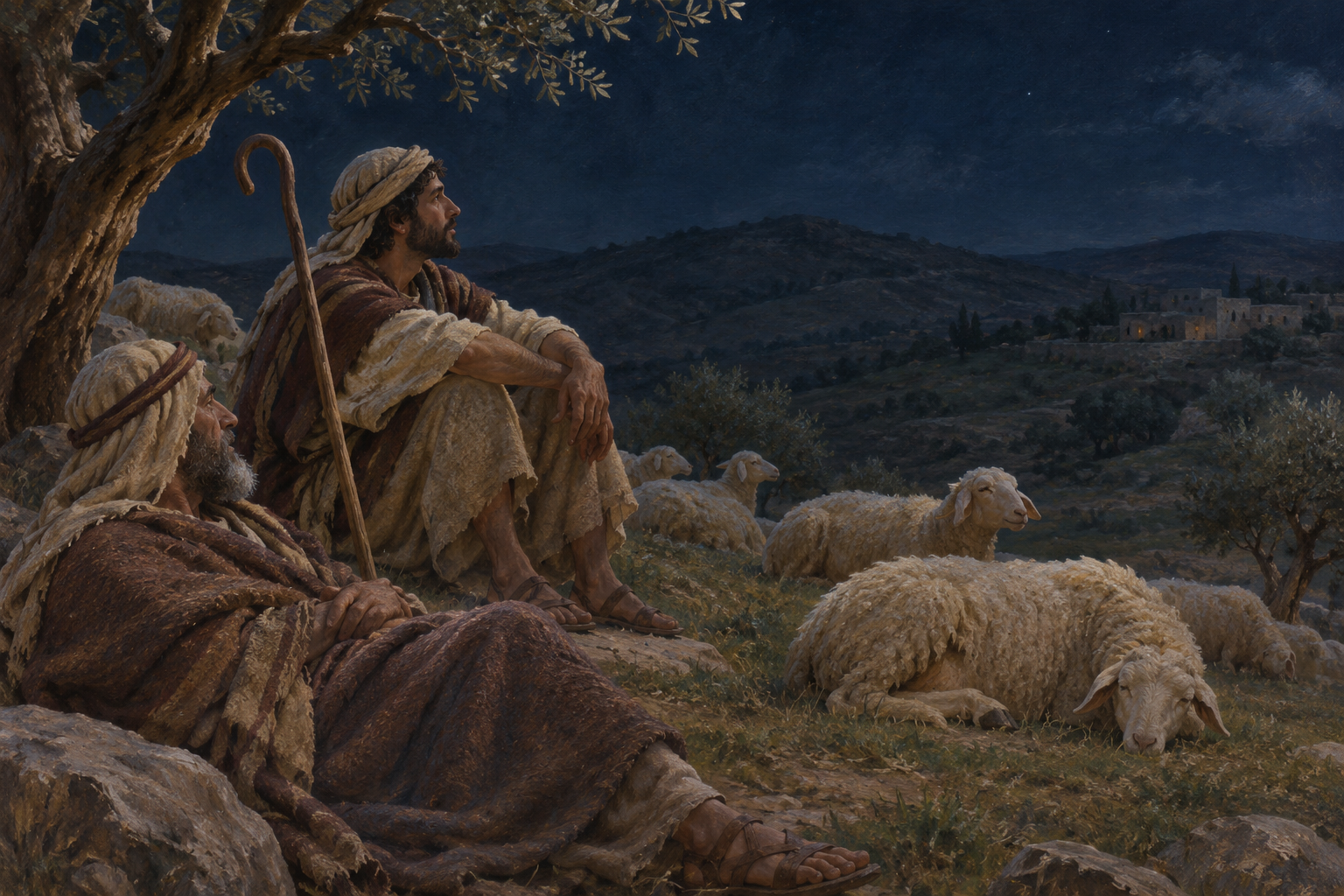
The Gospels do not name the season. Luke 2:8–20 describes shepherds watching their flock at night, but that detail alone does not identify a month with certainty. Claims about weather, lambing schedules, or local shepherding customs need evidence beyond the fact that the shepherds were outdoors.
The same caution applies to calculations based on priestly service divisions or astronomical proposals about the star. Those approaches involve assumptions and debated identifications. They may offer hypotheses, but they do not give every reader a secure method for recovering an exact birthday.
It is reasonable to say that we do not know the month. That is different from proving December impossible or establishing another season beyond doubt. Our study of messianic prophecies can help keep attention on the biblical promises while encouraging careful reading of each passage.
Why Is Christmas Celebrated on December 25?
Andrew McGowan’s study of how December 25 became Christmas describes evidence for December 25 observance in the fourth century and competing explanations for the choice. One concerns interaction with Roman winter or solar celebrations; another concerns early Christian calculations connecting Jesus’ conception and death. McGowan challenges a simple replacement explanation.
These are explanations of the history of a commemoration. Neither turns December 25 into a birthday explicitly stated by the Gospels. An observance can be meaningful to a Christian household without every historical question about its development being settled.
Our devotional on the true gift of Christmas focuses on gratitude for Christ. A historical date question and a devotional response can coexist, provided we explain what each is doing.
Does an Unknown Birthday Make the Birth Unimportant?
A narrative can communicate an event’s significance without supplying every detail later readers would like to know. The birth accounts direct attention toward Jesus’ identity, God’s initiative, and the response of those who hear the news. Their message should be read in its own terms, while historical questions are examined honestly.
Matthew 1:18–25 connects Jesus’ name with His saving mission. Luke’s announcement identifies Him as Savior, Messiah, and Lord. Those claims deserve our attention alongside any calendar discussion. Our study of Emmanuel, God with us offers a further reflection on the significance Matthew gives His coming.
Christian confidence rests in Christ and the gospel, rather than in the ability to supply a day and month Scripture does not give. We can ask serious questions, examine evidence, and resist unnecessary certainty. Humility about an unresolved detail is compatible with sincere worship.
A Family Conversation Worth Having
Return to the grandfather and grandson in our illustration. They can mark December 25 as their day of celebration while acknowledging that the exact birthday is unknown. Then they can read the account together and ask what it reveals about Jesus. Their learning becomes an act of attention, not a loss of something precious.
Our guide to family worship at home can help keep such conversations simple. You might read a short paragraph, let each person ask one question, and pray. If a question requires more study, write it down instead of inventing an immediate answer.
Our beginner’s guide to prayer can help a household begin in ordinary words. Thank God for Jesus and ask for understanding. Then let gratitude shape a practical act of love toward someone nearby.

A Prayer for Honest Study and Grateful Faith
Father, thank You for sending Jesus and making Your saving love known. Help us study carefully, admit what we do not know, and speak truthfully with one another. Keep curiosity joined with humility and worship. Give our families patience with questions and joy in knowing Christ. Let gratitude for His coming shape the way we love and serve. In Jesus’ name, amen.
Remember the Savior as You Study the Calendar
The exact birthday remains unknown, and the historical year is reconstructed rather than supplied in our modern notation. December 25 belongs to the history of Christian celebration. As you examine those distinctions, keep reading the accounts themselves. They direct us toward the Lord Jesus, whose coming gives Christians reason for gratitude every day.
Continue Growing
Read a short Christmas devotional.
Find a sustainable rhythm with a simple daily prayer routine.