


The names of Jesus in the Christmas accounts help us understand who He is and why He came. Matthew explains the name Jesus through His saving purpose and calls Him Immanuel, God with us. Luke’s announcements identify Him as Savior, Messiah, Lord, Son of God, and the promised ruler in David’s line. These names and titles direct our attention toward a person worthy of faith and worship.
This guide follows the birth announcements rather than collecting every title used throughout the Bible. Some expressions are personal names, while others identify His role, relationship, or authority. Reading them in context helps us understand their meaning and respond with more than familiarity.
Two Households Receive News About One Child
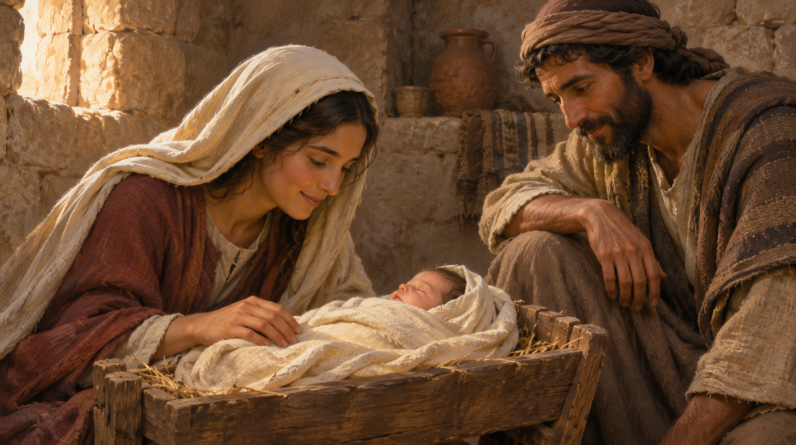
In Luke 1:26–38, Gabriel comes to Mary in Nazareth. She is told she will have a Son and name Him Jesus. The message speaks of His greatness, His relationship to the Most High, and an enduring kingdom. Mary asks a question, receives an explanation of God’s work, and responds with willingness to serve the Lord.
In Matthew 1:18–25, Joseph also receives a message. While considering how to respond to Mary’s pregnancy, he is addressed by an angel in a dream. He is told about the child’s conception and instructed to name Him Jesus because of His saving mission. Joseph obeys.
The accounts do not provide every conversation within that household. They do show that the child’s identity and purpose come from God’s initiative. Mary and Joseph are called to trust and respond. Before a crowd gathers or a public ministry begins, the names and titles announce the significance of His coming.
Our explanation of Jesus’ birth and why it matters offers the wider picture. Here, we will pause over the language of those announcements and the hope it gives.

Jesus: The One Who Saves His People From Their Sins
Matthew 1:21 connects the name Jesus with salvation from sin. That explanation prevents us from reducing Christmas to a general message about pleasant feelings or family togetherness. Those gifts can be enjoyed, but the child comes with a saving mission.
The name Jesus is related to the Hebrew name represented in English as Joshua. Matthew’s emphasis is not a secret pronunciation or a technique for obtaining an answer to prayer. It is the purpose of the One who bears the name. He addresses the separation and guilt caused by sin.
If you carry regret, this announcement gives you a reason to come to Christ honestly. You do not need to disguise wrongdoing as a small mistake or prove you have repaired yourself first. Bring your need to the Savior, turn from sin, and trust His grace. Our devotional on the true gift of Christmas can help you reflect on that gift.
Immanuel or Emmanuel: God With Us
Matthew connects the birth with Isaiah 7:14 and explains Immanuel in Matthew 1:22–23. Immanuel and Emmanuel are different English spellings of the same name, whose meaning is God with us. The BibleGateway encyclopedia entry discusses its Hebrew form and Matthew’s interpretation.
Joseph names the child Jesus as instructed. Immanuel expresses the significance of His coming; it does not mean Joseph disobeyed by choosing the wrong everyday name. Matthew presents Jesus as the fulfillment of God’s promise, bringing God’s presence among His people.
This truth does not promise a December free from grief or uncertainty. It directs faith toward God’s action in Christ. Our existing study of Emmanuel, God with us explores that theme more deeply, so this section can remain focused on its place among the birth announcements.

Son of God and Son of the Most High: His Unique Identity
In Luke 1:30–35, Gabriel identifies the child in relation to the Most High and explains the work of the Holy Spirit in His conception. Jesus is not presented merely as an unusually inspiring teacher. His identity is central to the message before His birth.
Christian belief about the Son should be read alongside the wider New Testament, including John 1:1–14. The eternal Son did not begin to exist in Bethlehem; His birth marks His entrance into human life. The incarnation affirms both His divinity and His real humanity.
Our study of Jesus as fully God and fully man explains that confession further. It gives depth to Christmas worship: we honor the Son who truly shared human life and came to save us.
Savior: Good News for People Who Need Rescue
In Luke 2:8–12, shepherds receive the announcement that the Savior has been born. The message is grounded in an event and a person. It is not a demand that the shepherds make themselves worthy before they can hear good news.
Read Savior alongside Matthew’s explanation of salvation from sin. The birth belongs with Jesus’ obedient life, sacrificial death, and resurrection. He offers more than encouragement for a difficult season; His mission concerns reconciliation with God.
You can respond by acknowledging your need and placing your trust in Him. Our beginner’s guide to prayer can help you speak honestly to God. Prayer does not earn salvation; it can express faith, repentance, gratitude, and dependence.

Messiah or Christ: God’s Promised Anointed One
The announcement in Luke 2:11 also identifies Jesus as Messiah, rendered Christ in other English translations. Messiah and Christ are corresponding terms for an anointed one. Christ functions as a title, even though we often encounter it alongside Jesus as if it were a surname.
The title directs us toward God’s promises and the hope associated with His appointed King. Read it with Gabriel’s message about David’s throne in Luke 1:32–33. The birth accounts present a fulfillment larger than the private happiness of one family.
Our study of messianic prophecies Jesus fulfilled offers a place to continue. When following a prophecy reference, read its original context and the New Testament passage that applies it. That habit helps faith grow through understanding rather than a list of disconnected predictions.
Lord: A Title That Calls for a Response
Luke 2:11 joins Savior and Messiah with Lord. Within the Christian reading of the passage and the wider Gospel witness, that title calls for reverence and allegiance. The child is not simply an addition to our holiday plans. His authority reaches into ordinary life.
Consider one part of your week in which you need to obey Him: the way you speak to family, the apology you have delayed, or a responsibility you keep avoiding. Following the Lord includes listening to His teaching and acting on it. A title we sing should also shape the way we live.
Our reflection on Jesus as the Prince of Peace can help connect His authority with His character. We come under the rule of the One who brings peace with God and teaches His people to pursue peace with others.
The Promised King: An Enduring Reign
Gabriel’s message in Luke 1:32–33 speaks of David’s throne and a kingdom without end. These promises give the announcement a royal scope, even though the birth takes place in humble circumstances.
The promised reign does not mean every political event or personal deadline will unfold as we wish. It gives Christians a foundation for hope in Christ’s authority and faithfulness. We can pray, serve, and remain obedient while waiting for the fullness of God’s purposes.
That hope can steady a household facing an uncertain future. It can also turn attention outward. People who trust the King can care for a neighbor, welcome someone overlooked, and practice generosity without needing public recognition.

A Simple Way to Reflect on These Names of Jesus
Imagine a mother and daughter reading one announcement at the kitchen table. The child recognizes the name Jesus but asks what Savior means. The mother explains the verse, then admits that she also needs His forgiveness. Their conversation becomes an opportunity for honest faith rather than a lesson about how impressive their family should look. This is an imagined illustration, not a testimony about a particular household.
Choose one name or title, read the surrounding passage, and ask what it reveals about Jesus. Then consider a fitting response: trust, repentance, gratitude, worship, or obedience. Our guide to family worship at home can help keep that time simple and sustainable.
A Prayer of Worship and Trust
Father, thank You for revealing the identity and purpose of Jesus. We praise Him as Savior, Messiah, Lord, and Your eternal Son. Help us understand Your Word, receive Your grace, and obey with willing hearts. Let the names we read become reasons for worship and faithful living. Teach our families to speak about Jesus with truth, humility, and love. In His name, amen.
Know the One the Names Reveal
Mary, Joseph, and the shepherds received news about the same child. The names and titles help us understand why that news mattered. As you read them this Christmas, give Jesus your attention and your trust. His saving purpose, divine identity, and enduring authority give us reason to worship long after the season has ended.
Continue Growing
Reflect with our short Christmas devotionals.
Make space for prayer with a simple daily routine.