

The wise men gifts named in Matthew 2:11 are gold, frankincense, and myrrh. The visitors present them while honoring Jesus. Gold is a precious metal; frankincense and myrrh are aromatic plant resins. Christians have traditionally connected the gifts with Jesus’ kingship, divinity, and suffering, while Matthew himself does not explain a separate symbolic meaning for each gift.
That distinction helps us appreciate both the biblical account and later Christian reflection. We can study what the gifts were, consider the interpretations Christians have given them, and keep our attention on the child receiving the visitors’ worship.
The Visitors Open Their Treasures
Read Matthew 2:1–12. Visitors from the east arrive in Jerusalem asking about the child born King of the Jews. Herod becomes troubled, consults the religious leaders, and sends the visitors toward Bethlehem. The account develops a contrast between their desire to honor the child and Herod’s response to a possible rival.
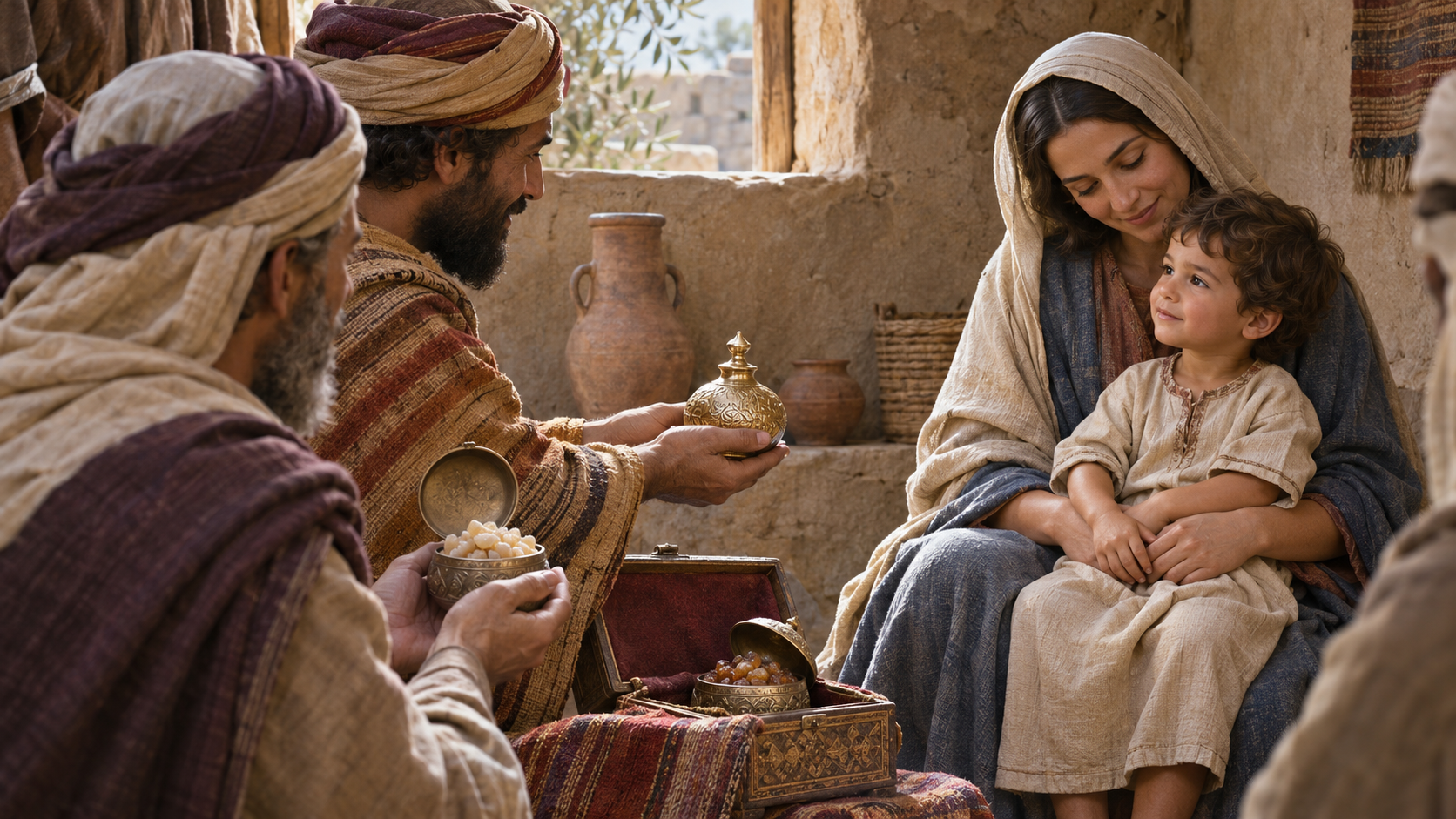
Matthew then describes their joy, their entrance into a house, and their encounter with Jesus and Mary. They bow before the child and present their treasures. The materials are named, but no speech explaining the individual gifts is recorded. We should resist giving the visitors a private conversation that Matthew has not supplied.
The story gives the gifts a personal setting: people have come to honor someone. The treasures serve that encounter. When we picture the containers, the metal, or the resins, the focus remains on Jesus. Our existing Wise Men story follows the wider narrative; this guide concentrates on the gifts and their interpretation.
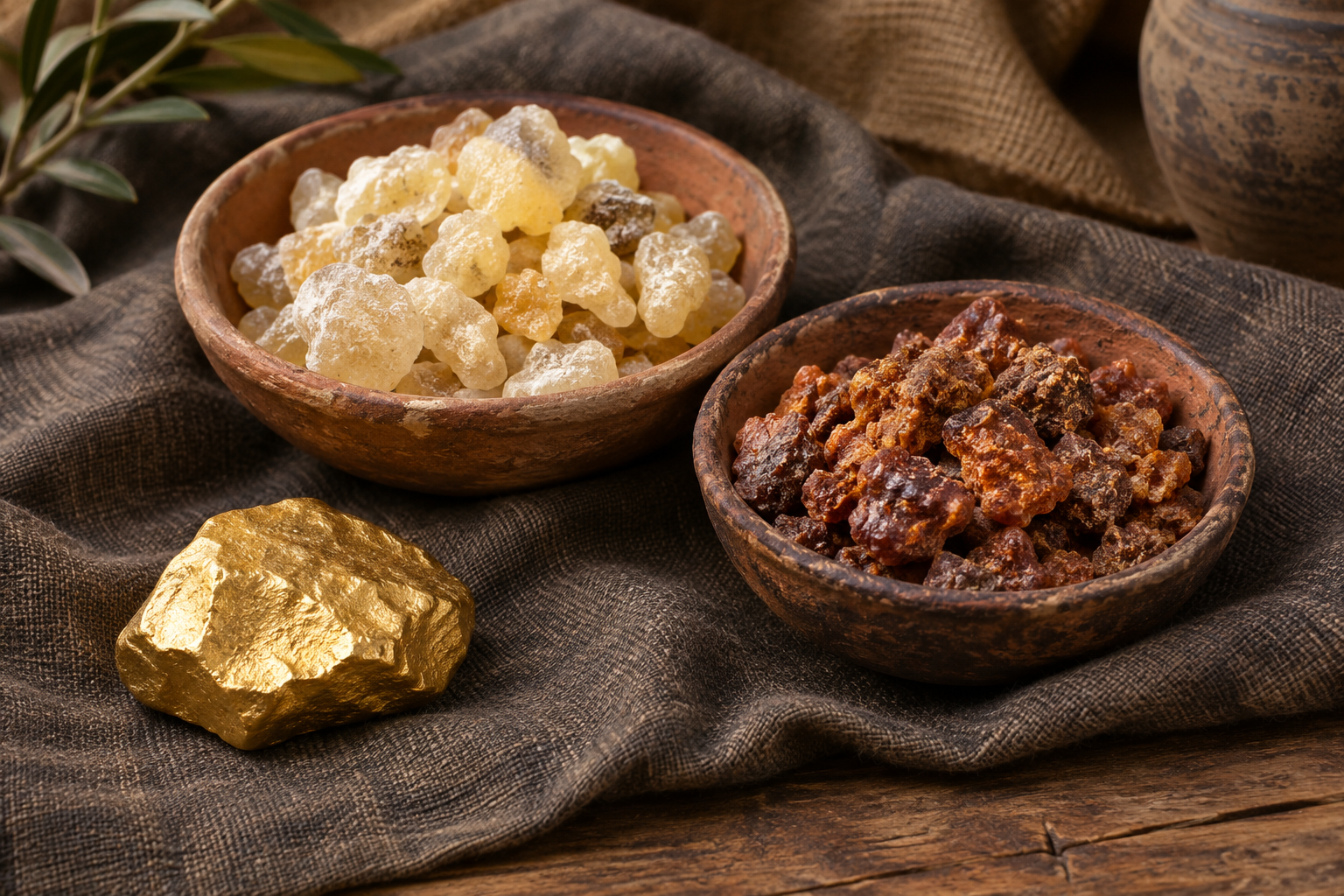
Gold: A Precious Gift Offered to the King
Gold is the most immediately familiar of the three materials. In the biblical world, it appears in connection with wealth, royal gifts, and objects used in worship. For example, 1 Kings 10:10 describes the queen of Sheba presenting gold among her gifts to Solomon.
That broader setting makes the traditional connection with kingship understandable. Matthew’s visitors have asked about the King of the Jews, and they offer gold as part of their tribute. Their act honors the child they have sought. It is reasonable to notice that relationship without claiming Matthew gives a dictionary-style explanation of the metal.
The passage does not tell us the weight, form, or financial value of the gold. It might be tempting to calculate a modern price or picture a particular coin, but those details would require information the account does not provide. We can recognize a valuable offering while leaving its exact size unknown.
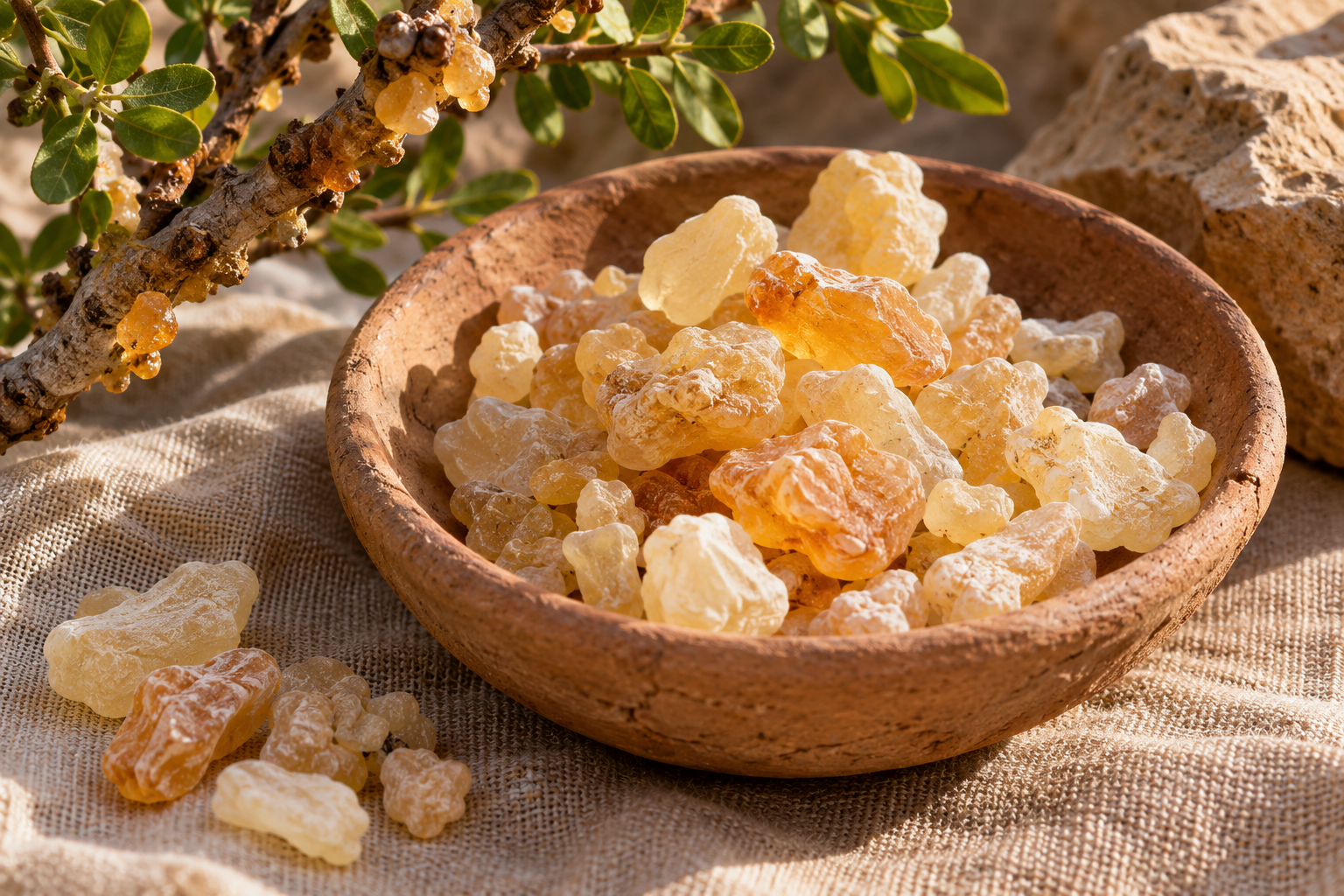
Frankincense: An Aromatic Resin
Frankincense comes from trees in the Boswellia genus. Kew’s botanical profile of frankincense describes it as a resin valued for its fragrant fumes when burned. The material is different from the modern bottled products that may also use its name.
In Exodus 30:34–38, frankincense is included in the instructions for sacred incense. That biblical association with worship helps explain why Christians have reflected on it in connection with Jesus’ divinity and the honor offered to Him.
However, Matthew does not say the visitors burned incense in the house or performed the ritual described in Exodus. The gift is listed among their treasures. Connecting passages can enrich understanding when we also respect the differences between them. Our study of Jesus as fully God and fully man explores His identity more fully.
Myrrh: A Resin With More Than One Biblical Use
Myrrh is also an aromatic resin, associated with trees in the Commiphora genus. Kew’s discussion of myrrh-producing plants describes resin obtained from these trees. The material had uses in fragrance and other preparations; it should not be reduced to only one purpose.
The Bible mentions myrrh in different settings. Exodus 30:22–25 includes it in instructions for anointing oil. Much later, John 19:38–42 describes myrrh with aloes in the preparations for Jesus’ burial.
Because of that later account, Christians have often reflected on the myrrh in Matthew as pointing toward Jesus’ suffering and death. That is a theological association made while reading the wider story of Christ. Matthew does not tell us how much the visitors understood about His future, and we should not claim to know their unrecorded intentions.
Where Do the Traditional Meanings Come From?
The familiar interpretation has a long history in Christian reflection. In Against Heresies, Book III, Chapter 9, Irenaeus connects gold with Christ’s kingship, frankincense with His divinity, and myrrh with His death and burial. This provides an early Christian example of the association.
We can describe that tradition honestly without treating it as a sentence Matthew wrote. The Gospel names the gifts and records the visitors’ act of honor. A later Christian writer considers how the materials relate to the identity and mission of Jesus. These are related kinds of reading, but they are not identical sources of information about the visitors themselves.
For personal study, begin with Matthew’s account. Then read the other biblical references and ask what connection you can actually support. Our explanation of the birth of Jesus and its meaning offers a broader framework for considering the incarnation and Christ’s saving mission.
Do Three Gifts Mean There Were Three Wise Men?
Matthew names three kinds of gifts but does not state the number of visitors. A list of materials cannot establish how many people traveled together. The account also does not give the visitors the familiar names found in later tradition.
This is a useful distinction when teaching children. You can explain that many Christmas pictures show three figures because there are three gifts, while the Bible leaves the number unstated. Enjoying a familiar illustration does not require presenting every detail in it as a recorded fact.
Matthew describes a visit to a house. He does not place the shepherds in that scene or state that the visit happened on the night of Jesus’ birth. Our existing Star of Bethlehem guide introduces the wider subject. Keep the gift study anchored in the details Matthew actually supplies.

Did the Gifts Pay for the Journey to Egypt?
Some readers suggest that the gifts helped support the family when they fled to Egypt. That is a possible practical use of valuable possessions. However, Matthew 2:13–15 does not explain how the journey was financed or what happened to each gift afterward.
We should therefore present that suggestion as a possibility, not as the stated purpose of the offerings. The account records the warning to Joseph, the family’s departure, and their stay in Egypt. It does not provide a household budget or a later inventory of the treasures.
This kind of care matters because a memorable explanation can quickly become something people believe is written in Scripture. A teacher can say that an idea seems possible while also showing the passage’s limits. Humility about an unstated detail can make a Bible conversation more trustworthy.
What Can the Wise Men Gifts Teach Us About Giving?
Their gifts belong to an act of honor directed toward Jesus. For Christians today, the account can prompt reflection on gratitude, worship, and the use of our resources. It does not establish a requirement to buy three presents, spend a certain amount, or obtain these particular materials for a Christmas celebration.
Consider what it means to honor Christ in your circumstances. You might give time to someone who needs company, contribute within your means, or help with a practical task. The value of a person is not measured by what they can afford to give. Generosity should not become pressure to neglect essential responsibilities or compete for recognition.
Our devotional on the true gift of Christmas keeps attention on what Christians receive through Christ. Giving can express gratitude for His grace. It is never a payment that purchases salvation or makes God obligated to provide a financial return.

A Simple Conversation for Your Family
Read Matthew 2:11 together and ask everyone to name one detail they can point to in the verse. Then discuss one traditional detail that the verse leaves unstated. This allows children and adults to practice careful reading without turning the conversation into a contest over who knows the most.
Finish by asking how your household can express gratitude for Jesus through one realistic act of care. Our guide to family worship at home can help you keep the time simple. Let the study lead toward attention, worship, and love rather than an increasingly expensive celebration.
A Prayer of Gratitude
Father, thank You for the Lord Jesus. Help us honor Him with sincere hearts, careful words, and faithful choices. Teach us to appreciate the gifts in Matthew’s account without adding certainty where Scripture is silent. Give us wisdom to use what we have generously and responsibly. Let our Christmas giving express gratitude for Your mercy. In Jesus’ name, amen.
Continue Growing
Reflect on Emmanuel, God with us.
Begin with our simple guide to prayer.