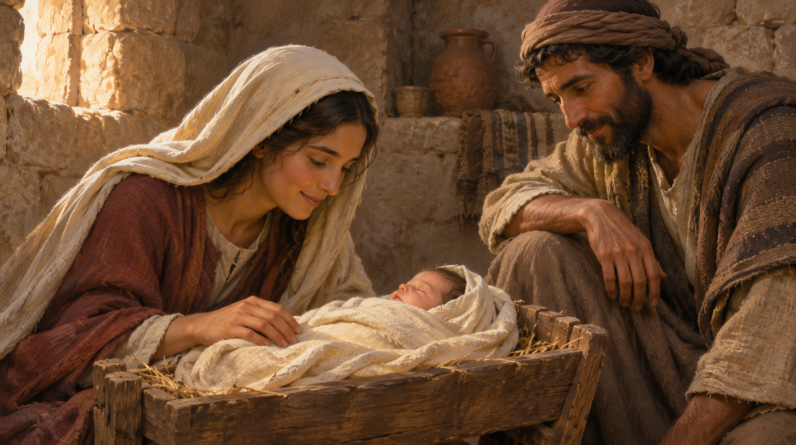



Glory to God in the highest is the heavenly praise recorded in Luke 2:14 after the announcement of Jesus’ birth. It gives honor to God for what He has done and connects the coming of the Savior with peace on earth. The words direct our attention to God’s saving work, rather than promising that every conflict or painful feeling will immediately disappear.
Read Luke 2:8–20 before considering the phrase by itself. The praise belongs to a story about a particular child, a message given to shepherds, and their response. Understanding that setting helps us hear more than a familiar Christmas line.
The Night the Shepherds Heard the News
The shepherds were watching their flock at night when an angel appeared. Luke records their fear as the glory of the Lord shone around them. The message then directed them toward good news: a child had been born in David’s town, identified as Savior, Messiah, and Lord.
They were given a sign involving a baby wrapped in cloths and lying in a manger. Then a multitude of the heavenly host appeared with the angel, praising God. The announcement concerned a newborn child, yet the response reached into heaven. The ordinary work of shepherds became the setting in which they heard news of God’s saving purpose.
After the angels departed, the shepherds went to Bethlehem. They found Mary, Joseph, and the child as described. They told others what had been announced, and they returned praising God. Luke does not tell us their later biographies. He gives us this movement from hearing to seeing, sharing, and worshiping. Our reflection on the shepherds’ faith explores their response in more detail.

What Does Giving Glory to God Mean?
In this setting, giving glory means honoring and praising God. The heavenly host recognizes His greatness in the news of Jesus’ birth. The NET Bible’s translation notes on Luke 2:14 explain this use of glory as giving honor to God.
People do not make God greater by praising Him. Worship acknowledges the greatness that already belongs to Him. The announcement gives the reason for that praise: the Savior has come. The words have substance because they respond to God’s action.
This can reshape our own worship. A familiar phrase may pass our lips while our attention remains on our performance, surroundings, or worries. Returning to the passage helps us remember whom we are honoring and why. Our guide to the meaning of Jesus’ birth offers a broader explanation of the event behind the praise.
What Does in the Highest Mean?
The phrase points toward the highest heavenly realm. The praise honors God in heaven while the announcement concerns His saving work on earth. The verse holds heaven and earth together: God’s glory and the peace associated with the Savior’s coming belong to one message.
It does not instruct us to locate God by measuring upward from the ground. Nor does it mean that only the loudest or most emotional worship reaches Him. The setting concerns heavenly praise, not a technique for making human prayer more effective.
You can honor God in a crowded church or a quiet room. A person whose voice is weak can pray sincerely. A caregiver interrupted by another task can return to gratitude. The volume of a voice does not measure the value of the Savior being praised. What matters is a truthful response to Him.
Why Does the Praise Follow the Birth Announcement?
The preceding message identifies Jesus as Savior, Messiah, and Lord. Those titles help explain why the birth gives reason for praise. The child is central to the good news. Christmas worship becomes thin when it celebrates a general feeling of kindness while leaving His identity unexplored.
Matthew’s account also connects Jesus’ coming with salvation from sin. Read Matthew 1:18–25 alongside Luke without blending every detail into one scene. Each account contributes to the Christian understanding of who Jesus is and why He came. Our study of Emmanuel, God with us develops Matthew’s emphasis.
The birth should also be understood within Jesus’ whole life, death, and resurrection. Christians praise God for the Savior whose mission leads beyond the manger. Gratitude for His coming grows as we learn about His saving work, rather than treating the birth as a sentimental event disconnected from the gospel.

What Kind of Peace Is Announced?
Luke’s message concerns the peace associated with God’s favor and the coming of the Savior. It is larger than a calm mood during a holiday. The wider New Testament connects peace with reconciliation to God through Jesus. Read Romans 5:1–2 and Colossians 1:19–20 for that broader context.
Luke 2:14 does not announce that all human hostility has already ended. Later in Luke, Simeon speaks of opposition and sorrow when he addresses Mary about the child. Our account of Simeon’s encounter in the temple helps connect Christmas hope with that serious part of the story.
You may therefore celebrate Christ while still grieving, working through conflict, or feeling exhausted. Those experiences do not automatically prove that your faith is false. Bring them honestly to God. Peace with Him is grounded in Christ; emotional steadiness may also require time, supportive relationships, rest, and practical help.
Why Do Bible Translations Sound Different?
Some readers remember the KJV wording about goodwill toward people; other translations emphasize people receiving God’s favor. The NET notes explain that there is a Greek manuscript difference behind this variation. It affects how the final part of the verse is expressed.
A short explanation should acknowledge that difference without building an argument from one English phrase alone. The heavenly praise still belongs to the announcement of the Savior. The notes also caution against reading the verse as though peace were simply a prize for people who first produce enough human goodwill.
God’s grace is central to the Christian message of salvation. Kindness matters as a response to Him, but it is not a purchase price for His favor. If the wording raises questions in your group, compare translations, read the notes, and discuss the passage patiently with a trusted pastor or teacher.
Were the Angels Singing?
Christmas songs often picture the heavenly host singing. Luke describes them praising God and speaking the words. The passage itself does not require us to settle whether the praise was sung or spoken in a musical way.
We can enjoy a carol while explaining that distinction. The important point in the account is the praise given to God and its connection with Jesus. A musical arrangement can help a congregation remember Scripture, but its added details should not become new claims about what Luke records.
For the same reason, we do not need to invent the number of angels, their appearance, or a detailed arrangement across the sky. Luke’s description is sufficient to direct our attention toward the message. Careful reading can deepen wonder without supplying a spectacle of our own.
How Can We Respond With Both Praise and Peace?
Begin by naming what you are thanking God for. Thank Him for sending Christ, showing mercy, and providing reconciliation through Him. If you need help putting that into words, our guide to praying Scripture offers a simple way to respond to a passage without forcing an elaborate prayer.
Then consider your relationships. Is there an apology you owe, an unfair assumption you should correct, or a conversation you can approach more gently? Romans 12:18 recognizes both responsibility and limits in seeking peace with others. You can take an honest step without pretending that another person’s response is under your control.
Peacemaking does not require calling harm acceptable or remaining in danger. Truth, wise boundaries, and help from others can belong alongside forgiveness and kindness. The practical question is how to honor Christ in the situation you actually face, not how to create a peaceful appearance at any cost.

An Imagined Christmas Conversation
Imagine a father who has just sung a Christmas carol at church. At home, he becomes impatient with his daughter over a small mistake. Later he remembers the words of praise and realizes that he has spoken carelessly to someone he loves. He returns, names what he did, and asks her forgiveness without blaming her for his tone.
This is an imagined illustration, not a reported testimony. The apology does not solve every family difficulty. It does show one ordinary way gratitude can affect behavior. Giving glory to God can lead us to take responsibility for words that have hurt another person.
A household can build on such moments through simple family worship. Read a short passage, thank God, and listen to one another. Keep space for honest questions and unfinished struggles. The goal is to grow in faith together, not to stage a perfect Christmas evening.

A Prayer of Praise and Trust
Father, You deserve our honor and praise. Thank You for sending Jesus, our Savior and Lord. Help us understand the peace You give through Him. Meet us in grief, tension, and ordinary responsibilities. Forgive our careless words, and teach us to seek peace with truth and kindness. Let our worship shape the way we live. In Jesus’ name, amen.
Carry the Praise Into Ordinary Life
The shepherds returned praising God for what they had heard and seen. Their example invites us to carry attention to Christ into our own responsibilities. Read the announcement again, thank God for the Savior, and choose one faithful response. The Lord is worthy of praise after the Christmas music ends.
Continue Growing
Reflect on Jesus as the Prince of Peace.
Make room for prayer with a simple daily routine.