


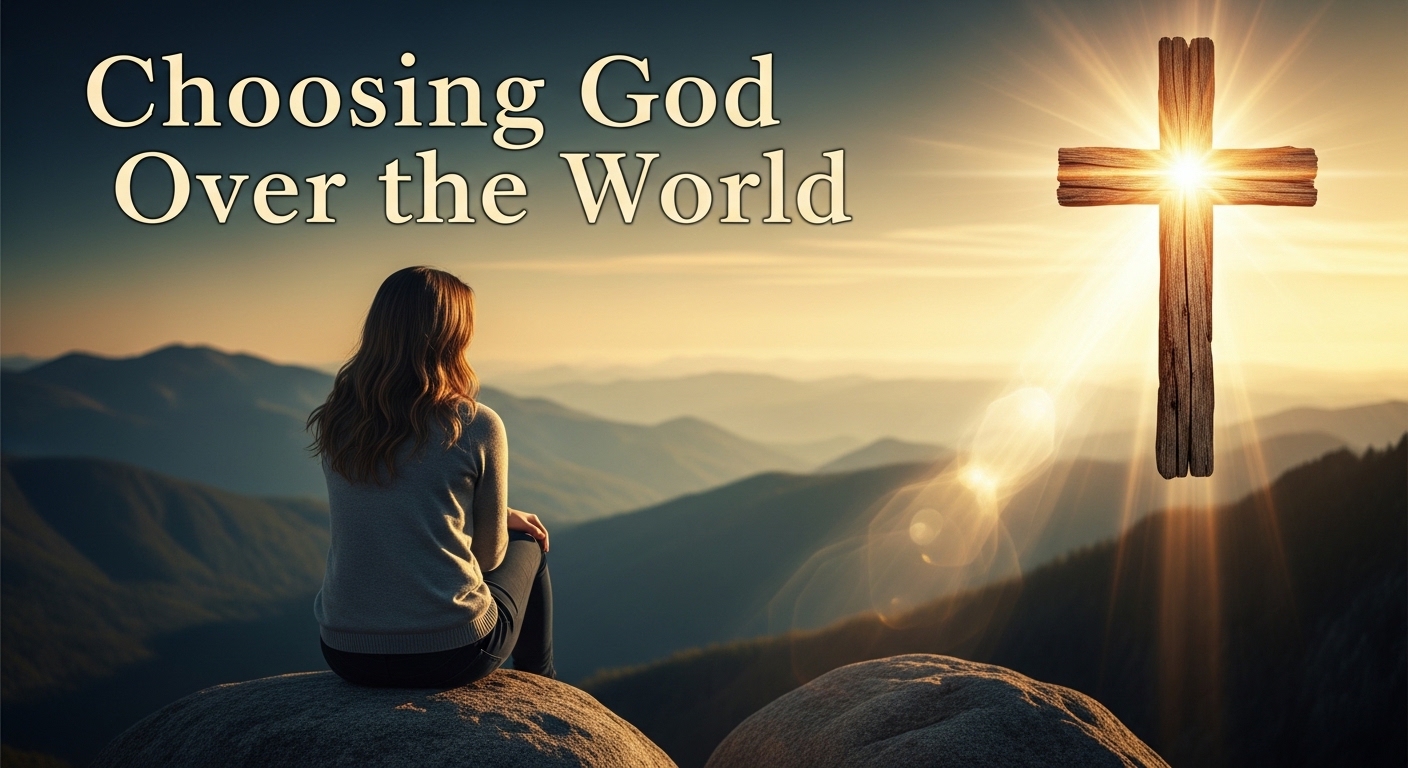
You wake up to a calendar full of meetings, a phone buzzing with notifications, and a mind already racing with what you must accomplish today. By evening, you’ve checked off many boxes—but you also feel a quiet tug: something important was missed. Maybe it was a prayer left unfinished, a moment with God traded for another scroll through feeds, or a long-standing tug on your heart to live differently that you kept ignoring. You’re not alone. In a world that measures success by speed, status, and stuff, choosing God can feel like swimming upstream.
How do you choose God when the world promises so much—and when that promise sometimes looks like comfort, recognition, or security? How do you hold the eternal in clearer sight when the urgent keeps shouting?
What does it truly cost to choose God over the world?

Key Bible Verse (Foundation)
Matthew 16:26 offers the lens we need: “What good will it be for someone to gain the whole world, yet forfeit their soul? Or what can anyone give in exchange for their soul?”
This verse cuts straight to the heart of priorities. It reminds you that the world’s gains—wealth, applause, comfort—are temporary when weighed against the value of your soul and your relationship with God. The question is stark and personal: what are you willing to exchange for what lasts forever?
Core Explanation (Main Teaching)
What it means to “gain the world” and “lose the soul”
When Jesus speaks of gaining the world, He’s pointing to the tangible successes and pleasures culture often prizes: money, influence, achievements, and even safety. These things aren’t inherently evil. The problem comes when they become the main thing—the measure of your worth and the aim of your life. Losing your soul means losing sight of God, sacrificing spiritual life, moral integrity, and eternal perspective for temporary gains.
The Bible is full of warnings and invitations about this trade-off. It doesn’t tell you to hate the world but to avoid letting the world define you. Choosing God over the world means letting your deepest loyalties, hopes, and identity flow from Christ rather than from external validation or possessions.
What the Bible teaches about priorities
Scripture consistently calls you to store up treasures in heaven rather than earth (see Matthew 6:19–21). Paul urges believers not to be conformed to this world but transformed by the renewing of the mind (Romans 12:2). John warns about loving the world and the things in it; such love can displace your love for the Father (1 John 2:15-17).
These teachings aren’t legalistic commands to renounce every comfort. Instead, they’re invitations to re-orient your heart so that what drives you is not fear, greed, or praise, but love for God and obedience to His ways. This orientation shapes how you use your time, money, decisions, and desires.
Why it matters today
You live in an age of constant comparison and curated success stories. Social media makes it easy to measure yourself against others and to chase a life that looks good from the outside. The cultural voice says, “You deserve this,” or “You’ve earned that,” and presses you toward immediate gratification.
But spiritual well-being often requires a countercultural posture: patience, self-denial, contentment, and a willingness to risk short-term loss for long-term faithfulness. Choosing God matters because it preserves your soul’s health and aligns your life with eternity. When your compass is set toward God, everyday choices—how you spend money, how you respond to stress, how you prioritize relationships—fall into a different pattern. You become someone who invests in what lasts.

Real-Life Application
This can look like different things depending on where you are in life. Below are practical ways the choice to follow God rather than the world shows up in everyday situations.
Career and success
This can look like not allowing your job title to become your identity. In real life, this happens when you chase promotions at the cost of ethical compromises or when work consumes so much of your time that prayer, family, and rest fall away. Choosing God in your career might mean setting boundaries, refusing to cut corners, or using your influence to serve others. It could mean taking a step back from a lucrative but draining role to protect your soul and family life.
Money and possessions
This can look like shifting your focus from accumulating to giving. In practice, this happens when you say “yes” to generosity even when it feels risky, when you budget with kingdom priorities in mind, and when your view of success moves from “more” to “enough.” Choosing God over the world often means living simply enough to bless others and trusting God for provision rather than hoarding resources for security.
Spiritual growth struggles
This can look like honest confession and small, steady habits. In real life, this happens when you admit that distraction and busyness are stealing your attention from God and you choose to take practical steps: a short daily devotional, a weekly Sabbath, or a regular accountability conversation. Spiritual growth rarely happens in a day; it’s the result of daily choices to prioritize intimacy with God over instant gratification.
Distractions and busyness
This can look like reclaiming silence and margin. In practice, this happens when you intentionally block time each day for prayer, when you turn off notifications during family time, or when you decline invitations that would leave you exhausted. Choosing God often demands saying “no” to good things so you can say “yes” to the best.
Identity and purpose
This can look like finding your worth in Christ rather than in approval or achievement. In real life, this happens when you anchor your value in baptismal identity—beloved child of God—rather than in the fluctuating applause of others. It might mean stepping away from social comparison and investing in a rhythm of Scripture and community that speaks truth to your identity.

Reflection Questions
- What in your life most commonly competes with God for your attention and affection?
- When have you felt the tension between a worldly gain and a spiritual cost? What did you choose?
- What one practical step can you take this week to make more room for God in your daily routine?
- How would your decisions look different if you lived with Matthew 16:26 as a daily reminder?
Devotional Thought
You’re invited to live with the freedom that comes from choosing God. It’s not about guilt; it’s about a reorientation of the heart. God’s love meets you not to punish your loves, but to reframe them—so that what you care about reflects what lasts.
Choosing God over the world is a posture of trust. It says, “I believe God is better than everything else I might gain.” That trust frees you to live with courage: to give generously, to work faithfully without worshiping results, to rest when needed, and to love without counting the cost. Let today’s choice be small and steady—a moment by moment aligning of your heart with what God values.

Supporting Bible Verses
- Matthew 16:26 — The central question: what does it profit to gain everything and lose your soul? This verse is a sober reminder to weigh eternal things above earthly gain.
- Matthew 6:19–21 — Jesus teaches you to store treasures in heaven. Your heart follows what you treasure, so choose what is lasting.
- Romans 12:2 — Paul calls you not to be shaped by the world but by the renewing of your mind; this is the path to discerning God’s good and perfect will.
- 1 John 2:15-17 — A warning against loving the world and its desires; the temporary nature of worldly things is contrasted with doing God’s will.
- Luke 9:25 — A parallel reminder to Matthew’s teaching: what good is gain if it costs your whole life?
Each of these passages offers a practical lens to evaluate choices. Read them slowly, and ask God to speak plainly about how you are spending your life.
👉 To better understand this topic, read our full guide: What Does It Profit A Man To Gain The Whole World But Lose His Soul? (Meaning Explained)
Conclusion
Choosing God over the world is less about a single dramatic decision and more about daily re-alignments. Matthew 16:26 asks you to consider what you value most, and the Bible provides steady guidance for living with an eternal perspective. When you choose God, you protect your soul, re-define your priorities, and live with a peace that outlasts temporary success.
Take heart: small choices matter. Each time you choose prayer over distraction, generosity over accumulation, or Sabbath rest over relentless productivity, you carve out space for God’s life to grow in you. You are invited into a life that values what lasts.
Prayer
Lord, give me wisdom to see what truly matters. Help me choose You over temporary gain, and to live with an eternal perspective. Grow my love for You and guide my daily steps so my life reflects Your Kingdom. Amen.
 Continue Exploring This Topic
 Continue Exploring This Topic
- Understand what it means to lose your soul in the Bible
- Compare worldly success vs eternal life
- See real-life examples of gaining the world but losing the soul
- Learn how to stay focused on God daily
Acknowledgment: All Bible verses referenced in this article were accessed via Bible Gateway (or Bible Hub).
“Want to explore more? Check out our latest post on Why Jesus? and discover the life-changing truth of the Gospel!”