

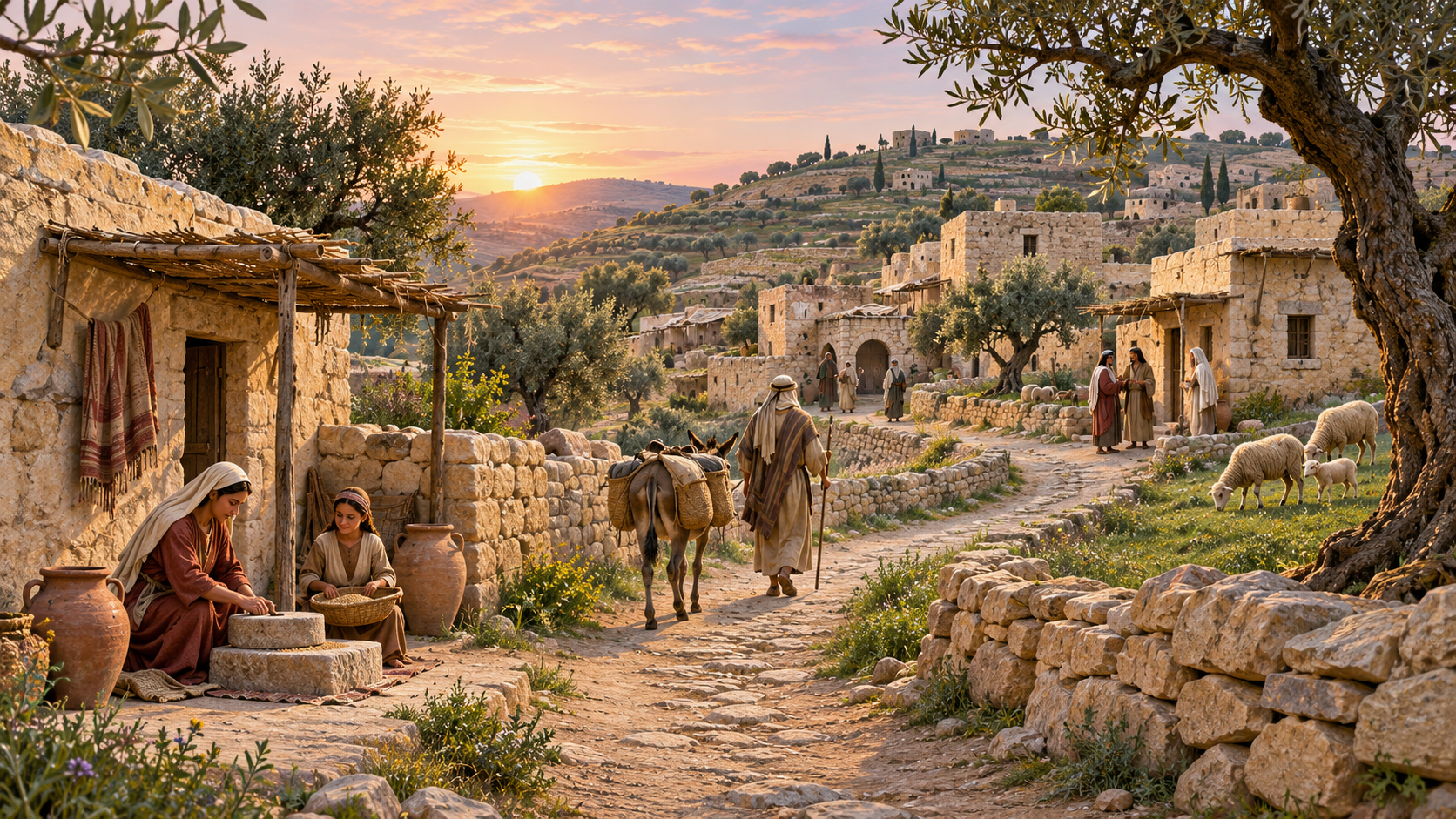
The traditional Hebrew meaning of Bethlehem is house of bread. In the Bible, Bethlehem in Judah is connected with Ruth and Naomi, David’s family, and the birth of Jesus. Its importance in the Christmas story comes from those biblical connections and the promise of a ruler from Bethlehem, rather than from a hidden message that can be proved from the town’s name alone.
The NET Bible’s dictionary entry for Bethlehem records the familiar Hebrew meaning and distinguishes Bethlehem in Judah from another town of the same name. For the Christmas account, Luke 2:1–7 identifies the Bethlehem associated with David.
Ruth and Naomi Arrive at Bethlehem
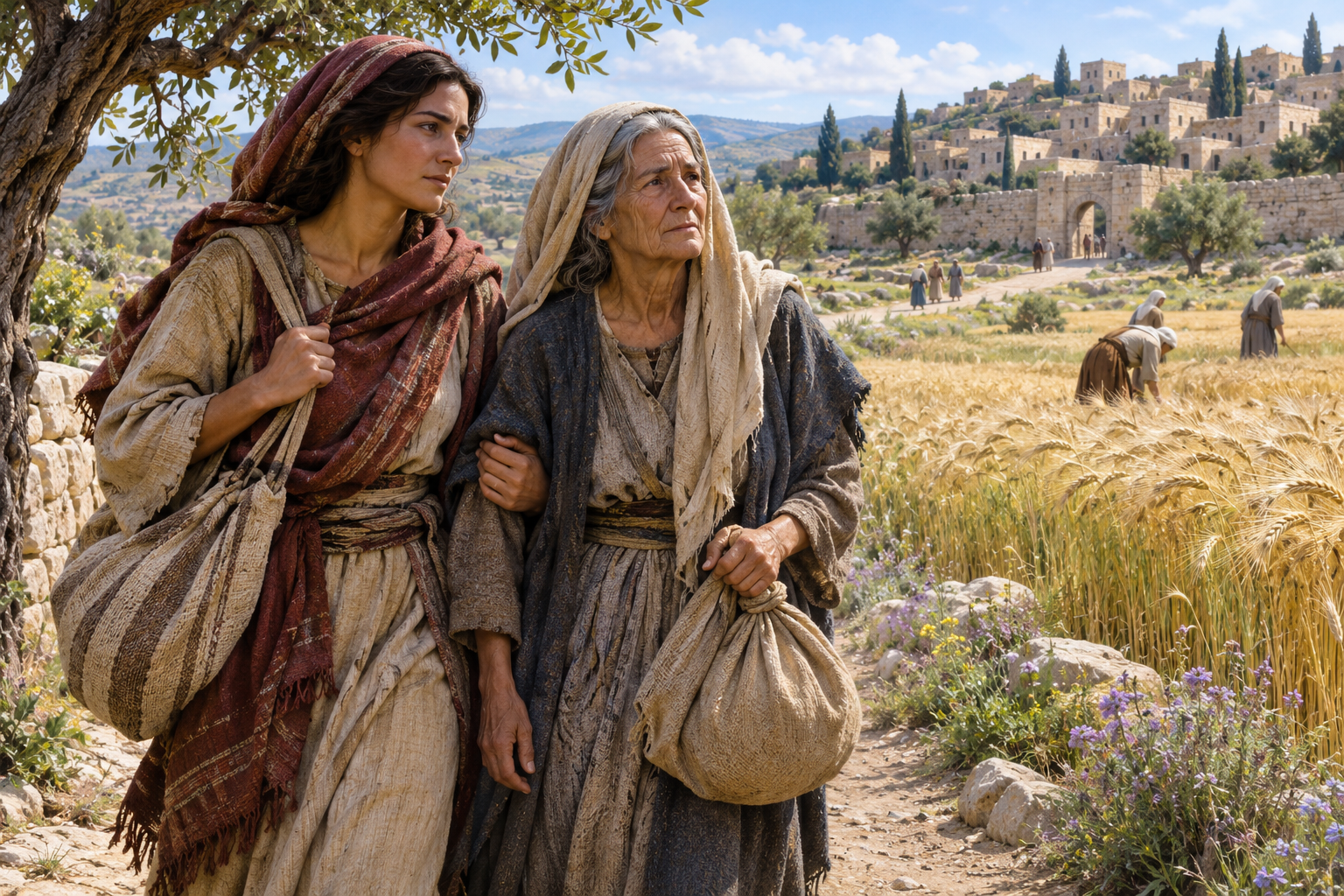
Long before the birth of Jesus, two women came to Bethlehem carrying the consequences of loss. Naomi had left Judah with her family during a famine. In Moab, her husband and sons died. Ruth, her widowed daughter-in-law, stayed with her as she returned.
Read Ruth 1:19–22. The town was stirred by their arrival. Naomi spoke openly about the bitterness of her experience. The chapter ends by telling us that they reached Bethlehem as the barley harvest began. Sorrow and the beginning of harvest stand together in the narrative.
The text does not ask us to pretend that Naomi’s grief disappeared at the town’s edge. She arrived with Ruth beside her, and the story continued. In the chapters that follow, Ruth works in the fields, Boaz shows generosity, and the family’s future unfolds through ordinary relationships and significant acts of care.
Our reflection on lessons from Ruth’s life explores that larger account. Here, the story helps us see Bethlehem as a place where people lived, worked, grieved, and received help. It was part of God’s work across generations before it became familiar in Christmas songs.
What Does the Name Bethlehem Mean?
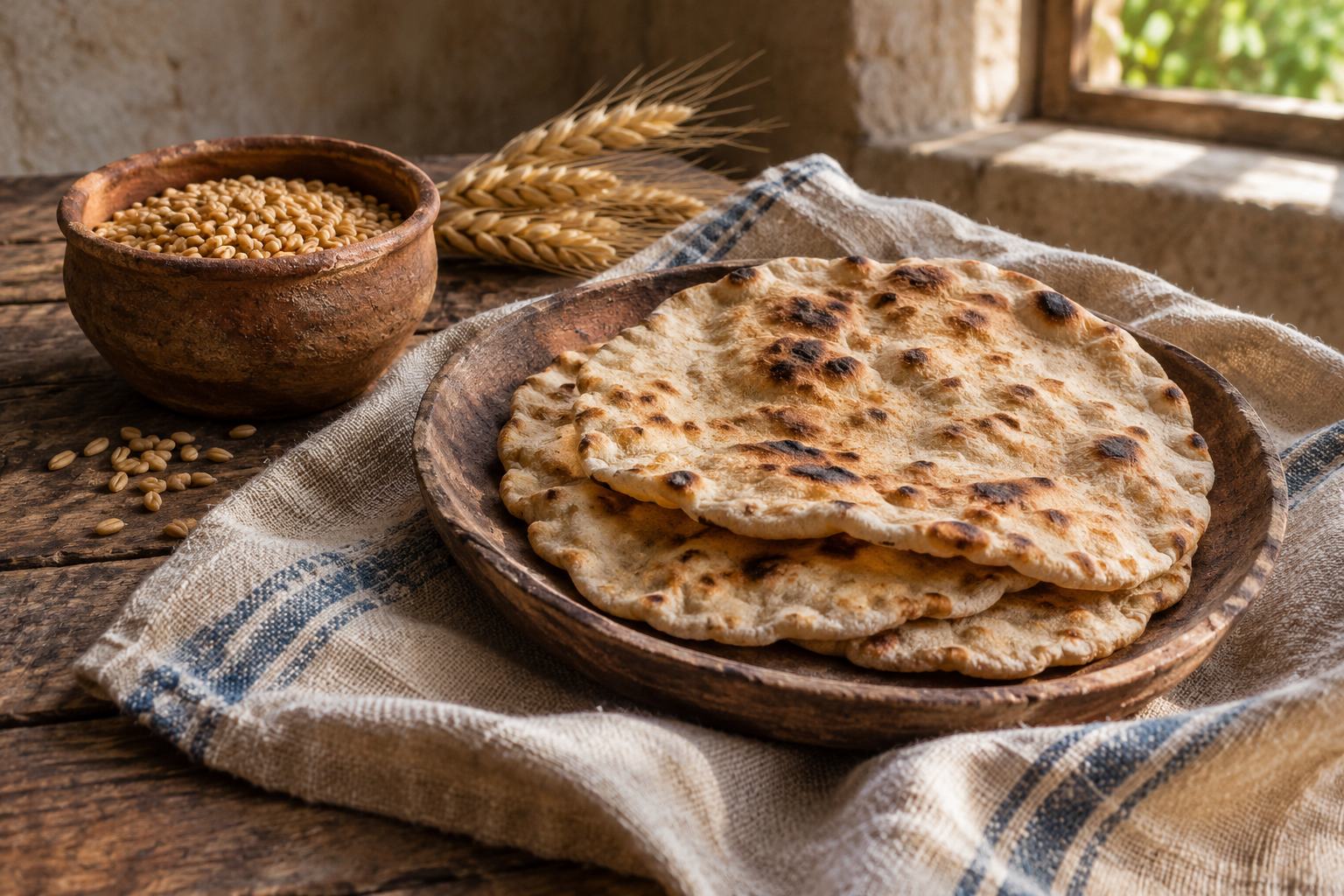
The familiar explanation combines the Hebrew words for house and bread or food. That is why dictionaries commonly give house of bread as the name’s meaning. It is useful to know, especially when reading the Ruth account with its famine, return, and harvest.
However, a place name does not explain every event that happens there. The meaning of Bethlehem is not a promise that residents would never face hunger. Ruth begins with a famine affecting the family from Bethlehem. The story itself prevents us from turning the name into a guarantee of uninterrupted provision.
The same care is needed in personal application. Knowing a Hebrew meaning can enrich our reading, but it should not become a method for inventing promises. Follow what the passage says about God’s action, people’s choices, and the unfolding story. A memorable connection is valuable when it serves the text rather than replacing it.
Which Bethlehem Is Connected With Jesus?
The Bible mentions more than one Bethlehem. Joshua 19:15 includes a Bethlehem in the territory of Zebulun. The Christmas accounts refer to Bethlehem in Judea, associated with David and the territory of Judah.
Matthew 2:1–6 identifies Jesus’ birthplace as Bethlehem in Judea. Luke describes Joseph traveling from Nazareth in Galilee to Bethlehem in Judea because he belongs to David’s family line. These details distinguish the town in the birth narratives from the northern town.
That distinction helps with a common question: Jesus is associated with Nazareth, so why is Bethlehem important? Nazareth is connected with His upbringing and later identification. Bethlehem is identified in Matthew and Luke as His birthplace. A person can be associated with more than one place for different reasons. Our life of Jesus timeline provides a wider view of those stages.
How Does Bethlehem Connect Ruth With David?
At the end of Ruth, the family story reaches beyond Ruth and Naomi’s immediate circumstances. Read Ruth 4:13–22. Ruth and Boaz have a son, Obed. The genealogy identifies Obed as the father of Jesse and Jesse as the father of David.
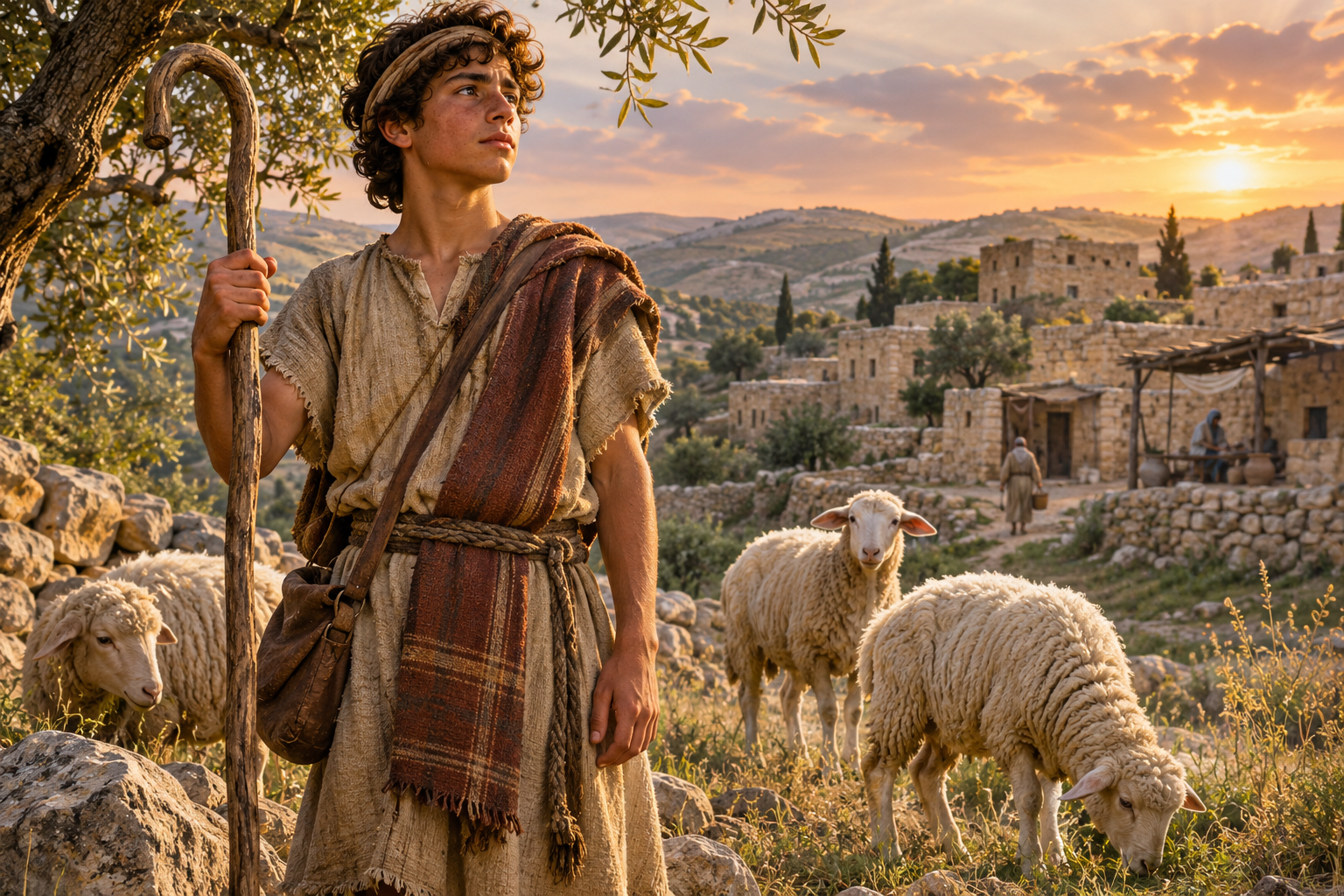
This connection matters because Bethlehem also appears in the story of David’s anointing. In 1 Samuel 16:1–13, Samuel goes to Jesse in Bethlehem. David is brought from tending sheep, and Samuel anoints him. The narrative directs attention toward God’s choice rather than impressive outward appearance.
Our account of Samuel anointing David explores that event. Bethlehem’s biblical significance therefore includes family history and kingship before we reach the Gospels. The Christmas references to David belong to an existing story of promise, failure, and hope.
This does not mean Ruth knew everything later readers would learn about her descendants. Scripture lets us see a connection across generations without claiming that every person in the story understood its eventual reach. We can appreciate God’s work without supplying private knowledge the text never records.
What Does Micah Say About Bethlehem?
Read Micah 5:2–5. The passage speaks of a ruler coming from Bethlehem and describes shepherding, strength, and security. The town’s small place among Judah’s clans is set beside the significance of the ruler who will come from it.
Matthew records the chief priests and teachers referring to this prophetic connection when Herod asks where the Messiah is to be born. Matthew’s presentation links Bethlehem with the promised ruler who will shepherd God’s people. The connection comes through the biblical passages, not simply through the English meaning of the town’s name.
Our existing Micah 5:2 guide considers the prophecy more fully. For a wider introduction, see messianic prophecies connected with Jesus. Read each passage in its setting, paying attention to how the Gospel writer uses it. Careful comparison is more useful than collecting isolated lines without context.
Why Does Luke Call Bethlehem David’s Town?
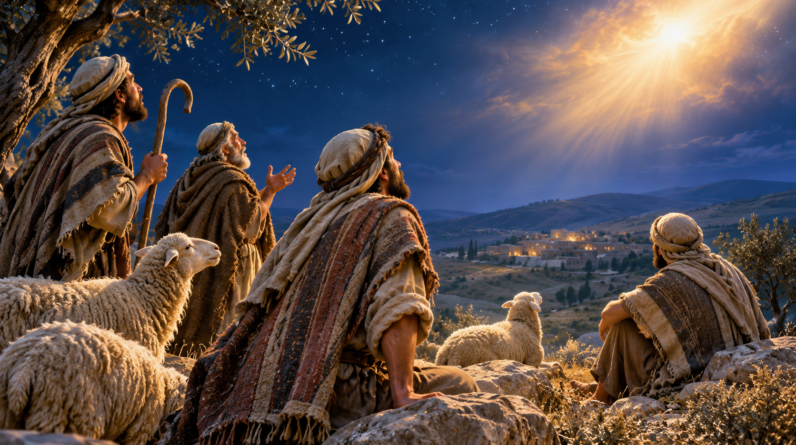
Luke connects Joseph’s journey with his ancestry in David’s family. Calling Bethlehem David’s town reminds readers of that association. In the same chapter, the announcement to the shepherds identifies the newborn child as Savior, Messiah, and Lord.
Elsewhere, the expression city of David can refer to Jerusalem; 2 Samuel 5:6–9 provides an example. Context tells us which place is meant. In Luke 2, the writer explicitly identifies Bethlehem, so there is no need to confuse the two locations.
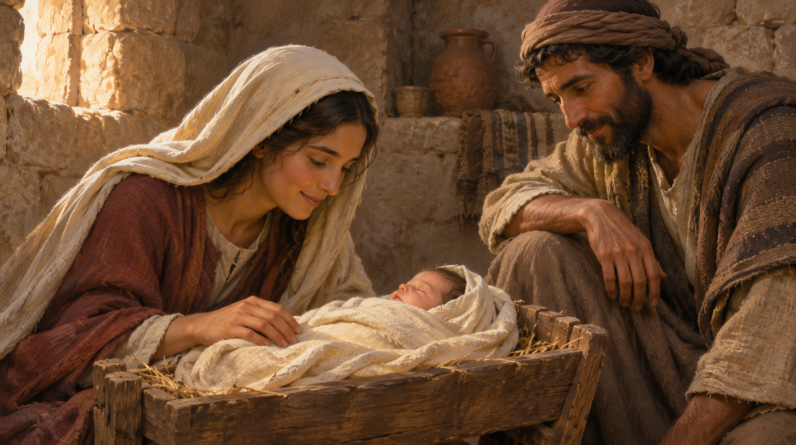
The birth account then moves from the journey to Mary’s care for her newborn. Luke records that she wraps Him and places Him in a manger. Our broader explanation of Jesus’ birth and its meaning develops the theological significance. This town-focused study helps explain why the location itself appears repeatedly in the story.
Does House of Bread Prove a Connection With the Bread of Life?
Christians sometimes reflect on Bethlehem’s name alongside Jesus’ teaching in John 6:35. It can be a memorable devotional association: the Savior born in a town traditionally called house of bread later speaks about Himself as the source of life for those who come to Him.
However, Matthew and Luke do not explicitly explain the town’s name in that way. John 6 also does not state that Bethlehem’s name proves Jesus’ identity. Present the connection as a devotional reflection, rather than an additional prophecy or the original explanation supplied by the birth narratives.
Jesus’ teaching in John deserves attention in its own context, including the discussion following the feeding of the crowd. A word association can introduce a conversation, but it cannot carry the whole explanation. Christian faith rests in Christ and the gospel, not in discovering a hidden code within every place name.
What Can Bethlehem Teach Us Today?
Bethlehem’s story can encourage people who feel their ordinary lives have little significance. Scripture connects a small town with family loyalty, shepherding, royal ancestry, and the coming of Jesus. We should be slow to measure a person’s worth by the size or reputation of the place they come from.
That encouragement is not a promise that every quiet act will lead to public recognition. Ruth’s faithfulness mattered within a real relationship. Naomi needed support during grief. People around us still need companionship, food, patient listening, and dependable care. We can serve without knowing the long-term effects.
Consider someone whose week has become difficult. Ask what would help rather than assuming. Offer a meal, a ride, or time to listen if you can do so. These acts are not reenactments of Ruth’s circumstances, but they can express the same concern for another person’s well-being. Let the story lead to attentive love.

A Prayer for Faithful Love
Father, thank You for the ways Your Word connects generations and points us toward Jesus. Help us read carefully and trust Your faithfulness. Remember those carrying grief or uncertainty today. Teach us to offer practical help with humility and love. Keep our attention on Christ, the Savior who came to Bethlehem. In Jesus’ name, amen.
Remember the Savior Behind the Place Name
Bethlehem traditionally means house of bread, but its biblical importance extends beyond that definition. Read Ruth’s return, David’s anointing, Micah’s promise, and the Gospel accounts together. Let those passages deepen your gratitude for Jesus and your willingness to care for people in the ordinary places where God has put you.
Continue Growing
Reflect on the true gift of Christmas.
Begin a conversation with God through our simple guide to prayer.